The first time I crossed the threshold of a zawiya in Tiznit, I was struck by the chromatic intensity of the walls. These Sufi sanctuaries in southern Morocco reveal an ancestral visual language that my years of studying Berber decorative traditions have taught me to decode. Far from Orientalist clichés, the murals of the zawiyas of Tiznit tell the story of an Amazigh Chleuh people who have managed to preserve their artistic identity through the centuries.
Here's what these murals bring to our understanding: they document the Chleuh cultural resistance to Arab influences, they reveal a pre-Islamic symbolic system adapted to the Muslim spiritual context, and they offer a unique aesthetic model for anyone seeking authentic and meaningful decor.
Many think that Moroccan wall art is limited to the colorful zellige of Fez or the stucco work of Marrakech. This reductive vision completely ignores the richness of the Amazigh traditions of the Souss, particularly those of the Chleuhs who have inhabited the Tiznit region for millennia. The zawiyas – these spaces of devotion and teaching – bear on their walls visual testimonies that few know how to interpret.
Rest assured: understanding the Chleuh influences in these murals does not require a doctorate in anthropology. It is enough to observe the motifs, colors and composition carefully to grasp how Amazigh identity shines through with every brushstroke. I invite you on a journey into the heart of this little-known sacred art.
Tiznit, guardian of Chleuh traditions
Located about fifty kilometers from Agadir, Tiznit is not like other cities. Officially founded in 1882 by Sultan Hassan I, it was built on a territory inhabited for centuries by the Chleuh tribes of the Souss. These Berber-speaking Amazighs have developed a distinct visual culture, marked by geometric symbols and specific color palettes.
The zawiyas of Tiznit are involuntary conservatories of this heritage. Unlike more recent mosques where Andalusian Arab influence dominates, these sanctuaries were decorated by local artisans who perpetuated know-how passed down orally. I spent hours comparing the motifs of the zawiyas with those found on Chleuh carpets, pottery or silver jewelry – the stylistic continuity is striking.
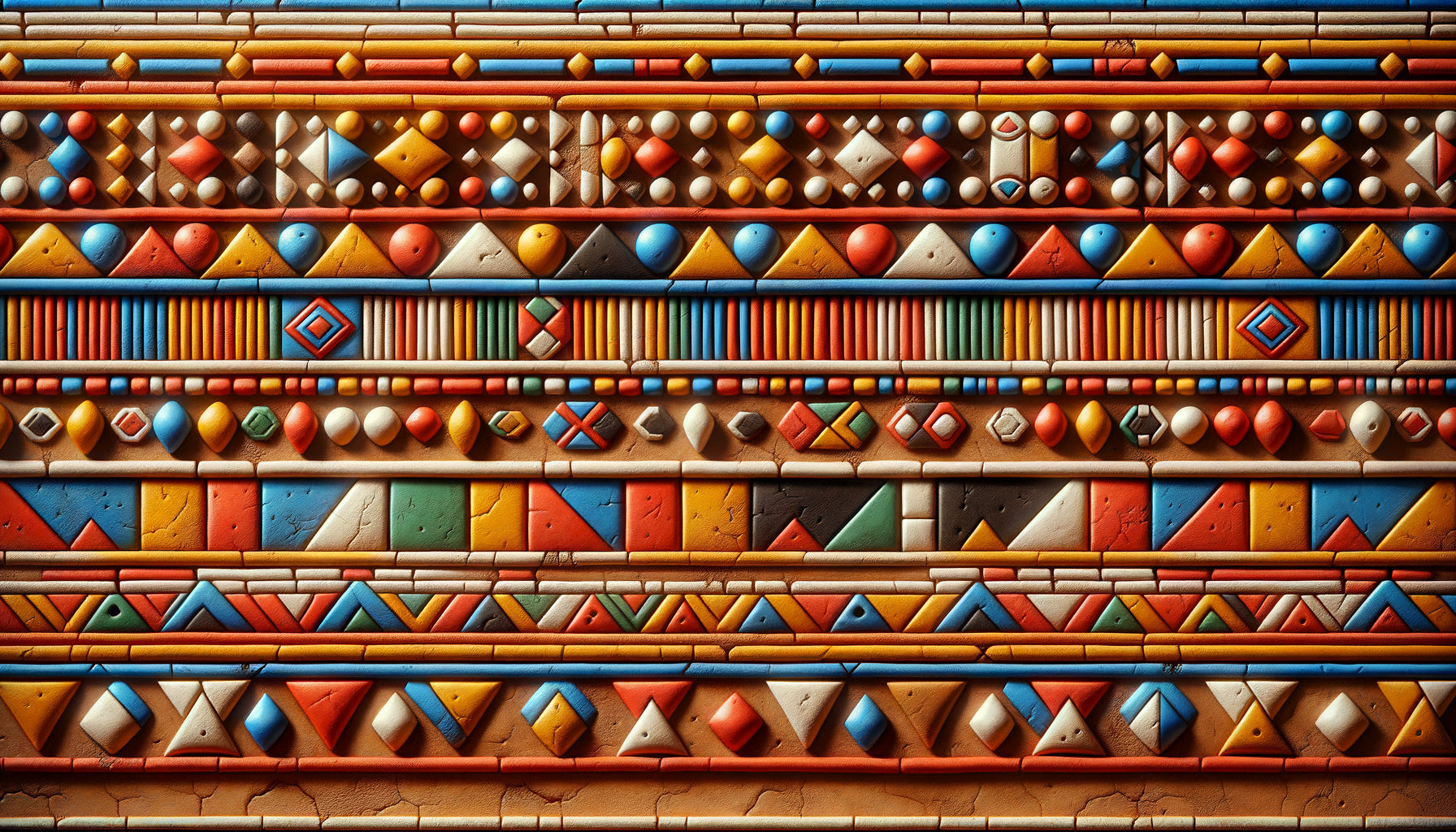
The murals of these religious buildings use natural pigments: red ochre extracted from the surrounding land, charcoal black, lime white, sometimes an imported indigo blue. This restricted palette creates a soothing visual harmony, far from the golden glimmers of classic Arab decor.
Amazigh motifs: a codified language on sacred walls
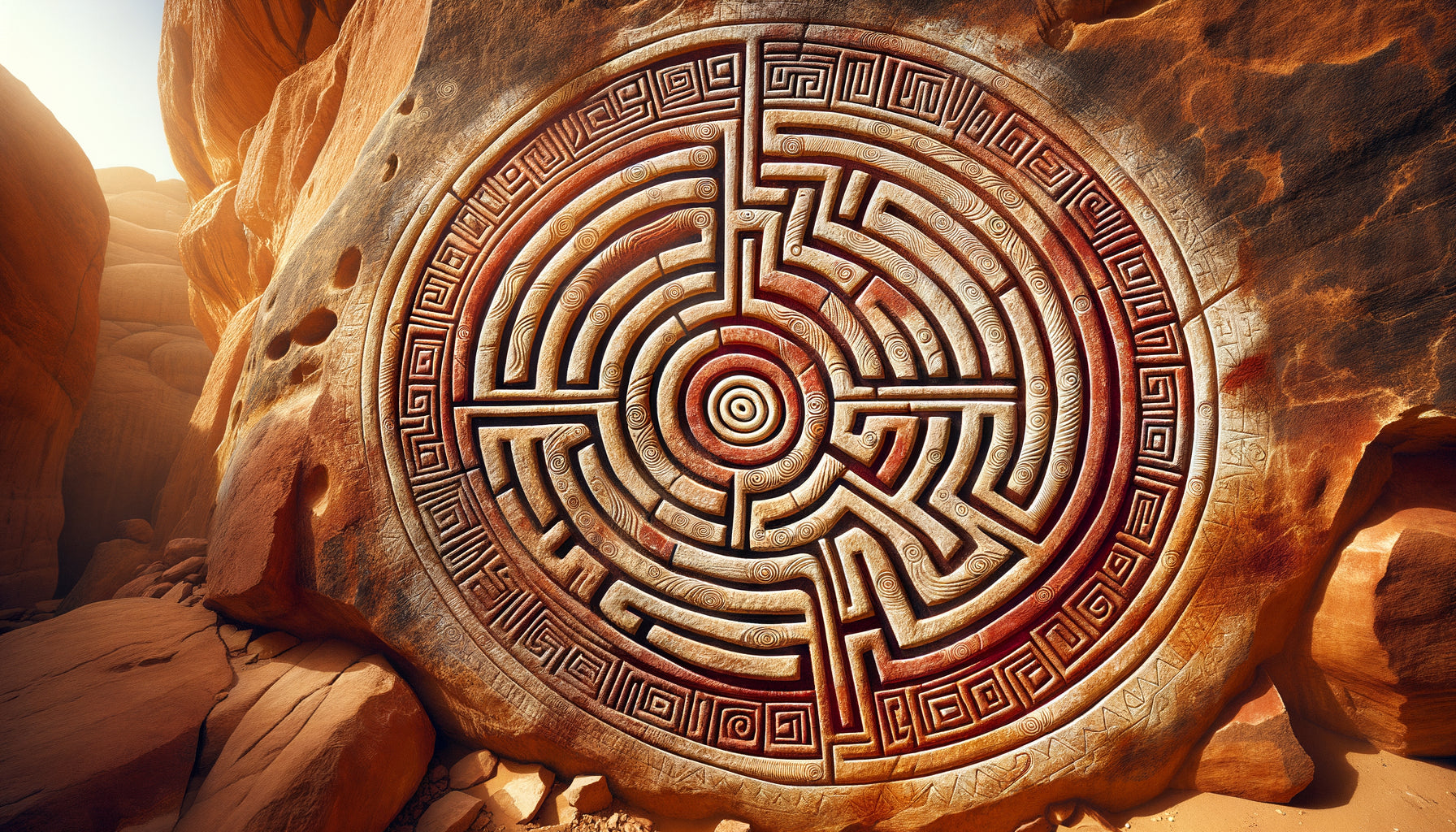
What immediately strikes you in the murals of the zawiyas, is the prevalence of geometric shapes. The Chleuh influences first manifest themselves through this radical abstraction. Where Arab-Muslim art develops stylized floral arabesques, Amazigh aesthetics favors the rhombus, triangle, zigzag and broken line.
The diamond: symbol of fertility and protection
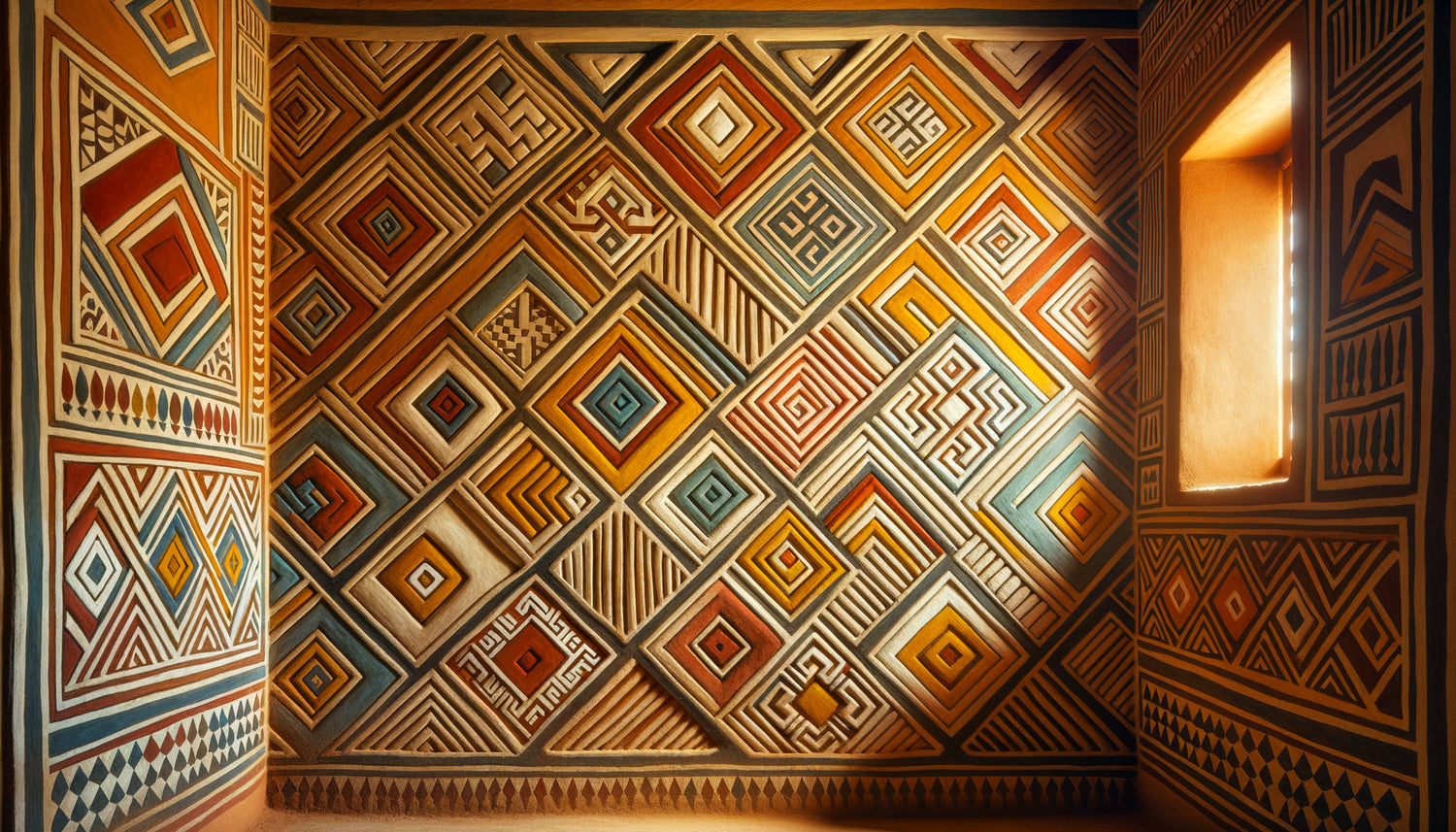
On the walls of the zaouïas of Tiznit, the diamond appears in repetitive compositions, often intertwined. In Chleuh cosmology, this motif represents the protective eye, femininity and fertility. Its presence in a Muslim religious space might seem paradoxical, but it is evidence of a cultural synthesis where ancestral Amazigh beliefs coexist with Sufi Islam.
I notably observed in the zaouïa Sidi Ahmed ou Moussa a continuous frieze of interlocking diamonds, painted in red ochre on a white background. This composition strangely recalls the traditional Chleuh tattoos of elderly women from the region, who bear the same symbols on their foreheads and cheeks.
Broken lines: representation of the spiritual path
Another signature of Amazigh influences: the zigzag lines that adorn door frames and prayer niches. These motifs, which the Chleuhs call taskiwin, symbolize the winding journey of the soul towards knowledge. Their presence in the zaouïas is therefore not insignificant – they visually materialize the spiritual quest.
These broken lines contrast with the fluid curves of Arabic calligraphy that sometimes accompanies the wall paintings. This juxtaposition creates a fascinating visual tension, where two aesthetic universes dialogue without blending.

The Chleuh color palette: between earth and spirituality
The colors of the wall paintings of the zaouïas in Tiznit tell a geological and cultural story. The omnipresent red ochre comes from the Souss clay soils. This warm hue evokes both the nourishing earth and vital blood – two central concepts in pre-Islamic Amazigh thought.
The lime white, obtained by calcination of local stones, symbolizes spiritual purity but also the blinding light of the nearby desert. Its application on the walls of the zaouïas creates a striking contrast with the ochre motifs, generating a particular luminosity that changes according to the time of day.
Rarely, we find indigo blue in some zaouïas. This precious color, imported at great expense, was reserved for desert men – the Tuaregs – and its parsimonious use in wall paintings is a testament to ancient trade contacts between settled Chleuhs and Saharan nomads.
When Sufism Meets the Amazigh Soul
Zaouïas are places of Sufi practice, this mystical dimension of Islam that favors direct experience of the divine. Sufi brotherhoods have largely settled in the Chleuh territory, finding fertile ground in a culture already marked by the cult of saints and the veneration of natural sacred places.
The wall paintings reflect this double belonging. The Chleuh geometric patterns structure the space, while verses from the Koran in calligraphy are inserted into the compositions. This coexistence is never conflictual – on the contrary, it creates a semantic richness where each tradition reinforces the other.
In the zaouïa of Sidi Abdallah Ben Yacoub, I photographed a mural panel where Amazigh lozenges frame the name of Allah in Kufic calligraphy. This layout reveals how Chleuh artisans integrated Islam without abandoning their ancestral visual vocabulary. The Chleuh influences are not a superficial veneer – they constitute the very structure of the artistic language.

Pictorial Techniques: Millennial Gestures Preserved
The creation of the wall paintings in the zaouïas of Tiznit follows technical protocols passed down from master to apprentice. Artisans begin by preparing the wall with several layers of tadelakt, this lime plaster polished with stone that makes the surface impermeable and slightly satin.
The pigments are ground by hand with water and a natural binder – usually skin glue or egg white. This artisanal preparation gives colors a depth and opacity impossible to achieve with industrial paints. The Chleuh influences also manifest in these technical know-how, inherited from a multi-millennial Berber tradition of earth construction.
Application is done with vegetable fiber brushes or directly with the finger for some repetitive motifs. I was lucky enough to observe an old maalem (master artisan) restoring a frieze in a zaouïa: his precise, almost ritualized gestures revealed a bodily memory of hundreds of generations of Chleuh artists.
Chleuh Influence Facing Modernity: Resistance or Adaptation?
Today, the wall paintings of the zaouïas of Tiznit face new challenges. The restoration of religious buildings sometimes uses modern techniques that threaten the authenticity of the decorations. I have seen zaouïas repainted with industrial acrylic paints that completely betray the original spirit.
Fortunately, an awareness is emerging. Local associations are working to document traditional patterns and train young artisans in ancient techniques. Moroccan Amazigh now proudly claims its Berber heritage, and the zaouïas of Tiznit are becoming symbols of this cultural renaissance.
These preservation efforts also interest interior designers and architects seeking authentic sources of inspiration. The Chleuh motifs of the zaouïas offer a refined formal repertoire, perfectly suited to contemporary aesthetics that value sobriety and cultural connection.
Let the Amazigh soul transform your interior
Discover our exclusive collection of African artworks that capture the essence of Berber traditions and bring authentic cultural depth to your living spaces.
Conclusion: when walls tell the identity of a people
The wall paintings of the zaouïas in Tiznit are not merely religious decorations. They constitute a living testimony to how the Chleuh Amazighs have managed to preserve their visual identity through historical upheavals. Each lozenge, each broken line, each shade of ochre tells the story of the cultural resistance of a people who refuse to dissolve into uniformity.
If you ever travel to the Souss, take the time to visit these discreet sanctuaries. Observe the walls carefully. You will read not only the history of Moroccan mystical Islam, but also that of a millennial Amazigh civilization that continues to speak its own aesthetic language. And perhaps, like me, you will return home with the desire to integrate these timeless motifs into your own living space – a way of prolonging the dialogue with this fascinating culture.
FAQ: Everything you need to know about the wall paintings of the zaouïas in Tiznit
Can you visit the zaouïas of Tiznit to see the wall paintings?
Yes, but with respect and caution. The zaouïas are active places of worship, not museums. Some accept visitors outside prayer times, provided they are accompanied by a local guide and wear decent clothing. Photography inside is generally prohibited without express permission. I recommend contacting the Tiznit tourist office, which can organize respectful visits with guides familiar with the appropriate protocols. The most suitable times are mid-morning or late afternoon. Remember that you are entering a sacred space – discretion and humility are essential. With these precautions taken, the visual and spiritual experience is unforgettable.
How to recognize Chleuh influences in the patterns of Zaouïas?
Chleuh influences can be distinguished by several visual characteristics. First, look for strict geometry: diamonds, triangles, broken zigzag lines rather than floral curves. The color palette is another indicator: dominance of red ochre, lime white and black, sometimes with touches of indigo blue. Unlike Arab decorations which fill the space densely, Chleuh aesthetics leaves the white background to breathe, creating a balance between empty and full. Also observe the modular repetition of patterns, arranged in horizontal friezes – this is an Amazigh signature. If you see these elements combined, you are facing authentic Chleuh influences. With a little visual training, these patterns become as readable as text.
Can I reproduce these Chleuh patterns in my interior decoration?
Absolutely, and it's even an excellent idea! The Chleuh patterns of Zaouïas offer a perfect source of inspiration for contemporary decoration with cultural depth. You can integrate them in several ways: by creating a stenciled mural frieze in a hallway, by choosing textiles (cushions, rugs) reproducing these geometries, or by ordering paintings inspired by these compositions. The advantage of Chleuh aesthetics is its sobriety – it integrates easily into modern minimalist interiors. Use the ochre-white-black palette to stay authentic, or dare colorful reinterpretations. The essential thing is to respect the geometric logic and symmetry characteristic of this art. These patterns instantly bring a narrative dimension and timeless elegance to any space.