Representation of traditional Berber architecture painting
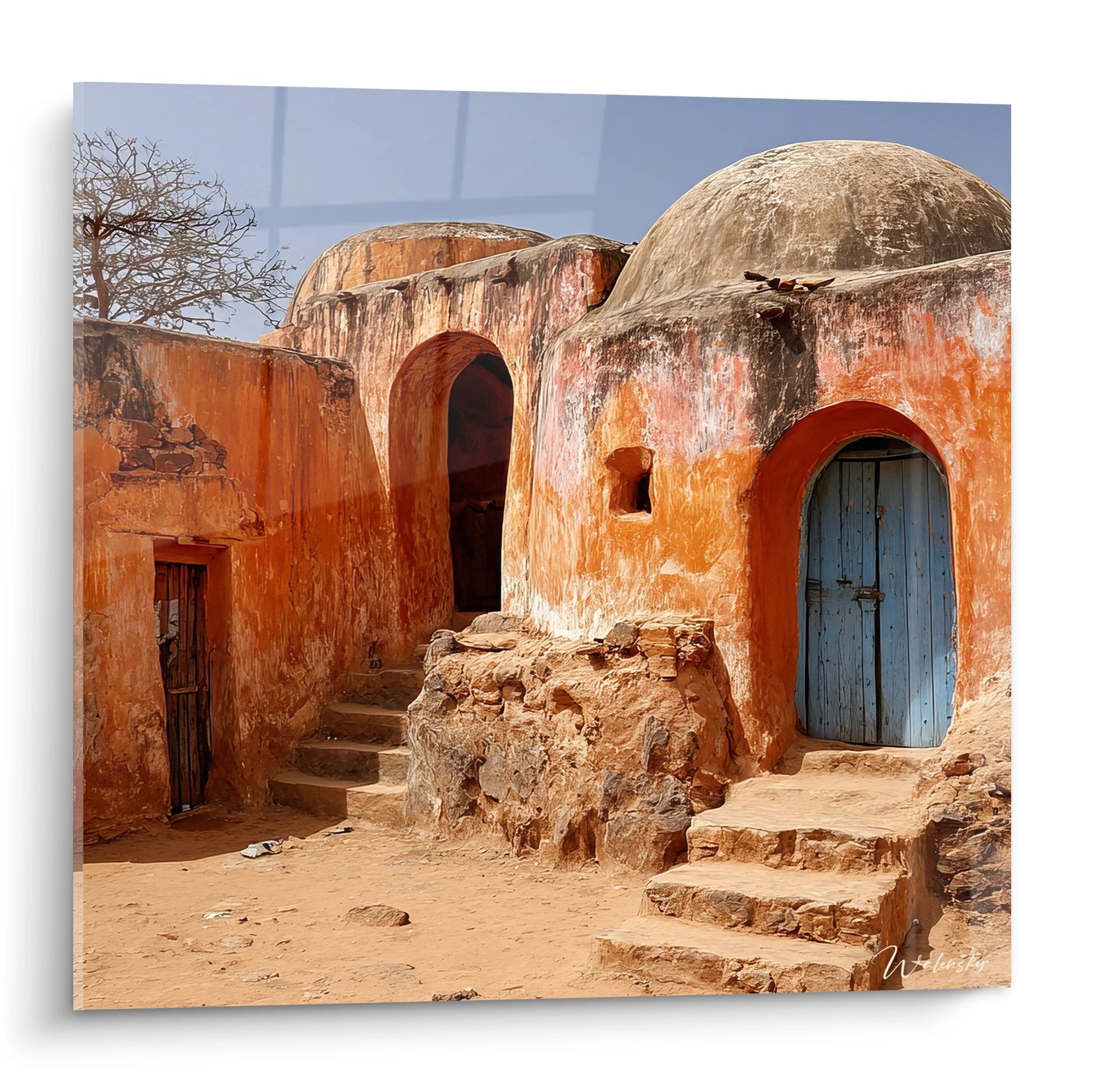
This African landscape wall painting captures the essence of traditional Tunisian architecture with striking authenticity. The image reveals a Berber village with characteristic domes, where ochre and terracotta tones dominate, telling the millennial history of this Maghreb region. The Tunisian troglodytic houses stand majestically under an azure sky, their rounded shapes perfectly embracing the surrounding arid landscape. In the foreground, a traditional blue door immediately catches the eye, creating striking chromatic contrast with the time-worn walls. The raw earth domes testify to ancestral know-how, while the stairs carved into red rock lead to mysterious vaulted passages. The authentic African wall art shines through every detail of this composition, from the rough textures of the walls to the deep shadows that sculpt the architecture. A bare tree stands to the left of the composition, a symbol of resilience in the face of extreme climatic conditions. This North African wall decoration will transform your space into a window open onto the wonders of Maghreb architectural heritage, bringing warmth and authenticity to your interior.
Symbolism and color palette
The chromatic palette of this African architecture painting draws from the emblematic colors of the Tunisian Sahel. Ochre and Sienna earth tones evoke the nourishing earth and ancestral connection between humans and their environment. The intense blue of the door symbolizes spiritual protection and Berber hospitality, a sacred color that wards off the evil eye according to local traditions. This Maghreb artwork conveys values of architectural harmony and sustainability, where each structural element respects climatic constraints while creating comfortable living spaces.
References and similar works
This representation is part of the legacy of great Orientalist painters such as Étienne Dinet and Alphonse-Étienne Dinet, who immortalized the Maghreb landscapes in the early twentieth century. The work also recalls the documentary photographs of vernacular architecture by Hassan Fathy, pioneer of architecture for the poor. The troglodytic villages of Matmata and the ksour of southern Tunisia are the direct references of this composition, testifying to a unique architectural heritage recognized by UNESCO. This documentary approach is similar to contemporary work on the preservation of traditional Maghreb housing.
Tags: Berber architecture, Tunisian village, ochre domes, Maghreb art, African decoration