


Realistic Paralympic Wall Art
Our Paralympic Painting Realistic collection celebrates the beauty and power of para-athletes. Each realistic paralympic artwork authentically captures the emotion, self-improvement and determination that characterize these exceptional champions. These artistic creations pay homage to human strength and the universal sporting spirit. Perfect for inspiring spaces, these paralympic athlete paintings bring a unique emotional dimension to your interior decoration.
 Paralympic Archer Painting - The Art of Precision - Paralympic Edition273,90 €
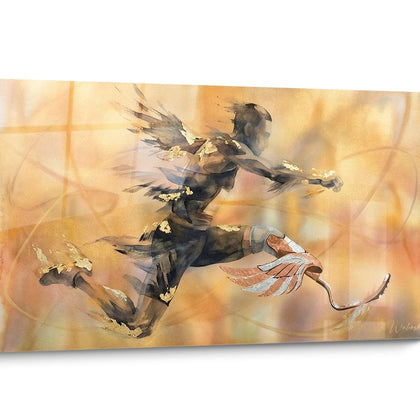
 Prosthetic Paralympic Artwork - Transmission and Courage - Paralympic Edition228,90 €
 Adapted Archery Artwork - Paralympic Excellence - Paralympic Edition228,90 €
 Prosthetic Hands Artwork - Strength and Determination - Paralympic Edition228,90 €
Explore further
In Realistic Paralympic Wall Art


All about Realistic Paralympic Wall Art
- Realistic Paralympic Wall Art Presentation
- Authentic Sports Representation
- Symbolism and Inclusion
- Visual Impact and Engagement
A realistic Paralympic wall art captures the essence of adapted sports performances with exceptional photographic fidelity. These large-format wall creations celebrate the athletic excellence of athletes with disabilities through detailed and respectful representation. Every visual element testifies to the determination, physical power, and self-transcendence that characterize international Paralympic competitions. The realistic approach guarantees a faithful reproduction of facial expressions, muscular tensions, and emotional intensity unique to these exceptional sporting moments.
Anatomical Accuracy and Gesture in Paralympic Representation
A realistic Paralympic wall art stands out for its ability to precisely reproduce the anatomical and gestural specificities of Paralympic athletes. This technical precision requires a thorough understanding of adapted postures, specialized sports equipment, and movements specific to each Paralympic discipline. The faithful representation of a manual wheelchair basketball player thus requires capturing the exact angle of the torso, the developed musculature of the upper limbs, and the coordination between wheelchair handling and ball control.
How does realism capture the technical details of Paralympic equipment?
High-performance sports prosthetics, racing wheelchairs with inclined wheels, or carbon blades used in Paralympic athletics are complex technical elements. Realistic rendering requires particular attention to metallic reflections, composite textures, and fastening systems that characterize this cutting-edge equipment. This visual fidelity allows appreciation of the technological innovation that accompanies adapted sports performances, transforming each realistic Paralympic sports representation into a testament to biomechanical progress.
Capturing expressions of effort and concentration
The emotional intensity of a Paralympic athlete during a decisive event is visible in every micro-expression. A large realistic wall art captures these minute details: drops of perspiration, facial muscle contractions, the determined gaze fixed on the finish line. This documentary approach transforms the work into a visual archive of moments of sporting glory, offering immediate emotional connection with the viewer. Variations in skin tone reflecting cardiovascular effort, prominent veins testifying to the power deployed—all these elements contribute to an authentic Paralympic visual immersion.
The competitive environment and its atmospheric particularities
A realistic Paralympic setting incorporates contextual elements of major international competitions: specific stadium lighting, regulatory floor markings, the subtle presence of judges and timekeepers. This contextualization reinforces the authenticity of the represented scene. Light reflections on metallic equipment surfaces, shadows projected according to competition time, depth of field creating hierarchy between the main athlete and background constitute numerous technical elements. For complementary color ambiance, a blue Paralympic wall art can create interesting visual contrast in the same space.
The Inclusive and Social Dimension of Realistic Paralympic Wall Art
Beyond sporting achievement, a realistic Paralympic wall art functions as a vector for transforming social perceptions about disability. This educational function relies on realism's ability to present athletic excellence in all its forms without filter or idealization. By visually valuing capabilities rather than limitations, these large-format wall representations contribute to normalizing disability presence in public and private spaces, particularly in environments dedicated to sports and physical education.
What social messages does realistic Paralympic representation convey?
The apparent neutrality of photographic realism eliminates any condescension or pity in the representation of Paralympic athletes. This documentary approach treats athletes with disabilities exactly like their able-bodied counterparts: as elite athletes deserving recognition and admiration. A large-scale realistic Paralympic visual in a sports center or training facility sends a powerful inclusion message, demonstrating concretely that physical excellence transcends bodily differences. This daily visual presence promotes natural awareness-raising without moralizing discourse.
Motivational impact on diverse audiences
For people with disabilities practicing adapted sports, a realistic Paralympic wall art functions as a source of direct identification and inspiration. Photographic fidelity enables immediate personal projection: recognizing one's own practice, equipment, and challenges in the wall representation. For able-bodied audiences, particularly young athletes, these visuals broaden the very definition of sporting performance. Authentic Paralympic wall decoration in educational or sports facilities normalizes bodily diversity as a natural component of contemporary athletic landscape.
Celebrating the diversity of Paralympic disciplines
The Paralympic repertoire includes specific disciplines like goalball, boccia, or wheelchair rugby, often unknown to the general public. Realistic wall art dedicated to these less-publicized sports fulfills important educational function by visually documenting their rules, equipment, and characteristic technical gestures. This diversification of sports wall representation enriches collective visual culture, offering alternatives to conventional sports iconography. Specialized institutions, rehabilitation centers, and adapted sports associations find in these large-format realistic Paralympic wall artworks pertinent visual supports for their common spaces.
Integration Strategies and Spatial Enhancement of Realistic Paralympic Wall Art
Installing a realistic Paralympic wall art of large dimensions requires specific spatial consideration to maximize its visual impact and inclusive message. The monumental formats characteristic of these creations require clear spaces where viewing distance allows appreciation of realistic detail fineness. High-traffic environments like sports facility reception halls, specialized school corridors, or medical center waiting areas constitute strategic locations where prolonged visual exposure time promotes message assimilation.
Why prioritize circulation zones for realistic Paralympic wall art?
Transition and passage spaces naturally generate visual micro-pauses during which the gaze explores wall surfaces. A large realistic Paralympic wall art installed in these zones benefits from a captive yet mobile audience, ideal for dynamic compositions capturing sports action. Daily repetition of visual exposure progressively reinforces familiarity with represented Paralympic disciplines, gradually transforming collective perception. This installation strategy differs radically from traditional contemplative spaces, privileging inclusive message integration into daily life rather than its aesthetic distancing.
Association with functional sports and therapeutic spaces
Physical therapy rooms, adapted gyms, and Paralympic training centers constitute environments where large-format realistic wall art resonates with daily activity. This functional concordance creates visual continuity between artistic representation and concrete practice, reinforcing the legitimacy of both. An athlete training under the gaze of a monumental representation of their discipline establishes direct motivational connection. Realistic Paralympic wall visuals in these contexts transcend mere decorative function to become integral components of the performative environment.
How does photographic realism influence spatial perception?
Technical precision of realistic rendering creates illusory depth of field that visually modifies space proportions. A narrow corridor accommodating wall art showing an athlete in full action generates sensation of openness and dynamism, counterbalancing architectural compression. This perceptual manipulation works particularly well in institutional facilities with marked spatial constraints. Facilities welcoming people with disabilities can transform functional spaces into motivational galleries through these large-scale authentic Paralympic wall representations.
Frequently asked questions about realistic Paralympic wall art
Which Paralympic discipline to choose for impactful realistic wall art?
The choice of represented discipline should reflect either the activities practiced in the installation environment or aim at diversifying sports representations. Paralympic athletics with carbon blades offers spectacular aesthetics, while wheelchair team sports allow dynamic multi-character compositions. Lesser-publicized sports like Paralympic swimming or adapted fencing provide additional educational value by visually documenting unknown disciplines.
Is realistic Paralympic wall art suitable for private residential spaces?
Absolutely, particularly for families with a member practicing adapted sports or for enthusiasts of exceptional sporting performances. In private space, monumental format transforms an ordinary wall into a powerful visual statement about inclusion and self-transcendence values. The realistic approach guarantees harmonious integration into contemporary interiors, avoiding overly marked graphic codes that could limit decorative possibilities.
How does realistic Paralympic wall art evolve with sports technology advances?
Paralympic equipment evolves rapidly thanks to biomechanical and material innovations. Realistic wall art capturing current technologies thus constitutes a dated testimony of a specific era in adapted sports. This archival dimension adds documentary value to the work, allowing concrete visualization of Paralympic performance evolution across equipment generations. The represented prosthetics and wheelchairs become precise temporal markers, enriching the historical reading of the work.


