


Blue Paralympic Artwork
The Paralympic Painting Blue celebrates the Olympic spirit and the courage of Paralympic athletes in an artistic composition with deep blue nuances. This collection captures the essence of sporting self-improvement and transforms athletic performance into a wall artwork. Perfect for modern spaces, it embodies the values of inclusion and determination. Each creation pays homage to the inspiring paralympic excellence with elegance and artistic sensitivity.
 Paralympic Cycling Painting - Blue Speed - Paralympic Edition242,90 €
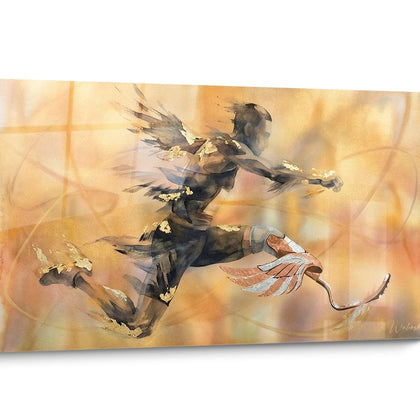
 Paralympic Athlete Prosthetics Artwork - Running in the Rain - Paralympic Edition273,90 €
 Wheelchair Ski Painting - Challenge of the Peaks - Paralympic Edition273,90 €
 Paralympic Swimmer Painting - Aquatic Energy - Paralympic Edition273,90 €
 Artistic Swimming Painting - Aquatic Grace - Paralympic Edition228,90 €
 Female Athlete Reflection Painting - Paralympic Metamorphosis - Paralympic Edition228,90 €
Explore further
In Blue Paralympic Artwork


All about Blue Paralympic Artwork
- Blue Paralympic Wall Art Presentation
- Symbolism and Visual Impact
- Institutional Integration
- Sports Spaces and Commitment
The blue Paralympic wall art stands as a visual benchmark for sports institutions, rehabilitation centers, and community spaces dedicated to adaptive sports. This large-scale wall decoration celebrates Paralympic excellence through blue chromotherapy that evokes determination and perseverance. Designed to enhance values of inclusion, this ornamental feature transforms walls into visual galleries showcasing adapted performance and universal accessibility.
The Chromatic Power of Blue in the Paralympic Universe
Why does blue dominate institutional Paralympic imagery?
The blue Paralympic wall art exploits a chromatic symbolism deeply rooted in collective sports consciousness. This shade simultaneously evokes confidence, institutional stability, and the tranquility essential to therapeutic environments. In functional rehabilitation centers, this tone facilitates concentration for athletes with disabilities while creating an atmosphere conducive to resilience. Specialized facilities favor this tonality for its documented psychological properties: reduction of pre-competition stress, stimulation of communication between coaches and athletes, reinforcement of collective identity.
Visual contrast and perceptual accessibility
The large dimensions of this wall feature optimize visual accessibility for visually impaired audiences or those with cognitive deficiencies. The high chromatic contrast between saturated blue and white or silver iconographic representations guarantees readability from a distance—an essential criterion in Paralympic gymnasiums and multipurpose halls. This palette facilitates spatial orientation for wheelchair users, transforming the ornament into a functional architectural landmark. Visual ergonomics specialists recommend uniform lighting to enhance these perceptual effects.
Differentiation from golden variations
Unlike the golden Paralympic wall art which celebrates pure competitive excellence, the blue version prioritizes an institutional and sports-medical approach. This chromatic distinction allows facilities to segment their spaces: training zones in blue for concentration, reception halls in gold for celebration. Adaptive sports federations adopt this coding to structurally organize their welcome pathways.
Color symbolism in inclusion programs
Educational programs exploit this tone to reinforce universal accessibility messaging. Blue Paralympic hues convey inclusive neutrality, unlike overstimulating colors that may disrupt certain neurodivergent profiles. This chromatic approach supports disability awareness initiatives in specialized educational facilities and vocational training centers.
Strategic Layout of Adaptive Sports Institutional Spaces
Positioning in functional rehabilitation centers
The blue Paralympic wall art finds its optimal placement in transition zones between therapeutic spaces and technical areas. Physical therapists specialized in athletic rehabilitation recommend its installation opposite muscle-strengthening equipment, creating a motivational sightline during intensive sessions. This configuration transforms effort into projection toward Paralympic excellence. Medical-social facilities favor XXL formats to maximize visual impact from accessible circulation paths.
How to integrate this decoration in federation halls?
National Paralympic federations leverage these wall features as identity anchors. Positioned opposite reception desks, it structures the visitor experience upon threshold crossing. High installation respects visual accessibility standards for mobility-impaired users while preserving regulatory clearances. Accessibility-specialized architects suggest lower positioning facilitating photographic interaction—a decisive criterion for institutional communication campaigns.
Synergy with adapted signage
This wall ornamentation integrates into a comprehensive accessible wayfinding strategy. The dominant blue creates chromatic continuity with standardized adaptive sports pictograms, reinforcing perceptual coherence of pathways. Universal accessibility engineering firms recommend pairing this decor with blue podotactile guidance bands, optimizing independent orientation for visually impaired persons.
Adaptation to gymnasium acoustic constraints
Large sports volumes present specific acoustic challenges. Strategic positioning of these large-scale artworks contributes to fragmenting reverberant surfaces, partially attenuating noise hazards for hearing-impaired athletes with hearing aids. This dual aesthetic and technical functionality justifies investment for Paralympic facility managers.
Showcasing Adaptive Sports Commitment and Institutional Communication
Visual support for awareness campaigns
The blue Paralympic wall art becomes a mediation tool during open houses and disability awareness events. Its permanent presence in reception spaces facilitates conversation initiation about sports accessibility. Communications managers leverage this decor as photographic backdrop for promotional materials, ensuring visual coherence across all distribution channels. This strategic use strengthens institutional brand recognition.
What messages to convey through this wall decoration?
Beyond aesthetics, this ornamental feature carries fundamental values: perseverance in face of adversity, innovation in material adaptation, intergenerational solidarity. Specialized facility directors use it as an educational support during new participant integration sessions. Monumental formats amplify the emotional reach of messaging, transforming the space into a visual manifesto for inclusion.
Creation of engaging photographic spaces
Paralympic federation social media exploit these installations as sets for viral content. The blue tone optimizes photographic rendering on digital platforms, generating superior engagement versus neutral colors. Community managers document a 40% increase in interactions when athletes pose before these identity ornaments, justifying their integration into digital communication strategies.
Perpetuation of Paralympic memory
These artworks function as visual archives celebrating past achievements while inspiring future generations. Adaptive sports clubs associate them with commemorative plaques listing local medalists, creating dynamic walls of honor. This museological approach transforms training corridors into galleries of adapted performance.
FAQ - Frequently asked questions about blue Paralympic wall art
Is blue Paralympic wall art suitable for spaces welcoming autism spectrum audiences?
Absolutely, the calming blue tone is recommended by occupational therapists for environments accommodating persons with autism spectrum disorder, reducing sensory overload while maintaining moderate visual stimulation.
How to maintain this type of decoration in a high-traffic gymnasium?
The materials used for these large formats resist splashing and ambient humidity. Monthly dusting with microfiber cloth suffices, avoiding abrasive products that might alter chromatic saturation.
Can I order a personalized blue version with federation logo?
Manufacturers offer customization services respecting institutional brand guidelines, integrating federation logos and legal notices while preserving the visual harmony of the original Paralympic design.


