


Minimalist Zen Stone Stacking Wall Art
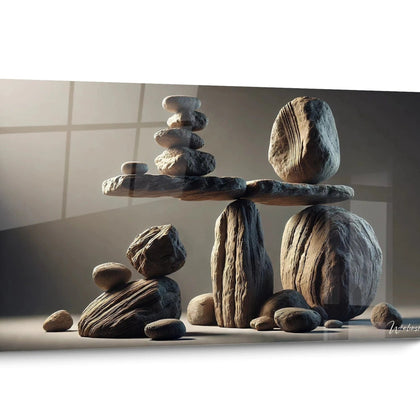
The Minimalist Zen Artwork> Pebbles embodies the essence of contemporary serenity. This collection celebrates the perfect balance> between simplicity and elegance, inspired by the ancestral art of the Japanese garden. Each work captures the natural beauty of stacked stones, symbols of harmony and meditation. Ideal for transforming your interior into a haven of peace, our wall decoration zen pebbles> blends perfectly into uncluttered spaces. Bring a touch of Japanese minimalist serenity to your living room, bedroom or office.
 Ephemeral Stability Wall Art - Zen Feng Shui Edition273,90 €
 Balance Pastel Wall Art - Zen Edition273,90 €
 Calm Abstract Painting - Zen Edition273,90 €
Explore further
In Minimalist Zen Stone Stacking Wall Art
All about Minimalist Zen Stone Stacking Wall Art
- Minimalist Zen Stone Wall Art Presentation
- Meditation Spaces
- Balance & Serenity
- Calming Décor
A minimalist zen stone wall art embodies the philosophy of visual simplification and silent contemplation. This artistic representation of stacked pebbles transcends mere wall decoration to become a genuine support for daily meditative practice. Photographic compositions of naturally arranged stones instantly evoke the principles of Japanese wabi-sabi and mindfulness. Each visual element — smooth texture of water-polished rocks, subtle gradations of grey and beige, precarious balance of stacks — contributes to creating an atmosphere conducive to mental anchoring. This type of large-format visual integrates naturally into spaces dedicated to wellness, yoga studios, therapy rooms, or bedrooms seeking a resolutely calming ambiance.
Minimalist Zen Stone Wall Art in Contemplative Practice Spaces
Integrating a minimalist zen stone wall art into a meditation space radically transforms the practice experience. Large-format representations of rock stacks serve as visual focal points during conscious breathing exercises and visualization. Compositional simplicity — a few carefully balanced stones against neutral background — facilitates mental concentration without excessively stimulating the visual cortex.
How do stacked pebbles promote mental anchoring?
Photographed cairns in high resolution offer a powerful visual metaphor for the inner balance sought during contemplative sessions. Each stone symbolically represents a layer of consciousness, a dimension of being to harmonize. Monumental formats allow appreciation of micro-geological textures, subtle chromatic nuances between whitish limestone and anthracite basalt, creating visual depth conducive to meditative immersion. In practice studios, positioning this imagery facing the meditation cushion establishes silent dialogue between practitioner and natural elements.
Adapting the therapeutic environment to recentering needs
Soft therapy professionals favor these mineral representations for their emotional neutrality and capacity to induce physiological calm. Unlike dynamic or colored visuals, minimalist zen stone wall art reduces sympathetic nervous system activation. Sophrology, hypnosis, and guided relaxation therapists report that clients enter alpha state more rapidly when their gaze rests on these simplified compositions. The visual presence of minimalist zen wall art creates overall aesthetic coherence that reinforces the therapeutic intention of the space.
Optimizing yoga rooms for concentration
In postural practices like Hatha or Yin yoga, maintaining stable gaze during prolonged asanas constitutes a technical challenge. A large format representing balanced pebbles offers a perfectly adapted drishti (focus point): interesting enough to capture attention, sober enough not to distract. Instructors note significant improvement in student stability during balance poses like Vrksasana or Natarajasana when such imagery structurally frames the practice space.
Symbolism of Balance and Compositional Principles of Stones
The evocative power of minimalist zen stone wall art lies in its capacity to visually materialize abstract philosophical concepts. Precarious stacking of natural stones instantly communicates notions of harmony, patience, and impermanence dear to Eastern contemplative traditions. These photographic compositions capture a suspended moment where gravitational forces and irregular surfaces momentarily find agreement — visual metaphor for delicate equilibriums we seek in our modern existences.
What cultural meanings do stone stacks carry?
Cairns and inuksuks traverse multiple traditions: Tibetan ritual markers, Celtic path markers, Shinto altars. Large-format minimalist zen stone wall art updates these ancestral practices within contemporary domestic contexts. Each superimposed stone evokes an existential layer — physical body, emotions, mind, spiritual consciousness — inviting multi-layered symbolic reading. Natural tones (slate grey, sandy ochre, chalky white) reinforce geological authenticity and connection to primary elements: earth, water that polished these surfaces, air in the interstices.
Minimalist visual composition principles
The contemplative efficacy of these representations stems directly from radical compositional choices. Emptiness strategically occupies 60 to 70% of the surface, creating essential breathing space around the central subject. Photographers specialized in this aesthetic rigorously apply the rule of thirds and favor uniform backgrounds (sand, still water, mist) that amplify the presence effect of pebbles. Vertical formats emphasize spiritual ascension suggested by stacking, while horizontal formats evoke terrestrial stability more.
Chromatic interactions and sensory perception
The restricted palette characteristic of minimalist zen stone wall art — dominant neutral tones within close value ranges — produces scientifically measurable calming effect. Monochromatic nuances reduce visual cognitive load, allowing the eye to rest rather than flit between contrasted color stimuli. This chromatic sobriety naturally harmonizes with contemporary interiors favoring raw materials (polished concrete, natural linen, whitewashed wood) and facilitates integration into already visually simplified spaces without creating decorative tension.
Decorative Integration and Calming Residential Atmospheres
Beyond its symbolic dimension, minimalist zen stone wall art addresses precise decorative objectives in contemporary homes. Residences favoring slow living aesthetics, Scandinavian interiors, or hygge-inspired layouts find in these mineral representations coherent visual grounding. Available format scale allows structuring entire walls without resorting to multiplying decorative elements, cardinal principle of inhabited minimalism.
Master bedrooms and rest sanctuaries
Sleep spaces particularly benefit from installing calming imagery promoting mental disconnection. Large format representing balanced pebbles facing the bed creates soft focal point accompanying the transition to nocturnal rest. Unlike narrative or figurative visuals stimulating brain activity, these geometric abstract compositions facilitate brain wave slowdown. Interior designers specialized in environmental psychology systematically recommend these themes for adult bedrooms facing insomnia or professional stress.
Which living spaces benefit most from this mineral aesthetic?
Spacious bathrooms, conceived as domestic spas, constitute privileged placement. Visual association between water present in the room and water-polished pebbles reinforces thematic coherence. Medical offices, particularly dentistry or cosmetic surgery where patient anxiety requires environmental management, massively adopt this iconography for its demonstrated anxiolytic power. Residential open-spaces use these monumental formats as subtle visual separators, delimiting living area from dining space without physical partitioning.
Decorative associations and material complementarities
The decorative efficacy of minimalist zen stone wall art amplifies through thoughtful material associations. Dialogue between photographic image and tangible elements — actual pebbles arranged in horizontal composition, interior fountains, graphic foliage plants like bamboo or sansevieria — creates sensory continuity between representation and physical presence. Natural textiles (wrinkled linen, bouclé wool, loosely woven cotton) extend the tactile dimension suggested by photographed mineral textures. Indirect lighting, avoiding direct reflections on surface, preserves legibility of subtle nuances and depth of deep blacks.
Visual durability and aesthetic timelessness
Unlike ephemeral decorative trends, mineral aesthetics transcend fashion effects. Minimalist zen stone wall art retains visual relevance independent of stylistic evolutions, guaranteeing lasting decorative investment. This aesthetic permanence stems from anchoring in universal visual archetypes — verticality, balance, minerality — present in all human cultures. Contemporary photography collectors particularly appreciate these pieces for their capacity to dialogue harmoniously with works of varied registers without creating visual dissonance.
Does minimalist zen stone wall art suit small spaces?
Paradoxically, large formats function remarkably in reduced surfaces. A single monumental visual creates amplitude impression superior to multiple fragmented small elements. The immersion effect compensates metric constraint by offering contemplative window that psychologically enlarges perceived space.
How to maintain the visual quality of minimalist zen stone wall art?
High-definition photographic prints on rigid supports simply require regular dusting with dry microfiber. Avoid direct solar exposure which could alter subtle grey nuances. Positioning perpendicular to windows preserves chromatic saturation long-term while benefiting from flattering indirect natural light.
Can minimalist zen stone wall art be combined with other decorative themes?
The thematic neutrality of these compositions allows wide associations: luxuriant vegetation for organic contrast, architectural geometry for abstract continuity, black-and-white portraits for eclectic wall gallery. The key lies in respecting coherent chromatic palette and balancing visual masses to avoid perceptual overload.


