


Minimalist White Zen Wall Art
The Minimalist White Zen Wall Art embodies the very essence of serenity and contemporary refinement. This collection celebrates the purity of clean lines and the timeless elegance of minimalist zen décor. Each creation captures the perfect harmony between emptiness and fullness, inviting contemplation and tranquility. Ideal for transforming your space into a haven of peace, these works elevate modern interiors with grace and subtlety. Explore our white minimalist art collection and let yourself be inspired by the beauty of artistic simplicity.
 Lotus Painting Pure Grace - lotus flower edition213,90 €
 Lotus Flower Eternal Grace Painting - Lotus Flower Edition233,90 €
 Sacred Purity Wall Art - Zen Lotus Flower Edition233,90 €
 Meditative Journey Artwork - Various Zen Edition233,90 €
 Minimalist Harmony Wall Art - Zen Edition233,90 €
 Blue Poetry Wall Art - Zen Edition233,90 €
Explore further
In Minimalist White Zen Wall Art
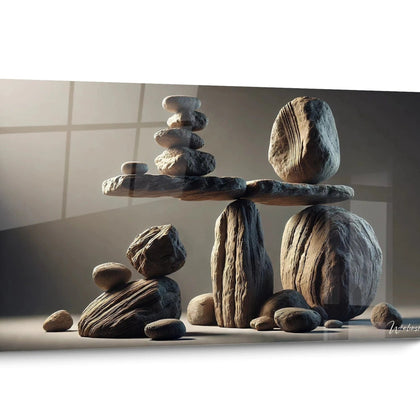
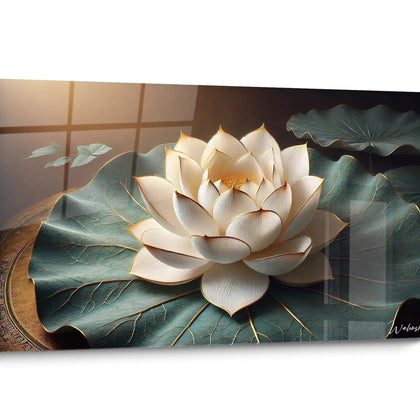
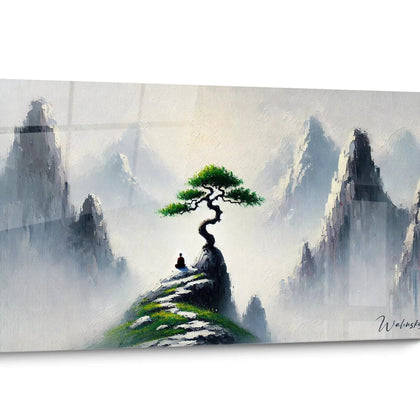
All about Minimalist White Zen Wall Art
- White Zen Canvas Presentation
- Refined Chromatic Harmony
- Spatial Amplification
- Visual Meditation
The minimalist white zen canvas represents the very essence of contemporary visual serenity. This large-scale wall creation embodies the philosophy of Western wabi-sabi, where immaculate whiteness becomes the vector of profound tranquility. Unlike colorful compositions, this format privileges chromatic purity to create spaces of mental breathing in overcrowded interiors. Refined lines and subtle textures in off-white, ivory or lunar white transform every glance into a moment of contemplation. Suited to generous spaces, this wall support develops a soothing presence that regulates the emotional intensity of modern environments while maintaining timeless elegance.
The Art of Meditative Whiteness in Contemporary Decoration
The psychology of contemplative white spaces
The minimalist white zen canvas acts as an emotional regulator in domestic and professional environments. Neuroscience demonstrates that monochromatic whiteness reduces excessive cortical stimulation, promoting a mental calm state comparable to that obtained through guided meditation. This chromatic neutrality allows the nervous system to switch to parasympathetic mode, essential for countering chronic stress from urban rhythms.
Compositions in pure or slightly nuanced white create visual decompression zones particularly effective in open living spaces. Unlike colorful artworks that constantly solicit attention, these wall creations establish a silent dialogue with the observer. Subtle textural variations – velvety matte, soft satin, slightly glossy – generate contemplative depth without ever breaking the soothing harmony.
Can a white zen canvas be integrated into already neutral décor?
Integrating a minimalist white zen canvas into an already refined interior requires a strategic approach based on micro-tonal variations. A space dominated by beige, pearl gray or off-white benefits from a pure white artwork that creates a luminous focal point without abrupt disruption. The key lies in exploiting subtle contrasts: a slightly textured surface captures light differently throughout the day, creating discrete yet perceptible animation.
For Scandinavian, japandi or hygge interiors, this wall format amplifies the less-is-more philosophy. The recommended large size – generally 120x80 cm minimum – allows visual structuring of the space without weighing down the atmosphere. Refined geometric compositions, fluid organic tracings or vaporous white-on-white abstractions develop visual sophistication accessible only to attentive eyes, creating an evolving decorative experience.
White finishes adapted to luminous environments
In rooms bathed in natural light, choosing the finish of a white zen canvas becomes determining. Matte surfaces absorb ambient luminosity to create a soft, velvety presence, ideal for south-facing spaces where glare can become aggressive. Conversely, slightly satin finishes play with changing reflections, transforming the artwork into an emotional sundial that evolves with hours and seasons.
For lovers of minimalist white zen canvas, whiteness becomes a terrain for sensory exploration where infinitesimal tonal variations – titanium white, warm white, bluish white – create radically different atmospheres. Large wall formats exploit these nuances to generate visual serenity fields particularly sought after in master bedrooms, domestic yoga spaces or offices requiring deep concentration without excessive stimulation.
Perceptual Amplification of Volumes by Contemplative White
How does a white canvas actually enlarge space?
The minimalist white zen canvas in large size functions as a spatial amplifier in constrained architectural configurations. Contrary to popular belief, it's not solely the white color that enlarges, but the strategic combination between reflective surface, absence of brutal contrast and refined composition. A 150x100 cm format positioned on a strategic wall creates a fictional visual window that psychologically pushes back the perceived boundaries of the room.
Minimalist white compositions exploit the optical principle of continuation: the eye naturally extends refined lines and fluid forms beyond the physical frame of the support. This mental extension generates a measurable sensation of additional space through spatial perception tests. In urban apartments with reduced surfaces, this effect becomes a major decorative asset, transforming a dimensional constraint into a contemplative opportunity.
The luminous mirror effect in dark spaces
For north-facing rooms or naturally dimly lit spaces, the large white zen canvas functions as a passive light reflector. White surfaces return up to 80% of received luminosity, creating a secondary clarity source that partially compensates for natural sunlight deficiency. This technical function combines with the meditative dimension to offer a particularly relevant decorative solution in converted basements, studios or living spaces without direct windows.
Layered white abstract compositions – superposition of slightly different nuances – capture and diffuse artificial light with remarkable efficiency. Warm white indirect LED lighting creates subtle halos that transform the artwork into a soft luminous source, perfect for twilight atmospheres. This interaction between white material and photons generates an enveloping atmosphere conducive to cognitive relaxation after stimulating days.
Positioning strategies to maximize spatial impact
Installing a minimalist white zen canvas follows specific spatial logic. In narrow corridors, a horizontal elongated format (160x60 cm) positioned along the circulation axis creates forced perspective that visually lengthens the passage. For square spaces perceived as boxy, a vertical format (100x150 cm) elevates the gaze and generates amplified ceiling height sensation.
White compositions particularly benefit from positioning opposite a natural light source. Placed on the wall opposite a window, the wall support captures and redistributes morning or evening glancing light, creating changing texture effects that subtly animate the space. This strategy transforms the artwork into an active architectural element rather than simple passive decorative ornament.
Visual Meditation and Mental Soothing Through White Aesthetics
White as support for daily contemplative practice
The minimalist white zen canvas is part of a mindfulness approach applied to domestic environment. Meditation practitioners use these refined surfaces as focal points for visual concentration exercises, alternative to colorful mandalas or traditional candles. Chromatic neutrality eliminates parasitic emotional associations, allowing more direct entry into profound meditative state.
Simple geometric compositions – perfect circle, single horizontal line, centered square – offer stabilizing mental structures for conscious breathing exercises. The fixed gaze on these white forms triggers neuronal synchronization process comparable to that observed in traditional zen practices. For spaces dedicated to yoga, morning stretches or post-work decompression rituals, this wall support becomes a silent yet effective partner.
Reducing mental load through simplified visual environment
In contemporary interiors saturated with objects, screens and competing visual stimuli, the large white zen canvas creates an oasis of cognitive simplicity. Environmental psychology research demonstrates that visually cluttered spaces increase cortisol and reduce concentration capacity. Conversely, a large-format white wall surface generates active emptiness that rests the over-solicited attention system.
This visual refinement proves particularly beneficial in bedrooms where sleep quality depends directly on pre-sleep calming. A 140x100 cm format facing the bed advantageously replaces figurative or colorful compositions that maintain the brain in analytical mode. Immaculate whiteness signals to the nervous system that the environment is safe and threat-free, thus facilitating the transition to slow brainwaves characteristic of deep rest.
Which white textures most promote visual relaxation?
White surfaces are not equivalent in their capacity to induce relaxation. Slightly irregular organic textures – watercolor effect, delicate wrinkled, subtle grain – create visual tactile depth that invites gaze rest. Conversely, perfectly smooth and uniform whites can generate tension through excess perfection, particularly in large formats where the eye instinctively seeks variations.
For a minimalist white zen canvas intended for everyday living spaces, slightly textured finishes offer the best compromise between aesthetic purity and visual comfort. Micro-reliefs capture light unevenly, creating infinitesimal shadow play that discreetly animates the surface without breaking contemplative harmony. This minimal complexity maintains visual interest during prolonged exposure while preserving overall soothing effect.
FAQ - Frequently asked questions about minimalist white zen canvases
Is a minimalist white zen canvas suitable for professional workspaces?
Absolutely, offices, medical practices and consultation spaces particularly benefit from these soothing compositions. Large white formats reduce client and patient visual stress while projecting an image of refined professionalism. In open spaces, they create essential visual rest points for preserving collective concentration.
How to maintain the whiteness of a zen canvas over time?
Quality white compositions benefit from anti-UV and anti-dust treatments that preserve their brilliance for years. Monthly dusting with a dry microfiber cloth is generally sufficient. For large wall formats, avoid direct exposure to splashing and maintain stable humidity levels (40-60%) to guarantee optimal longevity without tonal alteration.
Can multiple minimalist white zen canvases be combined on the same wall?
The multi-panel white composition works particularly well in series of three identical formats or asymmetrical diptych. Spacing between elements – ideally 10 to 15 cm – creates visual rhythm that amplifies overall contemplative effect. This approach suits large bare walls in spacious living rooms or long corridors requiring harmonious visual structuring.


