


Impressionist Brittany Wall Art
Our Painting Bretagne Impressionistic collection captures the authentic soul of the Breton coasts through stunning Breton impressionistic landscapes . Each artwork reveals the timeless beauty of Brittany: its majestic cliffs, its picturesque ports, and its changing skies immortalized by a unique marine impressionistic touch . These artistic creations bring character and elegance to your interior decoration, inviting you to travel and contemplate this iconic region of France.
 Wild Breton Coast Painting - Flowering Moors and Ocean - Brittany Edition242,90 €
 Rocky Breton Coast Painting - Cliffs and Turquoise Ocean - Brittany Edition273,90 €
 Heather Moorlands and Gorse Painting - Wild Breton Coast - Brittany Edition273,90 €
 Breton Coast Painting - Cliffs and Ocean Lighthouse - Brittany Edition273,90 €
 Gothic Cathedral Painting - Blooming Geraniums - Brittany Edition228,90 €
Explore further
In Impressionist Brittany Wall Art


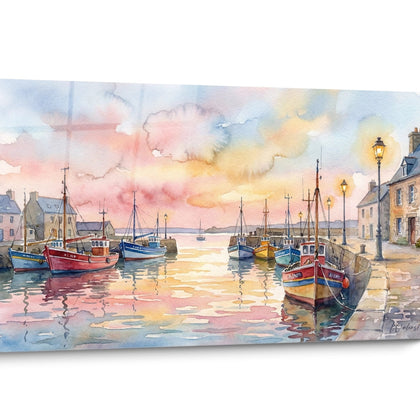

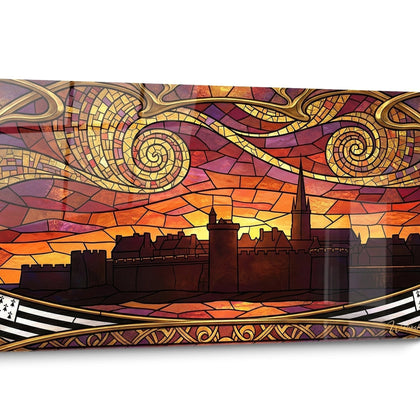
All about Impressionist Brittany Wall Art
- Paintings of Brittany: An Impressionistic Presentation
- Light and Maritime Atmosphere
- Chromatic Palette and Ambiance
- Decoration and Aesthetic Choices
Brittany impressionistic paintings capture the ever-changing essence of the maritime landscapes of this iconic region, where diffused light transforms each coastal scene into a visual symphony. These large-scale works celebrate the technique of quick touches and chromatic contrasts, immortalizing ports, lighthouses, and rocky coasts in their atmospheric authenticity. Harmoniously complementing a collection of Brittany paintings, these impressionistic creations reveal a unique artistic approach to regional heritage.
The Art of Capturing Light in a Brittany Impressionistic Painting
The Brittany impressionistic painting is distinguished by its unique ability to translate the infinite variations in luminosity that characterize the Armorican coastline. Impressionist artists have historically favored this region for its changing skies, morning mists enveloping port structures, and flamboyant sunsets over the Atlantic Ocean. This pictorial approach transforms each composition into a chromatic study where the aquatic reflections dialogue with the atmospheric nuances.
How do Impressionists Interpret Breton Marine Ambiance?
The impressionistic method applied to Breton landscapes relies on the observation of ephemeral luminous phenomena. Fractionated touches reproduce the shimmering of waves under the setting sun, while impasto suggests the rough texture of granite cliffs. In these large-scale works, the technique of plein air is particularly effective in restoring the saline humidity of the air and the translucency of stormy skies. Collectors seeking a Brittany port painting appreciate this faithful reproduction of port animation under different weather conditions.
The Dynamics of Natural Elements in Large-Format Compositions
Large-format Brittany impressionistic paintings magnify the oceanic power and the verticality of maritime structures. This scale allows for total immersion in the scenes depicted, where each brushstroke contributes to the illusion of the perpetual movement of the tides and the swaying of moored boats. Tonal variations applied to aquatic surfaces create a striking spatial depth, evoking both the coolness of the foam and the density of deep waters. This approach finds a particular echo in representations of Brittany lighthouse paintings, where the monumentality of these coastal sentinels harmonizes with the impressionistic treatment of their environment.
The Influence of Seasonal Cycles on Impressionistic Aesthetics
The impressionistic rendering of Breton landscapes varies considerably depending on the seasons represented. Summertime compositions favor the contrast between white sails and deep azure, while winter scenes exploit the ranges of pearly gray and muted ochre characteristic of Atlantic storms. This sensitivity to seasonal mutations gives the works a palpable temporality, transforming each painting into a testimony of a particular meteorological moment. Imposing formats accentuate this narrative dimension, inviting the eye to explore each area of the composition to discover atmospheric subtleties.
Chromatic Harmonies and Pictorial Vibrations of the Brittany Impressionistic Painting
The specific palette for the Breton Impressionist painting is built around the characteristic maritime tones of this region: the deep ultramarine blues of the oceanic horizons, the emerald greens of the surfacing algae, the reddish ochres of the exposed rocks, and the delicate violets of the twilight skies. This chromatic richness results from a careful observation of the interactions between natural light and the geological elements specific to the Armorican coast. Large formats amplify these vibrational effects, creating immersive visual experiences.
What nuances define the visual identity of Breton Impressionism?
Impressionists capturing the essence of Brittany developed distinctive chromatic blends to translate the ambient humidity that veils the coastal landscapes. The colored grays obtained by superimposing complements suggest the density of marine mists, while touches of vermilion and chrome yellow illuminate port scenes at sunrise. This science of tonal transitions transforms each composition into a visual score where chromatic chords simultaneously evoke the salty freshness and the solar warmth filtering through the clouds. Lovers of Breton watercolor painting will recognize this fluid approach to color transitions, although Impressionism favors a denser medium.
Simultaneous contrasts in monumental maritime scenes
The application of the principle of simultaneous contrasts takes on a spectacular dimension in large-scale Breton Impressionist paintings. The juxtaposition of orange and azure touches creates a visual vibration that simulates the shimmering of sunlight reflections on undulating surfaces. This technique is particularly effective for representing the complex light interactions between sky, sea, and coastal architectural structures. Monumental formats allow for sufficient density of touches to generate these perceptual effects without compromising the overall legibility of the composition. This approach also enriches representations of Breton castle painting when these buildings appear in their coastal context.
Chromatic evolution according to the geographical orientation of the scenes
Impressionists carefully distinguished palettes according to the orientation of the represented Breton sites. Views facing the open sea favored cool ranges dominated by blues and blue-greens, evoking the infinite ocean. Conversely, scenes facing inland integrated more shadows and green vegetation, establishing a harmonious transition between the maritime domain and the terrestrial environment. This geographical sensitivity gives the works a topographical authenticity that goes beyond simple visual transcription to reach a quasi-documentary dimension of the Breton territory.
Decorative Integration and Spatial Enhancement of the Breton Impressionist Painting
Installing a Breton Impressionist painting of large dimension radically transforms the perception of an interior space by introducing a visual window onto the Armorican maritime landscapes. These monumental compositions function as architectural focal points, structuring the spatial organization of reception rooms, professional spaces, or coastal second homes. The Impressionist technique, with its vibrant surface and subtle chromatic variations, reacts dynamically to changes in ambient light throughout the day.
In what environments does the Breton Impressionist painting reveal its maximum potential?
Spaces characterized by abundant natural light constitute the ideal environment for these Impressionist artworks. Large bay windows overlooking the sea create a visual dialogue between the real landscape and the pictorial representation, establishing a thematic continuity between interior and exterior. In urban environments far from the coast, these paintings function as nostalgic evocations of the maritime heritage of Brittany, bringing a contemplative dimension to contemporary living spaces. A collection can also be enriched with traditional Brittany paintings to create a stylistic dialogue between artistic approaches.
Decorative associations amplifying the Impressionist dimension
The decorative environment accompanying a Breton Impressionist painting should enhance its atmospheric quality without creating visual competition. Furniture with clean lines in natural wood subtly evokes the maritime universe without falling into nautical pastiche. Textiles in neutral tones allow the complex nuances of the artwork to dominate the color palette of the space. Plant elements – particularly coastal species such as grasses or hydrangeas – establish a thematic coherence reinforcing immersion in the Breton coastal universe. This decorative approach also applies when arranging with other regional artistic typologies.
What is the optimal arrangement for monumental Impressionist formats?
Large-format Breton Impressionist paintings require sufficient viewing distance to allow for the optical fusion of the colored touches. Installation on a clear wall facing the main entrance of a room maximizes the visual impact while respecting the perceptual requirements of the Impressionist technique. The positioning height should place the optical center of the composition slightly below eye level when standing, facilitating comfortable contemplation from various positions in the space. Indirect light sources preserve the subtlety of the chromatic modulations by avoiding parasitic reflections that would compromise the readability of the atmospheric variations characteristic of these maritime works.
Is a Breton Impressionist painting suitable for contemporary professional spaces?
Absolutely. These artworks bring a cultural and contemplative dimension to tertiary environments, particularly in sectors related to heritage, regional tourism, or maritime activities. Their presence enhances Breton identity while introducing a universally appreciated aesthetic quality.
How to maintain a large-scale Breton Impressionist painting?
The textured surface characteristic of Impressionist works requires delicate dusting with a soft brush with natural bristles. Avoiding direct exposure to sunlight preserves the long-term stability of the pigments, particularly for sensitive tones such as pinks and marine violets.
Can a Breton Impressionist painting be combined with other regional artistic styles?
The visual versatility of Impressionism allows for harmonious associations with various Breton artistic approaches. Juxtaposing with more graphic representations or contemporary interpretations creates enriching aesthetic dialogues, revealing the diversity of perspectives on the Armorican maritime heritage.
Further reading
Our articles on this topic
- Gauguin's Brittany Landscapes: Primitivism and Color Synthesis
- Normandy Cliffs Seascape Painting: The Guide to Decorating a Seaside Bedroom
- The Art of Capturing the Atmosphere of Breton Coastal Landscapes
- Breton Seascape Paintings: How to Choose the Right Painting for Each Room
- Modern Breton Painting: How to Choose the Perfect Piece
- Vintage Brittany Poster: A Guide to Choosing and Decorating with Authenticity
L'art qui suscite l'envie
Maison belge d'art mural grand format
14 jourspour changer d'avis*
Protection Walenskyincluse
Fabriquéen Italie
FormatXXL
Kit de fixationtoujours fourni
* Hors tableaux personnalisés et tailles personnalisées


