


Black and White Ski Wall Art
The Painting Ski Black and White captures the essence of the mountain in a clean and timeless aesthetic. This collection celebrates the passion for skiing through monochrome compositions that evoke the purity of snowy peaks and the adrenaline of descents. Perfect for lovers of ski decoration vintage and minimalist art, it brings a sophisticated alpine touch to your interior. Each monochrome ski painting transforms your space into a refined tribute to winter sports and the raw beauty of the mountains.
 Mountain Skier Painting - Extreme Turns - Ski Edition273,90 €
 Solitary Skier Mountain Painting - Alpine Adventure - Ski Edition228,90 €
 Skier in Powder Painting - Wild Descent - Ski Edition228,90 €
 Freestyle Skier Wall Art - Spectacular Jump - Black and White Sports Edition273,90 €
 Skiing Off-Piste Wall Art - Wild Descent - Black and White Sports Edition273,90 €
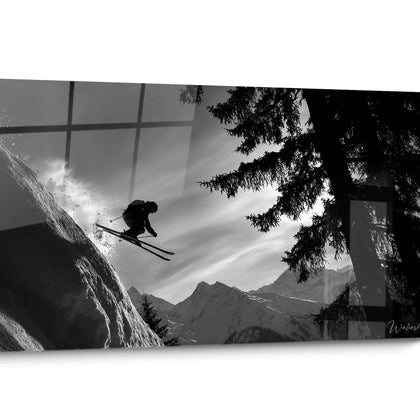
 Skier Painting Mountain - Spectacular Jump - Sports Black and White Edition273,90 €
Explore further
In Black and White Ski Wall Art


All about Black and White Ski Wall Art
- Black and White Ski Wall Art Presentation
- Minimalist Monochrome Elegance
- Visual Impact and Contrast
- Alpine Interior Architecture
The black and white ski wall art embodies the very essence of refined design applied to the alpine universe. This monochrome interpretation transforms the energy of snow-covered slopes into a sophisticated visual composition, where each shade of gray tells the story of mountain peaks. Unlike traditional colorful representations, this restricted chromatic approach reveals the geometric structures of descent trajectories, the silhouettes of skiers, and the granular texture of snow from a sculptural perspective. The absence of color paradoxically amplifies the sensation of movement and the dramatic dimension of alpine relief, creating a timeless decorative work that transcends trends without ever becoming outdated.
Monochrome Sophistication at the Service of Alpine Aesthetics
The black and white ski wall art continues an aesthetic tradition where chromatic limitation becomes synonymous with absolute refinement. This voluntary restriction to achromatic tones allows concentration on the essential: the dynamic gesture of the skier, the architecture of mountains, and the contrasted texture of snow-covered surfaces.
Why choose a monochrome palette for alpine decoration?
The world of skiing naturally evokes the purity of immaculate peaks and the intensity of shadows cast on slopes. Black and white treatment captures this fundamental duality by eliminating chromatic distractions. The generous dimensions of these wall creations allow full appreciation of subtle nuances between brilliant white in exposed areas and deep blacks in shadowed zones, creating visual depth comparable to master photographers like Ansel Adams applied to the alpine world.
The timelessness of chromatic duality in contemporary interiors
Unlike color-saturated representations that risk dating quickly, a black and white ski artwork traverses decades without losing aesthetic relevance. This chromatic neutrality facilitates integration into varied decorative environments, from minimalist industrial lofts to renovated chalets to sophisticated urban apartments. Wall art collectors particularly appreciate this versatility, which allows room redesign without replacing the main artwork.
Visual texture amplified by the absence of color
By eliminating the chromatic dimension, the eye naturally concentrates on textural variations: the graininess of powder snow, the striations left by skis on groomed snow, ice crystals sparkling under light effects. This attention to micro-details transforms each viewing into a renewed contemplative experience. The generous formats available allow appreciation of these subtleties even from a distance, creating a magnetic focal point in the lived space. This approach parallels abstract explorations found in an abstract ski wall art, where formal simplification reveals the essence of alpine movement.
Power of Contrast and Mountain Visual Dramaturgy
The exclusive use of black and white in a ski wall art creates visual tension that amplifies the emotional impact of the depicted scene. This extreme chromatic polarity generates graphic dynamism particularly suited to large wall formats.
How does contrast amplify the sensation of speed?
Juxtaposed dark and light zones create visual lines of force that naturally guide the eye along descent trajectories. The brain interprets these abrupt transitions as indicators of rapid movement, generating perceptual kinetics even in a static image. The cast shadows of skiers on snow, rendered in intense black, function as directional vectors that accentuate the impression of swift descent on slopes.
Visual hierarchy created by tonal values
In a successful monochrome composition, each element finds its place according to narrative importance through gray variations. The main subject, often a skier in full action, stands out through maximum contrast against its environment, while the mountainous background fades into subtle gradations creating atmospheric depth. This tonal stratification instinctively directs attention toward decisive image areas, maximizing the work's narrative effectiveness in its exhibition space.
Balance between solid areas and negative space
Black and white ski artwork masterfully exploits empty spaces as active composition components. The expanses of pure white representing virgin snowfields are not passive simple backgrounds but participate in overall balance, creating essential visual breathing room. This sophisticated management of solids and voids evokes oriental aesthetic principles where the unpainted possesses as much importance as the drawn line itself, conferring a meditative dimension to these representations of intense action.
- Maximum contrast between silhouettes and snow backgrounds
- Tonal gradations creating atmospheric depth of mountain ranges
- Pure white zones generating strategic visual pauses
- Deep blacks anchoring composition and creating focal points
Architectural Integration in Alpine and Urban Living Spaces
The black and white ski wall art functions as a complete architectural element in contemporary interiors, particularly in residences connected to the mountain universe. Its imposing format and restricted palette confer upon it a status as structural component rather than mere decorative accessory.
Dialogue with raw materials of modern chalets
In renovated chalets where raw wood, exposed stone, and polished concrete dominate, a monochrome artwork creates a sophisticated visual counterpoint without competing chromatically with these natural materials. The organic textures of walls and floors find their ideal complement in the two-dimensionality of the wall artwork. This material harmony unifies the space by creating balance between assumed rusticity and contemporary refinement, particularly sought in high-end mountain properties.
Which spaces benefit most from large-format monochrome ski artwork?
Double-height living areas constitute the ideal environment for these monumental creations. The available vertical volume allows full exploitation of these artworks' generous proportions, creating a focal point visible from multiple room angles. Open mezzanines offer spectacular low-angle perspectives revealing the composition in all its dynamism. Wide circulation corridors, often neglected decoratively, transform into private exhibition galleries through these linear formats.
Complementarity with natural and artificial light sources
Lighting variations throughout the day subtly modify perception of black and white artwork, creating an evolving piece. Direct morning light accentuates contrast and hardens tonal transitions, while diffuse late-afternoon light reveals subtle intermediate nuances. Directed artificial lighting allows dramatic surface sculpting, creating illusory relief effects that amplify the work's physical presence in its nocturnal environment.
Wall composition strategies to maximize impact
Installing black and white ski artwork requires reflection on overall room visual balance. In interiors with dominant light tonalities, the work functions as a dark visual anchor that structures space. Conversely, in environments with dark woods, the image's white areas create welcome luminous openings. The proportional rule recommends the artwork occupy approximately 60 to 75% of the width of the furniture it overshadows for harmonious relationship without visual overpowering.
- Positioning facing traffic flow to maximize visibility
- Hanging height adapted to seated and standing viewpoints
- Sufficient peripheral spacing to avoid visual clutter
- Accent lighting creating variable depths
Which interior style pairs best with black and white ski artwork?
Minimalist Scandinavian style constitutes the most natural alliance, where streamlined lines and the restricted palette of furnishings amplify the impact of the monochrome work. Contemporary industrial aesthetics, with exposed metal structures and open volumes, also creates an ideal setting for these graphic representations of the alpine world.
How does monochrome ski artwork influence a room's atmosphere?
Beyond its decorative function, this wall presence injects dynamic energy into the lived space. Descent scenes visually capture movement and speed, infusing particular vitality even in static moments of daily life. This subtle energetic charge radically differentiates the atmosphere of a space equipped with such artwork from one with bare walls or static compositions.
Can multiple black and white ski artworks be combined in the same space?
The accumulation of several monochrome works creates a sequential visual narrative particularly effective in linear spaces like hallways or stairwalls. This serial approach transforms physical displacement into a contemplative journey, each artwork representing a different descent phase or varied viewing angles on the same subject. Chromatic coherence guarantees visual unity despite image multiplicity.
L'art qui suscite l'envie
Maison belge d'art mural grand format
14 jourspour changer d'avis*
Protection Walenskyincluse
Fabriquéen Italie
FormatXXL
Kit de fixationtoujours fourni
* Hors tableaux personnalisés et tailles personnalisées


