









African Culture Wall Art
Immerse yourself in the fascinating world of African art with our collection dedicated to African culture. Each artwork captures the essence of traditions, vibrant colors, and the spiritual richness of the continent. From majestic portraits to scenes of daily life, these creations celebrate heritage and African artistic diversity. Perfect for bringing warmth and character to your interior, these artworks tell ancestral and contemporary stories. Explore this unique collection that pays homage to the timeless beauty of Africa.
 Maasai Warriors Painting - Ancestral March - African Culture Edition228,90 €
 African Women Water Carriers Painting - Traditional Grace - African Culture Edition228,90 €
 Abstract Golden Geometric Wall Art - Golden Harmony - African Culture Edition228,90 €
 Abstract Geometric Composition Wall Art - Modern Harmony - African Culture Edition228,90 €
 Geometric Patterns Wall Art - Colorful Interlaces - African Culture Edition273,90 €
 African Geometric Patterns Wall Art - Colorful Diamonds Wood Texture - African Culture Edition228,90 €
 Ancestral Spiritual Scene Wall Art - Ancestors' Rituals - African Culture Edition273,90 €
 African Woven Baskets Wall Art - Handmade Mosaic - African Culture Edition228,90 €
 Stylized Birds Painting - Spiritual Duality - African Culture Edition273,90 €
 African Abstract Art Painting - Cosmic Symbols - African Culture Edition228,90 €
 African geometric art wall art - Colorful abstract faces - African culture edition273,90 €
 African masks wall art - Mystical portraits - African culture edition273,90 €
 Arabic calligraphy wall art - Sculpted elegance - African culture edition228,90 €
 African traditional baskets wall art - Ancestral craftsmanship - African culture edition242,90 €
 Abstract Geometric Painting - Modern African Mosaic - African Culture edition273,90 €
 Arabic Calligraphy Painting - Orange Spirals - African Culture edition228,90 €
 African Sculptures Painting - Ancestral Heritage - African Culture Edition273,90 €
In the same family
Also explore the theme Africa
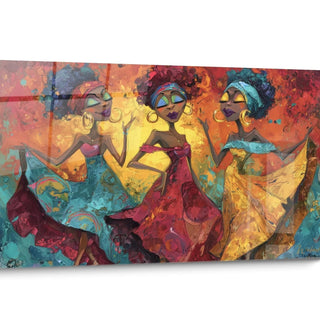


All about African Culture Wall Art
- African Culture Wall Art Presentation
- Symbolism and Cultural Identity
- Emotional Reconnection to Roots
- Enhancement in Modern Spaces
An African culture wall art represents far more than simple wall decoration. It embodies the soul of a continent rich in millennia-old traditions, profound spiritualities and ancestral knowledge transmitted from generation to generation. These large-scale mural works celebrate the heritage of African peoples through authentic representations that honor collective memory. Whether you seek to affirm your identity, transmit cultural heritage to your children or create a space that tells your story, these mural creations become visual guardians of African wealth. Discover our collection of African wall art that celebrates the continent's cultural diversity.
The Deep Symbolism of African Cultural Representations
When you choose an African culture wall art, you acquire not simply decoration, but a visual narrative charged with ancestral meanings. Each represented element carries within it centuries of wisdom, beliefs and traditions that have shaped African civilizations. Ritual masks, traditional textiles, ethnic adornments and scenes of community life constitute symbolic languages that speak to the soul of those who understand their importance.
What is the spiritual meaning of tribal masks in African wall art?
Representations of traditional masks in artwork dedicated to African culture carry essential spiritual functions. In Dogon societies of Mali, Yoruba of Nigeria or Dan of Ivory Coast, these masks are never mere decorative objects. They embody ancestral spirits, protective divinities or natural forces. A large-scale artwork featuring a Gelede mask, for example, recalls ceremonies honoring the mystical power of elderly women. These mural works create an almost living presence in your space, establishing a bridge between visible and invisible worlds according to African cosmologies.
The colors used in these representations are never arbitrary. White evokes spiritual purity and connection with departed ancestors, red symbolizes vital force and sacrifice, while black represents maturity and the mystery of the afterlife. An authentic African culture wall art respects this chromatic grammar that allows the initiated to immediately read encoded messages. This symbolic dimension transforms your wall into a sacred space, a place of meditation where the memory of rituals that structured communities for millennia continues to live.
Traditional Textiles and Their Coded Visual Language
The patterns of African fabrics constitute one of the most sophisticated non-verbal communication systems in the world. When an African culture artwork reproduces the geometries of Ghanaian Kente cloth, each colored band, each interweaving tells a precise story. The pattern "Nkyinkyim" symbolizes adaptability in the face of life's trials, while "Eban" represents the security of home and family. These large-scale mural canvases allow appreciation of the complexity of these visual messages that traditionally indicated social status, clan belonging or important life events.
Malian Bogolan, this textile dyed with fermented mud, also carries intense symbolic charge. Its angular patterns evoke proverbs, social taboos or spiritual protections. An artwork representing a woman draped in authentic Bogolan shows not merely clothing, but a complete system of thought. These mural representations remind us that in African cultures, appearance constitutes a text to decipher, a public declaration of identity and belonging. For the African diaspora or ethnographic art enthusiasts, owning such an artwork is a way to keep this visual literacy alive.
Musical Instruments and Transmission of Ancestral Knowledge
Representations of traditional instruments in African wall art far exceed simple musical evocation. An artwork showing a kora player, this 21-stringed mandinka harp-lute, celebrates the griot figure, that oral historian who preserves the memory of lineages and vanished empires. These large-scale works honor the guardians of oral tradition, these masters of speech who for centuries preserved genealogies, epics and philosophical teachings without resorting to writing.
The djembe, when it appears in an African culture wall art, evokes far more than a simple percussion instrument. It represents communication between villages, the call to ceremonies, the rhythm that structures community life. The Malinke say that "the djembe speaks" because it reproduces the tonalities of language. A large-scale artwork representing a collective percussion scene visually transmits this African philosophy where music is never individual entertainment but social cement, a language uniting the living with each other and with their ancestors. These mural works allow this holistic conception of art to remain present.
Why do African market scenes carry such strong cultural dimension?
Traditional African markets are not mere commercial exchange spaces. They constitute intense spaces for socialization, news transmission, matrimonial negotiations and affirmation of women traders' identity. An artwork representing a colorful market with its textile, spice or pottery vendors captures this teeming community life where languages, ethnicities and generations intertwine. These large-format mural scenes testify to a social organization where economics remain deeply embedded in human relationships.
The vivid colors of these representations – multicolored cloths, pyramids of tropical fruits, enameled basins – create visual explosion that energizes any interior space. Beyond aesthetics, these artworks recall an African economic philosophy where merchandise never completely separates from the person selling it. Bargaining is not mere financial calculation but social ritual, a verbal dance establishing and strengthening bonds. For someone seeking reconnection with African culture, such a mural artwork becomes a daily window onto this warm sociability.
Scarifications and Body Paintings: Identity Inscribed on Skin
Representations of ritual scarifications or body paintings in African wall art address a fundamental yet often overlooked aspect of continental cultures. Among the Mursi of Ethiopia, the Nuba of Sudan or the Yoruba of Nigeria, these body modifications do not stem from simple aesthetics. They mark transitions in the life cycle: passage to adulthood, marriage, belonging to a secret society. A large-scale African culture wall art showing a face adorned with these identity marks tells the story of a person inscribed in their lineage and community.
These mural works are particularly striking in a contemporary context where Western beauty standards dominate. They recall that for millennia, Africans developed their own aesthetic canons, deeply linked to spiritual and social values. The geometric patterns of Sara scarifications in Chad, for example, are not arbitrary but follow precise codes transmitted by elders. Displaying such an artwork in your interior constitutes an act of cultural resistance, an affirmation that African beauty possesses its own legitimacy, its own criteria that need not be validated by outside gaze.
Vernacular Architecture and Relationship with Environment
Architectural representations in artwork dedicated to African culture reveal philosophies of building in harmony with environment. The dome-shaped huts of the Mousgoum in Cameroon, the suspended granaries of the Dogon, the mud brick palaces of Djenné testify to architectural genius adapted to climatic conditions and local materials. These structures are not merely functional; they carry cosmological significance. A Kassena village's layout in Ghana reproduces cosmic organization according to their mythology.
A large-scale artwork representing these traditional habitats allows visual appreciation of this constructive intelligence that created thermally comfortable spaces without modern technology, buildings resistant to the elements using biodegradable materials. These mural works also constitute precious testimony facing the progressive disappearance of these architectures in favor of standardized concrete construction. For ecology and sustainability enthusiasts, these artworks remind us that Africa possesses millennia-old expertise in environmentally respectful building, expertise today rediscovered by contemporary architecture concerned with sustainable development.
The Emotional Power of Identity Reconnection
For members of the African diaspora, for descendants of Africans born on other continents, an African culture wall art represents far more than a decorative object. It embodies a visceral link with ancestral land sometimes never visited but deeply felt. These large-scale mural works become emotional anchoring points, daily visual reminders of belonging that transcends geographical boundaries and generations. They speak to something intimate, almost genetic, this collective memory that historical traumas have not completely erased.
How can an artwork repair fragmented cultural connection?
Forced displacements from the slave trade, colonization and its assimilation policies, economic migrations created painful ruptures with cultural heritage for many Africans and Afro-descendants. Forgotten languages, diluted traditions, transformed family names constitute identity wounds. An artwork representing scenes of authentic African life offers a starting point for this memorial reconstruction. By contemplating daily faces resembling one's own, landscapes evoking grandparents' accounts, rituals recalling ancestral spirituality, one gradually weaves threads of connection.
This visual reconnection operates at a preconscious level. Psychologists specializing in cultural identity explain that our visual environment shapes our self-perception. Growing surrounded only by images not resembling us creates subtle dissociation, a feeling of being foreign to oneself. A large-scale African culture wall art in the family living room changes this dynamic. It affirms to children that they belong to a rich, ancient, sophisticated civilization. It shows them their physical traits, hair, complexion are beautiful according to their own cultural references, not solely when conforming to European standards.
Portraits of African Women: Celebration of Black Beauty
Representations of African women in these mural works possess particularly powerful emotional charge. A woman adorned with traditional jewelry, coiffed according to ancestral techniques, dressed in vibrant textiles incarnates dignity and cultural pride. These large-scale portraits directly combat degrading stereotypes that long dominated representations of Black women in Western imagery. They affirm that African beauty exists according to its own criteria: ebony skin highlighted rather than masked, curly hair worn naturally and magnified by elaborate hairstyles, generous body forms celebrated.
For a young Black girl growing in society where media models primarily value European traits, having in her bedroom an artwork representing a majestic African queen constitutes an act of psychological resistance. It tells her that her natural beauty possesses historical nobility, that she descends from civilizations that erected empires and developed refined arts. These mural works become positive mirrors, visual affirmations of African identity's intrinsic worth. Many diaspora parents acquire these artworks precisely for this purpose: offering their children representations building self-esteem rather than undermining it.
Ancestral Rituals and Need for Authentic Spirituality
Representations of traditional African ceremonies in wall art respond to profound spiritual seeking among many people disconnected from their ancestors' religions. Whether Benin Vodoun ceremonies, Southern Africa Sangoma rituals or Sahel animist practices, these ancestral spiritualities offer approach to the sacred radically different from imported monotheistic religions. A large-scale artwork showing an initiation ceremony or ritual dance allows maintaining connection with these practices even when unable to experience them directly.
These mural works remind us that African belief systems do not separate sacred from profane, that spirituality there permeates all aspects of daily life. They show communities in collective trance, moments when ancestors are invoked and manifest, holistic healings treating simultaneously body, spirit and soul. For someone spiritually seeking, tired of institutionalized religions seeming foreign, an African culture wall art representing these ancestral practices opens a door toward more organic sacred form, more rooted in earth and natural forces.
Why do village life representations touch so deeply emotionally?
Scenes of daily life in African villages – women pounding millet together, children playing under the baobab, councils of elders under the palaver tree – evoke a form of community life largely disappeared in modern urban societies. These large-scale artworks speak to profound nostalgia for a lifestyle where no one was isolated, where children were raised collectively, where tasks were shared in joy and song. Even for those never living this village reality, these images resonate with collective memory of solidarity and mutual aid.
This emotional dimension explains why many diaspora members choose these representations for their living spaces. They create a sense of returning to roots, reconnecting with communal values Western individualism has eroded. A living room adorned with such an artwork becomes symbolically a space where these African values – respect for elders, importance of extended family, collective responsibility toward children – remain present and transmissible. These mural works function as safeguards against complete assimilation, visual reminders of another way of living and being together.
Intergenerational Transmission and Duty to Memory
Acquiring artwork celebrating African culture often fits within a conscious family transmission approach. Grandparents who knew Africa before migrating feel urgency to transmit something tangible to grandchildren born elsewhere, who perhaps no longer speak ancestral languages. These large-scale mural works become informal pedagogical tools. They spark children's questions, open conversations about family history, countries of origin, lost or maintained traditions.
Parents also see it as a form of resistance against cultural amnesia. In context where school curricula teach little African history beyond slavery and colonization, these artworks remind visually that Africa possesses millennia-old civilizations, prestigious empires like Mali or Zimbabwe, sophisticated intellectual and artistic traditions. An African culture wall art showing Timbuktu scribes or royal blacksmiths of the Kongo kingdom inscribes this historical pride in daily environment. It's a way of saying to following generations: here is where you come from, here is your ancestors' greatness, never forget it.
Psychological Impact of African Colors and Patterns
Typical chromatic palettes of African art – earthy ochres, deep reds, solar yellows, vegetative greens – produce energizing psychological effect. These warm colors create living, optimistic atmospheres contrasting with neutral tones often favored in contemporary Western decoration. A large-scale artwork in vibrant African colors literally transforms a room's atmosphere, introducing warmth and vitality. This chromatic explosion recalls tropical climates, intense light, teeming life.
Recurring geometric patterns in African art – spirals, zigzags, checkerboards, diamonds – also possess symbolic and emotional charge. These forms are never purely decorative; they encode philosophical concepts, proverbs, cosmological principles. Living daily surrounded by these patterns creates unconscious familiarity with this visual language. For a child growing with such an artwork in their environment, these forms become naturally readable, they constitute visual alphabet linking them to their culture of origin even if they do not explicitly know their meaning. It is cultural transmission operating through impregnation, through quiet daily presence.
Contemporary Integration and Heritage Valorization
Contrary to certain prejudices, an African culture wall art does not consign an interior to fixed or folkloric ethnic style. These large-scale mural works integrate remarkably into contemporary spaces, creating powerful visual dialogues between tradition and modernity. The secret lies in understanding that these pieces are not tourist souvenirs but artwork in their own right, possessing visual strength allowing them to stand their ground in any architectural context. Their presence transforms a generic space into a place charged with meaning, history and intention.
How to valorize African artwork in a modern loft?
Loft-type spaces, with their significant volumes and often white or exposed brick walls, offer ideal setting for showcasing large-scale African works. Contrast between industrial architecture's sobriety and artwork's chromatic richness creates fascinating visual tension. An immaculate white wall makes vivid colors of an African market scene or warm tones of an adorned woman's portrait stand out intensely. These large-scale works, sometimes exceeding two meters, find in these ceiling heights necessary space to deploy their full presence.
Association works particularly well when maintaining purity in remaining decoration. Furniture with clean lines, sober contemporary furnishings allow the artwork to be undisputed star of the space. This approach avoids ethnic overload pitfall while clearly affirming the place's cultural anchoring. Interior design professionals recommend treating a large-scale African culture wall art as one would treat a major contemporary artwork: offering it the space and visual breathing room necessary to assert itself powerfully.
Professional Offices and Corporate Identity Affirmation
Increasingly, African or Afro-descendant entrepreneurs choose to adorn their professional offices with works celebrating their cultural heritage. This approach transcends mere decoration; it constitutes conscious personal branding strategy. In business environment still largely dominated by Western aesthetic codes, displaying a large-scale artwork celebrating African culture sends several simultaneous messages: assumed identity pride, refusal of complete assimilation, inscription in an African entrepreneurial lineage not dating from yesterday.
These mural works in professional contexts also create conversation points with clients and partners. They humanize work space, charge it with personal narrative. An artwork representing African market women in a businesswoman's office subtly recalls that commerce is ancient female tradition in Africa, that women have always been major economic actors there. These visual references allow repositioning one's own success in historical continuity rather than as isolated meritocratic exception.
Which domestic spaces benefit most from African cultural artwork?
The family living room constitutes the privileged location for these large-scale works, as it is the reception space, gathering place where household identity expresses itself most openly. An artwork representing African community scene – council under tree, collective celebration, shared work – symbolically reinforces this space's social function. It visually suggests that this living room is a meeting place, exchange, warm hospitality according to African tradition. Visitors immediately grasp the message: here a specific culture expresses itself, particular values.
The master bedroom offers another relevant, more intimate context. Installing an African culture wall art representing a couple or fertility symbols there creates private space charged with profound cultural references. This visual anchoring can be particularly important for mixed couples seeking to equally integrate both cultural heritages in their shared life. The African or Afro-descendant partner finds there an affirmation of their identity in the household's most personal space.
Children's bedrooms greatly benefit from these representations, as mentioned previously. An artwork showing African children playing, learning, participating in village activities normalizes their cultural belonging. It visually tells them that being African is normal, beautiful, source of pride. This daily presence subtly shapes their identity construction positively.
Aesthetic Dialogues: Mixing African Tradition and Contemporary Design
Cutting-edge interior designers discovered that traditional African art works create remarkable associations with contemporary design furniture. A Barcelona chair by Mies van der Rohe dialogues wonderfully with an artwork representing African geometric patterns – both share same formal rigor, same elegant simplification despite different cultural and temporal origins. This sophisticated approach avoids "ethnic corner" pitfall to create genuine aesthetic fusion.
Natural materials of Scandinavian design – blonde wood, linen textiles, neutral tones – accord perfectly with earthy palettes of many African artworks. This combination creates warm, organic interiors where African cultural reference integrates harmoniously without violent stylistic rupture. An African culture wall art in ochre and earth tones finds its ideal place above a natural linen sofa, surrounded by green plants recalling African vegetation.
Commercial Spaces and Responsible Cultural Tourism
African restaurants, boutique hotels, cultural centers strategically use large-scale mural works to create authentic cultural immersion. Contrary to tourist clichés – accumulated masks and animal skins – thoughtful approach privileges few large-scale masterpieces truly telling something. An Ethiopian restaurant displaying an artwork representing the coffee ceremony, this social ritual central to Ethiopian culture, subtly educates clientele on cultural depth beyond simple gustatory pleasure.
This responsible use of African cultural representations in commercial settings requires careful attention avoiding cultural appropriation or folkloric reduction. Artworks should be accompanied by minimal contextual information, allowing clients to understand what they observe. This educational approach transforms commercial space into informal cultural education venue, where diaspora rediscovers familiar references and non-African public discovers overlooked continent aspects.
Collectors and Heritage Investment
Beyond decoration, some artwork purchasers celebrating African culture inscribe themselves in heritage collection approach. They seek works documenting traditional practices disappearing, ancestral costumes increasingly unworded, vernacular architectures progressively abandoned. These large-scale artworks then become visual archives, testimonies of cultural heritage threatened by globalization and rapid African continent urbanization.
This responsible collector approach privileges authentic representations by artists having profound cultural knowledge of represented cultures, rather than exoticizing visions produced externally. An African culture wall art acquires superior heritage value when it documents with precision details of adornments, hairstyles, scarifications specific to particular ethnicity, given period. These works become resources for anthropologists, historians, communities themselves seeking to preserve their visual memory.
Why invest in large-scale works rather than small formats?
Monumental formats – often exceeding 150 centimeters in width – possess incomparably superior visual and emotional impact to small works. They create immersive presence, truly transform space atmosphere. An artwork of imposing size representing ritual procession or teeming African market becomes almost a window opening onto another world, wall breakthrough transporting gaze elsewhere. This ability to create visual escape justifies investment in generous dimensions.
From practical standpoint, contemporary living spaces often offer vast bare walls calling for works matching their scale. Small artwork lost on large white wall creates disappointing visual imbalance. Large dimensions also allow appreciating details – facial expressions, complex textile patterns, chromatic nuances – that would be lost in reduced format. To truly honor African culture's richness, one must offer it space to express itself fully.
FAQ - Frequently Asked Questions About African Culture Wall Art
Does African culture wall art suit all interior styles?
Absolutely. These works adapt remarkably well to contemporary, industrial, Scandinavian or eclectic interiors thanks to their intrinsic visual strength. The key lies in treating the artwork as a major art piece rather than ethnic accessory, offering it space and surrounding sobriety enabling its full expression.
How to choose between different African cultural regions represented?
Choice depends foremost on your personal connection. If you have West African origins, representations of Kente textiles or Vodoun ceremonies will resonate more. For someone without direct African family link but attracted to culture, privilege universal themes like community life scenes, women's portraits or colorful markets that speak to shared humanity beyond ethnic boundaries.
Can one mix multiple artworks representing different African cultures?
This approach requires certain cultural sensitivity. Africa counts hundreds of ethnicities with distinct cultures, mixing them without discernment risks creating cultural confusion undermining heritage valorization. If desiring multiple artworks, privilege either regional coherence (West Africa, Southern Africa...) or transversal theme (women's portraits from different regions, varied instruments...) justifying diversity.
What is the lifespan of a large-scale artwork?
With minimal maintenance – protection from direct sunlight, occasional gentle dusting, humidity avoidance – these works retain their brilliance for decades. Professional-quality artworks use inks and supports resistant to aging. This durability allows transmitting these pieces as family heritage, reinforcing their role in intergenerational cultural transmission.
Further reading


