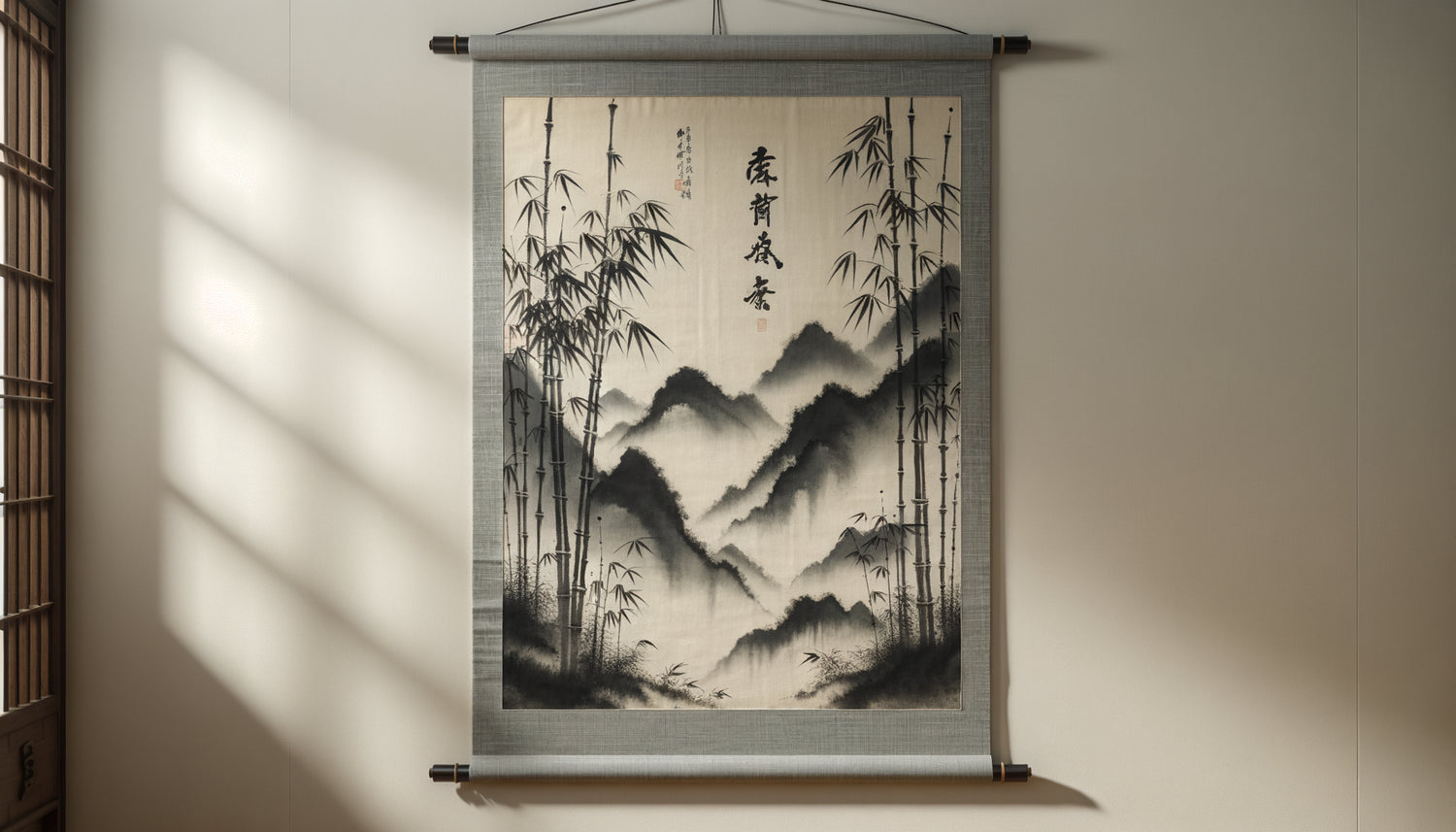
That morning, upon entering the workshop of a master calligrapher in Kyoto, I understood why some wall art zen transcend centuries while others fade within decades. On the wall, a two-hundred-year-old Chinese ink painting radiated an intact presence. Its secret? A maintenance as subtle as the work itself. These zen paintings, true bridges between oriental tradition and contemporary decoration, deserve special attention to preserve their soothing power.
Here's what proper maintenance of your zen painting brings: preservation of the intensity of deep black Chinese ink tones, protection of the delicacy of rice paper or silk, and above all, the guarantee that this work will continue to diffuse its serenity in your interior for generations.
Yet, faced with this treasure of fragility hanging on the wall of your living room, anxiety sometimes seizes you. How to clean without altering? What light does this thin paper tolerate? Will the humidity of the bathroom cause the fibers to swell? These legitimate questions often paralyze owners of zen paintings, to the point of neglecting them for fear of doing wrong.
Rest assured: maintaining a Chinese ink painting is less about art restoration than about simple gestures inspired by respect for the material. In the lines that follow, I pass on to you the techniques I have learned from conservators and passionate collectors, so that your work crosses time with the same grace as on the first day.
The invisible enemy: understanding the fragile nature of Chinese ink
Chinese ink, this millennium-old pigment composed of pine soot and animal glue, has a fascinating peculiarity: it does not penetrate paper like modern ink, but settles on its surface. This characteristic explains both its timeless beauty and its vulnerability.
Unlike acrylic or oil paintings, Chinese ink on traditional paper forms an intimate but delicate relationship with its support. The rice paper or washi paper, used in authentic zen painting, are untreated vegetable fibers, breathable and reactive to the environment. This natural breath guarantees the longevity of the work, but also makes it sensitive to climatic variations.
I have observed in my personal collection that a zen painting exposed in a room where humidity fluctuates brutally can develop undulations in just a few months. Conversely, a work placed in a stable environment retains its flatness for decades. The key lies in understanding this living material.
The three main threats
Direct sunlight gradually degrades the pigments of Chinese ink, creating yellowing of the paper and a loss of contrast. Excessive humidity causes mold and irreversible brownish stains. Finally, dust, often overlooked, becomes embedded in the porous fibers of the paper, dulling the brilliance of the artwork.
These enemies act silently, without you perceiving their destructive action until it is too late. That's why prevention always takes precedence over restoration when maintaining a Zen painting painted with Chinese ink.
Strategic placement: choosing the ideal location
Even before thinking about cleaning, the location of your Zen painting determines 80% of its longevity. This initial decision conditions all future maintenance gestures.
Prefer a wall perpendicular to windows rather than facing them. This simple arrangement prevents sunlight from striking the surface directly. If your configuration does not allow it, a filtering curtain or adjustable blinds offer effective protection. I personally installed my most prized Chinese ink paintings in a hallway lit by indirect light: they have retained their freshness for fifteen years without any particular intervention.
Imperatively avoid areas exposed to humidity: bathroom, kitchen, or uninsulated exterior wall. Humidity seeps into the fibers of the paper and creates an environment conducive to microscopic fungi. A collector friend lost a magnificent Zen painting depicting bamboo after hanging it above a radiator: the dry heat weakened the paper which cracked in a few winters.
The importance of ventilation
A well-ventilated room guarantees air circulation that prevents the accumulation of stagnant humidity. Open windows regularly, even in winter, to renew the atmosphere. This natural ventilation protects your Zen painting much better than any chemical treatment.

The dusting ritual: delicacy as a principle
Dusting a painting painted with Chinese ink is like meditation: slow gestures, sustained attention, absolute respect for the material. Forget the microfiber cloth you use for your furniture.
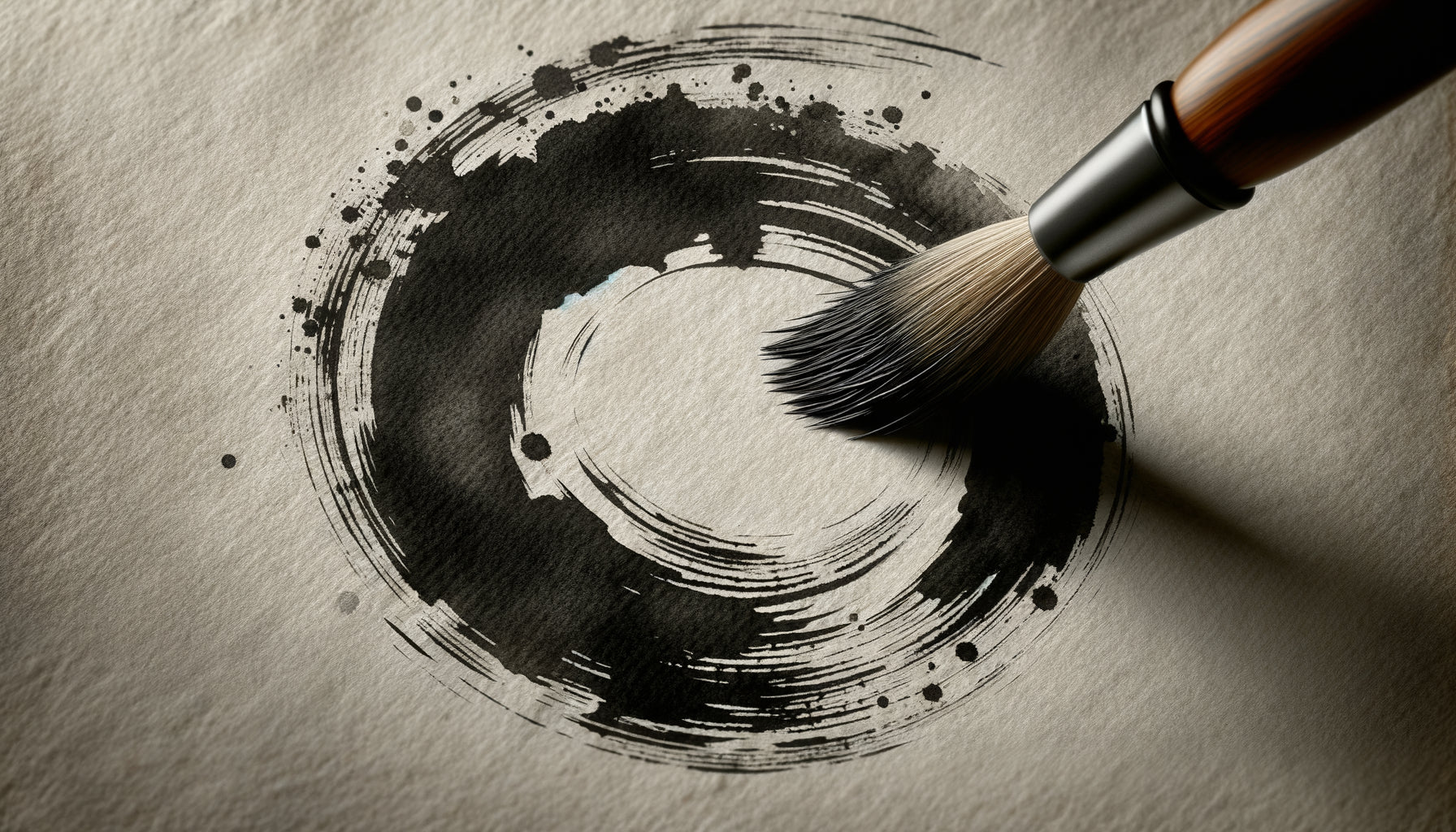
Use exclusively a soft brush, ideally with natural goat or squirrel hair, available in art supply stores. These wide brushes, originally designed for calligraphy or watercolor, have a flexibility that respects the fragile surface of the paper.
The technique is simple: hold the brush vertically and lightly graze the surface of the zen artwork with downward strokes, from top to bottom, without pressing down. Do not rub horizontally, as you risk tearing paper fibers or moving ink particles. Perform this dusting once a month in a living room, every two months in a less frequented bedroom.
A technical detail taught to me by a Japanese restorer: before touching the artwork, blow gently on the brush to check that no dust is stuck to it. This preventative gesture avoids depositing residues that the brush may have accumulated onto your Chinese ink painting.
What to do in case of an accidental stain?
Never apply water, detergent or cleaning product on a zen artwork. Water causes the Chinese ink to bleed instantly, creating irreversible halos. If a stain occurs (splash, accidental contact), do not touch anything and immediately consult a specialist restorer in Asian art. Some stains can be softened by professional techniques, but any amateur intervention systematically worsens the damage.
Managing the environment: temperature and humidity
Your Chinese ink zen painting prefers stable environments with minimal extremes. The ideal is between 18 and 22°C, with relative humidity between 45 and 55%. These parameters may seem restrictive, but they actually correspond to standard human comfort conditions.
Investing in a small hygrometer (available for less than twenty euros) allows you to monitor these parameters. If you notice excessive humidity, a discreet electric dehumidifier solves the problem. Conversely, in winter, when heating dries out the air, a humidifier or simply bowls of water placed on radiators restore balance.
I have noticed that my zen artworks react particularly to seasonal changes. Every autumn, when the heating comes back on, I slightly increase the ambient humidity to compensate. This seasonal ritual, inspired by Japanese museum collections, preserves the flexibility of the paper.

The protective frame: your best ally
An Chinese ink painting that is not framed remains extremely vulnerable. Framing is not only about aesthetics; it constitutes the first line of defense against environmental aggressions.
Opt for a glass frame, but not just any kind: UV-protective glass filters 99% of ultraviolet rays responsible for yellowing. This type of glass, slightly more expensive, justifies its cost by extending the life of the artwork by decades. Some collectors opt for anti-reflective glass which also improves visibility.
Crucial: always leave an air gap between the glass and the surface of the zen painting. This space of a few millimeters, created by a mat or specific spacers, allows the artwork to breathe and prevents moisture from condensing directly on the paper. A professional framer knows these imperatives and will use acid-free materials that do not alter the paper over time.
The natural wood frame
Natural wood, untreated or treated with water-based varnishes, harmonizes perfectly with the zen spirit of the artwork. Avoid plastic frames or synthetic materials that may release harmful volatile compounds for old paper. I personally chose bamboo frames for my Chinese ink paintings: their visual lightness respects the simplicity of zen art.
Gestures to absolutely avoid
Some practices, well-intentioned but disastrous, still circulate among owners of zen paintings. Let's establish a clear list of formal prohibitions.
Never spray any polishing, disinfectant or anti-dust product near your artwork. Suspended particles settle on the paper and create indelible greasy stains. Never touch the surface of the Chinese ink painting directly with your fingers: the natural fat from the skin becomes embedded in the fibers and causes brownish marks over time.
Avoid moving your zen painting frequently. Each manipulation increases the risk of shock, crease or accidental contact. Once the ideal location is found, let the artwork remain there. If you absolutely must move it, wear white cotton gloves and handle the frame, not the artwork itself.
Never use adhesive tape, thumbtacks or any fixing system that pierces or sticks directly to the paper. These systems leave irreversible traces. For an unframed work (although not recommended), use only suspension systems by the edges of the traditional mounting.
Transform your interior into a haven of serenity
Discover our exclusive collection of Zen paintings that bring this authentic touch of appeasement to your decor, while benefiting from personalized maintenance advice to preserve their beauty.
The transmission : preparing your painting for future generations
A Zen painting painted in Chinese ink well maintained becomes a heritage that crosses the ages. This long-term perspective changes your relationship to the work: you are no longer simply an owner, but a temporary guardian of a fragment of art and spirituality.
Document your Zen painting: photograph it in good lighting conditions, note its provenance, the artist if you know him, the date of acquisition. Keep this information with the certificate of authenticity if you have one. This traceability increases the heritage value of the work.
Every two to three years, carefully inspect your Chinese ink painting for early signs of degradation: slight discoloration, appearance of brownish spots, paper undulation, frame alteration. This vigilance allows intervention before damage becomes irreversible.
Consider a preventive consultation with a specialized restorer every ten years, even if the work seems to be in perfect condition. This professional will detect invisible weaknesses and advise you on appropriate preventative measures. Consider this expense as insurance for your emotional and financial investment.
By following these maintenance principles, your Zen painting will continue to diffuse its soothing presence in your interior, reminding every day that lasting beauty is born of delicate attention and respect for time. This work, by its fragility itself, teaches you patience and constancy: deeply Zen values that transcend the simple decorative object.
Frequently asked questions about maintenance of Chinese ink Zen paintings
Can I clean my Zen painting with a slightly damp cloth?
No, absolutely not. Water represents the main danger for a Chinese ink painting. Even minimal humidity causes the ink to bleed instantly and creates irreversible halos on traditional paper. Chinese ink is not chemically fixed like modern paints; it remains soluble in water even after complete drying. Use only a soft, dry brush for dusting. If your painting requires deeper cleaning due to stains or dirt, consult an art restorer specializing in Asian art. Only they have the appropriate techniques and products to intervene without damaging the work. This precaution may seem excessive, but it guarantees the preservation of your investment.
My zen painting is slightly warping, what should I do?
Warping of the paper usually indicates humidity variations in your room. The rice paper or washi used in zen paintings reacts strongly to hygrometric changes: it absorbs moisture and expands, then contracts as it dries, creating these undulations. First measure: invest in a hygrometer to measure the humidity level of the room. Ideally, it should be between 45 and 55%. If the humidity exceeds 60%, use a dehumidifier. If it drops below 40%, increase it with a humidifier. Once the environment is stabilized, the paper will gradually return to its natural flatness, provided that the warping remains moderate. If the deformations are pronounced or if the paper has marked creases, do not attempt any manipulation yourself: a restorer may be able to remount the work on a new support, a delicate technique requiring professional expertise.
How long can a Chinese ink zen painting last with proper care?
With appropriate care, a Chinese ink painted zen painting can last for several centuries. Asian museums preserve ink paintings over a thousand years old, still readable and moving. The exceptional longevity of Chinese ink is due to its stable mineral composition: unlike organic inks that degrade, pine soot remains chemically inert. The real limiting factor remains the paper support, sensitive to humidity, light and handling. In a domestic interior with correct exposure conditions (indirect light, stable temperature, controlled humidity), your zen painting will retain its original appearance for generations. Collectors regularly report that works acquired fifty or seventy years ago have shown no visible alteration. This exceptional durability makes the zen painting a true family heritage, transmissible from generation to generation, carrying both aesthetic beauty and spiritual continuity.