

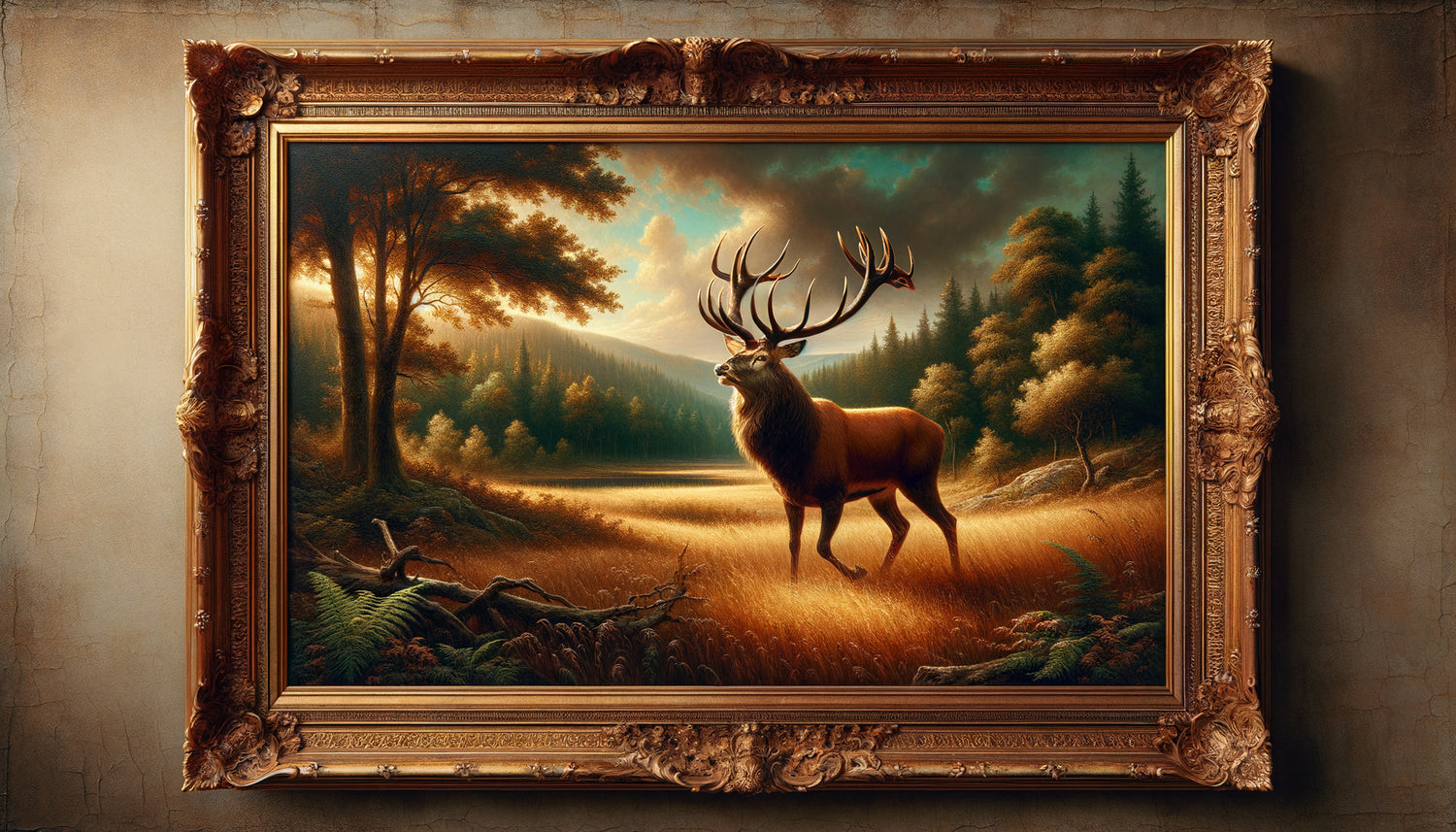
Last autumn, at an auction in Brussels, I observed a fascinating scene: two collectors were vying for a 19th-century animal painting depicting a majestic deer in a misty clearing. The price tripled in a few minutes. What was once relegated to the attics of our grandparents is now experiencing a spectacular renaissance in contemporary interiors.
Here's what vintage animal wall art brings to your decor: a historical depth that anchors the space in an authentic artistic tradition, an animal presence that breathes life and character into walls, and that patina of time impossible to reproduce which instantly confers nobility and refinement to any room.
Many hesitate before these works, judging them too classic, too academic, or even outdated. This perception is the result of a profound misunderstanding of their artistic and decorative value. In reality, these vintage animal paintings transcend the rigid categories of art history to assert themselves as masterpieces capable of dialoguing with modern furniture as well as more traditional interiors. Allow me to guide you through the fascinating world of these works that reconcile academic technique and contemporary sensibility.
Animal Academicism: More Than Just a Technique
When we talk about vintage animal wall art, we immediately evoke this academic tradition that dominated Parisian salons in the 19th century. Artists like Rosa Bonheur or Alfred de Dreux elevated animal representation to a major art form, with a technical requirement comparable to court portraits.
These painters spent weeks studying anatomy, movements, textures of fur and feathers. Each vintage animal painting bears witness to this rigorous discipline: observe the precision of proportions, the rendering of muscles under the skin, the brilliance of the eye that seems to follow you with its gaze. This technical mastery was not gratuitous – it served to capture the soul of the animal, its dignity, its place in the natural order.
But reducing these works to their academic dimension would be missing their essence. For beyond the technical prowess, these animal paintings carried a powerful social and symbolic message: the horse embodied nobility and power, the dog loyalty, the deer wild majesty. In the bourgeois salons of the Second Empire, owning an animal wall art meant displaying one's values, one's relationship with nature, one's social status.
The Visual Codes of Animal Academicism
A true academic vintage animal painting is recognizable by several characteristics: a dramatic light often lateral that sculpts the volumes, a sober background highlighting the main subject, a balanced composition respecting the classic rules. The antique gilded frame is not just an ornament – it participates in this theatrical staging which elevates the animal to the rank of principal character.
These works frequently use earthy tones – ochres, deep browns, dark greens – which create a timeless atmosphere. The natural patina of the varnish, slightly yellowed with decades, adds that golden warmth so sought after today in Scandinavian or contemporary industrial interiors.
Animal genre painting: when an animal tells a story
Alongside rigorous academicism, another tradition developed: animal genre painting. Here, the animal is no longer an isolated subject in its majesty, but an actor in a narrative scene. Think of those paintings depicting hunting dogs resting after the chase, chickens pecking in a sunny farmyard, or cats playing with a ball of wool.
These vintage wall art depicting animal scenes possess a particular charm: they invite anecdote, smiles, and tenderness. In the academic hierarchy of the 19th century, these works were considered minor – genre painting occupying a lower rank than portraiture or historical painting. Yet, it is precisely this narrative and accessible dimension that makes them so prized today.
A vintage animal painting showing puppies playing or birds in a nest touches a universal sensitive chord. It humanizes the space, brings a note of softness, tells a micro-story that each visitor can interpret in their own way. In a sleek contemporary living room, this touch of figurative storytelling creates a striking contrast with the minimalist lines of modern furniture.
The emotional power of animal scenes
What makes genre animal paintings so powerful is their ability to evoke an idealized rural world, a harmonious relationship between man and animal. In our urban interiors, these vintage artworks act as windows onto a domesticated nature, reassuring, far from metropolitan stress.
Discerning collectors particularly seek out Flemish farmyard scenes, depictions of draft horses at rest, or still lifes with game – themes that embody a certain nostalgia for a lost way of life.

Why do these works fascinate contemporary decorators?
For a decade now, I've observed an irresistible trend: vintage animal wall art is taking over the most avant-garde decor projects. From industrial lofts to renovated Haussmann apartments, these works are establishing themselves as essential statement pieces.
The reason? They perfectly meet several current trends. First, the quest for authenticity: in contrast to mass production, a true vintage animal artwork has a history, provenance, and uniqueness. Then, the return of figurative art: after decades of abstraction's dominance, realistic representations are reconquering walls. Finally, the ecological dimension: recycling and showcasing these antique works aligns with a responsible consumption approach.
A quality animal wall artwork instantly creates a focal point in a room. In an entryway, it welcomes with character. Above a velvet sofa, it adds a layer of sophistication. In an office, it inspires calm and concentration. Its decorative versatility largely explains its resurgence.
The art of mix and match
The most daring decorators don't hesitate to combine vintage animal artworks with ultra-contemporary furniture. A majestic stag on a dark background dialogues beautifully with a concrete table. Delicately painted birds bring poetry to a minimalist Scandinavian kitchen. This tension between old and modern creates a captivating visual dynamic.
The secret lies in balance: let the animal artwork breathe, don't overload the wall, and create a visual conversation between eras rather than a haphazard juxtaposition.
How to recognize a quality vintage animal artwork?
Not all vintage animal wall artworks are created equal. Some are works by recognized artists, while others are decorative productions of lesser value. Here are my selection criteria after twenty years of practice.
First examine the painting technique: are the brushstrokes mastered? Are the anatomical proportions respected? Does the rendering of textures (fur, feathers) show a real work of observation? A quality vintage animal artwork reveals undeniable technical skill, even in modest formats.
Then observe the composition: is the animal placed harmoniously within the frame? Does the background serve the subject or compete with it? The great masters of animal art knew how to create a clear visual hierarchy, naturally guiding the eye towards the main element.
Check the condition: natural varnish cracks (a sign of authenticity), canvas stability, absence of crude repaints. A vintage wall artwork may show signs of age – this is normal and even desirable – but it should not be irreversibly damaged.
The Signature and Provenance
A legible signature significantly increases the value, but many vintage animal paintings of quality are anonymous. Do not systematically reject an unsigned work if the pictorial invoice appeals to you. On the other hand, be wary of apocryphal signatures added later to artificially increase the value.
Provenance – the history of the painting – adds a fascinating narrative dimension. A vintage painting that belonged to an aristocratic family or was featured in an exhibition has a particular aura that enriches your decor with an additional layer of storytelling.

Academicism and genre painting: a false opposition
Let's go back to the initial question: do vintage animal wall paintings belong to academicism or the popular genre painting? The answer is: both, and that’s precisely what makes them rich.
This artificial dichotomy, inherited from the 19th century academic hierarchy, has no place today. A vintage animal painting can combine academic technical rigor and the narrative dimension of genre painting. The most beautiful works are those that transcend these categories to create pure emotion.
In your interior, it doesn't matter whether the animal wall painting that vibrates with you is academic or narrative. What matters is the emotional connection it creates, the presence it installs, the atmosphere it generates. A successful animal painting is one that, every morning, attracts your gaze and offers you a moment of contemplation before the whirlwind of the day.
The most discerning collectors no longer ask themselves this question of classification. They seek quality of execution, authenticity of emotion, and the ability of the work to dialogue with their living space. Whether it's a racehorse captured in its academic power or a touching scene of puppies playing, what matters is artistic sincerity.
Integrating a vintage animal painting into your decor
Specifically, how to showcase these vintage animal wall paintings in your interior? Here are my practical tips from hundreds of design projects.
First, prioritize suitable lighting: overly intense direct light will cause antique varnishes to fade and accelerate aging. Opt for indirect lighting or adjustable LED spotlights with a warm temperature (2700-3000K) that will reveal chromatic subtleties without damaging the pictorial material.
Regarding placement, vintage animal paintings thrive particularly well in reception areas: living room, dining room, library. Their contemplative dimension invites dialogue and reverie. In a bedroom, choose soothing subjects – birds, resting animals – rather than dynamic hunting scenes.
For the wall to be hung, create a chromatic contrast: an animal wall painting with warm tones will stand out against a charcoal gray or deep blue wall. Conversely, a light background will highlight the details of a painting with dark tones. Don't be afraid to take risks: these works have survived decades and can withstand the modernity of your decor.
Creating a Coherent Wall Gallery
If you have several vintage animal paintings, consider a thematic wall composition. Group the birds together, or create a narrative progression of rural scenes. However, respect a consistency of frames – antique gold or dark woods – to visually unify the whole.
Alternatively, the salon-style hanging – this dense arrangement in the manner of Victorian galleries – works wonderfully with animal paintings. This maximalist approach creates a wall of history and conversation absolutely unique.
Ready to give your walls character with a work full of history?
Discover our exclusive collection of Vintage paintings that will instantly transform the atmosphere of your interior with authenticity and refinement.
The investment in vintage animal art: emotional and financial value
Beyond their decorative dimension, do vintage animal wall paintings represent a worthwhile investment? The question is worth asking, especially when observing the rise in prices at auction houses.
The market for animal art is indeed experiencing significant revaluation. Works by 19th-century artists such as Percival Rosseau or Maud Earl now reach peaks during international auctions. Even animal paintings by lesser-known but beautifully crafted artists see their value rise regularly.
However, I always recommend buying with your heart first. A vintage wildlife painting should bring you daily joy, enrich your everyday life, and tell a story that resonates with your values. If its value increases over time, it will be an appreciable bonus, but the main investment is emotional and aesthetic.
To preserve and potentially increase the value of your vintage wall art, document its history, keep any certificates of authenticity, and ensure proper maintenance. Avoid direct sunlight exposure, maintain stable humidity levels, and consult a professional restorer for any intervention – never attempt amateur cleaning that could irreversibly damage the pictorial layer.
These antique wildlife artworks are witnesses to craftsmanship, fragments of art history that deserve respect and preservation. By integrating them into your decor, you become the temporary guardian of an artistic heritage that will cross generations, enriched with new stories at each change of ownership.
Imagine yourself in five years, receiving friends in your living room. Their gaze lingers on this magnificent vintage wildlife painting that you have carefully chosen. They approach, fascinated by the quality of the painting, the depth of the animal's gaze, the noble patina of the frame. You tell its story, how you discovered it, why it touched you. This moment of sharing, this transmission of aesthetic emotion – that is the true value of a vintage wall art.
Don't wait any longer to take the plunge. Whether it's a majestic academic stag or a touching rural scene, your vintage wildlife painting awaits you somewhere. It will transform not only your decor but also your daily relationship with art and beauty. Start by defining the space you want to enhance, the atmosphere you want to create, and let yourself be guided by emotion when looking at the artworks. This instinctive connection is what will make your choice a lasting decorative success.
Frequently asked questions about vintage wildlife wall art
How to authenticate a vintage wildlife painting?
Authenticating a vintage wildlife painting relies on several complementary elements. First, examine the canvas and frame: antique materials have specific characteristics (irregular weave of the canvas, non-industrial wood for the frame). The cracking of the varnish should be natural and consistent with the presumed age of the work – impossible to artificially reproduce convincingly. The signature, if it exists, must be integrated into the pictorial layer, not added on the surface. For valuable pieces, do not hesitate to consult an expert in wildlife art who can analyze the technique, compare with referenced works by the artist, and potentially perform scientific analyses (radiography, pigment analysis). Be wary of prices that are too attractive for prestigious signatures – the wildlife art market unfortunately has its share of forgeries. An authentic vintage wall painting possesses an overall coherence – pictorial facture, materials, patina – which does not deceive the trained eye.
Are vintage wildlife paintings suitable for modern interiors?
Absolutely, and it's even one of the most exciting decorative trends currently! Vintage wildlife wall paintings create a striking and sophisticated contrast in clean contemporary interiors. Their figurative and narrative dimension brings warmth and humanity to spaces that might otherwise seem cold or impersonal. In an industrial loft with raw concrete walls, a large wildlife painting of a hunt framed in antique gold creates a fascinating visual tension between eras. In a minimalist Scandinavian apartment, a delicate painting of birds on a branch softens the strict geometric lines of modern furniture. The secret lies in balance: let the painting breathe by avoiding decorative overload around it, create a chromatic dialogue between the tones of the work and your interior palette, and fully embrace the mix of eras. Leading decorators now consider that a vintage wildlife painting of quality is the finishing touch that transforms a modern interior into a truly personal and sophisticated space.
How to maintain and preserve an antique wildlife painting?
Preserving a vintage animal wall art requires some simple but essential precautions. Absolutely avoid direct exposure to sunlight, which would irreversibly discolor the pigments and weaken the varnish. Maintain a stable temperature between 18 and 22°C with humidity of 45-55% – drastic variations cause the canvas to work and can lead to lifting of the pictorial layer. For dusting, use a very soft brush (like a makeup brush) without ever touching the painted surface directly. Never apply household cleaning products that could dissolve the old varnish. If your vintage animal art shows signs of alteration (flaking, deep cracks, excessive yellowing), consult a qualified professional restorer. Proper cleaning and restoration by an expert can literally bring a painting back to life and reveal colors that decades of grime had masked. Also consider reframing if the original frame is damaged – but keep it preciously as it is part of the artwork's history. With these careful precautions, your vintage wall art will last through several generations while preserving all its beauty.


