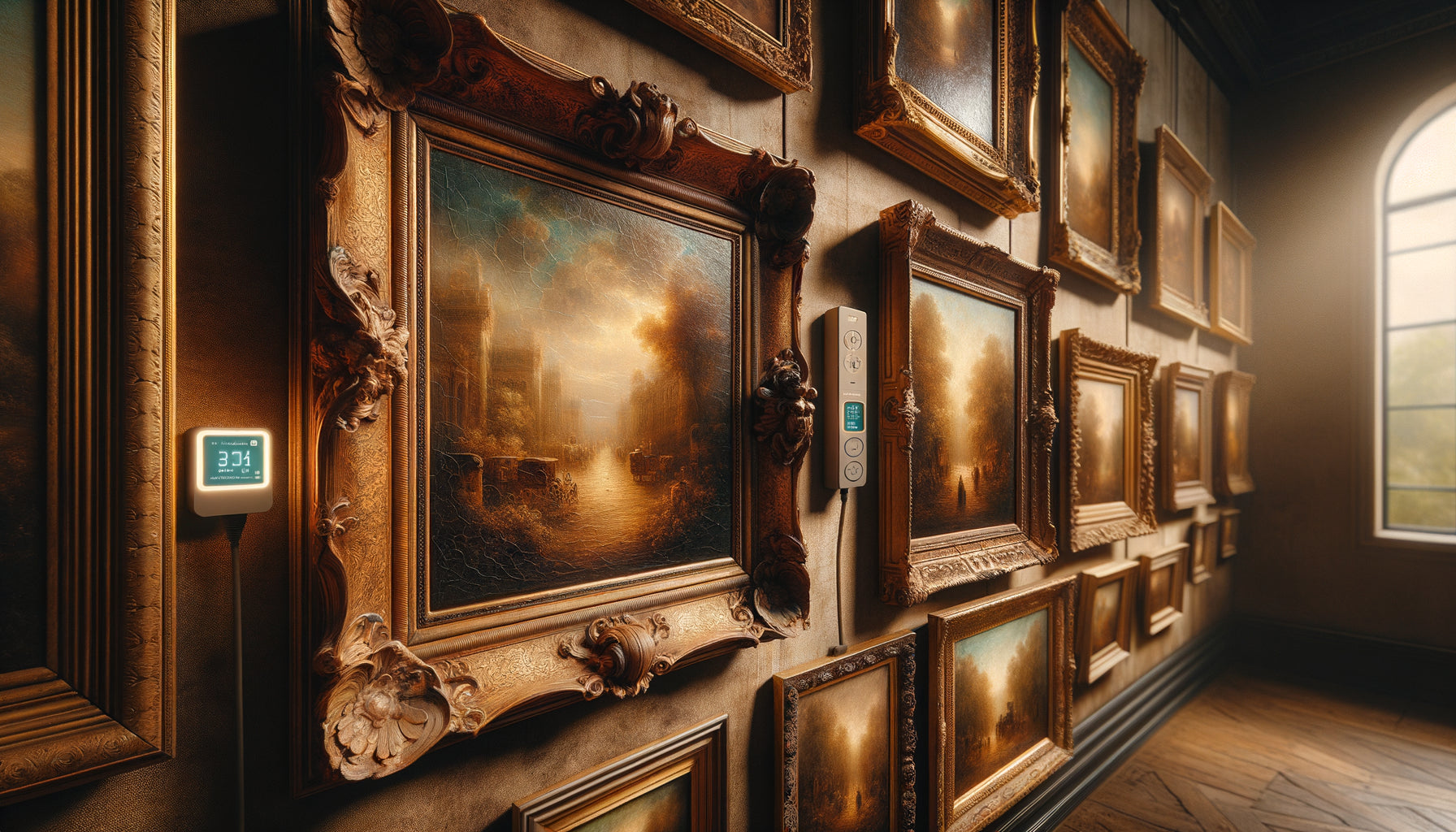
I spent fifteen years scouring European auctions, rummaging through gallery reserves, and talking with passionate collectors. One certainty emerged: when faced with a vintage abstract wall art piece, most people desperately try to understand rather than feel. They scrutinize the signature, attempt to identify the movement, as if an artwork's value lay solely in its historical label.
Here’s what vintage abstract wall art pieces truly bring: an instant emotional depth that transforms a white wall into a visual conversation, a vintage authenticity impossible to reproduce with contemporary prints, and a decorative investment that transcends trends without ever seeming dated.
Yet, how many times have I heard this same hesitation: 'It’s beautiful, but I don't understand abstract art. How do you know if this movement suits my interior?' This fear of making a mistake, of choosing the 'wrong' artistic reference, paralyzes dozens of decorative projects every year.
The truth? Artistic movements are not secret codes reserved for initiates. They are visual languages that your eye understands instinctively, long before your brain attaches a label to them. Let me guide you through the currents that shaped vintage abstraction, not as an art history lesson, but as a sensory exploration to find your decorative voice.
Abstract Expressionism: Raw Power on Your Walls
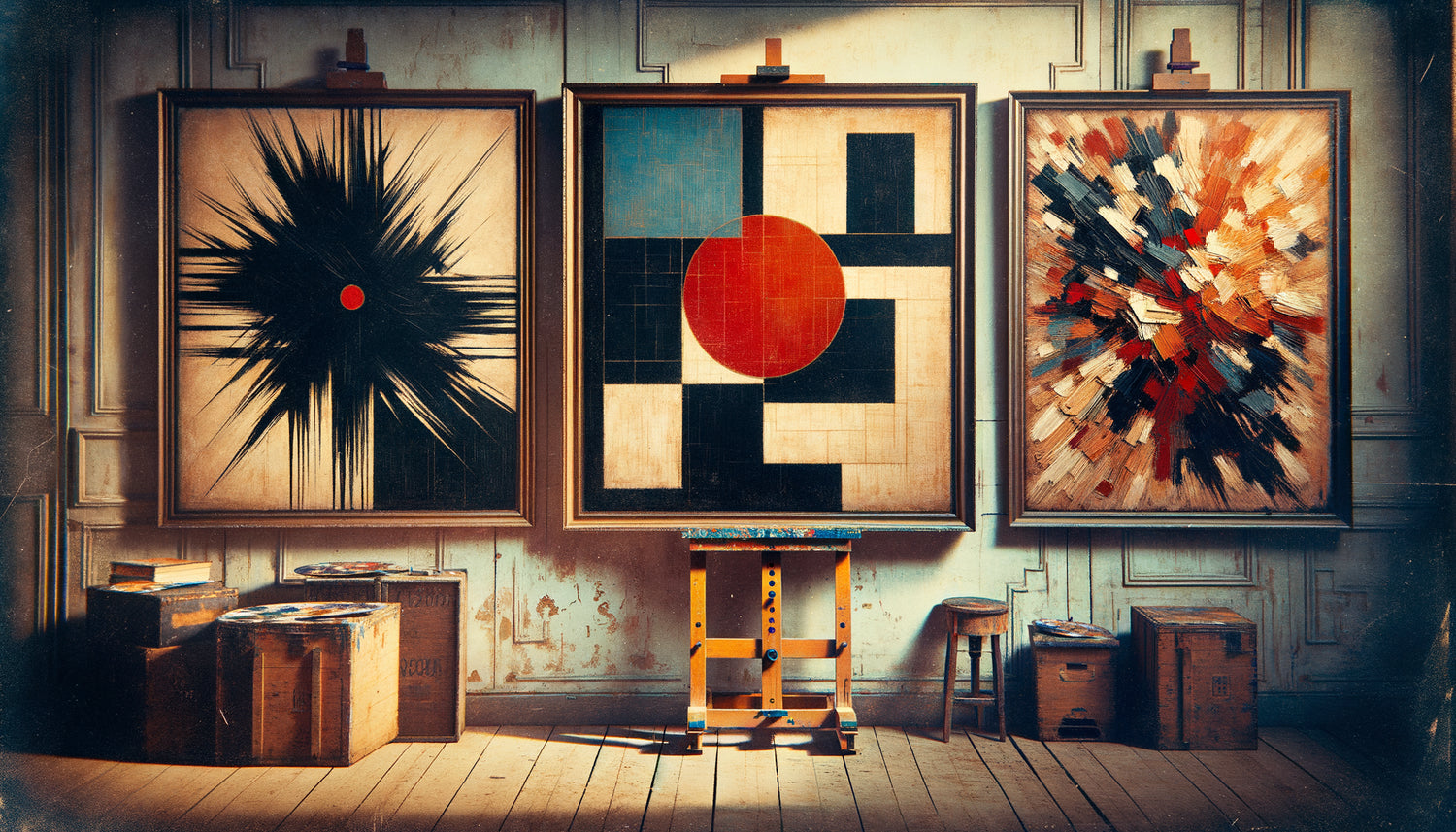
Imagine a vintage wall art piece where the paint seems to have been projected with urgency, where brushstrokes tell a physical struggle between the artist and the canvas. This is the legacy of abstract expressionism, the New York movement of the 1940s-1950s that revolutionized contemporary decor.
These vintage abstract artworks carry visceral energy. Pollock's drippings, Rothko's color fields have inspired thousands of wall art pieces where color becomes an emotional experience rather than mere ornamentation. In a loft or a minimalist living room, an expressionist abstract vintage artwork creates a magnetic focal point.
During a recent acquisition, I discovered an anonymous canvas from the 1960s, clearly influenced by this movement: deep blacks crossed with ochre and white splashes. The collector had installed it above a cognac leather sofa. The contrast between the calmness of the furniture and the gestural tension of the artwork created a striking dynamic.
Recognizing Expressionist Influence
A vintage abstract wall art piece inspired by expressionism is distinguished by its broad gestures, superimpositions of material, sometimes drips or impasto. The composition seems spontaneous, almost chaotic, but always possesses an internal balance. These artworks work particularly well in generous spaces where their intensity can breathe.
Suprematism and Constructivism: Pure Geometry That Transcends Time
On the opposite end of the spectrum, vintage wall art inspired by Russian Suprematism and Constructivism embodies a radically different abstraction. Malevich and his famous Black Square, Kandinsky and his geometric compositions generated a refined aesthetic that resonates today with Scandinavian design and contemporary minimalism.
I accompanied an interior architect who was desperately searching for the perfect artwork for a director's office. She eventually opted for a vintage abstract painting from the 1970s: red, black and white rectangles on a cream background, asymmetrical but rigorous composition. This piece brought visual authority without aggression, an immediate intellectual sophistication.
These geometric abstract vintage wall art pieces have a major decorative advantage: they naturally dialogue with modern architecture. Their clean lines, their blocks of color create visual bridges between the structural elements of the room and contemporary furniture.

Why Vintage Geometric Abstraction Never Goes Out of Style
Unlike fleeting decorative trends, a vintage geometric abstract wall painting transcends decades without appearing dated. The reason? Its visual language is based on fundamental principles: proportion, balance, tension between forms. These are not fashion effects but perceptual constants.
In a Parisian apartment I recently visited, a 1960s constructivist composition harmoniously coexisted with Ligne Roset furniture and Scandinavian design accessories. The vintage abstract painting served as a temporal bridge, proving that some works possess an intrinsic timelessness.
European Informal Art: Matter as Language
While America developed Abstract Expressionism, Europe cultivated its own response: Informal art. Fautrier, Dubuffet, Tàpies explored texture, raw materials, an abstraction that engaged touch as much as sight.
Vintage wall art from this movement possesses an extraordinary tactile presence. Sands, plasters, reliefs create living surfaces that capture light organically. In a dining room with white walls, a vintage informal abstract painting brings a mineral warmth, a physical depth that no print can reproduce.
A collector once told me he initially found these works 'difficult,' almost brutal. Then, after a few weeks, he realized his gaze kept returning to that complex texture, discovering new details in the layers of material each day. It is precisely this rich contemplative quality that distinguishes a true vintage abstract wall art from superficial decoration.
Integrating Material into Your Decor
A textured vintage abstract wall art works wonderfully in interiors where natural materials dominate: raw wood, stone, linen. It creates a sensory continuity between the architecture, furniture and art. However, avoid placing it in spaces that are already visually cluttered – these artworks need space to breathe.

The Color Field: When Color Becomes Architecture
Rothko, Newman, Still developed an abstraction where pure color occupies all the space. Vintage wall art inspired by American Color Field literally transforms the atmosphere of a room. No narrative, no visible gesture, just chromatic fields that change your spatial perception.
I saw a vintage abstract wall art – three horizontal bands of burgundy, blush pink and pearl gray – metamorphose a narrow and dark hallway into a meditative passage. The chromatic vibration created an optical depth that visually widened the space. That's the magic of these works: they don't decorate a wall, they dissolve it.
These abstract wall murals do however require a certain decorative boldness. Their large colored surfaces naturally dominate the space. But for those who accept this presence, they offer a monumental serenity that is otherwise unattainable.
Beyond Labels: Finding Your Personal Resonance
After fifteen years analyzing thousands of vintage abstract wall art, here's my most valuable advice: forget the movements when you choose for your interior. These historical categories are tools for understanding, not decorative prescriptions.
A vintage abstract wall art works when it creates an emotional resonance with your space and your sensitivity. I have seen impeccable interiors ruined by 'important' artworks historically but unsuitable, and beautiful spaces built around anonymous paintings chosen instinctively.
Ask yourself these questions: Does this artwork soothe your gaze or stimulate it? Do its colors dialogue with your existing palette, or do they create an intentional contrast? Does its presence make you want to spend time in this room? It is these sensory, non-academic criteria that determine the success of an integration.
Your wall awaits its visual conversation
Discover our exclusive collection of Vintage paintings
Vintage abstraction as a decorative investment
One last point rarely mentioned: a vintage abstract wall painting represents a remarkably stable decorative investment. Unlike trends that go out of style in a few years, these works gain relevance over time.
I have observed for fifteen years how interiors evolve. Sofas change, wall colors succeed each other, but quality vintage abstract paintings remain, gradually becoming the visual pivot around which everything else is organized. They acquire an affective patina, a personal history that enriches your daily life.
This temporal dimension fundamentally distinguishes an authentic vintage abstract painting from a contemporary reproduction. You are not just buying a visual composition, but a layer of history, a fragment of real artistic research, a presence that has already crossed decades and will continue its journey.
Imagine your living room in five years, ten years. Current trends will have evolved, your tastes will have refined. But this vintage abstract wall painting, chosen with sensitivity today, will still be there, perhaps even more relevant, certainly more charged with your own memories. It is this elegant permanence that you are really looking for.
So yes, artistic movements matter – not as collectibles to collect, but as visual languages to discover. Your mission is not to become an art historian, but to recognize which visual grammar resonates with your sensitivity. Let your instinct guide your gaze. The most beautiful decorative integrations I have observed always arose from a love at first sight informed, never from a purely intellectual decision.
Your wall doesn't need a degree in art history. It needs an authentic presence that will transform your daily life. Vintage abstract wall paintings offer precisely that: an emotional and temporal depth that no contemporary decoration can match.