⏱️ Reading time: 8 minutes
You've just furnished your living room with care, but something feels off. Despite your efforts, the atmosphere remains cold and impersonal, as if the room is desperately lacking life and emotion.
The furniture is perfectly arranged, the colors harmonious, yet your guests don’t linger, and you yourself don't feel that sense of well-being so sought after in your own home.
You may have tried a few generic paintings, banal reproductions that only accentuate this feeling of déjà vu. These characterless works cannot create the essential emotional connection.
This is perfectly normal: these conventional decorative choices cannot compete with the raw power of nature and the vital energy it naturally exudes.
By the end of this article, you will know exactly how to transform your interior into a true natural sanctuary with fauna and flora paintings, and create that authentic atmosphere that makes all the difference.
Why does nature so radically transform our living spaces?
Natural decoration is not just a passing trend. It's a visceral need that responds to our growing disconnection from the wild world.
Imagine an urban space with no vegetation at all: it quickly becomes oppressive, even sterilizing.
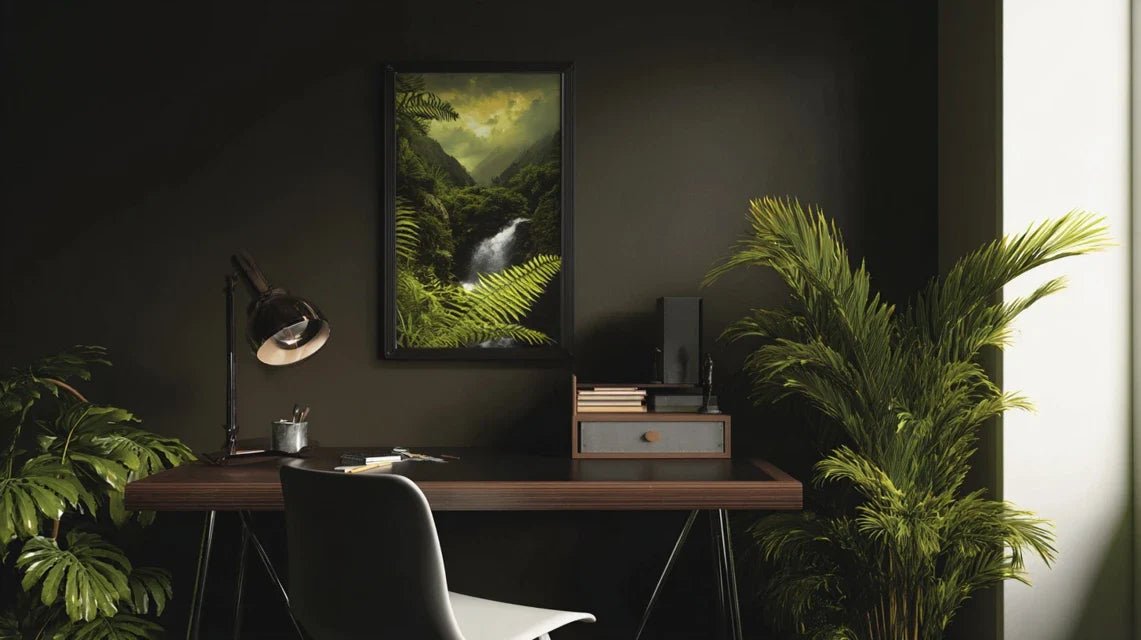
Fauna and flora paintings act as windows open onto infinite nature, instantly bringing this vital energy back into our homes.
🌿 Customer testimonial: Sarah, an interior architect, says: "I could multiply the green plants in my office, but the atmosphere remained tense. The day I hung a large painting depicting a bamboo forest on the main wall, my clients immediately commented on this feeling of calm. The artwork created a depth and serenity that real plants couldn't generate."
💬 Conversation with a decor expert
"I’m afraid it will be too visually busy, my living room isn't very large..."
On the contrary! A well-chosen nature painting creates an illusion of space and depth. It's like installing a virtual bay window: your gaze no longer stops at the walls; it travels through the artwork. A forest landscape or a flight of birds literally gives your room some air.
"I’ve always been told that you need neutral colors so as not to get tired..."
This outdated rule doesn't take into account our modern lifestyle! We spend 90% of our time indoors, far from real natural colors. A painting with deep greens or autumnal hues reconnects us to our natural biological rhythms. It’s therapeutic, not decorative.
Animal and plant art awakens our primal instincts: like a hiker regaining their breath in nature, your interior breathes again. The result is immediate: your loved ones naturally relax in this space, and you feel that inner peace within 24 hours.
Let's discover what's behind your decorative malaise
Do you recognize yourself in these situations? You avoid having people over because the atmosphere doesn’t satisfy you.
You regularly rearrange your furniture without ever getting the desired result.
You feel unexplained fatigue in certain rooms of your home.
These symptoms reveal an energetic imbalance in your habitat. Contrary to popular belief, the problem is not your taste or your budget:
it’s your environment that doesn't nourish your senses and psychological well-being enough.
Imagine your interior as an ecosystem: without strong natural elements, it becomes impoverished and sterile, just like soil lacking nutrients.
The first hidden cause: the lack of visual depth
Here’s what no one tells you: our brains are constantly programmed to analyze our environment for signs of life and movement.
In an interior that is too uniform, this vital function falls asleep, unconsciously creating a feeling of confinement.
It's exactly like those open-plan offices where everyone feels exhausted for no apparent reason: the eye finds no natural escape point to rest.
Landscape paintings break this visual monotony and reactivate our spatial perception.
Your brain rediscovers its ancestral bearings, that feeling of freedom and expansion characteristic of vast wildernesses.
🔍 Quick test: Look around you and count how many elements naturally capture your gaze beyond 2 meters. If it's less than 3, your space desperately lacks visual depth - mentally add a large nature painting to the main wall.
The unsuspected impact of artificial colors on your energy
Most people think that colors only have an aesthetic role. In reality, our nervous system reacts differently to natural hues and industrial pigments, even without us realizing it.
It’s like the difference between listening to a live concert and a compressed MP3 file: technically similar, but the emotional impact is completely different.
When you integrate artwork depicting fauna and flora, you reintroduce that organic chromatic range which naturally soothes your nervous system.
Result: more restorative sleep and increased creativity in these spaces.
The lack of visual cycles in our modern interiors
Here’s a factor that 99% of homeowners ignore: our living spaces lack natural visual rhythms.
Everything is static, unlike nature which constantly offers movement, growth and transformation.
Observe your reaction to an aquarium or a fireplace: your gaze naturally lingers on it because it finds this soothing dynamic.
Well-chosen animal art recreates this suggestion of movement and life, even in a fixed image.
Your eye continues to discover details, your imagination projects the "before" and "after" of the captured scene.
5 signs that your decor lacks natural vitality:
- You avoid certain viewpoints in your rooms: This indicates visually "dead" zones that your brain instinctively rejects
- Your guests always settle in the same places: They subconsciously flee spaces without natural points of interest
- You feel the need to "change something" without knowing what: It's your instinct calling for more connection with nature
The trigger element: size and placement of your artworks
The difference between ordinary decor and a real emotional impact often lies in one factor only: boldness in proportions.
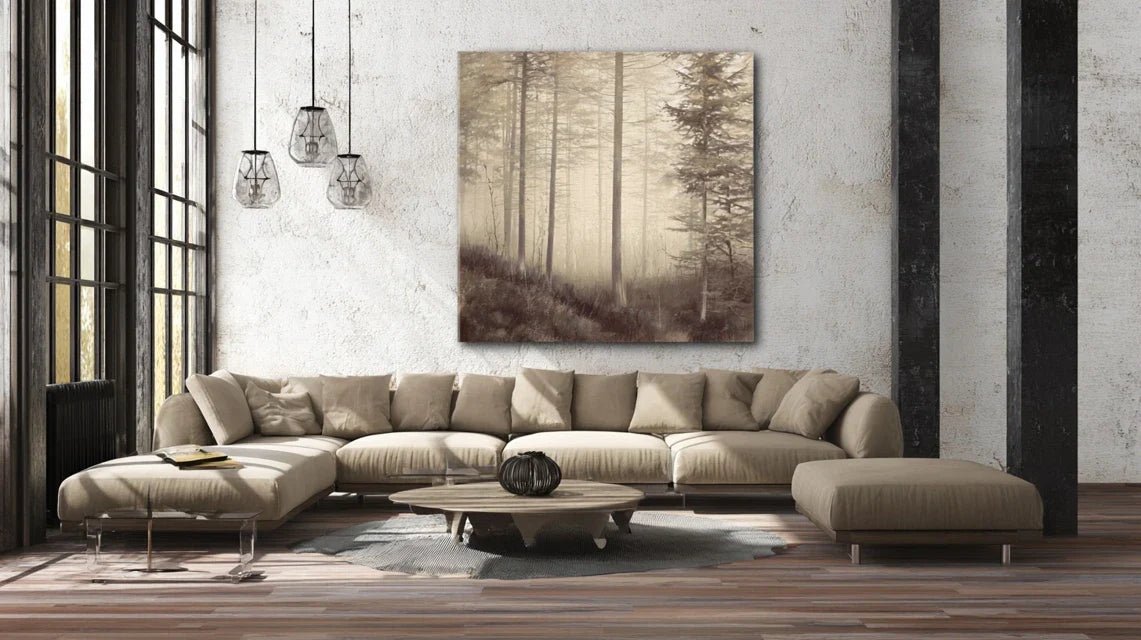
A small nature artwork produces a decorative effect, but a large format creates a true sensory immersion, like a window open onto another world.
Identify the "orphaned" walls of your home: these are generally the most powerful locations to maximize this feeling of natural presence.
Rule of natural proportions: To recreate the visual impact of a real landscape, your artwork should occupy at least 1/6 of the visible wall surface from your main viewing position. Test by stretching out your arms: your hands should comfortably frame the painting.
| ❌ Common belief |
✅ Nature decor reality |
💡 Explanation |
🎯 Practical benefit |
| Green tones tire the eyes |
Natural green soothes and revitalizes |
Our eyes are calibrated for vegetation |
Less eye fatigue, improved concentration |
| Too many animals makes it a "zoo" |
Wildlife brings movement and emotion |
Each species evokes specific sensations |
A more lively and personalized atmosphere |
| It's difficult to match with furniture |
Nature harmonizes with everything |
Natural colors are universally compatible |
More decorative freedom and authenticity |
| You have to change it according to the seasons |
A beautiful nature artwork transcends trends |
Wild beauty is timeless |
Sustainable investment and stable emotional value |
Your decorative transformation in 3 natural steps
Rest assured, creating this authentic natural atmosphere requires neither major renovations nor a significant budget.
Like a gardener who first prepares the soil before planting, we will proceed step by step so that each element naturally finds its place.
The final result? An interior that breathes serenity and authenticity, where everyone feels instantly calmed.
🗺️ Your natural roadmap: We will start by identifying your "impact wall" (the one that will immediately transform the atmosphere), then we will create chromatic harmony with your existing decor, before refining the last details for perfect consistency. Each step amplifies the benefits of the previous one.
Step 1: Identify your natural focal point
This first step is crucial as it determines 80% of the success of your project. Like choosing the location of a tree in a garden, the right positioning multiplies the visual impact.
Once this foundation is laid, you will immediately feel this new energy in the room, this impression that the space "breathes" finally.
What you will need for this step
-
A measuring tape or a measurement app: To accurately assess available dimensions. Avoid eye estimates that often lead to overly timid choices. The golden rule: think big while respecting the proportions of your space.
-
A camera or smartphone: To capture different views and objectively analyze your room. This technique reveals details that your accustomed eye no longer notices, such as visually empty areas or chromatic imbalances.
-
Kraft paper or newspaper: To create templates with actual dimensions and visualize the impact before purchasing. This professional trick avoids regrets and gives you confidence in your final choices.
Now let's move on to concrete practice
How to proceed without making a mistake
Spot your character wall: Stand at the entrance of the room and identify the wall that naturally attracts the eye. It is usually the one facing the door or perpendicular to the sofa. This wall will become your "window on nature" and anchor the entire atmosphere of the space.
⏱️ Time: 10 minutes | ✅ Successful when: You can close your eyes, open them again and your gaze spontaneously directs towards this wall | ⚠️ Attention: Do not choose a wall that is too cluttered - it is better to temporarily move a piece of furniture than to suffer from a poorly showcased work
Measure your impact zone: Note the available height and width, but also the viewing distance from your usual observation positions. A work viewed up close reveals its details, seen from afar it must create a global atmosphere - both aspects are equally important.
⏱️ Time: 15 minutes | ✅ Successful when: You have noted at least 3 different viewing distances | ⚠️ Attention: Take into account furniture that may obstruct the view - a reduced blind spot considerably reduces the emotional impact
Visually test with a template: Cut out and temporarily fix a rectangle of paper to the planned dimensions. Live with it for at least 24 hours to validate your feeling. This simulation reveals whether the size will create that sought-after "natural presence".
⏱️ Time: 20 minutes of preparation + 1 day observation | ✅ Successful when: The template seems naturally integrated into the space | ⚠️ Attention: If the rectangle appears "floating" or disproportionate, adjust the dimensions before validating
🎯 Step validation: Your location is perfect when you feel that impatience to see the definitive work installed, when the space seems "waiting" for something. If in doubt, test a second location - it's better to invest this time now than regret it later.
Step 2: Harmonize colors with your existing environment
Now that your location is defined, we move to the next level: creating this chromatic consistency that makes the difference between a simple decoration and a true visual ecosystem.
This step is particularly rewarding because you begin to visualize your future atmosphere concretely. The snowball effect begins: each good choice facilitates and improves the following.
Your chromatic harmonization tools
-
Existing color samples: Take small pieces of fabric, wallpaper or take high definition photos of your current colored elements. This will allow you to objectively compare natural tones with your existing palette.
-
Reference lighting: Test your colors under different lighting conditions in your room (natural, artificial, evening). Natural tones reveal their richness under natural light but must also work in artificial lighting for evenings.
-
Color wheel or color application: To identify natural harmonies between your current colors and the fauna/flora tones considered. This tool reveals unexpected and particularly successful associations.
Creating perfect harmony
Analyze your dominant palette: Identify the 3 main colors of your room (walls, main furniture, textiles). These tones will serve as a bridge to your future nature artwork. Even an apparently neutral interior has warm or cool nuances that must be respected.
⏱️ Time: 25 minutes | ✅ Successful when: You can precisely name your 3 dominant colors | ⚠️ Attention: Do not confuse dominant color with the most visible color - sometimes a discreet but omnipresent tone structures the atmosphere more
Select your natural family: Temperate forest (deep greens, browns), savanna (ochres, golds), tropical jungle (intense greens, colorful touches) or arctic fauna (whites, grays, blues). Each family naturally harmonizes with certain existing domestic atmospheres.
⏱️ Time: 20 minutes | ✅ Successful when: A family instinctively draws you in while completing your decor | ⚠️ Warning: Avoid choosing solely based on personal taste - check consistency with your current environment
🌈 Color verification: Harmony is achieved when your selection seems to naturally "belong" to your space, as if it had always been there. Your eyes smoothly transition from existing colors to the envisioned natural tones, without disruption or visual contradiction.
Step 3: Finalizing your natural composition
Congratulations, you are now reaching the level of mastery that separates amateurs from true connoisseurs in natural decor.
This final step consists of fine-tuning all these elements to create an overall composition that tells a story, evokes a specific emotion.
The final result will exceed your expectations: a space that not only resembles you but also inspires you daily.
Expert finishing touches
-
Professional hanging system: Invest in fixings suitable for the weight and dimensions of your artwork. A nature painting deserves an impeccable presentation - avoid makeshift systems that would compromise the desired effect.
Additional lighting (optional but recommended): A discreet LED spotlight or strip can reveal the subtle nuances of your work and create a more intimate atmosphere in the evening. Nature changes with light - so does your artwork.
Natural accompanying elements: A few plants, pebbles or driftwood can extend the universe of your artwork into the real space, creating a harmonious transition between art and reality.
The final touch that makes all the difference
Position at optimal height: The center of your artwork should be at eye level (approximately 1.60m) from your main viewing position. This universal museum rule maximizes emotional impact and long-term visual comfort.
⏱️ Time: 30 minutes installation included | ✅ Successful when: Viewing the artwork requires no cervical effort | ⚠️ Warning: Adjust slightly if you spend more time sitting than standing in this space
Create the perfect setting: Clear the space around your artwork so it can "breathe". A nature painting needs empty space to fully express that feeling of freedom and expansion it carries. Less is more.
⏱️ Time: 45 minutes | ✅ Successful when: The artwork naturally attracts attention without visual competition | ⚠️ Warning: Resist the temptation to "furnish" around it - nature expresses itself better in simplicity