


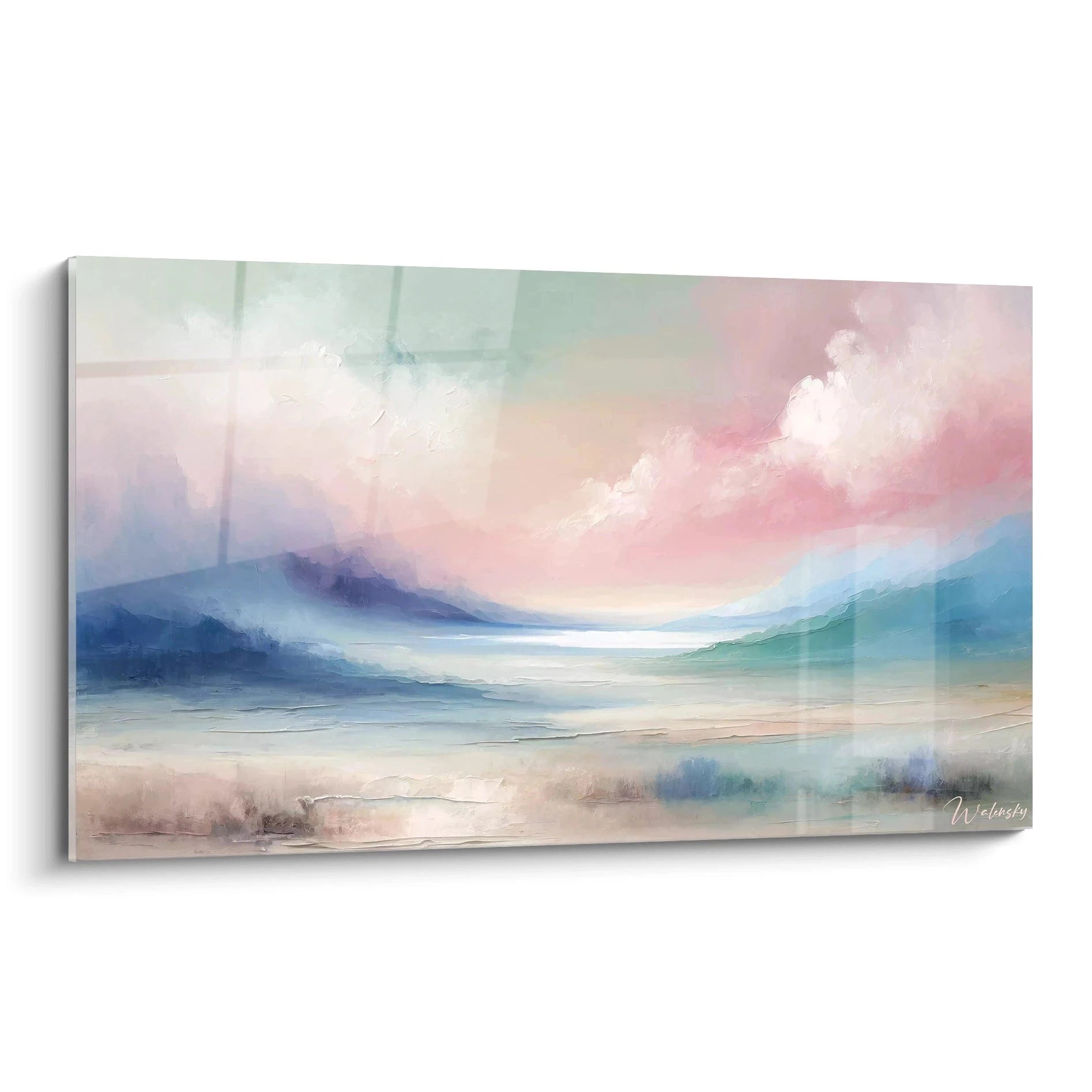

Why a well-chosen artwork can help structure a reading corner or calm space?
October 11, 2025 · 22 min read · by Walensky
In the morning, you find the books scattered, the cushions all over the place, and that frustrating feeling that the space you had imagined so cozy isn't creating the bubble of calm your little one desperately needs.
You’ve tried defining the space with a rug, installing a small shelf, even adding string lights... But nothing works: the space lacks character and visual structure to truly invite relaxation.
This is perfectly normal! A reading corner isn't just about piling up accessories in a corner of the room. The real challenge lies in creating a psychological delimitation of the space that subconsciously signals to the brain that it’s time to slow down.
By the end of this article, you will know exactly how a well-chosen wall art piece can transform any corner of a child’s room into a true reading sanctuary, and your child will finally have their daily refuge to recharge.
Why can a simple artwork revolutionize the atmosphere of a child's space?
A piece of art isn’t just a decorative element: it’s a powerful visual anchor that directly influences our state of mind. In a child’s room, where visual stimuli are often numerous and scattered, the right artwork becomes the focal point that mentally organizes the entire surrounding space. If you wait to structure this reading corner, your child may develop habits of dispersion that are difficult to correct later.
🏠 Parent testimonial: "My 6-year-old daughter had trouble concentrating on her books. I installed a painting depicting an enchanted forest above her reading corner. The change was immediate: she now tells me that she 'enters the forest' when she goes to read, and sometimes stays there for a whole hour!"
Conversation with a decor expert
The golden rule of visual anchoring: A well-positioned painting acts as a "gateway" to a particular state of mind. In 2-3 weeks, your child will automatically associate this image with the pleasure of reading and calm, creating a natural relaxation reflex.

Our highlight
Jewels of the Sands Wall Art - Seashell Nature Edition
233,90€
Discover this artwork →What really happens when a space lacks visual structure
Do you recognize yourself in these situations? Your child starts a book then gets up to go get a toy. They settle into their reading corner but look everywhere except at the pages. Or, they constantly ask you to come read with them because they can't "get into" the story on their own.
What is actually happening is that their brain isn’t receiving the necessary visual cues to switch to “calm” mode. Without a clear focal point, their attention remains in "exploration" mode instead of focusing on a soothing activity.
It's exactly like trying to meditate in a high-traffic area: the environment doesn’t support the intention.
The trap of scattered visual stimulation
Contrary to what one might think, the problem isn’t that there are “too” many decorative elements, but that they don't communicate with each other. A reading corner without a visual hierarchy creates a form of "noise" that prevents concentration.
Imagine an orchestra where each musician played their own melody: even if each instrument is beautiful individually, the whole thing creates cacophony. The painting plays the role of the conductor who harmonizes all the other elements.
As a result, your child subconsciously feels that something "is wrong" in this space, without being able to express it. They will naturally seek a more structured environment... often the sofa in the living room in front of the TV!
🔬 Quick test: Look at your child’s reading corner by slightly squinting. If your gaze immediately “hooks” onto a specific element and rests there, the space is well structured. If your eye flits around, it means the visual hierarchy is lacking!
The little-known impact on concentration ability
Neuroscience teaches us that our brain processes 11 million pieces of information per second, but only consciously retains about forty. In a space without a clear visual focus, a significant portion of this "bandwidth" is wasted analyzing the environment.
It's like trying to read with the radio on in the background: even if you’re not listening to it consciously, it “eats up” some of our attentional resources.
When your child gets impatient after a few pages or easily loses focus, it’s often a sign that their environment isn't helping them maintain their concentration bubble.
The underestimated power of emotional association
Here’s what few parents realize: every time your child looks at their reading corner, their brain subconsciously encodes the emotional state they feel at that moment. Without a memorable and positive visual element, this association remains weak or neutral.
A carefully chosen artwork becomes what’s called a “positive trigger”: just by seeing it, your child feels like settling in because their brain has created a link between that image and the pleasure of reading.
That's why some children shun their reading corner for months, then suddenly become deeply attached to it: the emotional trigger has finally happened.
🔍 The 3 signals that reveal a poorly structured space:
- Your child "skims over" their reading corner: They settle in briefly but quickly leave, indicating that the space doesn’t create an emotional attachment
- They prefer to read elsewhere in the house: Their instinct guides them towards spaces with better visual anchoring (like a chair facing a wall adorned with art)
- They need your presence to concentrate: You subconsciously compensate for the lack of structure in the environment by becoming their focus point
The leverage effect of a well-chosen focal point
The magic happens when your child develops what’s called a "visual anchoring routine”: their gaze naturally rests on the artwork, which automatically triggers them to switch into relaxation mode. It's like a domino effect: a single well-placed element reorganizes everything else. You’ll recognize it when your child starts “greeting” their artwork upon entering their corner, or talks to you about the character/landscape depicted as a reading companion.
The 7-second rule: A successful reading corner should make you want to settle in within 7 seconds of contemplation. If you or your child have to “think” about finding the space welcoming, it means the focal point lacks attraction power.
| ❌ Space without visual structure | ✅ Space with artwork focal point | 💡 Mechanism at play | 🎯 Observable benefit |
|---|---|---|---|
| The child flits around and gets bored quickly | They settle in naturally and stay focused | The brain has an anchor for concentration | Longer and more autonomous reading sessions |
| Prefers to read elsewhere in the house | Spontaneously asks for their "own corner" | Positive emotional association with the space | Development of a pleasurable reading routine |
| The space always seems “messy” | Natural maintenance of tidiness and harmony | Visual hierarchy guides organization | Autonomy in maintaining their personal space |
| Needs external stimulation to read | Reinforced autonomous concentration ability | The environment supports cognitive effort | Self-confidence and enjoyment of constructive solitude |

Our favourite
Futuristic Lunar Landscape Wall Art - Mysterious Horizon - Moon Edition
233,90€
Discover this artworkThe simple method to transform your reading corner with the right artwork
Rassurez-vous : vous n'avez pas besoin d'être expert en décoration pour réussir cette transformation ! The method follows a natural logic in 3 progressive steps, like when planting a tree: first the roots (location), then the trunk (artwork choice), and finally the branches (harmonization with the rest). By following this process, you will see the first behavioral changes from the first week of installation.
🗺️ Overview of your transformation: Step 1: Identify the maximum impact point (analysis of space and gaze). Step 2: Select the artwork that will become the soul of the place (theme, size, colors). Step 3: Create perfect harmony with what already exists (hanging, lighting, accessories). At each step, you will feel the space gaining character and power of attraction.
Step 1: Locate your magic point (the maximum impact zone)
This first step is crucial because location determines 70% of the success of your layout. Like planting a tree, the right location will allow your artwork to "radiate" naturally throughout the surrounding space. Once this step is mastered, you will immediately feel the satisfaction of seeing the space "organize" visually around this new focal point.
What you need for this analysis
- A simple measuring tape: To measure the ideal height (between 1m20 and 1m40 from the ground for a child). Avoid smartphone apps that lack precision for such important measurements. The right height is one where your child can admire the artwork while looking slightly up from their reading position.
- Your camera or smartphone: To take pictures of the space from different angles and objectively analyze the flow of gaze. The photographic eye reveals details that we no longer perceive in everyday life. You will probably discover unexpected perspectives!
- Colored masking tape: To temporarily delineate candidate areas and visualize the impact before drilling anything. This simulation step avoids 90% of regrets and gives you confidence in your final choice.
Let's move on to the practical part now that will reveal the hidden potential of your space!
How to reveal the natural focal point of your room
The instinctive eye test: Place yourself at the entrance of the room and let your gaze naturally settle on the space. The place where your eye stops first reveals the natural focal point of the room. It is usually the wall facing the entrance or the one adjacent to the reading corner. Trusting this initial reflex avoids fighting against the natural architecture of the space.
⏱️ Time: 5 minutes | ✅ Successful when: Your gaze settles spontaneously and comfortably on a specific area | ⚠️ Attention: Don't force yourself to look elsewhere - the first reflex is always right, even if the area seems initially "too obvious"
Simulation with masking tape: Outline a 40x30cm rectangle in the identified area and observe its effect on the entire space for 2-3 days. This size corresponds to the ideal format for a reading corner painting: large enough to structure the space, measured enough not to dominate. Your child unconsciously gets used to this new visual presence.
⏱️ Time: 15 minutes setup + 3 days observation | ✅ Successful when: The space seems more organized and your child positively notices the change | ⚠️ Attention: If the space seems unbalanced after 24 hours, test 20cm higher or lower - sometimes a small adjustment changes everything
The natural lighting test: Observe your chosen area at different times of the day to check that it benefits from soft and stable lighting. A poorly lit painting loses 50% of its impact and can create annoying reflections during reading. Ideally, indirect light reveals colors without creating violent contrast.
⏱️ Time: observation over a full day | ✅ Successful when: The painting remains clearly visible and pleasant to look at from morning to evening | ⚠️ Attention: Avoid areas directly facing a window - your child will have difficulty looking at the painting when the sun shines in
✨ Validation of your location choice: Your area is perfect when it naturally attracts the gaze from the reading position, remains well lit throughout the day, and gives a feeling of balance to the entire space. If you are still hesitating between 2 locations, choose the one that your child spontaneously looks at - their instinct is often the best guide! You are now ready to choose the painting that will bring this space to life.
— Our selection


OUR RECOMMENDED PRODUCTS
Step 2: Choosing the painting that will create magic (theme and emotional impact)
You are now entering the heart of the transformation: selecting the artwork that will become the soul of the space. At this stage, you are no longer buying a simple decorative item, but choosing the atmosphere and emotion your child will feel every day when entering their reading sanctuary. This step is particularly rewarding as you will immediately see the effect on the overall ambiance of the room.
Selection criteria for maximum impact
- Harmonious color palette: Choose 2-3 dominant colors that blend with the existing decor while adding a touch of character. Soft yet expressive tones (sage blue, tender green, pastel terracotta) create this cozy atmosphere without overwhelming. Avoid garish colors that stimulate rather than soothe.
- Evocative and reassuring theme: Opt for subjects that invite inner journeys: gentle landscapes, endearing animals, nature scenes, benevolent characters. The theme should tell a story that nourishes the imagination without creating agitation. A good reading corner painting "whispers" rather than it "shouts".
- Quality of support and durability: Choose high-quality canvas or paper prints with a solid frame. A quality painting ages well and retains its colors, unlike low-end prints that quickly fade and break the magic of the space.
How to identify the perfect theme for your child
Observing natural preferences: Note for a week the images, books or visual elements that spontaneously capture your child's attention. Their authentic tastes reveal the themes that truly touch them, beyond fleeting trends. A painting in tune with their sensitivity will create this precious emotional connection to the space.
⏱️ Time: 1 week of observation + 30 min analysis | ✅ Success when: You identify 2-3 recurring themes in their spontaneous choices | ⚠️ Attention: Distinguish their true favorites from what they choose "by default" - observe the intensity of their gaze when they discover something that truly touches them
The long-term emotion test: Imagine your child in 2 years looking at this painting: the chosen image must retain its power of attraction beyond the effect of novelty. Timeless themes (nature, gentle adventure, benevolent magic) cross ages without tiring. Avoid references too specific to your child's current tastes which risk becoming "outdated" quickly.
⏱️ Time: 20 minutes of mental projection | ✅ Success when: The theme still evokes something beautiful to you after careful reflection | ⚠️ Attention: Beware of the "trendy" themes of the moment - prioritize what touches the universal imagination of childhood
The validation by simulation: Discreetly show your child 3-4 options (on screen or catalog) and observe their instinctive reaction before they rationalize. Their first body movement (approach, smile, sustained attention) reveals the real attraction. Authentic enthusiasm is impossible to fake in a child.
⏱️ Time: 15 minutes of presentation | ✅ Successful when: One option triggers a reaction different and more intense than others | ⚠️ Attention: Do not ask them to "choose" explicitly - simply observe their natural reaction to avoid them feeling obliged to respond
🎨 Confirmation of your selection: Your choice is perfect when the artwork evokes a lasting positive emotion, naturally harmonizes with the existing space, and corresponds to your child's deep sensibility rather than their superficial tastes of the moment. You should feel that little excitement at the thought of seeing their reaction when they discover their new companion!
Step 3: Create perfect harmony with your environment (installation and finishing touches)
You are now entering the most technical but also the most satisfying phase: the installation that will reveal all the potential of your artwork. At this level, you are no longer just a parent decorating, but a true creator of atmosphere who masters the art of transforming an ordinary space into an exceptional place. The final result often exceeds expectations because the finishing details reveal unsuspected harmonies.
The arsenal for a successful installation
- Fixing system adapted to the wall: Molly dowel for plasterboard or nylon dowel for solid wall. A picture that moves or tilts destroys all the magic of the installation. Always provide a fixing slightly oversized compared to the theoretical weight - perfect stability subconsciously reassures and gives the impression of "solidity" to the entire layout.
- Spirit level and grey pencil: For millimeter-accurate hanging that respects the lines of the room. A picture crooked, even by 2°, subtly disrupts visual harmony and can create a feeling of discomfort without anyone knowing why. The precision of placement distinguishes the amateur layout from the professional realization.
- Discreet additional lighting: Adjustable spotlight or wall sconce to enhance the artwork during dark hours. A picture invisible in the evening loses its function as a focal point. Artificial lighting should reveal colors without creating annoying reflections or shadows on the reading space.
The art of perfect hanging that changes everything
Calculate the personalized optimal height: Measure your child's eye level when sitting in a reading position and place the center of the artwork 10-15 cm above. This personalization based on their physique ensures that the artwork remains within their natural field of vision without effort. An intuitive placement reinforces the impression that this space was designed specifically for them.
⏱️ Time: 10 minutes of measurement + adjustments | ✅ Success when: Your child can admire the artwork with a simple upward glance from their favorite position | ⚠️ Attention: Anticipate their growth by aiming for the higher end of the recommended range - it's better to be slightly too high than too low
Create visual balance with existing elements: Align the artwork with an existing architectural element (door, window, shelf) to create a sense of natural harmony. The eye appreciates geometric consistency even unconsciously. A good alignment gives the impression that the artwork has always been there, as if it were part of the room's original architecture.
⏱️ Time: 15 minutes of fine adjustments | ✅ Success when: The artwork seems "obvious" in its position and the space appears more organized | ⚠️ Attention: If you are hesitating between several alignments, photograph each option - the photo reveals imbalances invisible to the naked eye
Adjust lighting to reveal the magic: Test the lighting at different times and adjust the orientation to eliminate any distracting reflections. The light should caress the artwork without overwhelming it or creating shadows in the reading area. Controlled lighting transforms a simple artwork into a true work of art that dialogues with its environment.
⏱️ Time: 30 minutes of trials over a day | ✅ Success when: The artwork remains beautiful and legible from dawn to dusk, without ever hindering reading | ⚠️ Attention: Prefer multiple soft light sources rather than direct intense lighting that creates tiring contrasts
🌟 Successful transformation check: Your installation is perfect when the artwork seems to have always been part of the room, naturally attracts attention without monopolizing it, and retains its visual impact at all times of day and night. The ultimate test: your child positively notices the change and spontaneously spends more time in their reading corner. You've just created much more than a simple arrangement - a true emotional cocoon!
The rule of natural progression: Perfect each step before moving on to the next. An approximate placement ruins even the most beautiful artwork, just as a mediocre artwork does not enhance the best placement. Allow yourself 2-3 days between each step to "digest" the changes visually and refine if necessary.
You now master the fundamentals of arrangement, but some expert subtleties can transform a good result into a true masterpiece. These small details make the difference between a pleasant space and an irresistible sanctuary where your child spontaneously retreats.
🎭 Professional decorator's secret : Create a "visual dialogue" between your artwork and a small textile element (cushion, throw, bookmark) that subtly picks up a color from the artwork. This "color recall" technique subtly unifies the whole and gives that impression of sophistication found in the most beautiful interiors, as if every element had been thought harmonious with others.
"What if my child quickly gets tired of their new decor?"
"I'm afraid my son will think the artwork is great at first, then completely forget about it after a few weeks..."
This concern is very understandable and reveals your fine knowledge of your child! The beauty of a well-chosen artwork is that it evolves with your child's gaze instead of wearing out. Unlike a toy that you quickly exhaust, a quality image gradually reveals its details and hidden stories. Many parents are surprised to see their child discover new elements in "their" artwork after months of cohabitation. To maintain this magic, you can occasionally ask open-ended questions about what they see or feel, without forcing interaction.
💡 Tip to cultivate attachment : Let your child name the characters or places depicted in the artwork. This personal appropriation creates a lasting emotional bond that transforms the work into a true companion of their quiet moments. You will observe them naturally referring to it in their games or conversations.
— You may also like


The 5 mistakes that sabotage the magical effect (and how to avoid them)
Even with the best intentions, certain common mistakes can drastically reduce the impact of your arrangement. These mistakes are so frequent that they seem "logical" at first glance, but understanding why they don't work will save you months of frustration.
- 🚫 Choosing a painting too small for fear of cluttering : The classic mistake of the cautious parent! A 20x15cm artwork gets visually lost and cannot structure the space. Your eye needs a certain "visual mass" to create an effective focal point. The minimum effective size is 30x40cm for a child's reading corner. It's like putting a stamp on a wall - the intention is there but the impact is missing. 🚫 Placing the artwork too high "for safety" : Positioning the work at adult height completely negates its effect on children! A painting that you have to look up at becomes a decorative element for parents, not a companion for the child. Adapting the height to their build is essential - they should be able to admire it comfortably from their favorite spot.
- 🚫 Multiplying small decorative elements around the painting : The desire to "complete" the decoration with several small frames, stickers or shelves scattered dilutes the effect completely. The painting loses its status as "conductor" and becomes just another element. The fewer competing elements there are, the more your painting shines and structures the space.
- 🚫 Choosing a theme that is too stimulating to "motivate" the child : Thinking that you need bright colors and action to capture attention is counterproductive in a calm space. A painting that is too "dynamic" keeps the child in a state of alertness instead of inviting them to relax. Soothing themes (nature, softness, serenity) are infinitely more effective for a reading corner.
- 🚫 Neglecting lighting thinking that "it will be fine" : A beautiful painting becomes invisible in the evening if the lighting is not suitable. The lighting ambiance is an integral part of the experience and determines the desire to settle into the space. Poor lighting can even make the reading corner repulsive at times when your child needs it most.
🔍 Quick verification checklist : Your arrangement is on the right track if the painting immediately attracts the eye from the entrance of the room, remains clearly visible and pleasant to look at at all times, and if your child spontaneously makes positive comments about it. Warning signs to watch out for: if the space seems "cluttered" or if you feel the need to add even more elements to "balance", then the visual hierarchy is not clear enough.
— In the same vein


Frequently asked questions about arranging a reading corner with painting
For a truly satisfying result, expect to spend between €50 and €150 depending on the quality chosen (painting + small installation supplies + accent lighting if needed). The investment pays off quickly when you see your child develop genuine habits of autonomous reading. It's better to have one beautiful painting than an accumulation of low-end items that will never create this magic.
Your new reality: a child who spontaneously chooses their moments of calm
But this transformation goes far beyond the reading corner: you've just taught your child that an environment can be consciously organized to support their emotional needs. This intuitive understanding of the influence of space on well-being will accompany them throughout their life, nourishing their ability to create their own bubbles of serenity in a often agitated world. Your surroundings will probably notice something new in your child's attitude: that quiet confidence of someone who knows how to recharge.
Now that you understand the mechanisms at play, taking action becomes obvious. Start by identifying your maximum impact zone this week, then let yourself be guided by the enthusiasm of creating this little daily miracle. Your child deserves this precious gift: a space that understands and supports their deep nature.
✨ Your next step: You now have all the keys to transform a simple corner of a bedroom into a true personal sanctuary. This project is entirely within your reach, and the impact on your child's daily well-being will far exceed your expectations. Imagine their pride when they show you around "their" redesigned corner!
Also read: 📖 Read more articles on art and children’s decoration

More selected pieces
The Art of Water Painting - Marine Landscape Edition
233,90€
Discover this artwork →Explore our collections


