You come home after a tiring day, you pass in front of that bare living room wall which has been taunting you for months, and you feel this sense of emptiness that amplifies your stress instead of soothing it.
Your gaze wanders aimlessly, your mind continues to loop on the day's worries, and even in your own home, you can’t find that serenity you seek.
You have already tried guided meditation, scented candles, and even rearranged your furniture, but nothing works: your interior doesn't help you disconnect from the outside agitation.
It’s normal, and it’s not your fault! The real reason for this failure? Your visual environment isn't working for you - it doesn't create any focal point that naturally invites recentering.
By the end of this article, you will know how to transform any painting into a true daily refocusing ritual, and create at home a visual sanctuary that instantly soothes your mind.
Why your empty wall is sabotaging your well-being without you realizing it?
The urgency is now: every day spent in a visually neutral environment further depletes your mental recovery capacity. It's like trying to sleep in a room without curtains - your brain remains in permanent alert mode without a visual resting point. The longer you wait, the more you miss the opportunity to transform your daily stress into moments of peace simply by coming home.
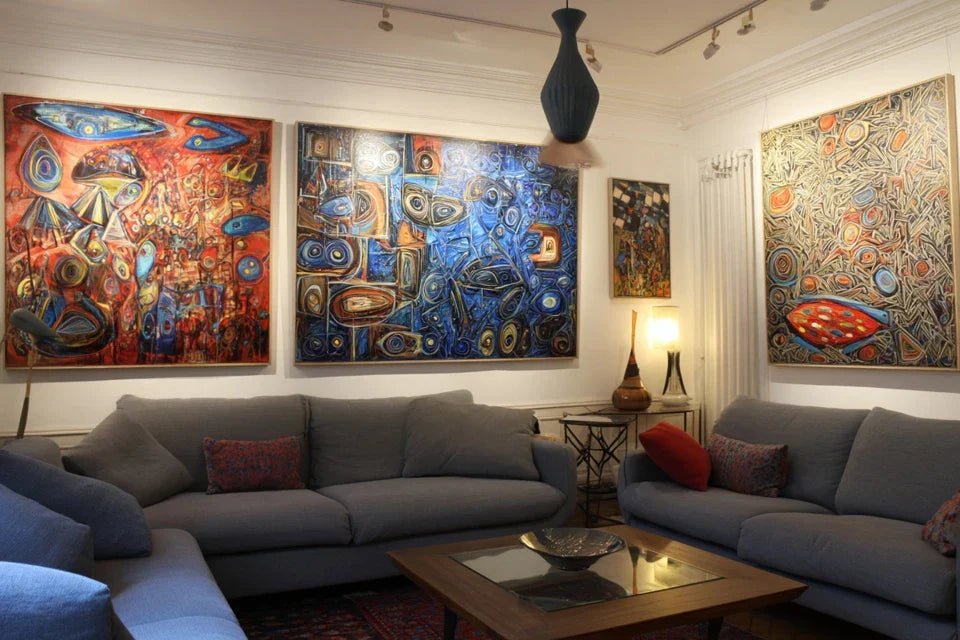
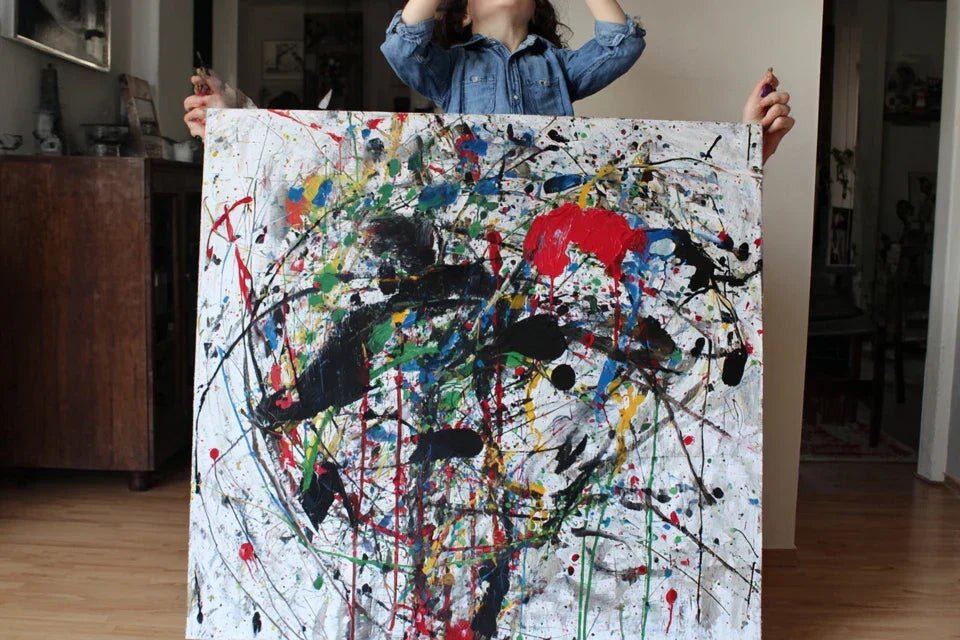
🏠 Customer testimonial: "I long thought that decoration was superficial. Then I hung this abstract painting in ocean tones in my living room. Now, when I come home from work, my gaze instinctively rests on it and it's as if my heart rate slows down instantly. My 8-year-old daughter does the same!"
💬 Conversation with a decor expert
Your eye needs an emotional anchor point for your mind to settle: without inspiring visual support, your brain continues to scan the environment instead of resting. Observable result? Natural relaxation in 30 seconds as soon as you look at your ritual painting.
Why You Can’t Relax at Home (and It's Not What You Think)
Do you recognize yourself in these three situations? Do you pace around your living room without knowing where to focus your gaze, do you feel a persistent restlessness even on your sofa, and do your attempts at relaxation fail because your environment doesn’t “support” you.
What's really happening? Your nervous system isn't finding any visual safety signals in your space. The problem isn't your ability to relax, but the total absence of soothing landmarks in your field of vision.
It’s like trying to fall asleep in an unfamiliar place: your reptilian brain stays on alert until it recognizes familiar and reassuring elements.
The First Hidden Cause: Your Walls “Suck” Your Energy
Contrary to the common idea that clean spaces promote relaxation, an environment that is too neutral actually creates a energy void that drains your vitality. The difference between soothing minimalism and draining emptiness? The strategic presence of an artistic focal point.
It’s exactly like the difference between a silent forest (restful because it's full of life) and a soundproofed room (agonizing because it lacks life). Your living room needs that “visual breath” that a work of art brings.
Emotional impact? You unconsciously draw on your energy reserves to compensate for this visual void, which explains why you feel drained even at rest. This discovery will change your approach to well-being wall art.
🔍 Instant test: Sit in your living room and observe where your gaze naturally settles for 30 seconds. If it wanders without stopping, you’ve just confirmed that your space lacks visual anchoring!
The Second Hidden Cause: Your Brain Searches for an “Emotional Signature”
Many think that having beautiful objects is enough to feel good at home. But the real mechanism? Your emotional brain needs to recognize a “signature” that corresponds to your desired state - calm, inspiration, joy, strength...
It’s like a tuning fork that vibrates the strings of a piano: the right work of art “tunes” your inner state to the emotional frequency it emits.
Why do you feel this frustration of not being “at home” at home? Because no visual element reflects and activates your deep personality. The solution? Choose a painting that acts as a mirror to your soul and reconnection ritual.
The Third Hidden Cause: The Absence of a “Bridge” Between Exterior and Interior
Here’s what almost no one notices: the brutal transition between the exterior agitation and your home without a visual decompression element. Imagine this client who told us: "I slammed the door, I took off my shoes, but my stress remained stuck to me like a wet coat."
How to spot it in your home? If you feel the need to "do something" as soon as you walk in instead of simply being, that's the sign.
Your gaze needs to "latch onto" something beautiful to trigger a mental transition
Impact on your daily life? You "carry" your professional tensions into your personal time, which pollutes your moments of rest and affects nighttime recovery.
🎯 The 3 signs that your space needs a ritual artwork:
What really makes the difference? The first element your eye lands on when entering determines the emotional state of your entire evening.
It's a domino effect: like a smile that triggers good humor, a deliberately chosen artwork instantly activates your "relaxation-recharging" mode.
To identify it in your home: note what is the first visible element from your entrance, and ask yourself what emotion it inspires.
The golden rule of decor ritual rebalancing: your artwork should be visible within the first 3 seconds of arriving home, and evoke an immediate positive emotion. Simple test: if you smile when you see it, you've got it!
The trigger element: the "first glance" that changes everything
❌ Bare wall or generic decor
✅ Personalized ritual artwork
💡 Mechanism in action
🎯 Felt benefit
I come home stressed and stay that way
My gaze immediately finds its "refuge"
Visual anchor = safety signal for the brain
Natural mental transition in 30 seconds
The space feels cold and impersonal
I recognize myself in my environment
Emotional resonance between the artwork and my personality
A deep feeling of being "at home"
My attempts at relaxation fail
Relaxation comes naturally
Visual support that guides attention towards soothing
Accelerated mental recovery
I have trouble "disconnecting" in the evening
My mind settles as soon as I look at the artwork
Artistic focal point = interruption of mental chatter
Instant presence and serenity
How to transform your artwork into a daily wellness ritual (simple 3-step method)
Rest assured, you don't need any particular artistic knowledge! The progression is as natural as learning to cook: first choose the right ingredients (your artwork), then master the recipe (placement and lighting), and finally create your own variations (personalize your ritual). The final result? A visual sanctuary that reconnects you with yourself in seconds.
🗺️ Your transformation journey: Step 1 - Identify your "emotional signature" and choose the artwork that corresponds to it (immediate satisfaction). Step 2 - Create the perfect setting with placement and lighting (amplifying the effect). Step 3 - Develop your personal ritual of refocusing (automation of well-being).
Step 1: Find your artwork "soulmate" (the one that really speaks to you)
Starting with this step is crucial because without authentic emotional resonance, no placement technique will work. It's like building a house: without solid foundations (your connection with the artwork), everything else collapses. The satisfaction you will feel once this step is complete? That excitement of knowing that you have found "your" artwork, the one that makes you want to come home.
🎨 What you need to choose well
- Time to connect with your emotions: 20 minutes of calm to identify what truly soothes you, away from trends and external advice. No impulse shopping! The difference from a classic decor purchase? You choose with your feelings, not with your mind. A clear intention for well-being: precisely define the emotional state you want to cultivate at home (serenity, joy, inspiration, strength...). The principle? Your artwork becomes the visual anchor of this desired state, like a daily reminder of who you want to be. A trained eye for nuances: learn to distinguish between "I quite like it" and "it touches me deeply". The quality indicator? Your heart beats slightly faster when you look at the artwork, a sign of a real emotional connection.
Now, let's move on to the selection practice
✨ How to identify your emotional signature
Take the 5 emotions test: close your eyes and imagine yourself in your ideal living room. What is the first emotion that comes up? Note it down. Repeat 4 times. The reason for this technique? Your subconscious knows exactly what you need to recharge, just listen without the mind interfering.
⏱️ Time: 10 minutes | ✅ Success when: you have identified 1-2 emotions that come back, that make you smile just imagining them | ⚠️ Attention: don't choose what "looks good" socially, but what truly nourishes you
Explore the styles that reflect your emotion: browse art collections by filtering them according to your dominant emotion, rather than decor style. Observe what kind of works make you feel that emotion. The trick? Trust your first visceral reaction, before your mind starts analyzing.
⏱️ Time: 15 minutes | ✅ Success when: 3-4 artworks give you chills or make you breathe deeper | ⚠️ Attention: resist the temptation to choose "to keep up" - your well-being is unique
Test the lasting connection: Keep the image of your selection in sight for 2-3 days. Observe whether the emotion persists or fades away. Why this step? A true artistic crush grows with time instead of wearing out, like a deep friendship.
⏱️ Time: 3 days of observation | ✅ Success when: you still want to look at the artwork after 72 hours, or even longer | ⚠️ Attention: don't confuse "habitual gaze" with "diminished emotion"
🎯 Validate your choice: You should feel a little excitement at the idea of seeing this artwork every day, as if it were going to become your "well-being accomplice". If you're still hesitating, then it’s not the right one - keep searching, your ritual artwork is waiting for you!
OUR RECOMMENDED PRODUCTS
Step 2: Create the perfect energetic setting (placement and enhancement)
You are now moving to the "architecture of well-being" level! What changes? You no longer decorate, you orchestrate the energy of your space to amplify the effect of your artwork. This step is more rewarding because you immediately see the impact of each adjustment on how you feel. The snowball effect begins: your entire space transforms around this focal point.
🏠 Mastering strategic placement
Find the "first view" point: Stand at your main entrance and identify the first wall you see. This is where your artwork will have the maximum psychological impact. The scientific reason? Your brain encodes the emotion of those first 3 seconds, and it influences all your subsequent behavior.
⏱️ Time: 5 minutes | ✅ Success when: your artwork "jumps out at you" from the entrance, naturally | ⚠️ Attention: avoid placing it facing a window (backlighting) or in a passageway (distraction)
Adjust the height for dialogue: The center of your artwork should be at eye level when you are standing (about 1m60 from the floor). This height creates a natural "dialogue" between you and the work, without visual effort. Too high = distance, too low = dominance.
⏱️ Time: 10 minutes with measurement and test | ✅ Successful when: your gaze naturally falls on the center of the artwork | ⚠️ Attention: adjust if you often look from the sofa (lower slightly)
Create a contemplation bubble: clear at least 1 meter in front of the painting, without obstacles or visual distractions. This space allows your gaze to "breathe" with the artwork and your mind to settle. It's your zone of refocusing.
⏱️ Time: 15 minutes of rearrangement | ✅ Successful when: you can stand in front of the painting and feel "enveloped" by its energy | ⚠️ Attention: do not clutter with other decorations that scatter attention