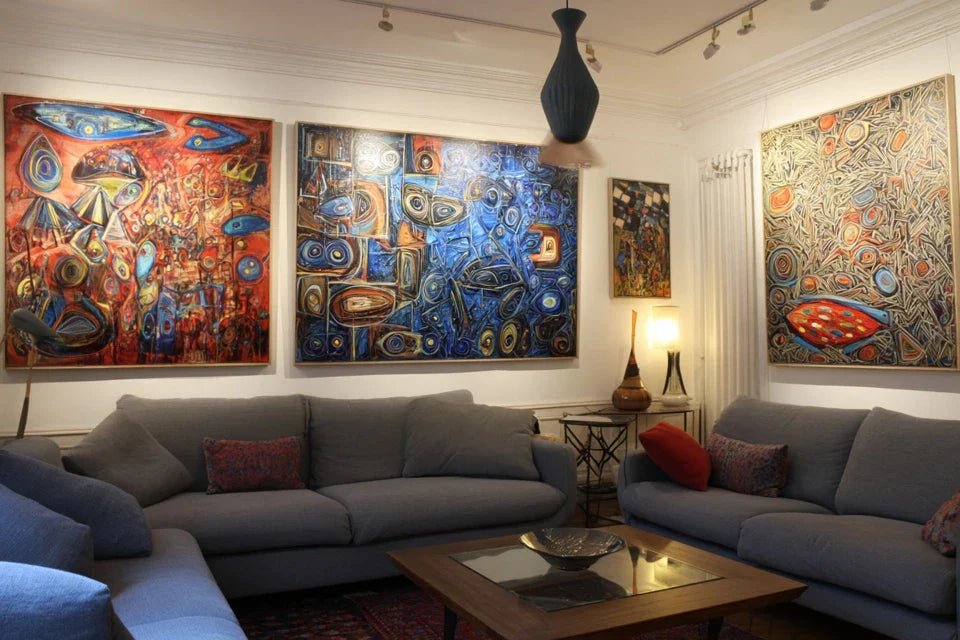
You just bought that perfect artwork that made you feel excited in the store, but once hung in your living room, the magical effect has evaporated. Instead of that deep emotion you were hoping for, you feel a vague discomfort: "Is it too kitsch?"
This feeling of doubt gnaws at you. You observe your wall, scrutinize the looks of your guests, watch their reactions... This artwork that was supposed to express your artistic sensibility now seems to scream "amateur" or worse, "supermarket decor."
Perhaps you've tried to compensate by adding other decorative elements, changing the lighting, or even moving the painting several times. But nothing works: authentic emotion that you are looking for remains elusive.
This frustration is perfectly normal and it’s not your fault. The problem doesn't come from your artistic sensibility, but from a lack of knowledge of the subtle codes that distinguish authentic emotional art from decorative kitsch.
By the end of this article, you will master the secrets of professional decorators to create a sophisticated emotional atmosphere, and you will know how to transform any space into a place that truly resembles you.
Why your "perfect" painting can suddenly seem disappointing?
Emotional art without kitsch obeys precise rules that 90% of enthusiasts ignore. If you wait for “the right moment” to learn these subtleties, you risk multiplying impulsive purchases and costly disappointments. It's like trying to cook a refined dish without knowing the art of spices: even the best ingredients can give a bland or sickening result.
💡 Revelatory testimonial: Sophie, an interior architect, says: "A client had spent €800 on a 'love at first sight' painting depicting a sunset. Beautiful in the store, but at her place, it transformed her modern living room into a roadside diner decor. The problem? Too direct emotional intensity, without nuance or subtlety.”
💬 Conversation with a decorating expert
The golden rule of professional decorators: A successful emotional wall artwork must create a subtle tension rather than perfect harmony. This tension generates authentic emotion in 2-3 weeks of daily observation.
What’s Really Behind Your Artistic Doubts
You probably recognize yourself in these three situations: you hesitate for a long time before hanging a new painting, you constantly ask your surroundings for advice, or you regularly change the placement of your artworks hoping to find "the" right combination.
What’s really happening is that you are unconsciously applying commercial decoration codes instead of the principles of emotional art. Your brain has been conditioned by years of exposure to standardized decor catalogs.
It's like trying to play jazz with the rules of classical music: technically correct, but emotionally flat.
🎭 The First Illusion: "The More Obvious It Is, The More Expressive It Is"
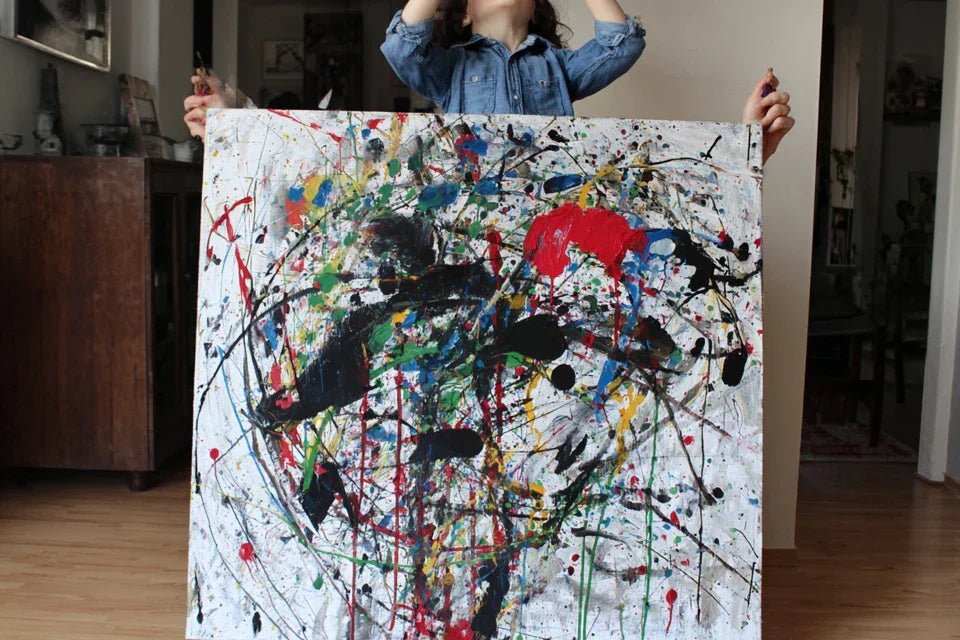
Contrary to what everyone believes, powerful artistic emotion is born from suggestion rather than evidence. A sublimated landscape will be less evocative than a colorful abstraction that leaves room for your imagination.
Imagine the difference between an overwhelming perfume that overwhelms you as soon as you enter and a subtle fragrance that reveals itself gradually. One marks you immediately then bores you, the other seduces you durably.
This approach completely transforms your way of choosing wall art: instead of looking for what "says" something, you learn to spot what "suggests" and invites reverie.
🔍 Quick test: Look at your current painting and close your eyes for 30 seconds. Open them: if your gaze is immediately "saturated" by the image, it's an indication of emotional overload.
Perfect harmony kills emotion. True art collectors know this: a work must create a slight visual dissonance to stimulate the eye and maintain interest over time.
It's the principle of the beauty mark that makes a face unforgettable, or the blue note that sublimates a jazz chord.
Result: you stop looking for the "missing piece" of your decor puzzle and start composing a visual symphony where each element has its personality.
🏠 The Third Illusion: “Art Is For Cultured People”
Many think that it takes advanced artistic knowledge to create an emotional atmosphere. In reality, your emotional intuition is your best guide, much more reliable than any decoration manual.
You already know how to instantly recognize if a place soothes or stimulates you, if a color comforts or irritates you. This natural sensitivity is quite sufficient.
The impact on your daily life is immediate: you gain confidence in your artistic choices and finally dare to express your real personality.
🚨 The 3 warning signs of involuntary kitsch
⚡ The trigger factor: the intention behind the choice
What really makes the difference is why you choose a work. Buying to "make it pretty" creates kitsch. Choosing to "feel something" generates authentic emotion. This is the domino effect of true art: a pure intention transforms even a simple work into a magnetic focal point.
The 10-second rule: An emotionally right artwork makes you feel “something” in the first 10 seconds, without you being able to explain it rationally. Test this before any purchase.
| ❌ Decorative approach | ✅ Emotional approach | 💡 Why it works | 🎯 Felt benefit |
|---|---|---|---|
| Looking for what “goes well” with the furniture | Choosing what “speaks to” you emotionally | Emotion transcends decorative logic | Durable and personal pleasure |
| Prioritizing "obvious" subjects (landscapes, flowers) | Dare abstraction and suggestion | Imagination completes the work | Discovery of new nuances |
| Seeking perfect color harmony | Accepting subtle contrasts | Visual tension stimulates attention | Renewed interest every day |
| Following current trends | Expressing your authentic personality | Authenticity resists trends | Confidence in your personal taste |
The 3 circles method: from raw emotion to subtle elegance
Rest assured: transforming your artistic approach requires neither expensive training nor a particular gift. It is a progressive process, like learning to cook: you start by mastering the basics, then develop your own signature. In 3 simple steps, you will go from permanent hesitation to assumed artistic confidence.
🎯 Overview of the transformation: Like a photographer who first learns to frame, then play with light, and finally create their own aesthetic, you will first clarify your target emotion, then learn the visual codes of sophistication, and finally develop your unique decorative signature.
🎭 Step 1: Identify your personal emotional palette
Starting with this step is crucial because it's your emotional compass that guides all your future choices. Without this solid base, you risk collecting contradictory works that neutralize each other. Once this foundation is laid, you will immediately feel more consistency in your choices.
🧭 What you need for this exploration
- An emotional logbook: A simple notebook or your phone to note your spontaneous reactions to the artworks. It serves as an emotional memory to identify your preference patterns. Avoid complicated apps: simplicity favors spontaneity. Moments of pure observation: 15 minutes daily without distractions to really look at your current environment. This is like musical training for the eye: the more you consciously observe, the sharper your sensitivity becomes. A collection of visual references: Photos, magazines, or web images that touch you without you knowing why. These references reveal your subconscious aesthetic and help you transform it into conscious choices.
- The rule of measured contrasts: Learning to dose tension and harmony in your compositions. It's like adjusting the temperature of a dish: too bland or too spicy, the effect is missed. The optimal contrast creates interest without aggression.
- The palette of emotional nuances: Each color carries different emotions depending on its saturation and brightness. A bright red stimulates, a muted red soothes. This nuance makes all the difference between sophistication and vulgarity.
- The golden proportions of wall art: Certain sizes and hanging positions maximize emotional impact. These millennial rules still work because they respect the natural way the human eye explores space.
- 🎯 The obsession with the "perfect match": Seeking to have everything perfectly match kills artistic emotion. It's tempting because it reassures, but the result looks like a store display case. Prefer an imperfect harmony that allows personality to breathe: it is this controlled "false note" that makes a space memorable. 📐 The trap of systematic symmetry: Centering and perfectly balancing everything gives a "chain hotel" effect. It's reassuring because predictable, but it lulls the eye. Dare asymmetrical compositions: they create visual movement and keep attention awake. 💰 Confusing high price with emotional quality: An expensive painting is not automatically more moving than an affordable artwork. This confusion leads to buying "the label" rather than the emotion. Your personal connection with the work counts infinitely more than its market value. 📱 The "perfect photo" syndrome: Choosing based on what will look nice in an Instagram photo rather than what nourishes you daily. This superficial approach creates photogenic but emotionally empty interiors. Prioritize what makes you feel good to live with, not to show. ⏰ Emotional impatience: Wanting to immediately feel a strong emotion and abandoning if the work takes time to reveal itself. Some works are like deep friendships: they unfold gradually. Give them that chance.
Let's move on to concrete practice now
🔍 How to decode your emotional DNA
Create your map of desired emotions: For a week, note 3 emotions you would like to feel when you come home (serenity, energy, nostalgia, mystery...). This cartography reveals your deep needs beyond superficial tastes and avoids impulsive purchases disconnected from your personality.
⏱️ Time: 10 minutes per day | ✅ Successful when: You identify 2-3 recurring emotions and can describe them precisely | ⚠️ Attention: Do not confuse the emotion you "should" feel according to magazines with the one you really feel
Analyze your spontaneous crushes: Photograph 10 visual elements that naturally attract you in your daily life (architecture, nature, objects, colors). This collection reveals your instinctive aesthetic, much more authentic than external influences.
⏱️ Time: 1 week of collecting | ✅ Successful when: You detect patterns (colors, shapes, atmospheres) | ⚠️ Attention: Resist the temptation to "correct" your natural tastes to appear more sophisticated
Test emotional durability: Hang a test image (even printed) for 3 days and note the evolution of your sensations. A real emotional connection strengthens over time instead of weakening, unlike simple visual appeal.
⏱️ Time: 3 days of observation | ✅ Successful when: You clearly distinguish lasting pleasure and novelty effect | ⚠️ Attention: Don't judge too quickly: some artworks take time to reveal their richness
✅ Validation of step 1: You must be able to describe in 2-3 words the emotional atmosphere you are looking for, and have identified at least 5 visual elements that generate this emotion in you. If it's blurry, extend observation for a few more days: emotional clarity is the key to everything else.
OUR RECOMMENDED PRODUCTS
🎨 Step 2: Mastering the Codes of Visual Sophistication
Now that you know your emotional compass, you are going to learn how to refine its expression. This is where the magic happens: your natural sensitivity is adorned with an elegance that impresses without ostentation. This step transforms your spontaneous tastes into artistically assumed choices.
🎭 The Tools of Artistic Refinement
🔧 Applying the Codes of Sophistication
Apply the 60-30-10 emotional rule: 60% dominant emotion (serenity), 30% complementary emotion (mystery), 10% accent emotion (surprise). This distribution creates richness without confusion, like a balanced perfume where each note has its place without dominating the others.
⏱️ Time: 1 hour of planning | ✅ Success when: Your space exudes a clear main atmosphere with subtle nuances | ⚠️ Attention: Do not mix contradictory emotions (zen + intense dynamic) without transition
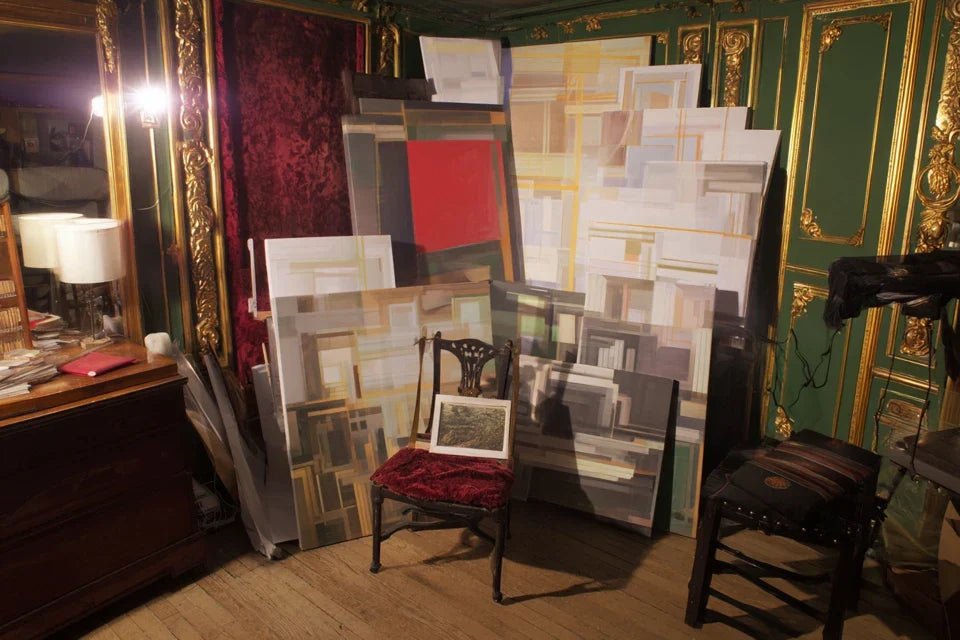
Create visual breathing points: Alternate emotionally charged areas and neutral spaces so that the eye and mind can "breathe". A wall completely covered in art is tiring, like a conversation without pause. Whites create emotional relief.
⏱️ Time: 30 minutes of observing your space | ✅ Success when: Your gaze naturally circulates without getting lost | ⚠️ Attention: "Empty" does not mean "blank": a bare wall can have as much presence as a work
🏆 Step 3: Developing Your Unique Emotional Signature
This final step takes you from the "I like it" stage to the "this is me" stage. You develop this instinctive recognition that true art lovers possess: your aesthetic universe is recognized as you recognize your voice. This is the level where art becomes authentic personal expression.
🎨 Building Your Artistic Identity
Create your "aesthetic phrase" : Define in one sentence the unique atmosphere you want to create ("mysterious elegance with touches of warmth", "soothing modernity with natural accents"). This sentence becomes your selection filter for all your future artistic purchases.
⏱️ Time : 45 minutes of reflection | ✅ Success when : Your phrase immediately evokes precise mental images | ⚠️ Attention : Avoid clichés ("cozy chic"): seek YOUR words for YOUR sensitivity
Establish your artistic choice protocol : Create a decision-making process of no more than 5 questions to validate your future crushes. This protocol prevents you from making impulsive purchases while preserving emotional spontaneity. It's your personal safeguard against kitsch.
⏱️ Time : 20 minutes of formulation | ✅ Success when : You can test a work in 2 minutes chrono | ⚠️ Attention : Don’t over-intellectualize: keep emotion as the main criterion
The artistic maturation rule : Wait to have mastered one step before moving on to the next. You are ready when you make decisions without excessive hesitation and your choices satisfy you durably (more than 3 months).
You are now equipped with the subtleties of an expert that distinguish the informed amateur from the simple home decor consumer. These nuances make all the difference between a space "that commands respect" and a space that truly touches you.
🔥 Pro tip level : Experienced collectors often buy their most striking works during periods of personal change (moving, career evolution, breakup). Intense emotions reveal our most authentic tastes, freed from social conventions.
🤔 "What if I already have paintings that no longer fit this approach?"
"I realize that my current paintings don't really match what I discovered about myself. Should I change everything at once?"
Your questioning shows a healthy awareness! Rather than revolutionizing your decor overnight, start by identifying one work that truly corresponds to you according to your new criteria. Place it in a strategic location and observe how it transforms the overall atmosphere. Often, a strong piece "converts" the others by giving them a new context. It's progressive and less expensive than a major artistic overhaul.
💡 Immediate action : Choose ONE main wall and create your "emotional laboratory" with a test work. The rest of your decor will gradually gravitate around this new artistic direction.
⚠️ Emotional traps that turn art into kitsch
Warning: some well-intentioned reflexes can sabotage your artistic efforts. These mistakes are so common that they seem "normal," but they explain why so many homes look like impersonal decor catalogs.
🛡️ Quick self-control system: Before any purchase, ask yourself: "Does this work still surprise me after 5 minutes of observation?", "Can I explain why it touches me without using words like 'beautiful' or 'pretty'?", "Would I buy it even if no one should ever see it?" If you answer no to any of these questions, wait.
🎁 Special readers offer
Because you took the time to inform yourself, enjoy 10% discount on your first order:
❓ Your questions about emotional art without kitsch
🌟 Your artistic transformation starts now
In a few weeks, you will enter your home with that feeling of satisfaction that we have when we truly feel at home. Your gaze will no longer be drawn to the "flaws" in the decor, but to those works that resemble you and evolve with your mood. Your guests will notice this particular atmosphere, this emotional signature they won't know how to name but which will mark them.
Beyond decoration, you will have developed aesthetic confidence that impacts all your visual choices: clothing, layout, even professional presentation. This assurance in your artistic tastes reveals and strengthens your authentic personality.
The most difficult part was understanding that emotional art obeys different rules than simple decoration. Now that these mechanisms are no longer a secret to you, start by really observing your current space with your new criteria. The art of living in a universe that resembles you begins with this first enlightened look.
🚀 Your first artistic mission : Within 24 hours, identify an emotion you would like to feel more often at home, then find a visual element that already evokes it in your environment. Your emotional transformation begins with this awareness!