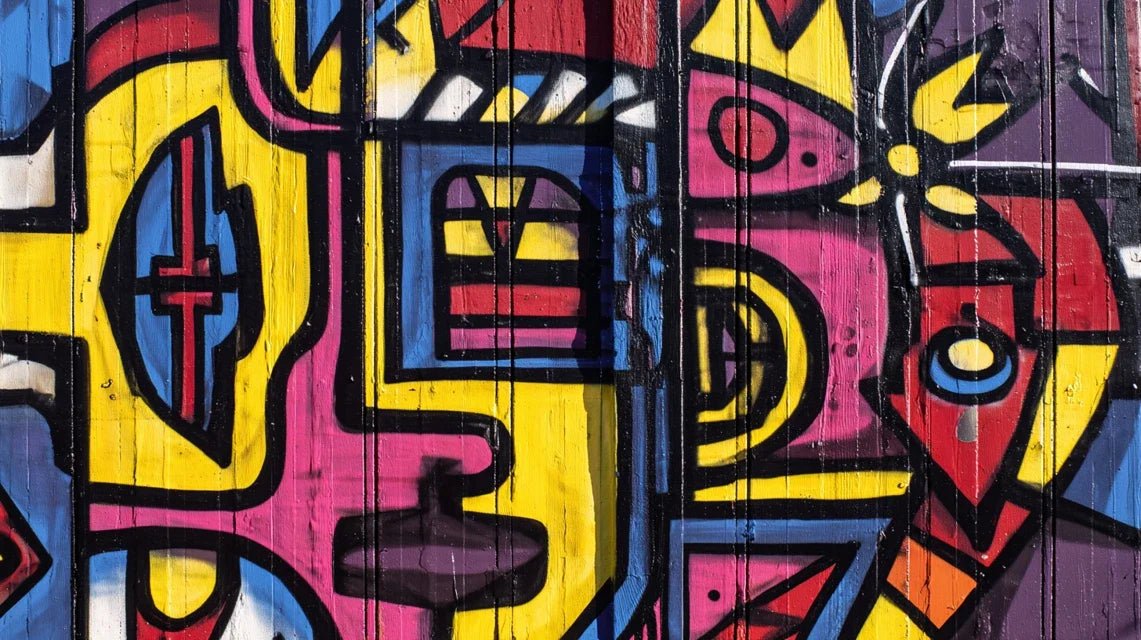
You're looking at the walls of your living room, desperately searching for a work that tells your personal story, but all you find seems bland, impersonal, already seen a thousand times.
The traditional art leaves you cold, classic reproductions no longer resonate with your time, and yet you feel this deep need to be surrounded by symbols that speak to your modern soul.
You may have tried conventional galleries, browsed mainstream decoration sites, but nothing seems to fill this thirst for symbolic authenticity that inhabits you.
It's perfectly normal: contemporary art has long abandoned the symbolic dimension, creating a gap between our ancestral heritage and our current aspirations. The problem is not your taste, but the absence of a new generation of artists who dare to revisit ancient codes.
By the end of this article, you will discover how contemporary wall art reconciles tradition and modernity, and how to choose a work that will transform your interior into a personal sanctuary full of meaning.
Why have our walls lost their power of fascination?
Contemporary wall art is undergoing a silent revolution. For decades, we have decorated our interiors with works aesthetically pleasing but spiritually empty. Imagine a perfectly presented meal but without flavor - that's exactly what more and more art lovers feel when faced with classic contemporary creations.
🎨 Atelier testimony: Sophie, a Parisian interior architect, recently confided in me: "My clients are increasingly asking for works that tell something, that have a soul. They are tired of decorative canvases without depth. They want to rediscover that mysterious connection our ancestors had with art."
💬 Conversation with a decor expert
Contemporary symbolic wall art doesn't impose, it reveals: like a mirror that reflects your deep personality, it transforms your space into a true extension of your identity, creating a unique atmosphere in 3 to 6 months of daily immersion.
When your decor becomes a secret language
You come home and feel that emotional emptiness despite impeccable furniture. You receive guests who compliment your taste without ever asking questions about your artworks. You are looking for that spiritual connection that symbols once provided in art.
What's really happening is that your environment lacks narrative depth. Purely decorative art nourishes the eye but not the soul. You need creations that carry coded messages, subtle references that enrich your daily life.
It's like owning a library filled with beautiful books with blank pages - the appearance is perfect, but what’s missing is the essential: the content that nourishes the mind.
The Renaissance of Symbolism: when the old inspires the new
Contrary to popular belief, contemporary symbolic art is not nostalgic - it is prophetic. Today's artists draw on ancestral iconography to create a universal language adapted to our time.
Imagine a translator who doesn’t just transpose words, but transposes the very essence of a message from one culture to another. That is exactly the creative process that animates this new generation of mural artists.
This approach transforms your relationship with art: every glance becomes a discovery, every contemplation reveals new layers of meaning. Your interior becomes a personal sanctuary where each symbol resonates with your deepest aspirations.
🔍 Immediate test: Observe the art that surrounds you currently. Can you tell a story about each artwork? If not, you have just understood why your decor lacks that symbolic dimension that makes all the difference.
The mistake of traditional galleries: separating aesthetics and meaning
The contemporary art market has long favored formal innovation over symbolic content. This approach has created an art intellectualized but disconnected from deep emotional needs.
It's like serving a dish technically perfect but without soul - you admire the skill, but you don’t really nourish yourself.
As a result, you feel excluded from contemporary art, intimidated by codes that you do not master, while your intuition naturally guides you towards creations full of meaning.
The hidden power of universal symbols
Here’s what no one tells you: some symbols activate unconscious resonances that directly influence your daily well-being. Mary, a collector for 15 years, told me: "Since I hung this golden spiral in my office, I feel a tenfold increase in creative energy."
You can identify these symbolic carriers by observing your instinctive reaction: some shapes soothe you immediately, while others energize you. This first bodily impression is an infallible guide.
The impact on your daily life is measurable: improved mood, richer conversations with your guests, a feeling of coherence between your values and your environment.
🎯 5 signs that your art lacks symbolic dimension:
- You regularly forget the works around you: Truly symbolic art creates a permanent presence in your consciousness, like a silent friend who accompanies you.
- Your guests never ask questions about your artworks: Symbolic art naturally generates curiosity and opens up deep conversations about values and identity.
- You feel a lack despite a aesthetically successful interior: This sensation reveals the need for a spiritual connection that only symbols can fulfill.
The click: when art becomes a mirror of the soul
What really makes the difference is personal resonance. Like a tuning fork that vibrates only at its frequency, some symbols activate ancestral memories and deep aspirations unique to your personality. You recognize it by that feeling of "déjà-vu" mixed with wonder, by that feeling of immediate recognition that transcends rational analysis.
Rule of gold for symbolic choice: Trust your first emotion when facing the artwork - if it triggers an immediate resonance, then the symbols are already speaking to your unconscious. Test by closing and opening your eyes: the impact must be identical.
| ❌ Classic decorative art | ✅ Contemporary symbolic art | 💡 Key difference | 🎯 Benefit felt |
|---|---|---|---|
| Pleases at first glance then becomes tiresome | Reveals its secrets over time | Evolving depth of readings | Durable and enriching relationship |
| Superficial conversations about aesthetics | Deep exchanges about values | Catalyst power for connection | More authentic human relationships |
| Impersonal and cold decoration | Personal and warm sanctuary | Alignment with deep identity | Well-being and fulfillment on a daily basis |
| Impression of emptiness despite beauty | Feeling of fullness and meaning | Permanent spiritual nourishment | Inner balance regained |
How to transform your interior into a personal symbolic gallery
Rest assured: creating a collection of symbolic art doesn't require fortune or the expertise of an art historian. The process is similar to that of a gardener who intuitively cultivates plants that thrive in their environment. You start with a work that speaks to you, then gradually develop a coherent symbolic ecosystem. The final result? An interior that tells your story and nourishes your soul every day.
🗺️ 3-Step Roadmap: First step: identify your personally resonant symbols. Second step: create harmonious dialogues between the works. Third step: develop your own visual language. At each stage, you gain confidence and clarity about your aesthetic identity.
Step 1: Decoding Your Personal Symbolic Alphabet
Starting with this step is essential as it lays the emotional foundations of your future collection. Like an archaeologist discovering traces of a civilization, you will unearth your unconscious symbolic affinities. Once this mapping is established, you will feel that deep satisfaction of reconnecting with your true nature.
🔍 Your Symbolic Exploration Tools
- A Resonance Notebook: This tangible medium resembles a visual diary where you collect images, emotions and first impressions. It serves as an external memory for your discoveries. Choose an A5 format with quality paper - the act of writing by hand activates a deeper neurological connection than digital. Avoid notebooks that are too small which limit expression.
- An Emotional Testing Method: This scientific but accessible process involves observing your physical reactions to symbols. Your body knows before your mind - tension, relaxation, heart rate acceleration are reliable indicators. The quality of your introspective attention determines the accuracy of your discoveries.
- An Intuitive Classification System: This organizational tool transcends rational logic to prioritize spontaneous associations. It reveals hidden patterns in your symbolic personality and facilitates future creative connections.
Now, let's move on to practice with a progressive approach
🎯 Concrete Implementation
Scan Your Current Environment: Browse your interior with a fresh eye, photograph every decorative element that evokes a positive emotion. The goal is to map your unconscious tastes - often we already possess clues about our symbolic affinities without realizing it. Pay particular attention to the shapes, colors and textures that recur.
⏱️ Time: 30 minutes | ✅ Success when: You have identified 5 to 8 elements that generate an emotional reaction | ⚠️ Attention: Don't censor yourself on "good taste" - authenticity takes precedence over aesthetic conventions
Create your library of symbolic references: Explore art books, specialized websites, and social networks to create a collection of images that resonate intuitively. The important thing is not the intellectual understanding of the symbol, but your visceral reaction. Organize by families: geometric, organic, spiritual, cultural.
⏱️ Time: 1 to 2 hours | ✅ Success when: You have gathered 20 to 30 visual references that move you | ⚠️ Attention: Avoid intellectual analysis - rely only on your bodily feeling
Test compatibility with your space: Use augmented reality apps or simple mockups to visualize your favorite symbols in your interior. This step reveals the harmonies and tensions between your aspirations and your real environment.
⏱️ Time: 45 minutes | ✅ Success when: You have identified 3 to 5 symbols that integrate naturally | ⚠️ Attention: A symbol may please you in isolation but create a dissonance in your space - always test in context