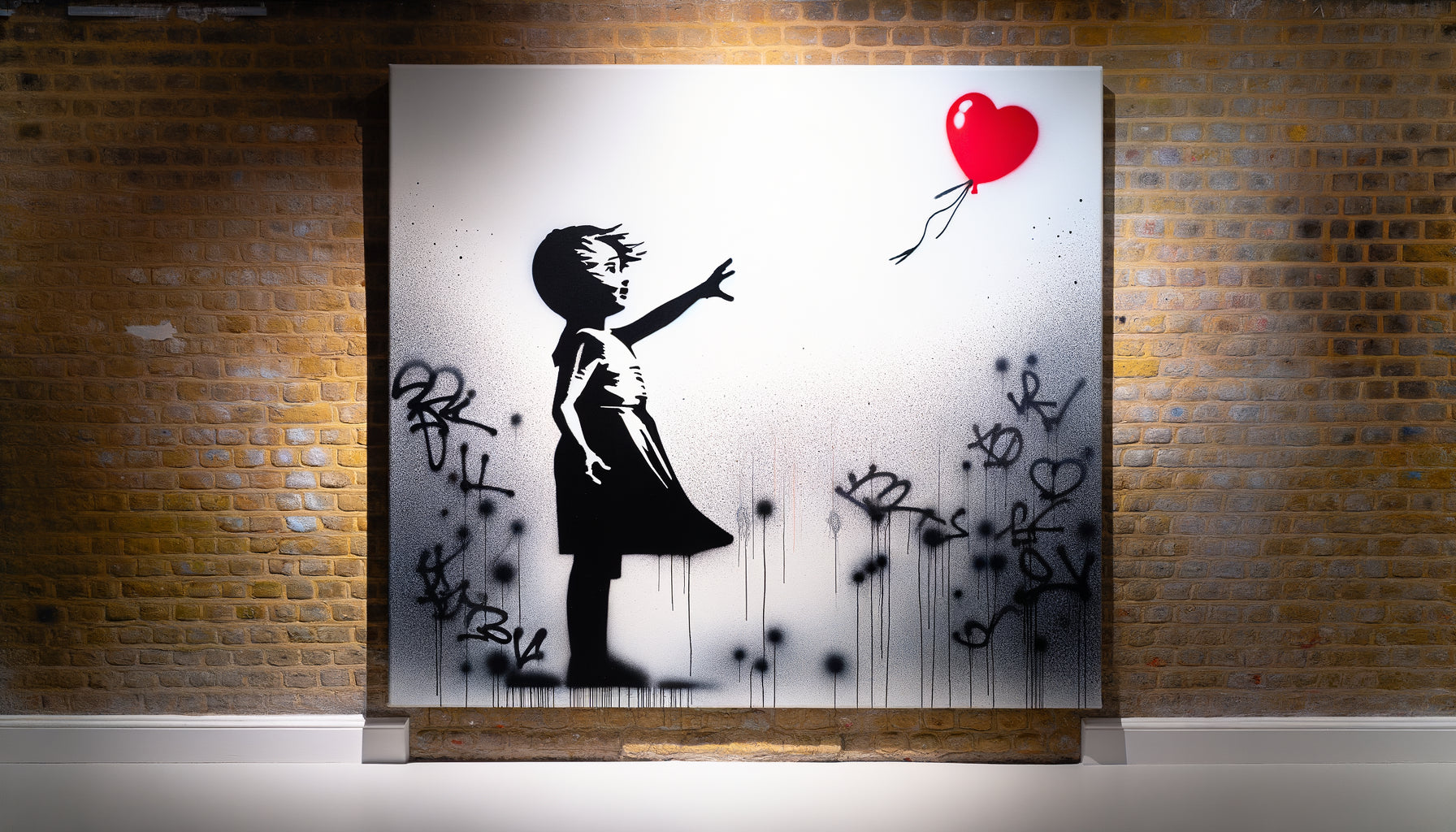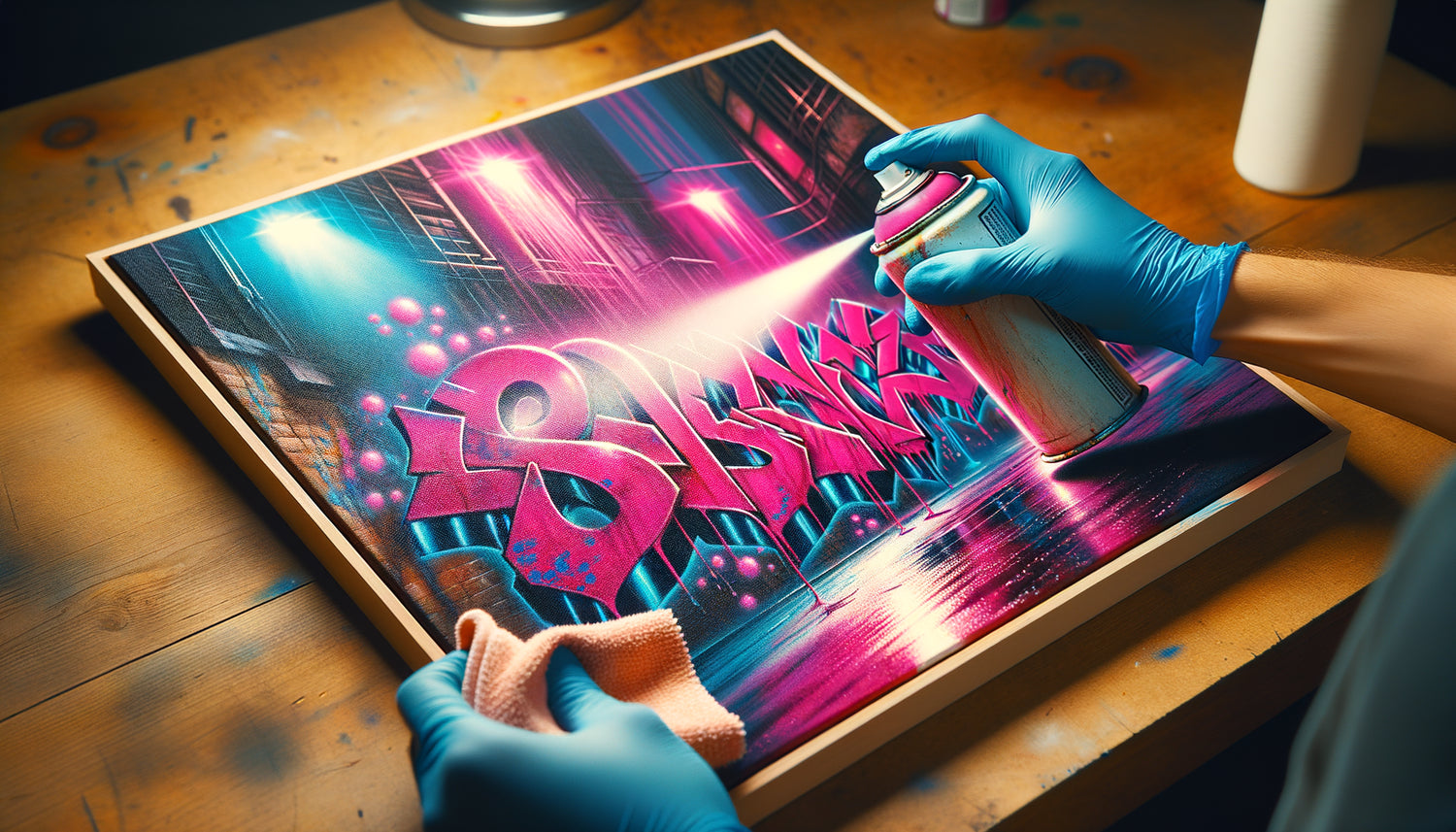
This Banksy you brought back from London, this giant Obey that illuminates your living room, this original piece sourced from an underground gallery – your wall art street art is much more than just decoration. It's a window open onto urban culture, a graphic manifesto that makes the heart of your interior beat. But after a few months, you notice that the colors seem to be fading slightly. A thin layer of dust accumulates in the reliefs of the spray paint. You want to clean it, but fear of ruining everything paralyzes you.
Here's what proper maintenance brings to your wall art street art: it preserves the vibrant intensity of the spray-painted colors, maintains the depth of contrasts that are the soul of the work, and guarantees that your artistic investment stands the test of years without losing its visual impact.
Unlike traditional paintings, street art creations made with spray paint have a unique texture, a particular material that requires a specific approach. Classic maintenance techniques can be disastrous on these surfaces. Rest assured: with the right gestures and an understanding of the nature of these works, preserving your wall art becomes a simple and rewarding ritual. In this article, I will reveal to you the maintenance secrets that I have perfected over the years so that your piece retains all its rebellious strength.
Understanding the fragile nature of spray paint
Before touching your street art painting, you need to understand what makes it so special. Spray paint works by layering thin coats of pigments sprayed. This technique creates effects of transparency, subtle gradations and those grainy textures characteristic of graffiti. But this magic has a price: the surface is paradoxically more porous and delicate than traditional acrylic paint applied with a brush.
The pigments in the spray can adhere differently to the support. On canvas or panel, they form a film that can be sensitive to friction, aggressive chemicals and even excessive humidity. I have seen collectors unintentionally destroy valuable pieces using ordinary household products. The solvent contained in some cleaners can literally reactivate the spray paint and create irreversible runs.
Protective varnish: your first line of defense
Most professional street art artists apply a protective varnish layer to their indoor artworks. This varnish acts as a transparent shield between the environment and the paint. If your artwork has one – you can check by observing a slight uniform reflection across the entire surface – maintenance will be considerably simplified. Without varnish, spray paint remains bare and vulnerable, requiring even more meticulous attention.
Daily gestures to preserve brilliance
Maintaining a street art painting begins with simple but essential habits. Dust is the silent enemy: it settles into the micro-reliefs of the aerosol and gradually dulls the colors. Each week, gently wipe the surface with a microfiber duster or electrostatic cloth, without pressing down. The gesture should be light, almost caressing, as if you were brushing the artwork rather than cleaning it.
Absolutely avoid damp cloths for this regular dusting. Water, even in small amounts, can create halos or cause certain pigments to migrate, especially on street art paintings that are not varnished. Also, be mindful of direct sunlight: UV rays are the worst enemies of vibrant colors typical of street art. If your painting is exposed near a window, invest in filtering curtains or reposition the artwork. I have seen bright reds turn pale orange after two summers of intense sun exposure.
Strategic placement of your artwork
Maintaining a street art painting begins with the choice of its location. Avoid the kitchen where suspended grease settles insidiously, and the bathroom where humidity can be fatal. Favor a wall away from dusty drafts, far from radiators that dry out and weaken supports. A stable environment – temperature between 18 and 22°C, humidity around 50% – is ideal for preserving your street art piece.

Deep cleaning: delicate protocol
Once or twice a year, your spray-painted street art canvas deserves a more thorough cleaning. This requires patience and delicacy. Start by testing your method on a discreet corner of the artwork – usually in the lower right or left corner. This precaution can save you from an irreparable disaster.
For a varnished street art canvas, prepare a solution of lukewarm distilled water (never tap water which contains lime and minerals). Add a micro-drop of pH neutral soap – literally one drop for 500ml of water. Lightly dampen a quality microfiber cloth, wring it out as much as possible until it is barely damp, then wipe the surface in gentle circular motions, section by section. Immediately dry with a second clean and dry microfiber cloth.
The particular case of unvarnished street art canvas
If your artwork does not have a protective varnish, moisture is totally prohibited. For these fragile street art canvases, dry cleaning remains the only safe option. Use a special eraser for artworks (bread crumb eraser or white eraser without abrasive) that you gently roll over dirty areas. This technique absorbs dirt without touching the paint. For stubborn dust in the reliefs of the spray can, a photographic compressed air blower can work miracles.
When accidents happen: stain management
A coffee splash, a fingerprint, an accidental projection... Accidents happen even with the strictest precautions. On a street art canvas, reactivity is crucial. The longer you wait, the more the substance becomes embedded in the porous texture of the spray can.
For a fresh stain on a varnished canvas: blot immediately with a white absorbent paper (no color that could bleed) by pressing gently, without rubbing. The friction movement risks spreading the stain and damaging the varnish. Once the maximum has been absorbed, follow the gentle cleaning protocol described above. For greasy stains, a solution of distilled water with a tiny trace of eco-friendly dish soap can be tried on a test corner first.
On an unprotected street art canvas, options are unfortunately limited. Do not attempt anything wet. Let liquid substances dry completely, then try the bread crumb eraser. For complex stains or significant damage, consult a specialist in contemporary art restoration rather than risk aggravating the situation.

The professional re-varnishing option
If your street art painting has never been varnished or if the original varnish shows signs of aging (yellowing, cracking, opacity), consider a professional varnishing. This intervention transforms the future maintenance of your artwork. A good UV protective varnish protects the bright spray paint colors, facilitates cleaning and adds visual depth to the contrasts.
Contact the artist directly if possible – many offer this service for their pieces. Otherwise, a specialist restorer in urban art will know how to choose the appropriate varnish: matte to preserve the raw appearance of street art, satin for an elegant compromise, or glossy to enhance colors. This invisible protection is an investment that will prolong the life of your street art painting by decades.
Products to absolutely avoid
Some products are veritable poisons for spray paint street art paintings. Never attempt : household alcohol which dissolves the pigments, window cleaners containing ammonia, cleaning wipes impregnated with aggressive chemicals, bleach obviously, and even dusting sprays that leave a greasy film. Solvents such as white spirit or acetone are catastrophic – they literally reactivate the aerosol paint. Even simple Marseille soap can be too alkaline for some delicate works.
Your wall deserves a work that stands the test of time
Discover our exclusive collection of Street art paintings that will transform your interior with the raw energy of urban culture.
Preserving urban heritage in your home
Your street art painting tells a story – the story of a culture born in the streets, of rebellious gestures becoming legitimate art, of aerosol bombs transformed into genius brushes. By taking care of this work with the appropriate gestures, you are not only maintaining a decorative object: you are preserving a fragment of this vibrant history.
Imagine your living room in ten years. The colors of your street art painting are still as vibrant, the contrasts as striking as on the first day. Visitors stop in front of it, captivated by this intact energy. This is not an unattainable dream; it's a direct result of regular and attentive maintenance. Start today: dust your artwork with a gentle touch, check its location, observe the condition of the varnish. These small attentions are the silent guardians of your passion for urban art.
Frequently Asked Questions about Street Art Painting Maintenance
Can I use a steam cleaner on a spray paint street art painting?
Absolutely not. A steam cleaner combines the two worst enemies of aerosol paint: excessive heat and intense humidity. The steam penetrates the layers of paint, can peel off the protective varnish, and cause deformation of the support, especially if it is canvas or wood. Even on a solidly varnished street art painting, steam creates risks of condensation between the layers that lead to delamination or opacity that are irreversible. Always prefer gentle methods at room temperature to preserve the integrity of your artwork. Patience in maintenance is the assurance of longevity.
My street art painting has yellowed with time, can I restore the original colors?
Yellowing generally comes from two sources: low-quality varnish that has oxidized, or prolonged exposure to UV rays. If it is the varnish that has yellowed, a professional restorer can carefully remove it with suitable solvents and then apply a museum-quality anti-UV varnish. Your street art painting will regain its original luster. However, if it is the pigments of the spray paint themselves that have faded under the effect of sunlight, the damage is unfortunately irreversible. That's why prevention is essential: always protect your artwork from direct sunlight from purchase. A simple change of location can save years of beauty.
How often should a street art painting be deep cleaned?
For a normally inhabited interior, a thorough cleaning once or twice a year is more than sufficient for a street art painting. Light weekly dusting remains your primary ritual. If you live in a particularly dusty environment – near a construction site, a busy road, a windy region – you can increase this frequency to three or four times annually. However, be careful: over-cleaning gradually wears down the protective varnish through micro-abrasion. Each pass of the cloth, even soft, exerts a tiny mechanical action. The ideal is to observe your artwork regularly and clean only when it's needed, not according to a rigid schedule. Your street art painting will itself indicate when it needs special attention.