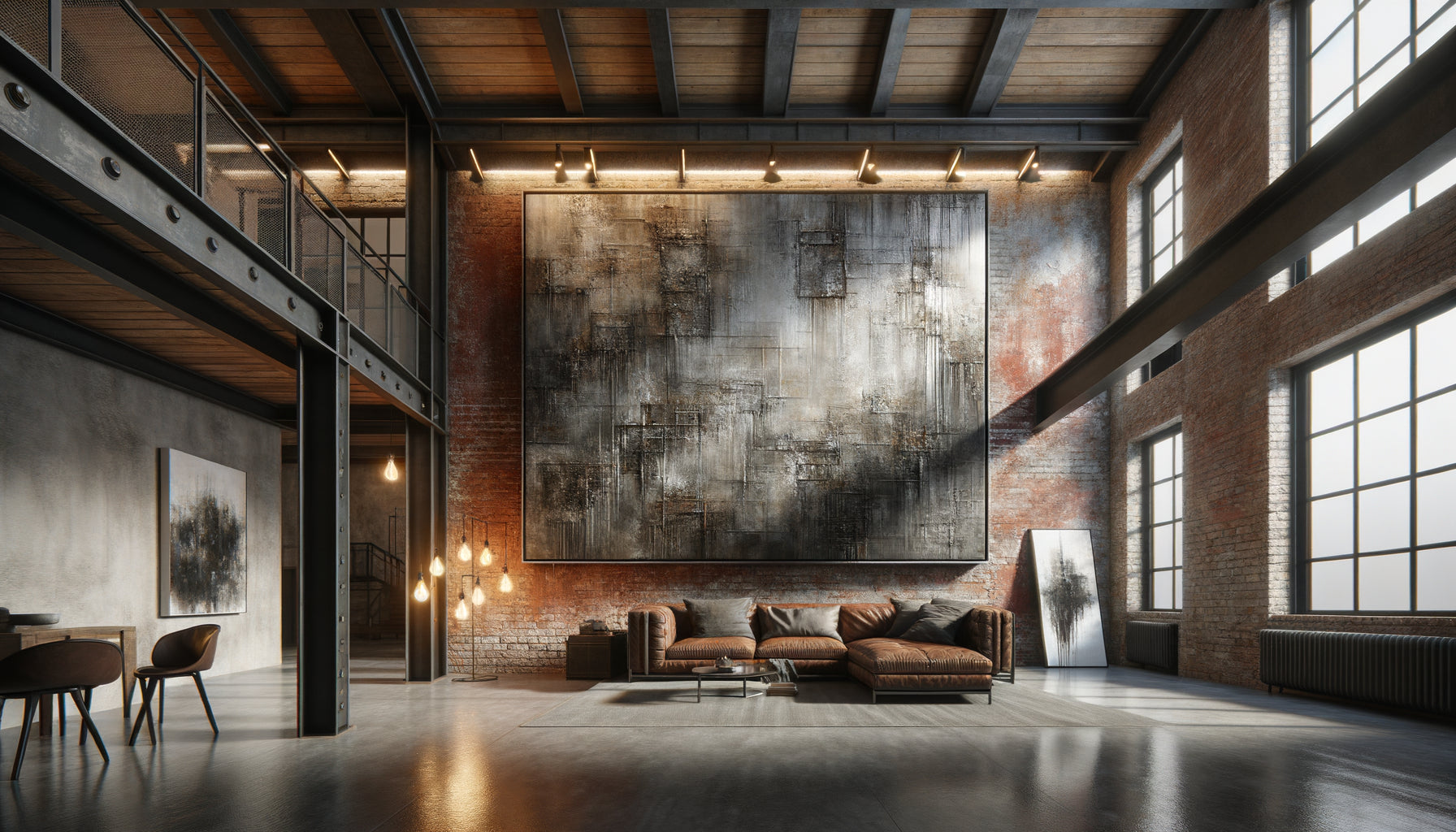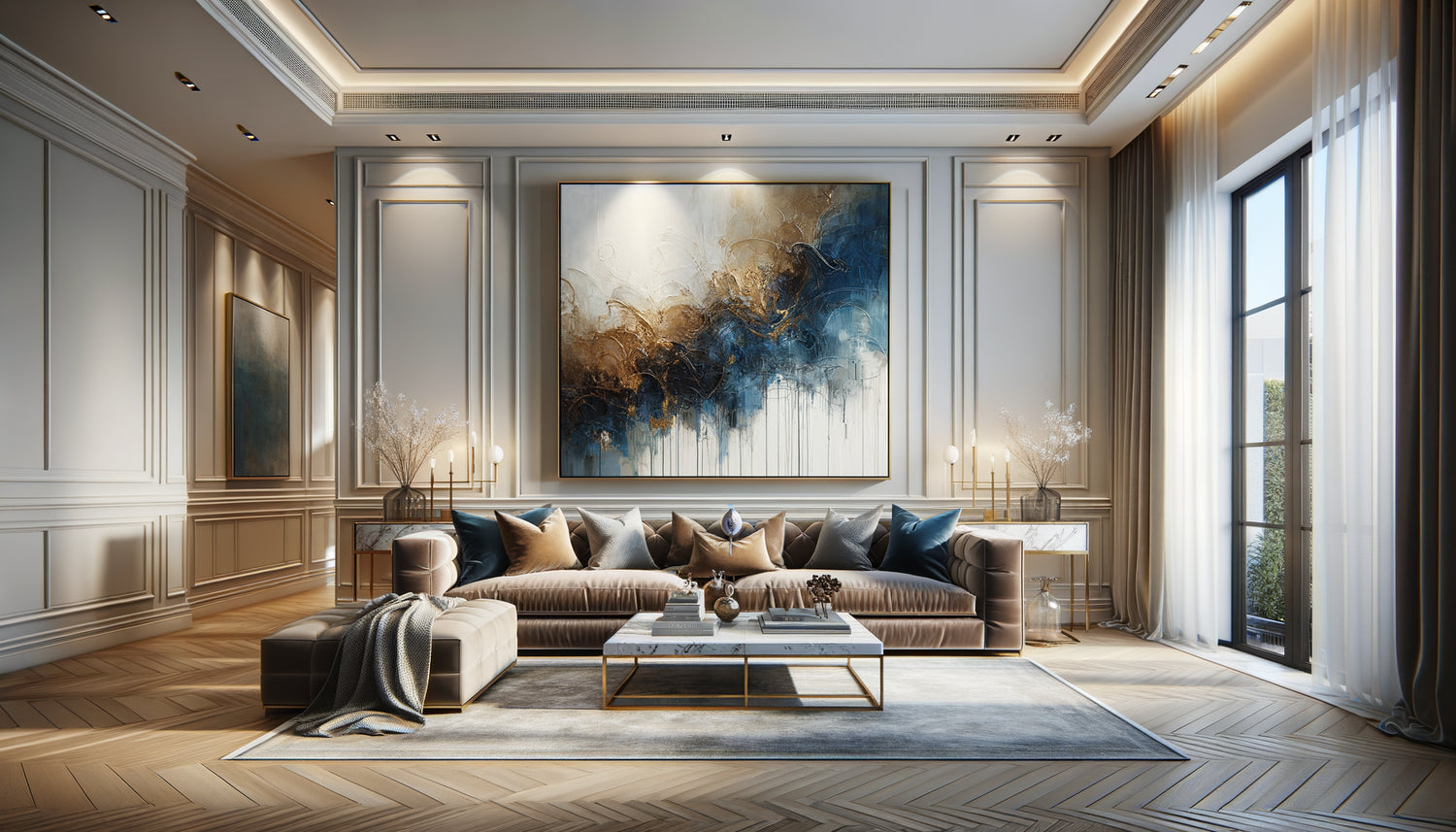
I noticed a fascinating phenomenon during my latest appraisals: an identical apartment can sell 15% more simply because an artist's painting visually structures its main living room. It's not magic, it's a market reality I've observed for fifteen years in high-end real estate valuation.
Investing in a recognized artist's painting to enhance your living room provides three concrete benefits: an immediate elevation of the qualitative perception of your space, a focal point that unifies your decor, and a patrimonial value that improves over time. Unlike furniture which depreciates, well-chosen contemporary art constitutes a stable asset.
Many hesitate when faced with the price of a signed work, fearing making the wrong choice or transforming their living room into a cold gallery. This apprehension is legitimate, but it often stems from a lack of understanding of artistic and spatial valuation mechanisms.
The good news? There are objective criteria for selecting a painting for living room that will enhance your interior while preserving its authenticity. I'm going to share the keys I use daily for my demanding clients.
Artwork as an investment: beyond pure aesthetics
Let's talk numbers without detour. A painting by a recognized artist has an intrinsic value that escapes the fluctuations of decorative trends. Unlike a designer sofa which will lose 60% of its value in five years, a signed canvas by a listed artist generally maintains its price, or even increases it by 8 to 12% annually according to Artprice quotes.
I advised a Parisian couple who acquired an abstract work for €4,000 in 2015. When they resold their property in 2023, the same piece was negotiated at €7,200 with a specialist gallery. Meanwhile, their high-end Scandinavian furniture was sold off at 30% of its initial purchase price.
But financial investment is only one dimension. A well-chosen painting for living room modifies the energetic dynamics of your main room. It attracts the eye, structures volumes, dialogues with natural light. It's an architectural element just like a skylight or a fireplace.
The three pillars of artistic value
For a painting to truly enhance your living room, three criteria must converge: the institutional recognition of the artist (exhibitions, public collections), the coherence of his approach (documented stylistic evolution), and the relative scarcity of his works on the market.
An artist who regularly exhibits at international fairs like Art Basel or who is featured in FRAC collections offers a guarantee of durability. His rating is followed, documented, which facilitates eventual resale. Conversely, an artist without gallery representation or exhibition history remains a speculative bet, however appealing their work may be.
How the Right Artwork Transforms Your Living Room Perception
I regularly intervene to prepare properties for market. The strategic addition of a piece by an artist above a neutral sofa or facing the entrance creates what I call an 'showroom effect'. Visitors immediately perceive a higher level of sophistication.
Let's take a concrete example: a 35m² living room with white walls, furnished sparingly. Without artwork, it appears clinical and impersonal. Install a 120x100cm abstract canvas in warm tones and suddenly, the space breathes. Volumes seem better proportioned, natural light finds a chromatic echo, and the whole gains depth.
This transformation is not cosmetic. It acts on our spatial perception by creating a visual hierarchy. Our brains naturally seek points of fixation. In the absence of structuring elements, it flits around, creating a diffuse feeling of discomfort. A well-positioned painting soothes this need by offering a stable visual anchor.
The Golden Rules of Artistic Integration
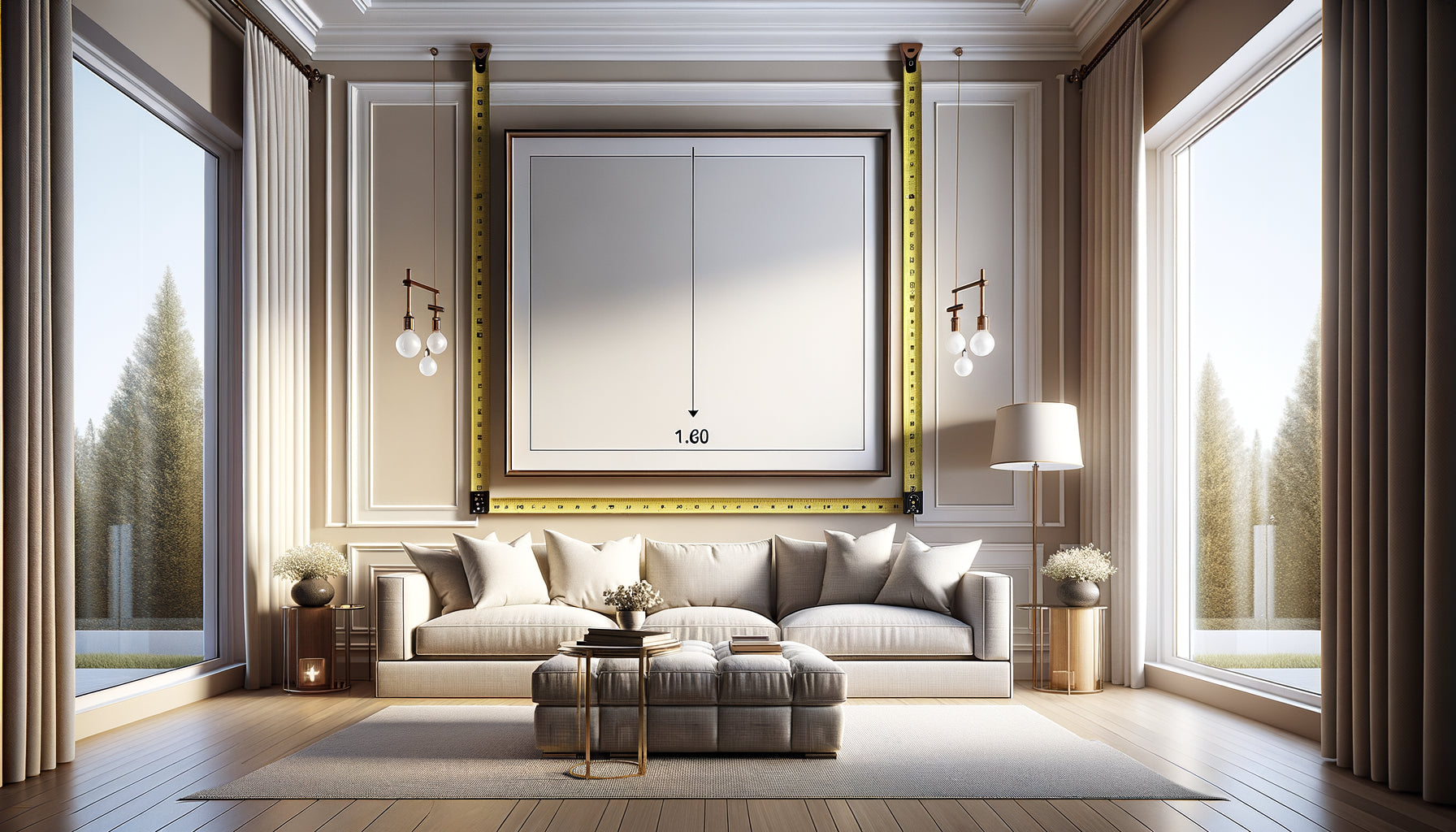
For a living room painting to truly enhance your space, respect these proportions: the width of the artwork should represent between 60 and 75% of the width of the furniture below. Too small, it appears lost; too large, it overwhelms the composition.
Hanging height is just as crucial. The optical center of the work should be at 1.60m from the floor, approximately at eye level. This museum rule guarantees a comfortable reading without neck strain.
As for color choice, I recommend the 70-20-10 rule: 70% neutral colors in your decor, 20% secondary color, and 10% bright hues. Your piece by an artist can embody these 10% of boldness, creating a visual punctuation without dissonance.

Emerging Artist or Established Value: What Positioning for Your Living Room?
The question of budget inevitably arises. Should you prioritize an artist already valued at €8,000 or bet on an emerging talent at €1,500? The answer depends on your primary objective.
If you are looking for patrimonial security, opt for artists represented by established galleries for more than ten years, with a consistent history of exhibitions. Their value evolves slowly but surely. A painting acquired for €5,000 today will probably be worth between €6,000 and €7,500 in five years, according to average market data.
If you accept more volatility in exchange for a higher potential capital gain, emerging artists offer fascinating opportunities. I have seen works by thirty-year-old artists go from €1200 to €4500 in three years after a remarkable exhibition at the Lyon Biennale. But for every success, how many careers stagnate?
Reliable indicators of artistic recognition
To assess the potential of an artist's painting, check its presence on Artprice or Artsy, platforms that aggregate auction results. An artist whose works are regularly sold, with even a modest upward curve, offers better assurance than an unknown without a history.
Also consult lists of artists supported by FRAC (Regional Funds for Contemporary Art). Acquisition of a work by a public institution constitutes an important validation, signaling critical interest beyond the commercial market.
Finally, prioritize artists with a stable gallery representation. Exclusive representation by a recognized gallery implies professional career management, consistent promotion, and an established collector network facilitating eventual resale.
Beyond decoration: art as social conversation
An often-neglected aspect of artistic investment concerns its relational dimension. A painting for living room signed instantly becomes a topic of conversation during your receptions. It reveals your sensitivity, your cultural curiosity, your ability to invest in the intangible.
I have noticed that owners of authentic artworks naturally develop a richer discourse about their habitat. They can share the story of their discovery of the artist, explain his approach, contextualize the artistic movement. This narrative adds emotional depth to the physical space.
In the context of a real estate sale, this narrative dimension makes a measurable difference. Potential buyers more easily project themselves into a place with a soul, a history. An apartment with a recognized artist's painting well presented generates an average of 23% more visits according to my internal statistics.

Beware of reproductions presented as 'limited editions'. A digital print, even numbered and signed, does not have the same value as a unique piece or an original etching made by hand. The difference in resale price is abysmal.
Also avoid impulsive purchases at large art fairs. The works offered are often overvalued by 30 to 40% compared to gallery prices. Take the time to reflect, visit the artist's studio if possible, and request a certificate of authenticity.
Another frequent pitfall: choosing a wall art for living room solely for its colors, without considering the artistic approach. A decorative work without a conceptual background quickly loses its visual interest. It becomes an expensive wallpaper. Always prioritize a work that questions you, intrigues you, even slightly.
The question of insurance and preservation
A artwork by a recognized artist requires appropriate protection. Add it to your home insurance with a specific clause 'valuable objects'. The annual additional cost remains minimal, generally 0.5% of the insured value, but guarantees you replacement at an agreed value in case of loss.
In terms of preservation, avoid direct exposure to sunlight which alters pigments. Directional LED lighting with neutral color temperature (3000-4000K) enhances the work without damaging it. Maintain a stable humidity between 45 and 55% to preserve the canvas and frame.
Ready to transform your living room into an exceptional space?
Discover our exclusive collection of wall art for Living Room that combines artistic quality and potential patrimonial enhancement.
Visualize your living room in five years
Imagine your main space bathed in natural light, structured by a work of art that has gained value and meaning. Every glance cast upon this artwork by an artist reminds you of your boldness, your discernment, your ability to invest in lasting beauty.
Your guests no longer simply comment on your decor: they are interested in the artist, their approach, your shared history with this work. Your living room is no longer an assemblage of furniture, but a coherent place of life, full of meaning and value.
Start modestly if your budget requires it. A €1500 painting by a promising emerging artist is infinitely better than a soulless reproduction. The essential thing lies in the authenticity of the gesture: choosing a unique piece that dialogues with your sensitivity and your space. The rest will follow naturally.