


How to Choose Artwork for an Industrial Living Room?
November 27, 2025 · 9 min read · by Walensky
I spent fifteen years transforming abandoned factories into contemporary lofts, and I still remember this client feeling lost in front of her magnificent, perfectly arranged industrial living room. Exposed metal beams, patinated bricks, raw furniture... everything was impeccable. Yet, something was sorely lacking. The bare walls transformed her space into a cold warehouse rather than a cozy nest. That's when I understood: an industrial living room without the right artwork is like a symphony without a finale.
Here's what a wall art for living room truly brings to an industrial space: it softens the harshness of raw materials, creates focal points that structure the space, and infuses that touch of humanity that transforms four walls into a true home. Many think that industrial aesthetics are self-sufficient, that too much ornamentation would betray its minimalist essence. This fear paralyzes them when choosing wall art. The result? Technically perfect spaces but emotionally empty. Rest assured: choosing the right artwork for your industrial living room doesn't require a degree in art history. It just takes understanding a few fundamental principles that I will share with you, those very ones that have transformed dozens of projects whose photos I cherish.
Raw Art to Amplify Industrial Identity
The first instinct would be to oppose art and industry, as if one had to compensate for the other. Fundamental mistake. The most impactful artworks in an industrial living room are those that dialogue with the architecture, not those that contradict it. I've seen abstract canvases with thick textures, almost sculptural, enhance the authenticity of a brick wall. Generous impasto, flowing material, scratched or oxidized surfaces create a visual continuity with the raw materials of the living room.
Think of relief-worked monochrome works, minimalist compositions where texture takes precedence over motif. These wall art for living room don't seek to embellish the space but to reveal its power. A large format charcoal gray with metallic nuances can capture natural light and subtly dialogue with your exposed steel structures. The goal? That the visitor wonders if the artwork completes the living room or if the living room was designed around it. This perfect fusion is the signature of a truly appropriate artwork choice.
Color Palettes That Always Work
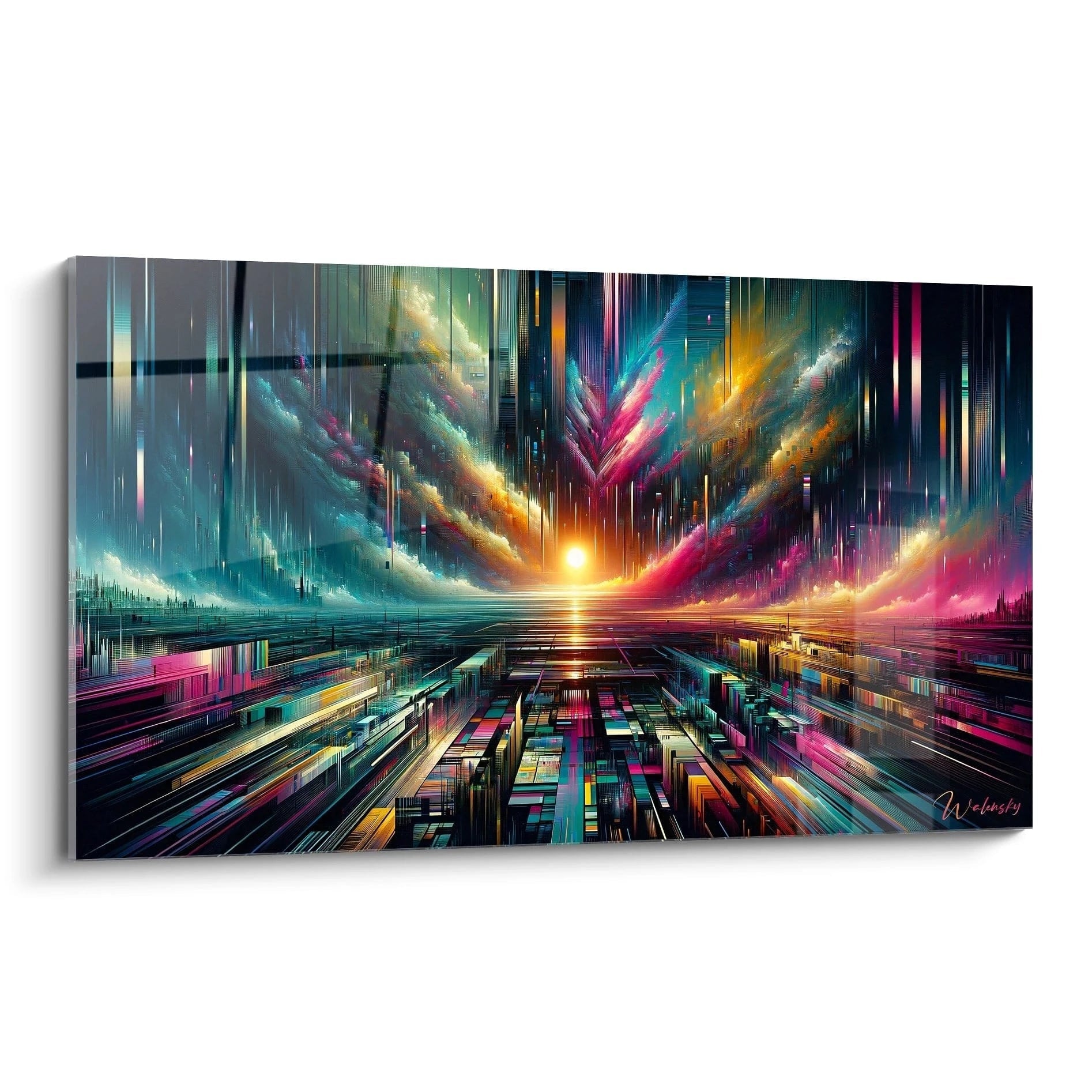
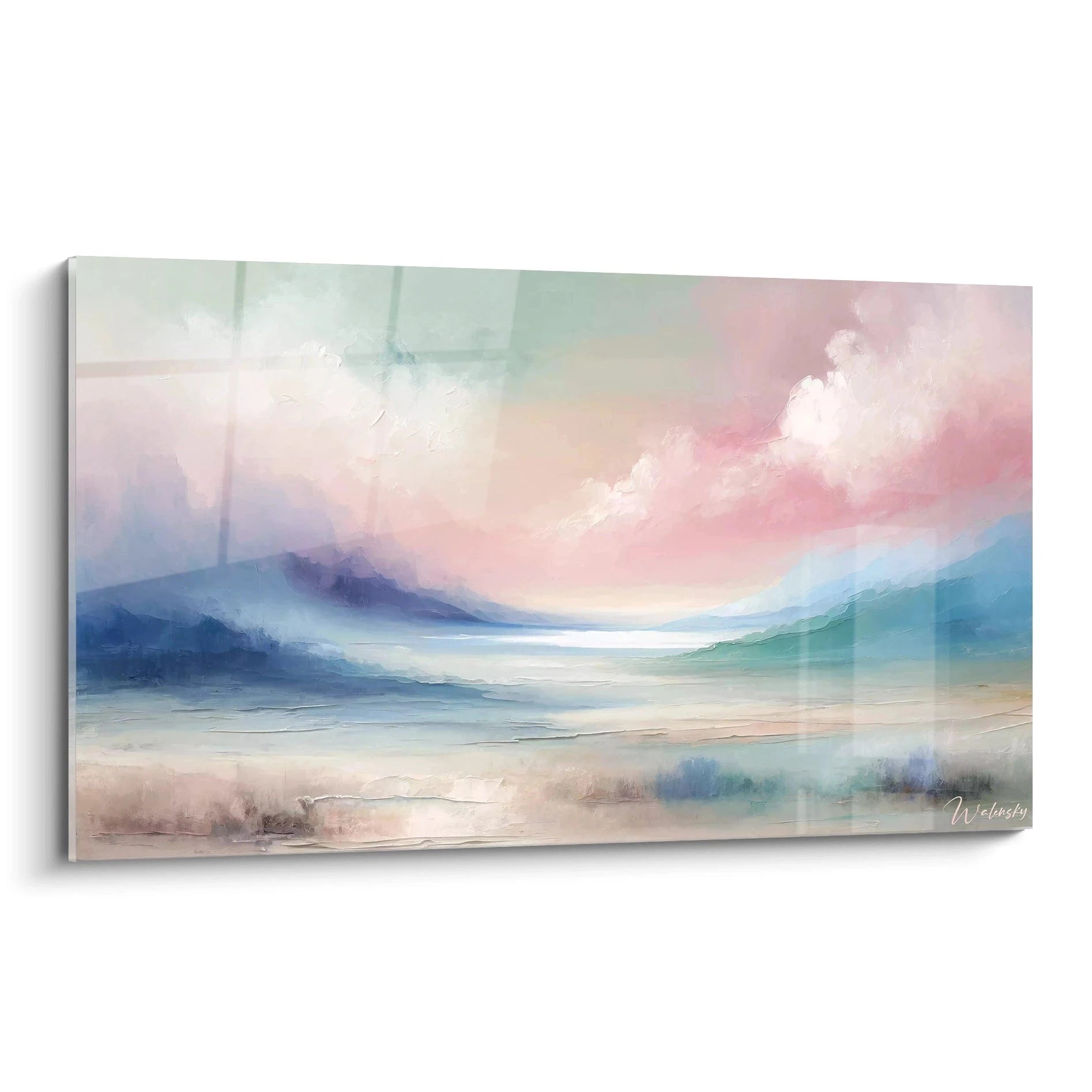
In the industrial universe, a neutral palette naturally dominates: concrete gray, charcoal black, off-white, rusted ochres. Your artwork should either extend this harmony or create a controlled contrast. I have successfully experimented with both approaches. Earthy tones, deep blacks and textured whites blend seamlessly. But a touch of mustard yellow, duck blue or brick red can electrify the whole without denaturing it. The essential thing? Avoid pastel colors or overly saturated shades that would clash with industrial sobriety.
When urban photography graces your walls
If you are looking to choose a painting for an industrial living room with a figurative approach, contemporary urban photography offers a remarkable narrative coherence. These images of metal structures, New York fire escapes, suspension bridges or rehabilitated factory facades tell the same story as your interior. I installed in a Parisian loft a series of three black and white prints representing architectural details from the Ruhr: bolts, beams, monumental gears. The owner confessed to me that these paintings transformed his living room into a poetic extension of his professional world as an engineer.
Photography also offers this graphic sharpness, these frank contrasts that resonate with industrial aesthetics. A panoramic format above a weathered leather sofa, representing an urban perspective from a low angle, creates a spectacular visual depth. Favor quality prints, ideally framed in thin metal frames or untreated rough wood. The frame counts as much as the image: it should disappear or assert itself as a structural element in its own right, never as a simple decorative border.

Our favourite
Stained Glass Splendor - Geometric Abstract Wall Art Edition
233,90€
Discover this artworkThe XXL format: dare the monumentality
In an industrial living room with generous volumes, nothing works better than a large-scale artwork. High ceilings, characteristic of these spaces, call for imposing vertical compositions. I learned this lesson during a renovation in Lille: we had first hung several small paintings that were completely lost. By replacing them with a single canvas measuring 2 meters by 1.50 meters, the space suddenly found its balance.
A monumental canvas for the living room functions as a visual manifesto. It asserts an intention, structures the gaze, and becomes the focal point around which to arrange furniture. Don't be afraid of grandeur: in an industrial context where everything breathes spaciousness (workshop windows, massive beams, open volumes), a small format will seem timid. If your budget limits the size, prefer a diptych or triptych that, once assembled, creates this essential monumental presence. The spacing between panels even adds a visual rhythm that can recall the typical gridded windows of factories.
The strategic placement of your artwork
Hanging a canvas in an industrial living room adheres to specific spatial rules. Forget the standard height of classic spaces. Here, you can play with levels. I like to position a work in contrast with a strong architectural element: above a vintage cast iron radiator, between two workshop windows, or even on the floor, simply leaning against a brick wall for a deliberately relaxed effect. This latter option, which I call unmounted hanging, reinforces the loft spirit and allows you to easily change the artwork according to your moods.
— Our selection


Geometric abstraction: a timeless classic
When I need to choose a canvas suitable for an industrial living room for undecided clients, I often turn to geometric abstraction. Why? Because it shares the very DNA of industrial architecture: clean lines, elementary shapes, rational composition. An abstract painting with angular motifs, with color planes delimited by clear lines, creates a perfect resonance with the environment.
Compositions inspired by Russian constructivism, the Bauhaus or Suprematism naturally find their place in these interiors. Circles, squares, triangles arranged according to a rigorous visual logic echo the metal structures and orthogonal arrangements of furniture. I recently integrated a neo-geometric piece in black-and-white-red hues into a living room with entirely metallic furniture: the harmony was immediate. The painting seemed to have always belonged to that space, as if it were its two-dimensional expression.

— You may also like


Dare the subversion: when the unexpected elevates
After years of designing industrial living rooms, I’ve developed a taste for counter-intuitive choices that paradoxically work wonderfully. A classic portrait in a massive gilded frame, a Flemish still life, an antique map reproduction: these seemingly unsuitable artworks can create a fascinating visual tension. The contrast between industrial rawness and academic refinement generates an unexpected sophistication.
This approach requires finesse. It’s not about accumulating incongruities but creating a deliberately off-center focal point that humanizes the space. I installed a large-format reproduction of a Caravaggio in a former converted mechanics workshop: the dramatic chiaroscuro dialogued beautifully with the shadows created by the metal structure. This living room artwork transformed the room into a contemporary cabinet of curiosities, proof that rules are made to be questioned.
Lighting: Revealing the Artwork
An artwork suited to your industrial living room deserves lighting that enhances it. Track spotlights, so characteristic of these interiors, allow you to precisely direct the light. I recommend a slightly angled lighting, avoiding reflections but creating shadows that accentuate material reliefs. If your work is textured, this highlighting will reveal its depth. Some choose articulated metal wall lights, reminiscent of workshop lamps, positioned on either side of the artwork: functional and aesthetically consistent.
Your industrial living room deserves a work worthy of it
Discover our exclusive collection of living room artworks that will transform your walls into true aesthetic statements.

In the same vein
Modern Muse Canvas - Contemporary Abstract Painting Edition
233,90€
Discover this artwork →Composing with the Existing: The Art of Balance
Your industrial living room already has a strong identity: metal furniture, pendant lights, perhaps a steel and recycled wood bookcase. The artwork you choose must fit within this constellation of objects without creating visual cacophony. I apply the rule of thirds: if your furniture is visually dominant, opt for a restrained work that breathes. Conversely, if your layout is minimalist, allow yourself an expressive, colorful artwork that will become the undisputed star of the space.
Observe the dominant lines of your living room. If horizontal lines predominate (long shelves, low sofa, ribbon windows), a vertical artwork will create a dynamic counterpoint. Conversely, a horizontal composition will amplify the feeling of space in a living room with marked vertical lines. This geometric complementarity, often intuitive, makes the difference between an ordinary choice and a truly suitable artwork.
Imagine yourself in six months, welcoming friends for the first time since installing your artwork. Their eyes will naturally be drawn to this focal point that tells your story, your sensitivity. That once bare wall will have become the soul of your living room, the detail that transforms a functional space into an authentic place to live. Choosing an artwork suitable for your industrial living room, is accepting to let emotion enter a universe reputed cold, it's affirming that architectural authenticity and artistic sensitivity do not oppose but sublimate each other mutually. Start simply: identify the wall that naturally attracts the eye, measure it, and let yourself be guided by your instinct while keeping these principles in mind.
Frequently asked questions about choosing an artwork for an industrial living room
What size of artwork should I choose for a large industrial living room?
For an industrial living room with generous volumes, aim big without hesitation. A 4-meter wide wall can accommodate a work of art from 1.80 to 2.50 meters wide, or a set of three paintings totaling that dimension. The rule of thumb: your artwork should occupy about two thirds of the width of the main furniture below (sofa, console). In these spaces with high ceilings, a format that is too modest will be completely lost. If your budget does not allow for a large format, prioritize a triptych or a wall composition of several medium-sized works arranged according to a clear geometric logic. The monumental effect will be preserved while diversifying the visual points of interest.
Should I prefer neutral colors or dare to use color?
Both approaches work beautifully in an industrial living room, depending on the effect desired. Artwork with neutral tones (grays, blacks, whites, beiges, ochres) create a harmonious continuity with the raw architecture and reinforce the contemplative atmosphere. They focus on texture and subtle nuances rather than chromatic impact. On the contrary, a touch of bold color (saffron yellow, petrol blue, oxidized red, fir green) can electrify the space and give it character. My advice: if your furniture and textiles are already colorful, stay restrained on the wall. If everything is neutral, dare to use a colored artwork as a focal point. Simply avoid pastel or neon colors that would clash with the industrial sobriety.
What art style best suits an industrial living room?
The industrial living room tolerates a wide stylistic diversity, but some movements naturally dialogue with its DNA. Geometric abstraction (constructivism, Bauhaus, minimal art) shares its formal rigor. Art brut and abstract expressionism resonate with the authenticity of materials. Urban and documentary photography creates an obvious narrative coherence. Street art and typographic works bring a perfect contemporary energy. Even classic art can work in assumed contrast, creating a sophisticated tension. In reality, the question is not so much the style as the quality of the artwork and its ability to dialogue with your space. Trust your feelings: if a painting touches you and its colors, format, and energy harmonize with your living room, it's probably the right choice.


