



Why Historical Bathroom Paintings (Pompeii
November 20, 2025 · 9 min read · by Walensky
In the ruins of Pompeii, beneath the ashes of Vesuvius, archaeologists discovered something unexpected: sophisticated frescoes adorning the private baths and luxurious bathrooms of patrician villas. Mythological scenes, seascapes, delicate floral motifs... Why did this space, dedicated to hygiene, deserve such artistic treatment?
This is what historical bathroom paintings reveal to us: they transformed a functional space into a sanctuary of well-being, created a complete sensory experience, and affirmed the refinement of their owners. This millennial tradition strangely resonates with our contemporary aspirations.
Today, we hesitate to hang artwork in our modern bathrooms. Too much humidity, not enough space, a lack of inspiration... We reserve art for "noble" rooms like the living room or bedroom, forgetting that we spend nearly two hours a day in this intimate space.
Yet, the Romans understood something essential: the bathroom is not just a place of hygiene; it's a space of regeneration where body and mind are replenished. And this vision transcends centuries, from Pompeii to Ottoman hammams, Japanese baths to Nordic spas.
This article invites you to rediscover this forgotten tradition. You will understand why our ancestors placed so much importance on embellishing their bathroom spaces, and how this ancestral wisdom can transform your own daily life into an enchanting ritual.
Pompeii: when the bathroom becomes an art gallery
The Pompeian frescoes bear witness to remarkable sophistication. In the Villa of the Mysteries, archaeologists unearthed a caldarium (hot bath) whose walls were entirely covered with Dionysiac scenes. Not simple decorations: complex narrative compositions, made as frescoes on fresh plaster, a demanding technique that guaranteed their durability against humidity.
Roman artisans perfectly mastered water-resistant pigments: ochres, earths, Egyptian blues extracted from lapis lazuli, cinnabar reds. These colors, applied in multiple layers of lime plaster, created an impermeable and luminous surface that magnified the trembling glow of oil lamps.
The preferred themes were not trivial. The Romans chose aquatic scenes – dolphins, tritons, nereids – which established a poetic continuity with the water element. Motifs of lush gardens, with their fountains and birds, visually extended the confined space of the bathroom towards imaginary horizons. This visual strategy created a feeling of openness, transforming the intimacy of bathing into a mental journey.
Technical ingenuity in the face of humidity
The Romans were aware of no challenges posed by the permanent humidity of baths. They developed the hypocaust system – underfloor heating that dried the air and preserved wall paintings. The walls themselves were built with a slight air gap allowing ventilation, an engineering feat we are only just rediscovering today with our modern MVHR systems.
This technical attention reveals a deep conviction: if so much effort is invested in protecting art in a humid space, it's because its presence is considered essential, not accessory. Aesthetics were not a superfluous luxury but a fundamental dimension of the bathing experience.
Beyond Pompeii: A Constant Across Civilizations
This tradition did not die with the Roman Empire. In 16th-century Ottoman hammams, Iznik tiles transformed bathhouses into heavenly gardens. Glazed ceramics, resistant to water and steam, covered walls and domes with stylized floral motifs – tulips, carnations, roses – in harmonies of cobalt blue, turquoise, and coral red.
In Japan, sento (public baths) and onsen (hot springs) are traditionally adorned with murals depicting Mount Fuji, pine forests, or waterfalls. These monumental paintings are not mere decorations: they participate in the purification ritual, inviting meditation and connection with nature.
In Europe, aristocratic bathing cabinets of the 17th and 18th centuries competed in refinement. At Versailles, Marie Antoinette's bathing apartments featured painted panels depicting nymphs and pastoral scenes, framed by gilded woodwork. Humidity? It was combatted with careful ventilation and the use of oil paintings on treated wood panels, techniques inherited from Flemish masters.
The Psychological Function of the Bathroom Painting
This historical constant reveals a universal intuition: the ritual bath requires an environment that elevates the spirit. When we undress, we put ourselves in a vulnerable position. A cold, purely functional space reinforces this feeling. Conversely, an aesthetically rich environment wraps us in symbolic protection, transforming routine hygiene into a holistic self-care moment.
Contemporary neuroscience confirms what the ancients sensed: our visual environment directly influences our stress hormones. A study by the University of Exeter demonstrated that exposure to works of art in everyday spaces reduces cortisol by 25% and increases feelings of well-being by 32%. Imagine these benefits in the very room where we seek to relax.

Why This Tradition Was Lost – and Why It’s Back
The 20th century abruptly broke with this millennial tradition. Modernist architecture, with its cult of functionalism, reduced the bathroom to its simplest expression: white tiling, harsh lighting, maximum efficiency. Le Corbusier defined the bathroom as a “washing machine” – a revealing metaphor for a philosophical impoverishment.
This rupture can also be explained by economic considerations. The industrialization of construction imposed standardization. Mass housing, produced in series after the world wars, left no room for personalization. Art was relegated to the museum, separated from everyday life, as if beauty were a privilege reserved for exceptional moments.
But something is changing. For about ten years, architects and designers have rediscovered the importance of domestic well-being. The slow living movement, the growing popularity of Scandinavian hygge, the enthusiasm for self-care rituals... all point to the same aspiration: to re-enchant everyday life, to transform our habitat into a regenerating sanctuary.
The Return of Artwork Suitable for Humid Spaces
This renaissance is accompanied by technological innovations. Aluminum prints, which are completely waterproof, faithfully reproduce works of art with increased brightness. Acrylic paintings under glass, encapsulated photographs, resin panels: all solutions that combine demanding aesthetics and resistance to humidity.
Designers now offer collections specifically designed for bathrooms: adapted formats, anti-corrosion fixings, invisible protective treatments. This offering responds to a growing demand from consumers who refuse to choose between beauty and practicality.
— Our selection


Lessons From Pompeii for Your Contemporary Bathroom
What can these historical artworks teach us to arrange our modern spaces? Several timeless principles emerge from this millennial tradition.
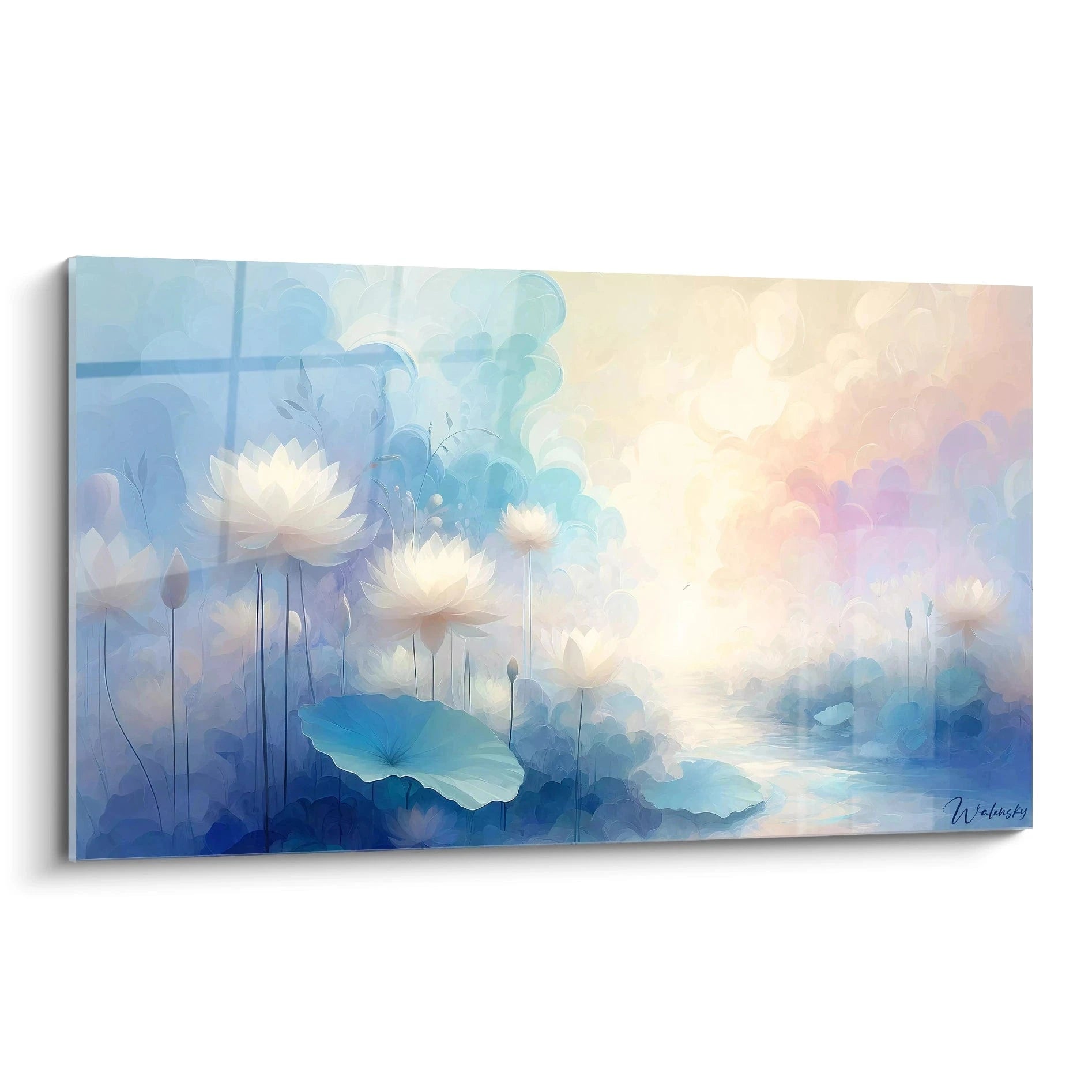
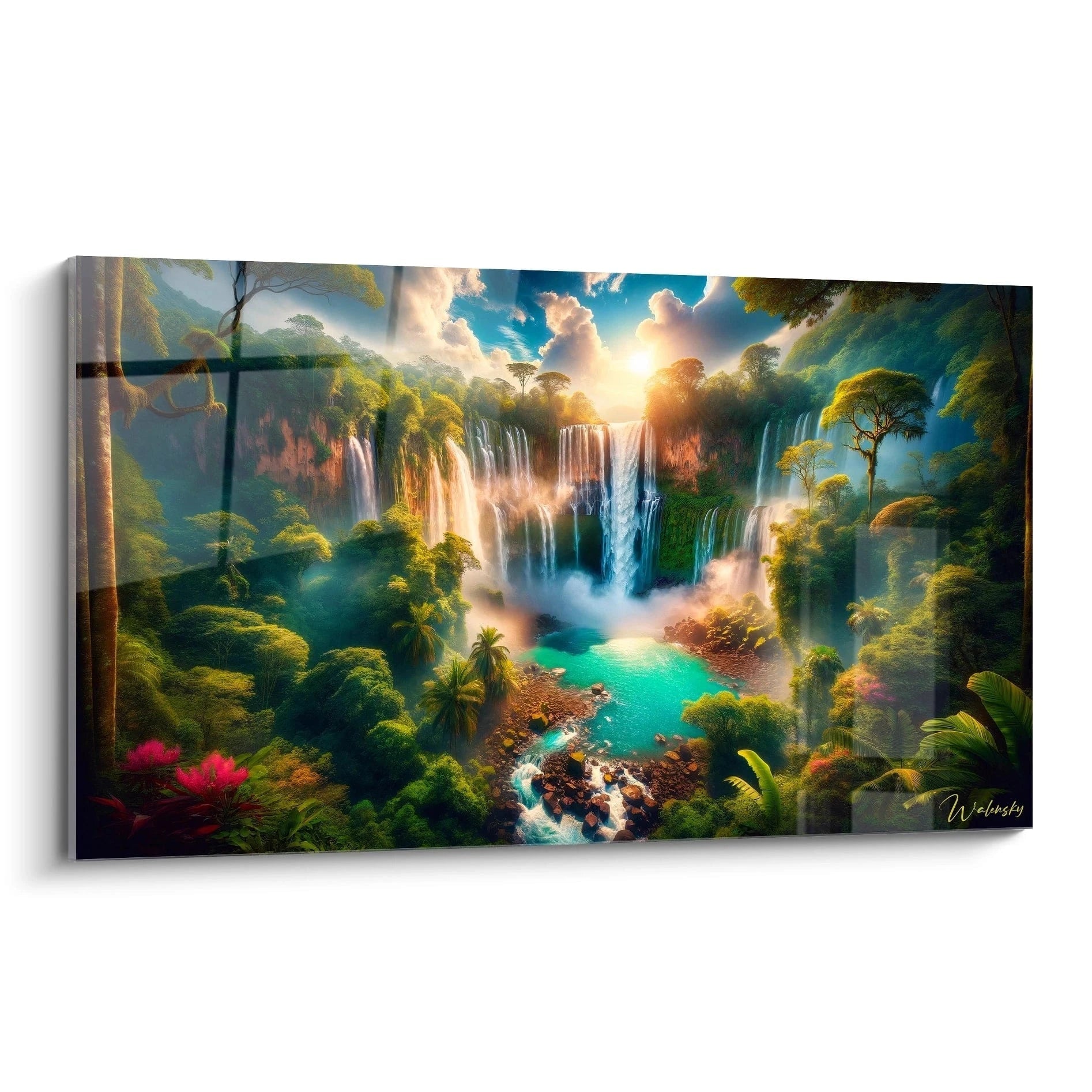
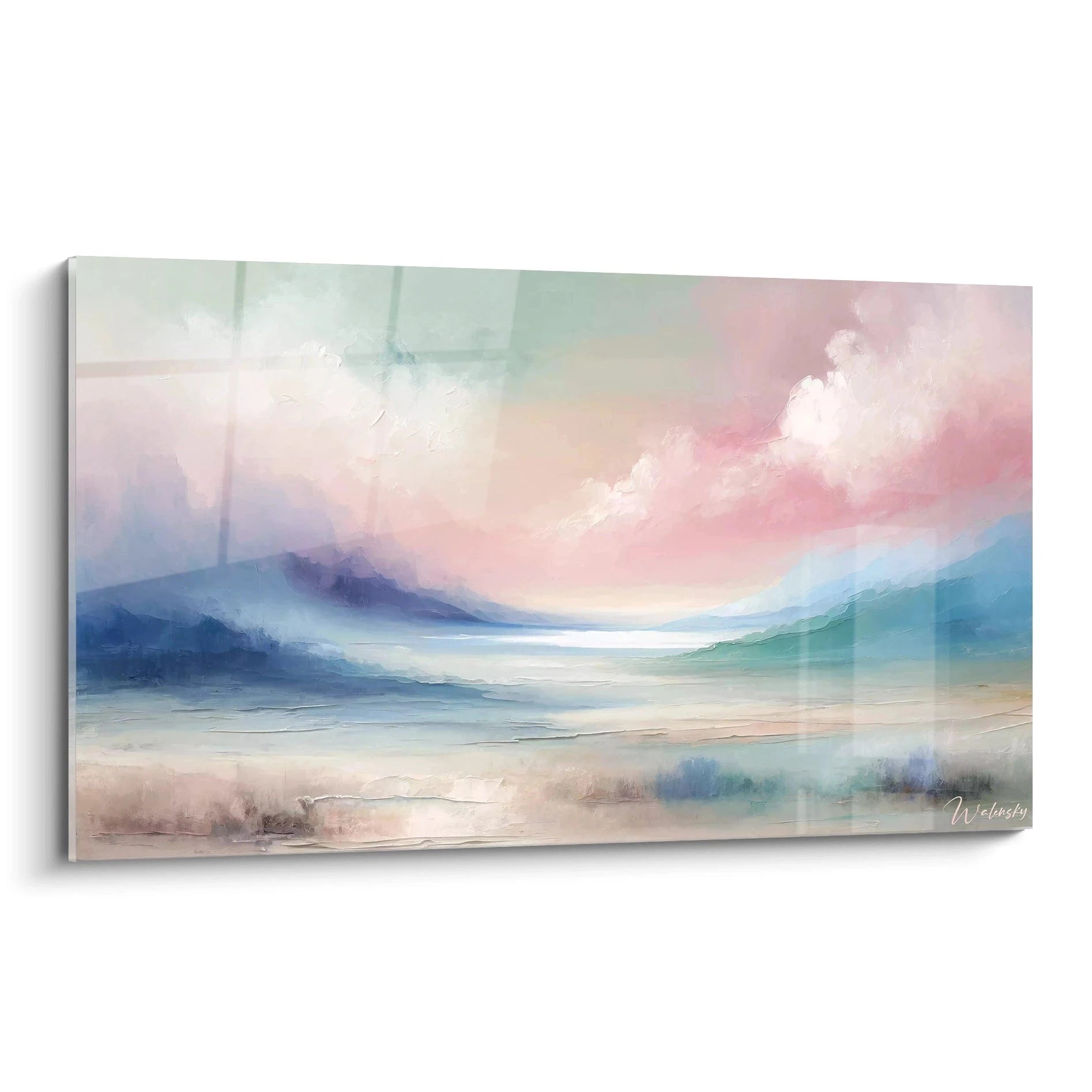
Firstly, the thematic choice: prioritize subjects that resonate with the element of water. Marine landscapes, lush plant motifs, soothing nature scenes... These themes create a sensory coherence that amplifies the bathing experience. An Icelandic waterfall, a misty forest, a Japanese garden in the rain – these images naturally dialogue with steam and trickling water.
Secondly, the color palette: The Romans favored deep blues, aquatic greens, warm ochres. These tones create either a refreshing atmosphere (ideal for a bright bathroom) or a cocooning ambiance (perfect for a more intimate space). Avoid garish colors that disrupt relaxation.
Thirdly, strategic placement: In ancient Roman baths, frescoes occupied the direct field of vision from the bathtub. Transpose this principle by hanging your wall art facing the bathtub or shower, at eye level when immersed or under water. This is where you will spend your moments of contemplation.
Creating a multisensory experience
The Romans never considered art visually in isolation. The bathroom wall art was part of a complete orchestration: scents of essential oils, music from fountains, varied textures of marbles. Transpose this holistic approach by coordinating your artwork with the lighting (prefer warm and subdued light), the textiles (towels whose shades echo those of the painting), and even the scents (a candle whose aroma evokes the universe of the work).
This attention to detail radically transforms the experience. You no longer simply take a morning shower: you enter a sensory ritual that mentally prepares your day or closes your evening in serenity.

— You may also like


Art as an investment in your daily well-being
There is a recurring objection: “Why invest in a painting for a room that no one sees?” This question reveals a profound misunderstanding of the function of domestic art.
The Pompeians didn't decorate their private baths to impress visitors. They did it for themselves, aware that their quality of life depended on the quality of their daily environment. In a culture obsessed with social image and reception spaces, this philosophy resonates as a forgotten wisdom: authentic luxury begins with the spaces you truly inhabit.
Consider the time spent in your bathroom: about two hours per day, or 730 hours per year, 7,300 hours per decade. That's more time than you’ll spend in most museums throughout your life. Doesn't it deserve to be as inspiring as an art gallery?
Historical paintings of bathrooms teach us that self-care begins with the environment we create for those intimate moments. Every morning, while getting ready in front of a work that moves you, you affirm that your well-being deserves this attention. Every evening, while relaxing in a bath facing a soothing image, you practice a form of visual meditation that deeply regenerates.
Transform your bathroom into an inspired Pompeii sanctuary
Discover our exclusive collection of bathroom wall art that combines the aesthetics of ancient frescoes with the resilience of modern technologies.

Your bathroom, your personal manifesto
The ruins of Pompeii convey a message across the centuries: our private spaces reflect our deepest values. The Romans who adorned their baths with sophisticated frescoes affirmed that daily beauty was a right, not an exceptional privilege.
Today, hanging a wall art in your bathroom is a similar act. You affirm that these moments of intimacy – often rushed, neglected, considered purely functional – deserve the same aesthetic attention as your public spaces. You join a millennial tradition spanning Pompeii, Istanbul, Kyoto and Versailles.
Start simple. Choose a work that speaks to you, evokes water, nature, serenity. Make sure it is resistant to humidity. Hang it at eye level from your bathtub or shower. And observe how this simple gesture transforms your daily ritual.
Because that's exactly what the Pompeii fresco painters knew: art doesn’t just embellish walls; it transforms the very experience of space. Your morning shower becomes active contemplation. Your evening bath, immersive meditation. Your bathroom, a personal sanctuary that our ancestors would never have dared to neglect.
Frequently asked questions about bathroom wall art
Do wall art pieces risk being damaged by bathroom humidity?
This is the primary concern, and it's legitimate. But as the artisans of Pompeii proved two thousand years ago, everything depends on the materials and techniques used. The Pompeian frescoes survived the eruption of Vesuvius and centuries of burial precisely because they were designed for humid environments. Today, we have even more effective solutions: waterproof prints on aluminum, acrylic paintings sealed under glass, photographs encapsulated in resin. These modern technologies guarantee exceptional durability. The key is to choose artworks explicitly designed for humid spaces, with anti-corrosion fixings. Simply avoid unprotected canvases or untreated wooden frames. Good ventilation (extractor fan) also significantly extends the lifespan of your wall decoration.
What types of images are best suited for a bathroom?
Historical civilizations offer remarkably consistent clues. The Romans favored aquatic scenes – marine life, nymphs, fountains – which created a thematic continuity with the water element. The Ottomans opted for lush gardens evoking paradise. The Japanese chose natural landscapes that promote meditation. These approaches share a common logic: to create a resonance between the image and the bathing experience. Specifically, prioritize marine landscapes, misty forests, waterfalls, rain gardens, plant motifs, or abstract compositions evoking water or mist. In terms of color palettes, soothing blues, aquatic greens, neutral tones, and soft ochres work particularly well. Avoid anxiety-inducing subjects, colors that are too vibrant and disrupt relaxation, or images that are too complex and tire the eye.
Where exactly should a painting be placed in a small bathroom?
In the baths of Pompeii, frescoes were positioned to be contemplated from the bath itself, transforming each immersion into an enriched visual experience. Transpose this principle: the ideal placement is facing your bathtub or shower, at eye level when you are in the water or under the jet. If space is limited, a single well-positioned painting is more than sufficient – Romans often preferred a majestic central composition to an accumulation of works. For a small bathroom, prioritize a medium format (approximately 40x60 cm) rather than several small paintings that visually fragment the space. The wall facing the sink is also an excellent location: you enjoy the work during your morning and evening rituals. Simply ensure that the painting is at least 60 cm away from areas directly exposed to water splashes, even with resistant materials. This distance guarantees optimal longevity while preserving contemplative visibility.
Explore our collections


