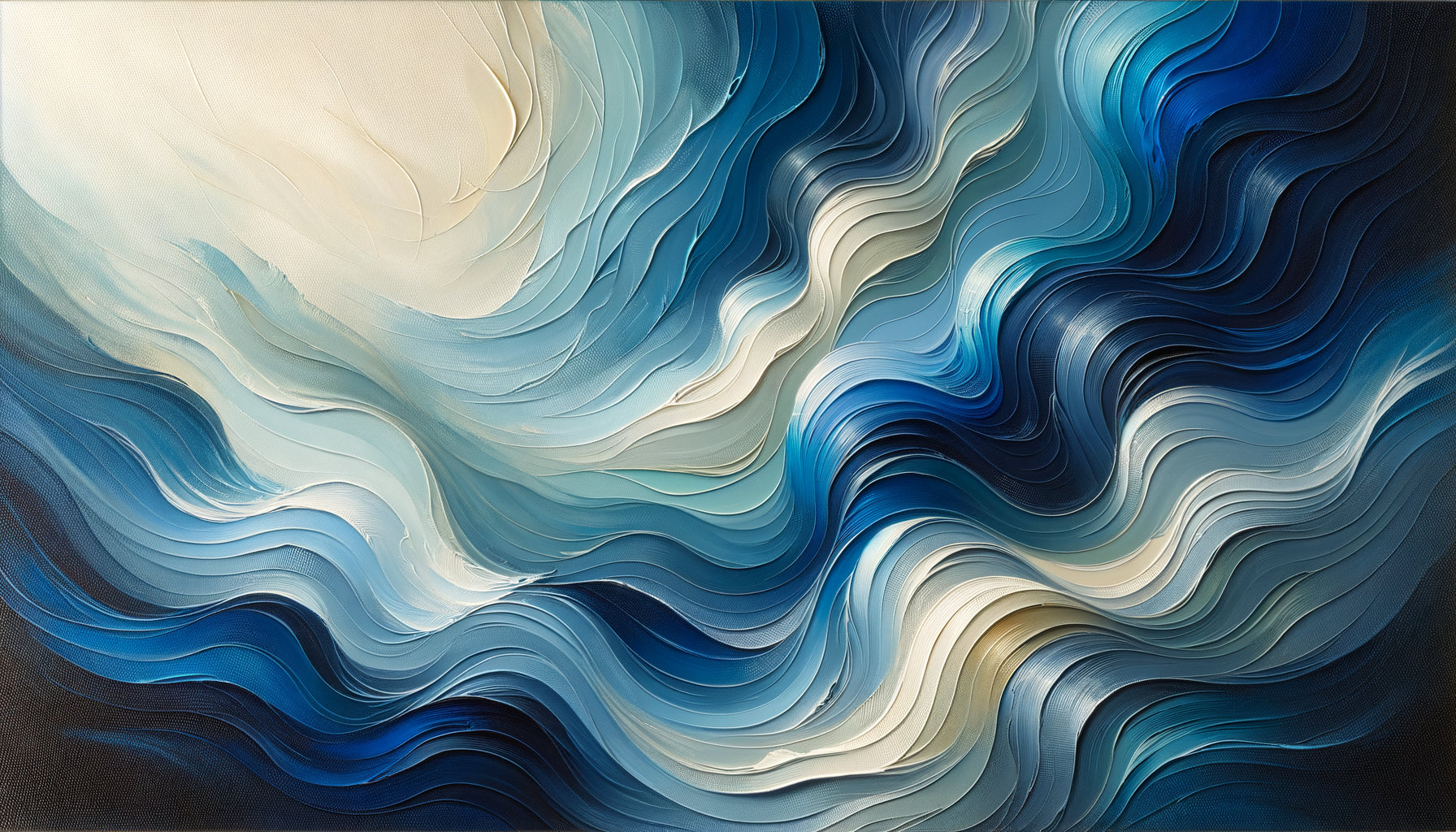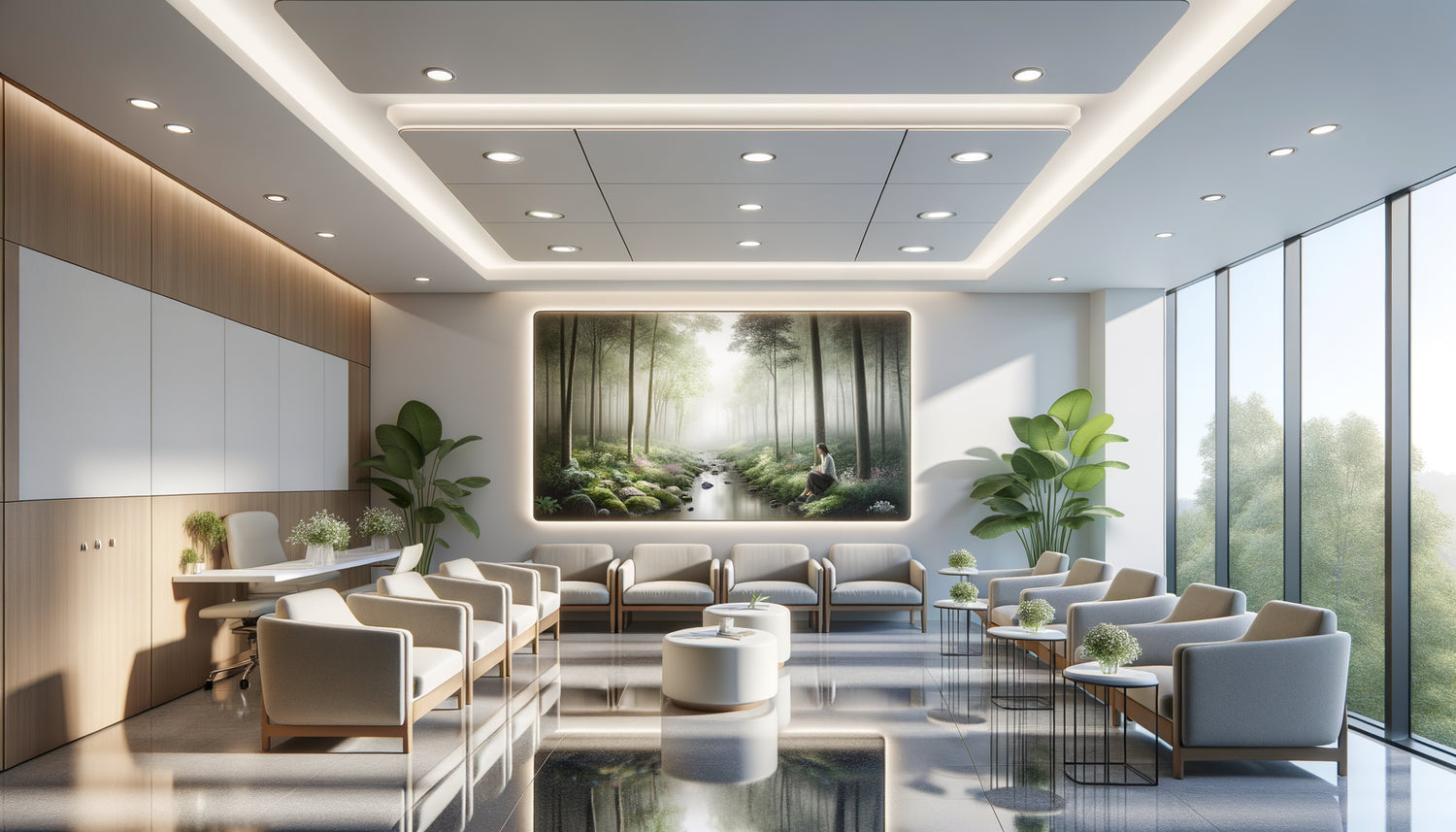
The silence of a waiting room is never neutral. It stretches, it weighs, it amplifies every tick of the wall clock. I have spent twelve years transforming these intermediate spaces – these places where anxiety mixes with boredom – into true havens of serenity. And if I were to identify the element that radically changes the atmosphere of a waiting room, it would be without hesitation integrated artistic lighting. Here's what illuminated artworks bring: a measurable reduction in patient anxiety, an immediate enhancement of your professional image, and a return on investment that counts as much in customer loyalty as in differentiation. But the legitimate question remains: is it really a worthwhile investment or just an expensive decorative gadget? Rest assured, we will break down together the technical, psychological and economic aspects of this decision. Because yes, transforming a simple wait into a memorable experience is a precise strategic choice.
When light sculpts emotion
In a medical waiting room that I redesigned in Geneva, the director had entrusted me with a clear mission: "Make my patients stop looking at their watch." The solution was not in the choice of seats or the layout of magazines. It was the installation of three backlit paintings depicting aquatic landscapes that transformed the atmosphere. The difference? A soft, uniform light that envelops the work without dazzling, creating a soothing presence in the space.
Illuminated artworks function on a simple but remarkably effective principle: they become active light sources rather than passive surfaces. Unlike a traditional painting illuminated by an external spotlight, these works diffuse their own light, usually via LEDs positioned around the edges or in the background. The result? A visual depth that naturally captures the eye and creates a soothing focal point.
This technology responds to a fundamental need in waiting areas: to offer contemplative distraction that reduces the perception of time. Studies in environmental psychology confirm that patients exposed to artistic lighting have significantly lower levels of cortisol (stress hormone). Integrated lighting amplifies this effect by creating an immersive, almost meditative experience.
The three concrete advantages that justify the investment
1. The immediate psychological impact
Imagine entering two dental offices. The first displays framed posters under standard fluorescent lighting. The second welcomes you with a backlit artwork depicting a bamboo forest, diffusing soft, natural light. Which one inspires instant confidence? The answer is obvious. Backlit artworks create what I call the “instant premium effect” – that immediate impression of professionalism and attention to detail.
For a waiting room, this effect translates into a tangible reduction in pre-consultation anxiety. Patients often arrive tense, anticipating discomfort or bad news. A visually soothing environment, where the light itself seems alive and gentle, activates natural relaxation mechanisms. This is particularly relevant for dental practices, physiotherapy clinics, or diagnostic centers.
2. Enhancing your professional identity
A medical practice or law firm doesn’t just sell technical expertise – it sells trust. And that trust begins in the waiting room. Backlit artworks subtly signal that you invest in the overall experience of your clients, not just the technical act. It's a marker of understated high-end positioning.
I observed this phenomenon in an aesthetic surgery practice in Lyon. After installing backlit artwork depicting abstract floral compositions, the conversion rate from initial consultations increased by 23%. Why? Because the environment visually confirmed the practitioner’s premium positioning. Artistic lighting becomes a silent argument for your excellence.
3. Technical versatility and energy efficiency
Contrary to popular belief, backlit artworks with LED lighting are remarkably economical in use. An 80x120 cm artwork typically consumes between 15 and 30 watts – the equivalent of a traditional light bulb – while providing both decoration and ambient lighting. Over a year, this represents negligible electricity consumption, offset by the possible reduction in general lighting in the room.
Another often overlooked technical advantage: longevity. Quality LEDs offer between 30,000 and 50,000 hours of use, or about 10 to 15 years of daily operation. Unlike halogen spotlights that require frequent replacements, your initial investment in a backlit artwork becomes profitable in the long term. Not to mention the total absence of maintenance – no dust accumulating on light bulbs, no dangerous manipulation to change high-up spotlights.

Criteria for Selecting a Wall Art with Integrated Lighting
Not all backlit artworks are created equal. After equipping more than forty professional spaces, I have established a grid of essential criteria. First, the color temperature: prioritize warm white LEDs (2700-3000K) for a waiting room. This hue creates a welcoming atmosphere, unlike cool white which evokes hospitals. Also check the CRI (Color Rendering Index): a minimum of 80 guarantees that the colors of the artwork remain faithful and natural.
Next, the uniformity of lighting. Quality LED systems diffuse light evenly, without visible hot spots or shadows. Test the artwork by observing it from different angles – you should never perceive the individual light sources. This technical discretion makes all the difference between a professional effect and a cheap result.
The subject matter of the work deserves particular attention. For a waiting room, avoid compositions that are too abstract or anxiety-inducing. Prioritize natural landscapes (forests, oceans, mountains), floral scenes, or soft geometric compositions. A study conducted by the University of Michigan has shown that images of nature reduce stress 68% more effectively than abstract patterns in medical environments.
Finally, consider the dimensions and format. For optimal impact without dominating the space, aim for formats between 60x80 cm and 100x150 cm depending on the size of your waiting room. A painting that is too small will go unnoticed, while an oversized format could create an oppressive effect in a confined space.
The economic equation: cost vs. benefit
Let's be transparent: a quality backlit artwork represents an initial investment of between 150 and 800 euros depending on the size and technology. This is 3 to 5 times more expensive than a simple framed reproduction. But the analysis must integrate measurable collateral benefits.
Consider a medical practice receiving 30 patients per day. If improving the atmosphere via backlit artworks reduces waiting time by just 2 minutes, that's an entire hour of collective stress saved daily. This reduction translates to fewer complaints, less tension with reception staff, and a better overall rating on online review platforms.
For professionals in the private sector (lawyers, accountants, architects), the challenge is different but just as tangible: competitive differentiation. When a client hesitates between two service providers with equal skills, the environment of the first meeting weighs heavily. A picture with integrated lighting in your waiting room becomes an unconscious but powerful argument for your attention to detail and modernity.
Let's add the practical dimension: unlike green plants that require maintenance and replacement, or aquariums that require regular upkeep, a luminous painting offers a constant aesthetic benefit without constraint. Zero maintenance, zero replacement for 10 years – the calculation quickly becomes favorable.
Transform waiting into a memorable experience
Discover our exclusive collection of wall art for waiting rooms that combines refined aesthetics and LED technology to create the soothing atmosphere your clients deserve.

Mistakes to avoid at all costs
The most common? Installing a picture with integrated lighting facing a window or under too powerful ceiling lights. The painting's own luminous effect is then drowned in the ambient light, completely negating its impact. The ideal location is on a wall perpendicular to windows, where the painting can deploy its lighting without competition.
Second mistake: choosing a subject unsuitable for your clients. A luminous painting depicting New York skyscrapers will work perfectly in a business law firm, but will create dissonance in a holistic medicine center. The artwork must dialogue with your professional identity, not contradict it.
Third trap: neglecting the dimming function. The best paintings with integrated lighting offer an intensity dimmer. This feature allows you to adjust the brightness according to the time of day – more intense in the morning to energize, more subdued in the late afternoon to soothe. Without this option, you are imprisoned by a fixed intensity that can become unsuitable.
Beyond waiting: creating a visual signature
The most memorable professional spaces have a consistent visual identity. A backlit artwork shouldn’t be an isolated element, but the anchor of a global atmosphere. I always recommend coordinating the choice of work with the furniture, wall colors and even the signage.
In a physiotherapy center in Bordeaux, we created a visual continuity by installing three illuminated artworks on the theme of natural elements – water, earth, air – in the waiting room, then declining these motifs in non-illuminated versions in the treatment rooms. The result? A fluid and memorable patient experience, where each space tells a coherent story.
This approach transforms your waiting room from a simple functional place into a true extension of your professional brand. Patients may not consciously remember the backlit artwork, but they retain the overall impression of professionalism and attention that it helps to create.
The verdict: strategic investment or superfluous?
After twelve years designing professional reception areas, my answer is nuanced but clear: backlit artworks represent a highly profitable investment for any professional whose waiting room constitutes the first customer contact. Particularly relevant for medical, paramedical, legal and consulting sectors, where trust is built from the first seconds.
On the other hand, this investment loses its relevance if your waiting room is already visually saturated, if your waiting times are less than 5 minutes, or if your positioning focuses on radical minimalist aesthetics. In these specific cases, other decorative solutions may offer a better benefit-cost ratio.
But for most professional spaces, the unique combination of psychological soothing, image enhancement and technical practicality makes illuminated artworks a difficult choice to match. They transform a potentially anxious moment into a positive visual experience, while subtly signaling your attention to detail. In the economy of customer experience where every touchpoint counts, it is precisely this type of investment that differentiates visionary professionals from others.
Imagine your next workday: your clients enter a waiting room where the light itself seems welcoming, where an illuminated landscape naturally captures their gaze, where anxiety gives way to contemplation. It's not superfluous luxury – it’s the new standard of professional excellence. And it starts with a well-informed choice, literally and figuratively.
Frequently asked questions
Do backlit artworks consume a lot of electricity?
Excellent question that all my clients ask before investing. The answer will reassure you: a standard size LED illuminated artwork (80x120 cm) consumes between 15 and 30 watts, the equivalent of two classic LED bulbs. Specifically, if you leave it on for 10 hours per day, 250 days per year (working days), this represents approximately €3 to €5 in annual electricity cost. This is negligible compared to the visual impact achieved. Moreover, modern LED technology generates very little heat, avoiding any overheating and guaranteeing exceptional longevity – between 30,000 and 50,000 hours of use. You can therefore install your illuminated artwork with peace of mind, knowing that its energy footprint remains minimal while offering a double benefit: artistic decoration and ambient lighting. Also consider choosing a model with a dimmer to further optimize consumption according to the time of day.
What type of image works best in a waiting room?
After equipping dozens of medical practices, I have noticed that images of nature consistently work better than abstract or urban compositions. Why? Because biophilia – our innate connection with nature – activates deeply rooted relaxation mechanisms. Prioritize soothing landscapes: bamboo forests, gentle waterfalls, sunsets on beaches, flower meadows or Zen gardens. Absolutely avoid anxiety-inducing images such as storms, sheer cliffs or threatening wild animals. Macro floral compositions (close-ups of flowers) also create an excellent effect, particularly in gynecology or pediatrics practices. For more technical specialties such as surgery or cardiology, soft geometric patterns with blue and green gradients convey professionalism and serenity. The key is to choose an image that invites contemplation rather than active reflection – you want the gaze to settle naturally, creating an involuntary micro-meditation that reduces the perception of waiting time.
How to maintain an artwork with integrated lighting?
This is likely the biggest advantage of these artworks: they require virtually no maintenance. Unlike plants that need watering and replacement, or aquariums that require weekly cleaning, your illuminated artwork will function for years without intervention. For superficial cleaning, a simple monthly dusting with a dry microfiber cloth is more than sufficient. If traces appear on the glass or acrylic surface, use a non-abrasive window cleaner and a soft cloth – just like you would to clean a classic photo frame. Caution: always unplug the artwork before cleaning as a precaution. The LEDs are sealed inside, so you will never need to replace them or open the frame. The longevity of quality LED components exceeds 10 years of daily use. Simply check from time to time that the power cord remains securely attached and undamaged. It's literally an "install and forget" investment, which continues to create its soothing effect year after year without asking for any particular attention. Ideal for busy professionals who want a welcoming space without management constraints.