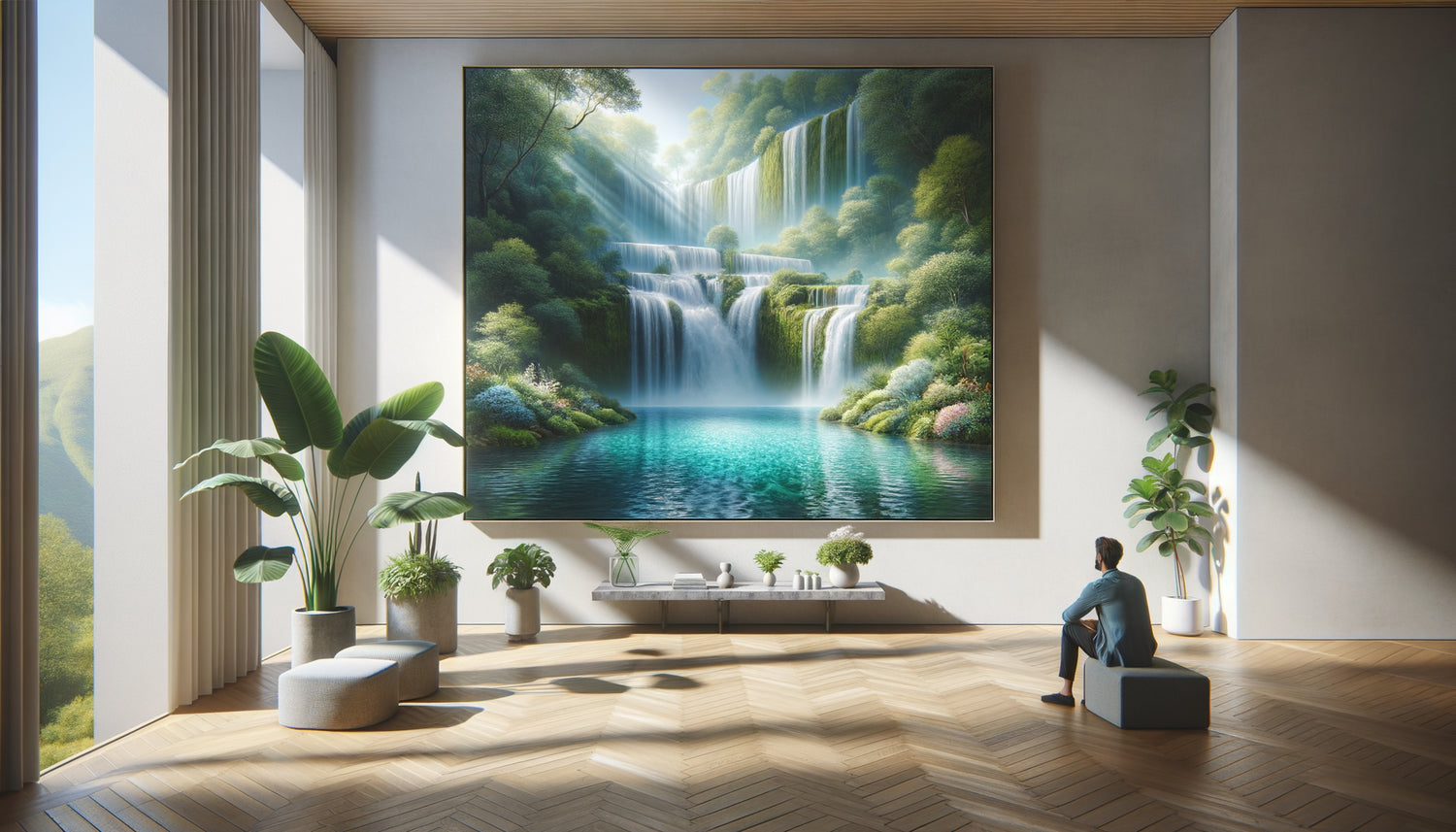
I installed my first psychotherapy practice twelve years ago, in a pristine, minimalist, almost clinical white space. Three weeks later, a patient confided to me that she felt "oppressed" in the room. I then hung a reproduction of a mountain lake surrounded by pine trees. The change was immediate: patients' shoulders relaxed as they sat down, silences became peaceful rather than tense. This canvas of water and greenery operated an invisible but palpable transformation.
Here's what paintings depicting water and nature actually bring: a measurable reduction in physiological stress (decrease in cortisol and blood pressure), improved mental concentration ability, and emotional grounding that facilitates the regulation of anxious moods. These effects are not folklore decoration, but documented neurobiological mechanisms.
You have probably felt this persistent heaviness in some spaces: oppressive waiting rooms, offices that exhaust you before you even start working, bedrooms where sleep refuses to come. We spend 90% of our time indoors, yet our brains remain wired for natural environments. This mismatch creates invisible fatigue, a background stress that we end up considering normal.
The good news? You don't need to move into the forest. Environmental neuroscience demonstrates that the visual representation of nature activates the same brain circuits as actual exposure. A well-chosen painting becomes a therapeutic window, a bridge between your urban daily life and the spaces that naturally regenerate our nervous system.
In this article, I will show you how and why these works work, what types of images produce the most powerful effects, and how to strategically integrate them into your living and working spaces.
What Your Brain Actually Does When Facing a Water Landscape
When your gaze rests on an image of a waterfall, lake or river winding between trees, your parasympathetic nervous system activates in seconds. This branch of your autonomic nervous system governs recovery, digestion, rest. It is the physiological antidote to the "fight-or-flight" mode in which we chronically maintain our organisms.
Researchers in environmental psychology have identified this mechanism as the “Stress Reduction Theory.” In a study conducted by Roger Ulrich in 1984 – which became foundational in this field – patients recovering from surgery with a view of nature recovered faster and required less pain medication than those facing a brick wall. Subsequent research has confirmed that representations of nature produce similar effects, albeit slightly attenuated.
The color blue: a natural tranquilizer
Water massively introduces blue into your field of vision. This hue possesses a unique neurochemical property: it slows heart rate and decreases cortisol production. In my practice, I have consistently observed that patients arriving in a state of high anxiety spontaneously fixate on the blue areas of a painting – the water of a stream, the sky reflected in a pond. Their breathing slows down, deepens, without instruction from me.
The green tones of vegetation complement this calming effect. Green is at the center of the visible spectrum, requiring the least adjustment from our photoreceptors. Our eyes literally « rest » on this wavelength, an evolutionary adaptation linked to millions of years spent in vegetated environments.
Why water has a superior therapeutic power compared to other natural elements
Not all natural elements are equal in terms of therapeutic effect. Water possesses visual characteristics that make it exceptionally effective for emotional regulation.
First, the suggested movement. Even static, an image of waves, a waterfall or a river implies a continuous flow. Your brain mentally reconstructs this movement, creating what psychologists call a « passive meditation object ». Your attention focuses effortlessly, freeing you from the incessant mental chatter that characterizes anxiety and cognitive overload.
Next, water unconsciously evokes the notion of vital resource. We are biologically programmed to feel relief in the presence of water – a historical sign of survival, hydration, safety. This ancestral reaction is triggered even when facing a pictorial representation, triggering a micro-dose of dopamine.
Compositions that work best
After years of observation, I have identified three types of compositions particularly effective:
Progressive depth scenes: a foreground (bank, pebbles), a middle ground (water surface), a background (forest or mountains). This stratification invites the eye to travel, reproducing the sensory experience of being physically in space. It is this visual immersion that activates attentional restoration circuits.
Tempered color palettes: deep blues to emerald greens, with touches of earth and stone. Saturated or artificial colors break the therapeutic effect. Your brain detects the inconsistency with real natural environments and maintains a cognitive vigilance that prevents relaxation.
The absence of disruptive elements: strong> no imposing human structures, no crowds, no aggressive geometric lines. Therapeutic purity requires a certain visual clarity. An immaculate mountain lake surpasses a picturesque port neurologically, even if the latter is aesthetically magnificent.

How I Transformed an Anxious Waiting Room into a Therapeutic Preparation Space
Five years ago, I collaborated with a dental clinic whose patients consistently arrived in a state of high anticipatory stress. The waiting room was functional but cold: white walls, harsh LED lighting, outdated magazines. We undertook a minimalist but strategic transformation.
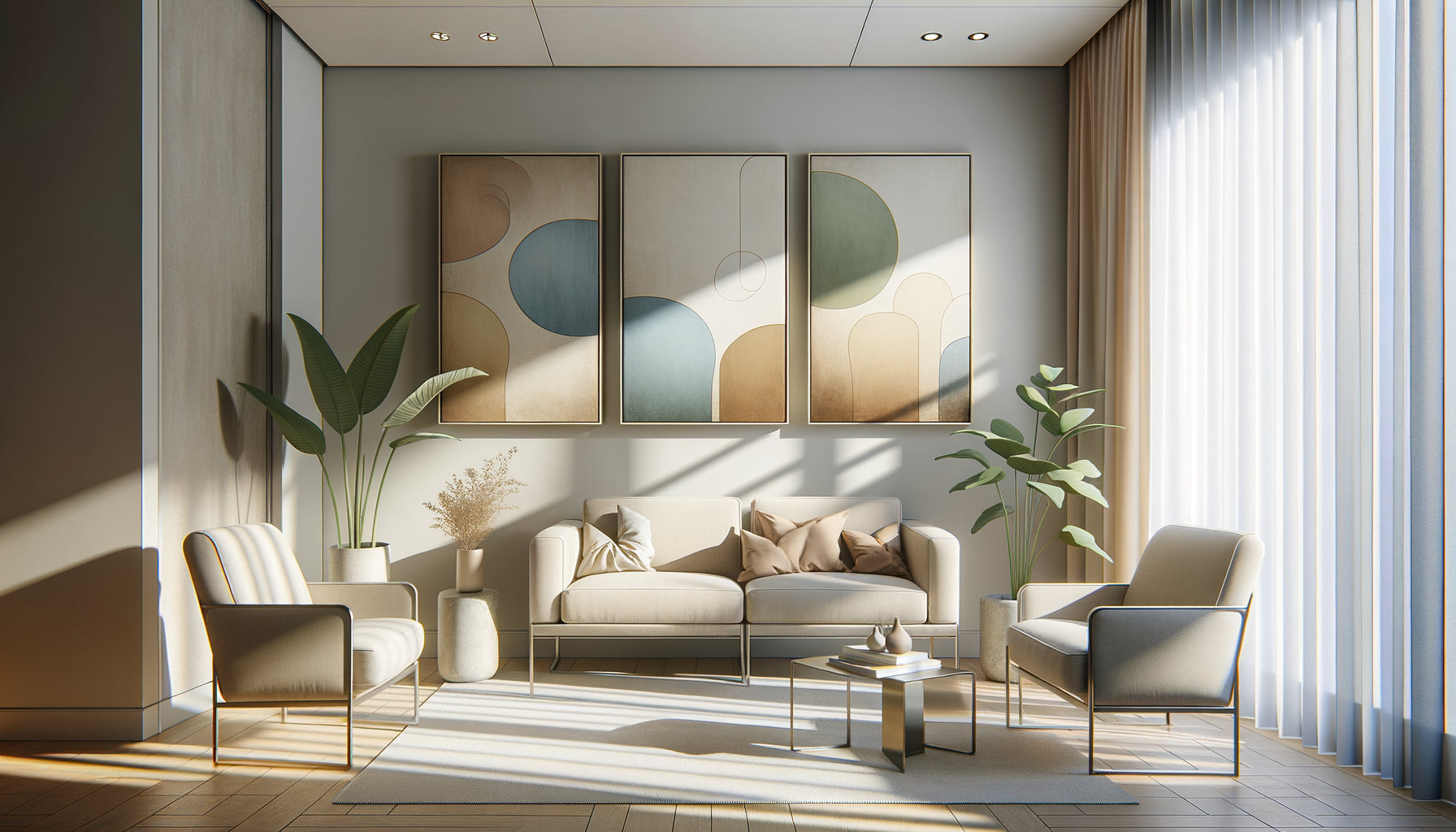
We installed three large paintings depicting aquatic scenes: a forest river with turquoise waters, an Icelandic waterfall emerging from basalt formations, an alpine lake at sunrise. No ostentatious gold frames – simple light wood frames that direct attention to the image, not the object.
The results were documented over six months. Patients spontaneously reported feeling “less stressed” while waiting. Even more significant: practitioners noted a decrease in muscle tension during initial examinations, facilitating interventions. The visual environment had created a physiological predisposition to relaxation.
The effect is not magical, it is cumulative
A common mistake is to expect an immediate and spectacular impact. Nature paintings do not act like a fast-acting medication. Their therapeutic power is exercised through repeated exposure and soothing familiarity.
Each time you pass by this lake landscape, each time your gaze drifts towards these trees reflecting in the water during a work break, you perform a micro-regulation of your nervous system. These dozens of daily micro-interactions build a more stable, resilient emotional environment.
It is comparable to dental hygiene: a single brushing changes nothing, but daily practice radically transforms oral health. Similarly, a therapeutic painting works over time, becoming a visual anchor of safety and calm.
Where and how to place these artworks to maximize their effect
Location largely determines the therapeutic effectiveness of a work. A beautiful painting relegated to a passageway will have only a marginal impact.
Transition spaces: entrances, thresholds, hallways leading to bedrooms. These areas particularly benefit from aquatic and natural artworks, as they become decompression chambers between the stimulating exterior and the restful interior. You create a progressive deceleration sequence.
Rest and concentration zones: facing the bed (but not directly above the head, which can create a feeling of oppression), next to your desk for regular visual breaks, in reading corners. The idea is to position the artwork where your gaze naturally rests during moments of cognitive pause.
Professional waiting areas: medical offices, therapeutic waiting rooms, reception areas for anxious visitors. In these contexts, the painting becomes a tool for environmental emotional regulation, preparing visitors for better receptivity.
Size matters (really)
A small painting of 30x40 cm will have a pleasant but limited therapeutic effect. To activate attentional restoration mechanisms, you need a substantial visual presence – ideally 80x120 cm minimum, or even larger in generous spaces.
This dimension allows for peripheral immersion: even without looking directly at the artwork, it occupies enough of your field of vision to influence your neurological state. It's the difference between having a window overlooking a garden and having a 20cm diameter porthole.
Transform your waiting areas into true therapeutic oases
Discover our exclusive collection of waiting room paintings that naturally soothe your visitors before even the first interaction.

Beyond decoration: integrating these artworks into a conscious wellness practice
Aquatic nature paintings reach their full therapeutic potential when you intentionally integrate them into your daily routines, rather than letting them become invisible through familiarity.
In my practice, I recommend the technique of structured visual breaks. Several times a day, particularly after sequences of intense cognitive work or stressful interactions, allow yourself two minutes in front of the artwork. No phone, no multitasking. Simply observe: follow the course of the river, count the shades of green in the foliage, imagine the sound of water.
This simple practice activates what neuroscientists call the « default mode network » – an active resting state of the brain where memory consolidation, creativity, and emotional regulation occur. Our hyper-connected lives chronically deprive us of this state, with consequences for mental health. The artwork becomes a ritual trigger to recover these essential moments.
Combining real natural presence and representation
The therapeutic effect is amplified when you associate the artworks with other natural elements: indoor plants near the work, subtle diffusion of water sounds, indirect natural light. You create a sensory coherence that amplifies each component.
In my own living space, I have placed a large woodland lake artwork above an arrangement of stabilized ferns and moss, with a small indoor fountain nearby. The experience becomes multisensory: the visual of the artwork, the movement of real water, the living green of the plants. This synergy transforms a corner of the room into a therapeutic micro-sanctuary.
What research reveals about measurable effects
Scientific evidence has been accumulating for three decades. A 2019 meta-analysis compiling 37 studies confirmed that exposure to images of nature (particularly those containing water) produces objective physiological changes: an average reduction of 12% in blood pressure, a decrease of 15% in salivary cortisol levels, and a 25% improvement in performance on tasks requiring sustained attention.
Even more fascinating, brain imaging studies show that these artworks activate regions associated with reward and pleasure (ventral striatum), while reducing activity in the amygdala – the brain center for threat detection. You are literally creating a more favorable neurochemical environment for serenity.
Clinical applications are multiplying. Hospitals systematically integrate nature artwork into patient rooms, observing significant reductions in preoperative anxiety. Technology companies install these artworks in their open spaces to counter cognitive exhaustion. Schools use them in teachers' break rooms to facilitate recovery between classes.
You face a simple but profound choice: continue to suffer from visually sterile environments that keep your nervous system on permanent alert, or intentionally create spaces that support your physiological and emotional balance.
This mountain lake, this mossy waterfall, this stream winding through ferns – these are not mere decorations. They are gentle neurological regulation technologies, windows into the environments that have shaped our biology for millions of years. In our urban lives saturated with artificial stimulation, these artworks become therapeutic necessities, not decorative luxuries.
Start modestly. Choose one piece, one wall. Select an image that resonates intuitively with you – this lake evoking a childhood memory, this forest slowing your breath just by looking at it. Install it at eye level, in a daily passage location. Then observe. Note how your body reacts over the weeks, how this space gradually becomes your preferred visual refuge.
The transformation begins with that first artwork. The water depicted on your wall starts to soothe the turbulent waters of your nervous system, wave after wave, day after day.
Frequently Asked Questions
Do nature artworks really work or is it a placebo effect?
This is a legitimate question, and the answer is nuanced: yes, there is probably a placebo component (as with any therapeutic intervention), but measurable effects go far beyond that mechanism. Studies using objective physiological measurements – heart rate, electrodermal conductance, cortisol levels – demonstrate real biological changes, independent of participants' conscious expectations. Moreover, these effects are observed even in initially skeptical people, and in children too young to have conceptual expectations about the « benefits of nature ». What happens is an ancestral neurobiological reaction: your brain recognizes a safe and restorative environment, then automatically adjusts your physiology. You don't need to « believe » for it to work, just like you don't need to believe in gravity to keep you grounded.
What type of water image is most effective: waterfall, ocean, lake or river?
Research suggests that calm or moderately dynamic waters (lakes, tranquil rivers, streams) produce the most powerful calming effects, while stormy ocean scenes or very imposing waterfalls can paradoxically increase physiological activation in some people. This also depends on your personal associations: if you grew up near the ocean with happy memories, a sunset beach will likely be more therapeutic for you than an alpine lake, even though the latter « works better » on average statistically. My advice: prioritize scenes that evoke in you a spontaneous slowing of breathing when you look at them. This is your best personal indicator. Clear or translucent waters seem particularly effective, perhaps because they subconsciously signal purity and safety. And don't hesitate to vary according to the rooms: a dynamic river in an office to maintain some vitality, a peaceful lake in a bedroom to promote rest.
How long does it take to feel the therapeutic effects of these paintings?
Effects manifest on two different time scales. First, the immediate impact: in 30 to 90 seconds of attentive observation of an aquatic nature painting, your heart rate begins to slow and your breathing deepens. This is an acute effect that you can consciously use during stressful moments – a kind of « visual rescue technique ». Then, the cumulative effect: after 3 to 4 weeks of daily exposure (even passive, simply passing by the painting several times a day), the benefits stabilize and amplify. Your nervous system gradually integrates this calming element into its reference environment, creating a slightly lower baseline stress level. This is comparable to physical exercise: one session makes you feel good immediately, but it's regular practice that fundamentally transforms your physical condition. Patience is essential – we live in a culture of instant gratification, but lasting transformations require time. Allow at least a month before evaluating the real impact.