I’ve seen hundreds of patients tense up as they walk through the door of a waiting room. That moment when stress rises, when each minute seems to last an eternity, when anxiety invades the mind. Then, during a complete renovation of a pediatrician's office in Brussels, I observed something fascinating: a little girl staring at a painting depicting a kitten sleeping in a teacup. Her face relaxed. Her mother smiled too. That’s when I understood: paintings with cute animals are not just decoration, they are a true visual therapy.
Here's what paintings with cute animals bring to waiting rooms: they reduce patient anxiety through their calming power, create a welcoming atmosphere that humanizes the medical space, and generate positive emotions that transform waiting into almost an enjoyable moment. You might think these visuals are too childish for a professional office? That they only suit pediatricians? Think again. In fifteen years of designing medical and administrative spaces, I have equipped waiting rooms for cardiologists, notaries, physiotherapy centers, and even law firms with these touching works. The result is unanimous: more relaxed patients, a calmer atmosphere, consistently positive feedback. I will reveal to you why this solution works and how to integrate it elegantly into any professional environment.
Why cute animals captivate our brains in seconds
Science is formal: our brain reacts instantly to images of endearing animals. This phenomenon is called the baby schema (Kindchenschema in German), identified by ethologist Konrad Lorenz. Round eyes, rounded proportions, gentle expressions trigger an immediate neurological reaction: release of oxytocin, a hormone of well-being, and decrease of cortisol, a stress hormone.
In a waiting room, this biological reaction becomes a major asset. A patient anxious who stares at a painting depicting a rabbit with big ears or a playful panda will naturally see their heart rate slow down. I equipped a dental office in Namur with five different cute animal paintings. The practitioner confided to me that conversations with his patients have changed: less tension, more smiles before treatments. Children, of course, but also adults point to these works upon arrival.
The immediate psychological effect
Paintings with cute animals act as a positive emotional anchor. In a medical environment often associated with discomfort or worry, they create a welcome cognitive break. The patient diverts their attention from their concerns to focus on a reassuring image. This distraction is not trivial: it mentally prepares the person for interaction with the professional, in a more open and cooperative state of mind.
I installed a large painting depicting three kittens playing with a ball of yarn in a medical practice. The receptionist told me that this painting has become a natural conversation starter between unknown patients. This spontaneous social interaction helps create a warm atmosphere, far from the cold and silent ambiance of many waiting rooms.
Professional Waiting Rooms: Beyond the Clichés
Many professionals hesitate to incorporate paintings with cute animals for fear of appearing unprofessional. This reluctance is based on a misunderstanding: cute does not mean childish. It all depends on the artistic choice, the frame, the composition and integration into the overall decoration.
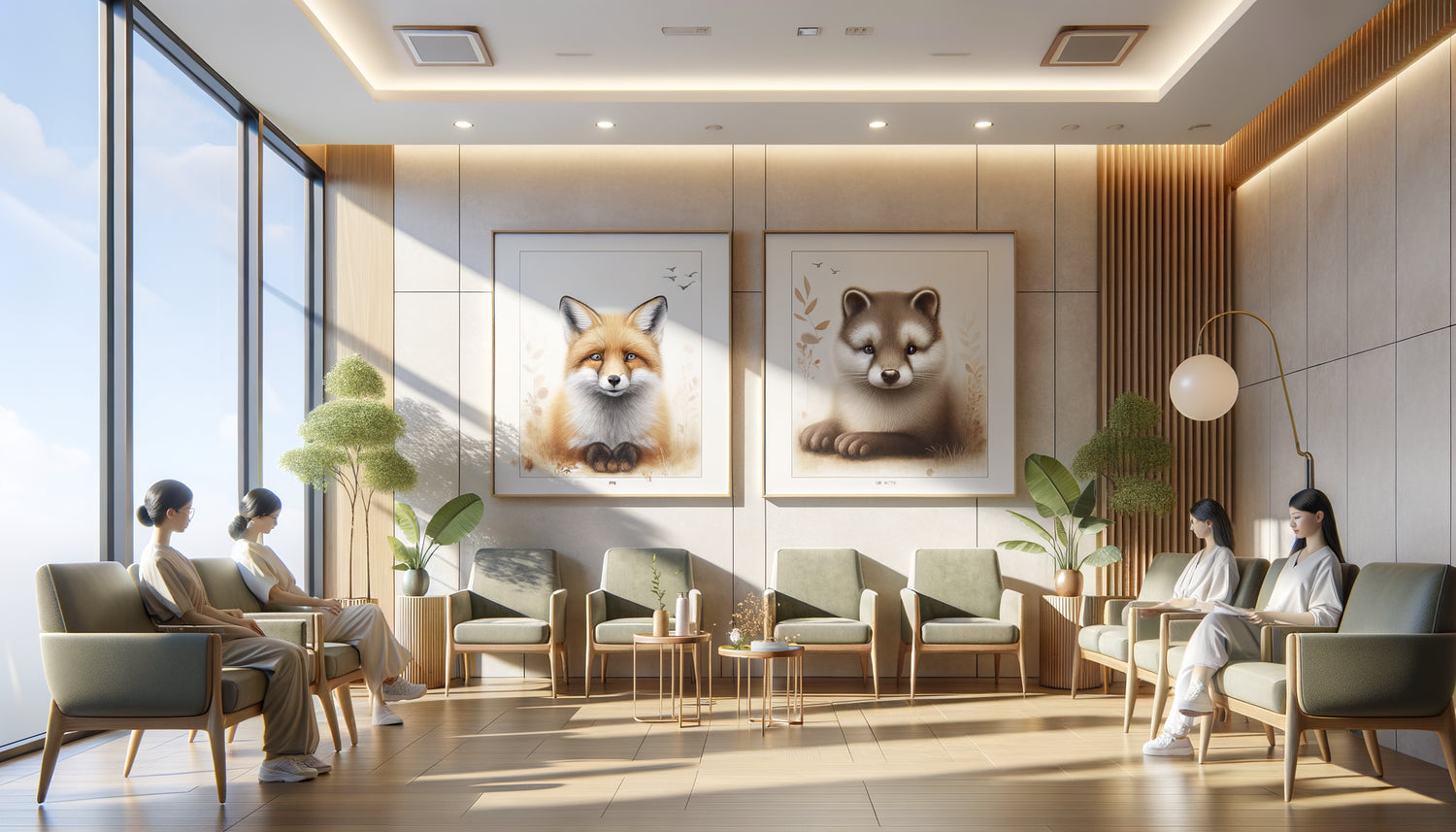
In a law firm specializing in family law, I selected a triptych depicting foxes in an autumnal setting, with ochre tones and elegant finishes. The effect was sophisticated, comforting without being puerile. Clients awaiting divorce or mediation found a welcome softness in these images during difficult times. The lawyer confirmed that several clients had spontaneously mentioned the soothing atmosphere of his firm.
Adapt the Style to Your Professional Universe
Paintings with cute animals come in a surprising variety of styles. For a modern medical practice, opt for minimalist compositions with animals on a solid background, in neutral tones. For a more traditional space, prefer realistic or watercolor representations. In a sports physiotherapy center, I chose images of animals in motion – a leaping squirrel, a stretching cat – creating a subtle link with the body and mobility.
The framing makes all the difference. A painting depicting a hedgehog can appear childish in a colorful plastic frame, but becomes an elegant decorative piece in a natural wood or brushed metal frame. Size also counts: a large format (80x120 cm) asserts itself authoritatively and creates a focal point, while several small formats (30x40 cm) offer a dynamic gallery.

When Cute Animals Transform the Patient Experience
I oversaw the complete renovation of a radiology center. The team was initially skeptical: how could animal paintings be suitable for such a technical environment? We installed six different paintings in the main waiting room: a koala, two rabbits, a ginger kitten, a chick and a baby seal. The feedback was immediate and measurable.
The center director noted a decrease in tension. Patients often arrived stressed, sometimes aggressive due to wait times. After installing the cute animal paintings, the atmosphere softened. People smiled while looking at the artwork, showed images to their loved ones, even photographed some paintings to share them. This emotional transformation is not anecdotal: it improves overall satisfaction and the center's image.
The universality of emotion
What fascinates me about paintings depicting cute animals is their ability to appeal to all generations and cultures. A four-year-old child and a seventy-five-year-old grandfather react positively to the image of a panda or a rabbit. This emotional universality is rare in decoration. Few visual elements can claim such consensus.
In a multicultural waiting room of a community health center, cute animal paintings have become facilitators of dialogue. They transcend language barriers and create moments of complicity between people who do not share the same language. A Syrian mother and a Belgian grandmother were exchanging smiles while looking at a painting depicting sleeping puppies, without needing words.
Mistakes to absolutely avoid
Not all cute animal paintings are suitable for a waiting room. I have seen failed attempts that produced the opposite of the desired effect. The first mistake: visual overload. Multiplying paintings in a confined space creates confusion rather than tranquility. Three to five works are sufficient for an average-sized waiting room.
Second pitfall: choosing images that are too childish or cartoonish. A painting depicting animals stylized excessively can indeed infantilize the space. Opt for realistic representations, artistic photographs or sophisticated illustrations. In a psychology practice for adults, I selected black and white photographic portraits of animals: a curious fox cub, a fawn in the mist. The result was poetic and mature.
Consistency with your identity
Tableaux should blend harmoniously with your existing decor. If your waiting room has a clean Scandinavian style, opt for artworks featuring cute animals on light backgrounds in pastel tones. For an industrial style, black metal frames with contrasting images will work better. This aesthetic coherence ensures that your works enrich the atmosphere rather than creating an awkward disruption.
I've also learned to take into account the medical specialty. For an allergy clinic, avoid paintings of cats or dogs that could remind patients of their allergies! A good choice: wild animals (foxes, squirrels, birds) or exotic animals (koalas, pandas). This attention to detail demonstrates your sensitivity to your patients' needs.

How to integrate these artworks with elegance
Installing cute animal paintings deserves careful consideration. The ideal height is at eye level for a seated person, or about 130-140 cm from the floor for the center of the artwork. This allows waiting patients to contemplate them comfortably without tilting their heads.
Lighting plays a crucial role. A poorly lit painting loses its emotional impact. If possible, install accent lighting (adjustable LED spotlights) that highlights each work without creating distracting reflections. In a veterinary clinic – where cute animal paintings are particularly relevant – I created an illuminated gallery that became the visual signature of the place.
Vary the species and scenes
Don't limit yourself to the usual kittens and puppies. Paintings depicting less conventional cute animals create surprise and interest: hedgehogs, hamsters, squirrels, rabbits, ferrets, guinea pigs, colorful birds, farm animals. This variety keeps the interest of regular patients who don't get tired of discovering the different artworks.
Also vary the scenes: sleeping animals for maximum soothing effect, playful animals to energize the space, animals in nature for a contemplative dimension. In a geriatric center, paintings showing animals in nostalgic scenes (kitten with ball of yarn, rabbit in a garden) triggered childhood memories in elderly patients, opening valuable conversations with caregivers.
Ready to transform your waiting room into a haven of tranquility?
Discover our exclusive collection of wall art for Waiting Rooms that soothe your patients from the moment they arrive.
The silent transformation of your space
Tableaux with cute animals don’t shout their presence, they infuse it. This subtlety is their strength. Unlike a complete renovation or a change of furniture, adding a few carefully chosen works radically transforms the atmosphere without upsetting your budget or your organization.
A dentist I worked with confided in me a revealing detail: since the installation of cute animal paintings in his waiting room, his assistants smile more. The soothing environment benefits the entire team, not just patients. Staff work in a more pleasant setting, which improves the professional climate and, consequently, the quality of welcome.
Imagine your waiting room tomorrow morning. An anxious patient walks through the door, their gaze worried. Then their eyes rest on a painting depicting a golden retriever puppy with sparkling eyes. A barely perceptible smile relaxes their face. They sit down, breathe more calmly, observe the other works. When you call them, they are in a more open and relaxed state of mind. This silent transformation is exactly what cute animal paintings accomplish, consultation after consultation, day after day.
Start simple: choose two or three paintings that resonate with your sensitivity and the identity of your practice. You will quickly see that these small touches of softness change everything. And remember: behind every cute animal is an invitation to comfort, exactly what your patients need when they walk through your door.
Frequently Asked Questions
Aren’t paintings with cute animals too childish for a general medical practice?
It’s a legitimate concern I regularly hear, but it’s based on a reductive view of this type of artwork. Tableaux representing cute animals come in an extraordinary variety of artistic styles. A black and white photograph of a fox cub, a realistic portrait of a rabbit in natural tones, or a sophisticated watercolor of a squirrel are not childish. The heartwarming effect comes from the animal itself, not the artistic treatment. I’ve equipped cardiologists' and rheumatologists' offices with this type of artwork, and the feedback from adult patients is unanimously positive. The secret lies in choosing quality works, with mature treatments and elegant frames. The positive emotional response to a cute animal is universal and intergenerational: it affects a fifty-year-old as much as a child, simply because it activates deep biological mechanisms in our brain. Rather than infantilizing your space, these artworks humanize it and create a welcoming atmosphere that counterbalances the technical coldness often associated with medical environments.
How many cute animal artworks should you install in a medium-sized waiting room?
The golden rule in designing waiting areas is to avoid visual saturation while creating enough points of interest to occupy the gaze. For a waiting room accommodating 8 to 12 seated people, I recommend between three and five cute animal artworks, judiciously distributed on the walls visible from the seats. This quantity allows for a visual journey without cluttering the space. The frequent mistake is to multiply small works, creating a cluttered effect. Favor a few generously sized pieces (60x80 cm or 80x120 cm) rather than many small ones. Each artwork should breathe, surrounded by empty space that allows it to fully express itself. Also think about the layout: a large central artwork as a focal point, complemented by two or three smaller works on adjacent walls, creates a balanced composition. Remember that your patients will potentially spend fifteen to thirty minutes in this space: they will have time to appreciate each work individually. It is better to have four remarkable artworks than ten banal images. This qualitative approach reinforces the impression of professionalism and care taken with the environment.
What types of cute animals work best in professional waiting rooms?
The choice of animal depicted subtly influences the atmosphere and should align with your professional context. Classic domestic animals – kittens and puppies – work universally well as they evoke familiar and comforting emotions. However, be careful in allergy or pneumology clinics where some patients may have negative associations with these animals. Cute wild animals offer a fascinating alternative: foxes, squirrels, hedgehogs, birds create a connection with nature that is particularly soothing. In pediatric environments, farm animals (rabbits, ducklings, chicks, lambs) are remarkably successful. For high-end clinics seeking a touch of originality, endearing exotic animals – pandas, koalas, lemurs, sloths – bring a more sophisticated dimension. I have also noticed that paintings showing baby animals, whatever the species, generate the strongest emotional reactions. An important technical point: prioritize images showing the animal facing forward or in slight perspective, with the visible gaze. Eye contact, even with a representation, activates our empathy more powerfully. Finally, vary the species in your waiting room to maintain the interest of regular patients and create diverse conversation topics.