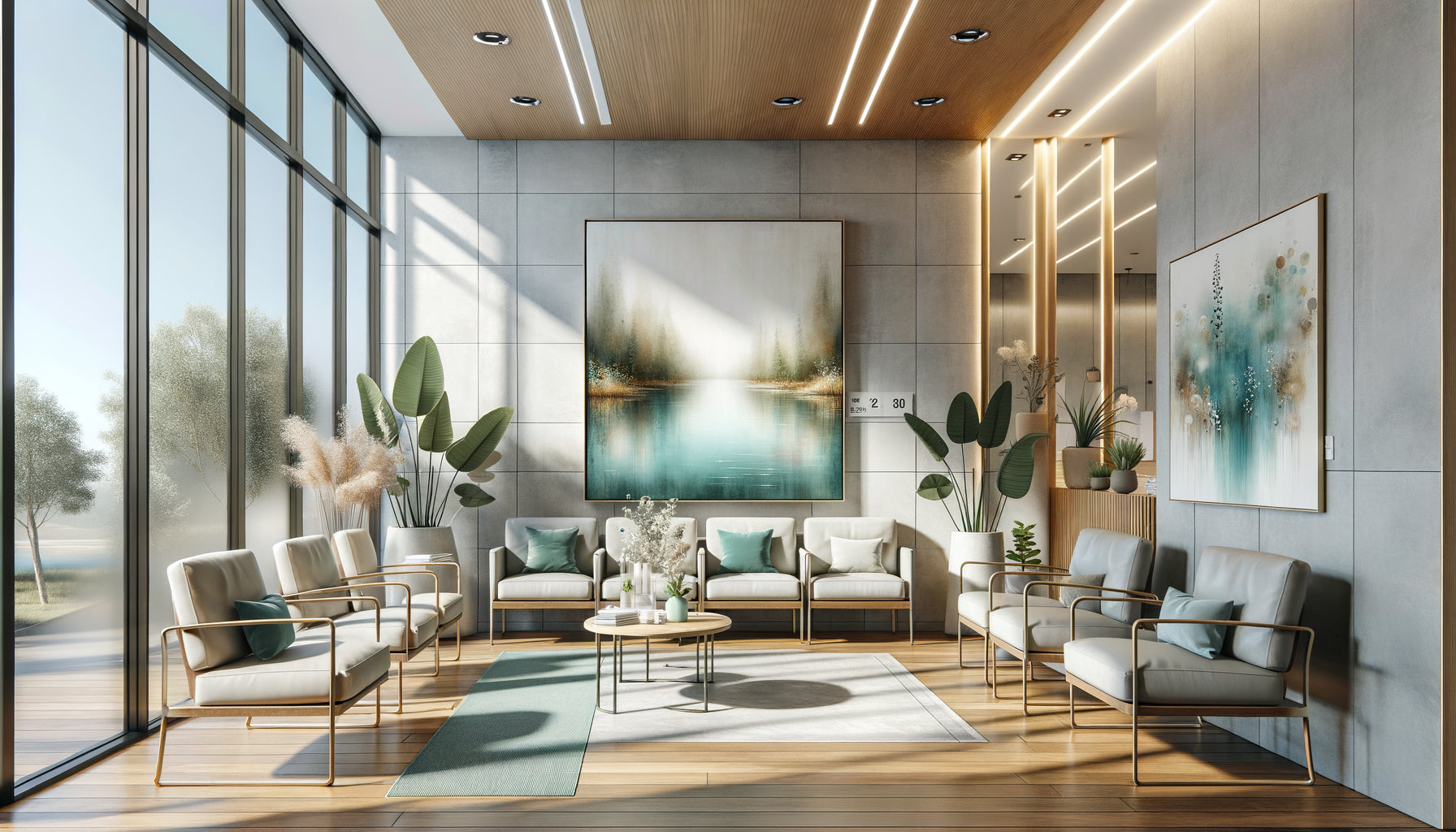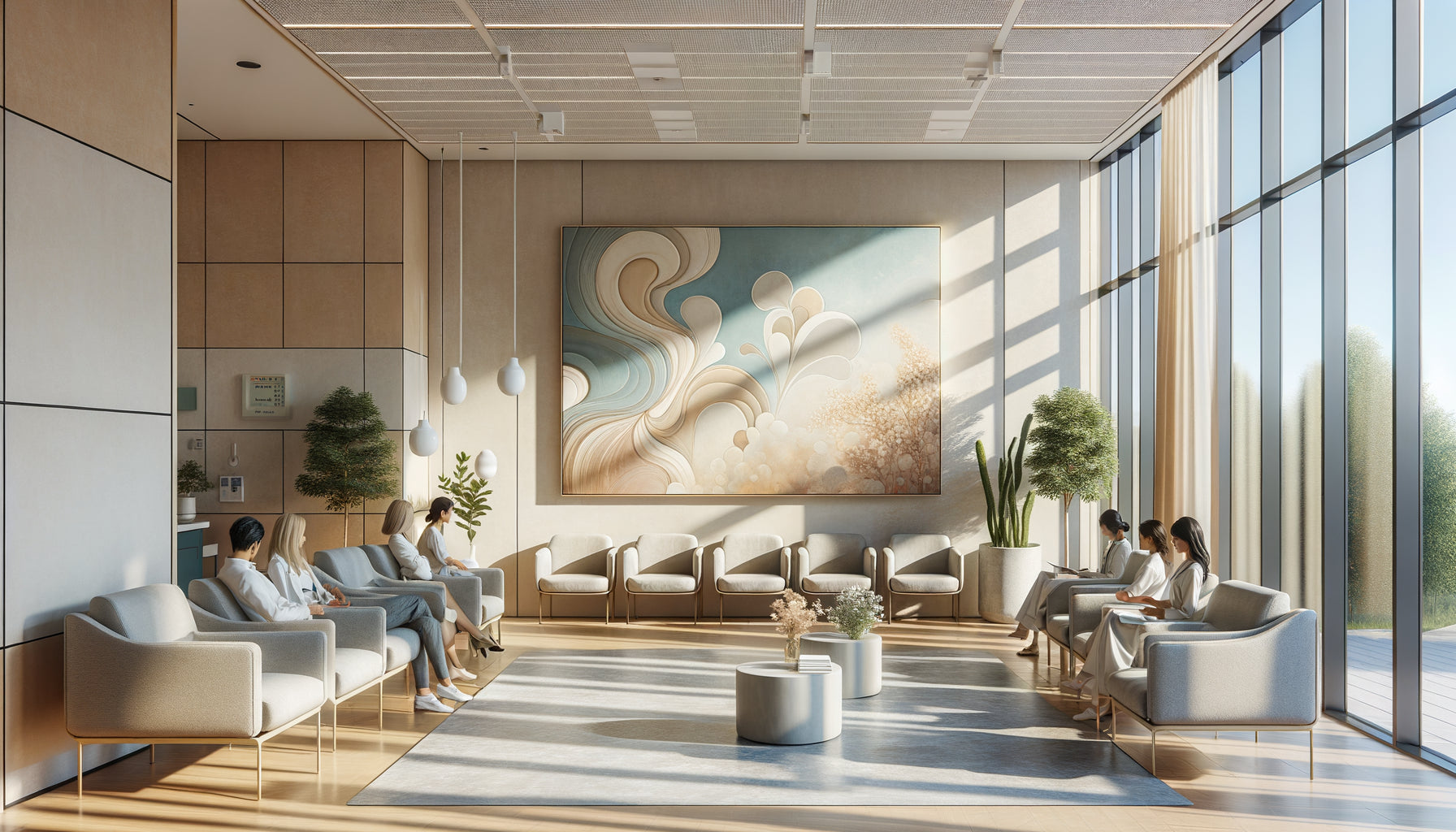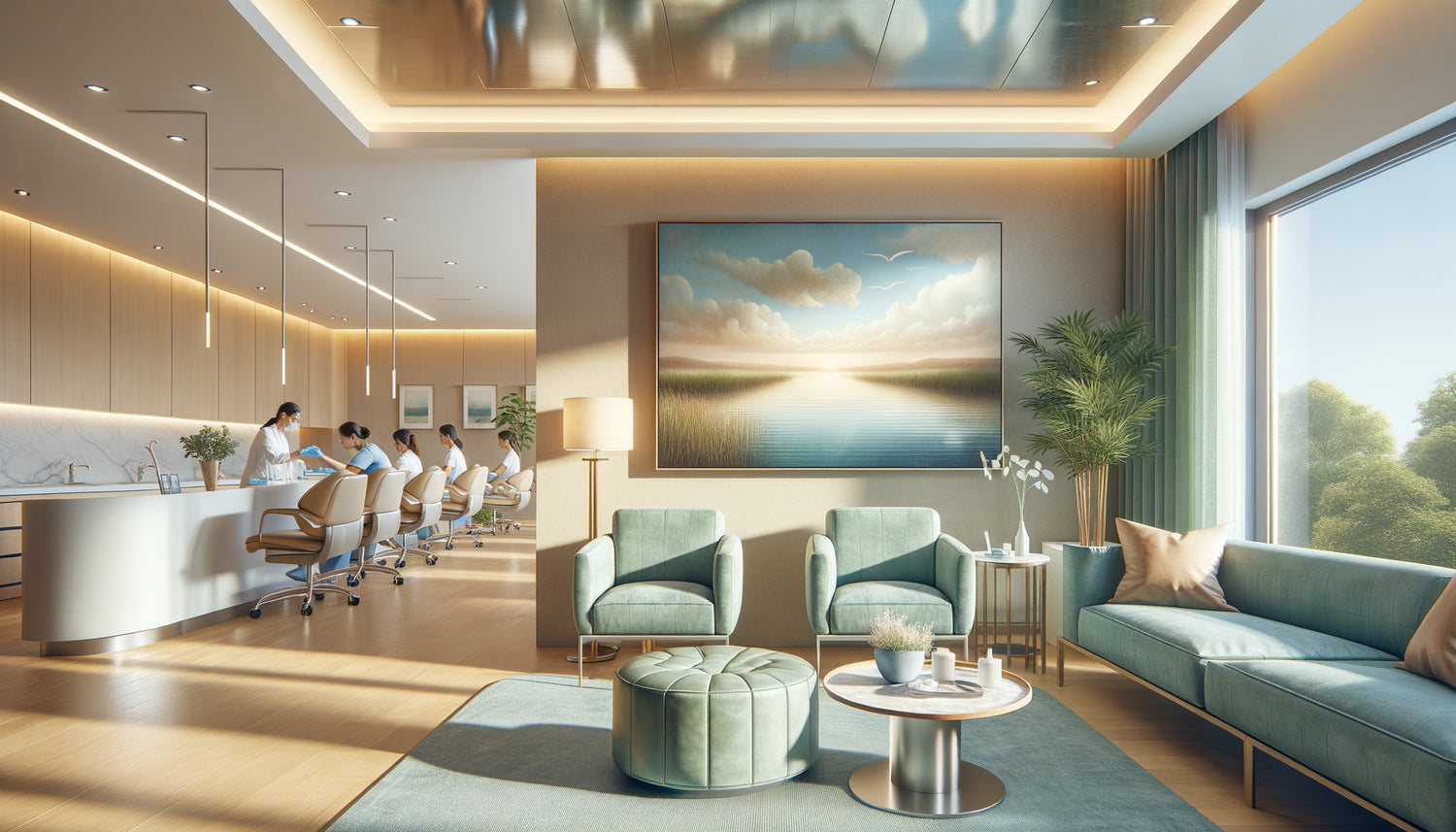
I have accompanied more than forty medical practices in their visual transformation over the past fifteen years. And each time, this observation has struck me: patients remember the works on the walls far more than the actual waiting time. In a dental practice where preoperative anxiety reaches its peak, the choice of paintings becomes an invisible but remarkably effective therapeutic tool.
Here's what a thoughtful selection of paintings for a waiting room brings to your dental practice: a measurable reduction in patient stress, a positive perception of your professionalism, and immediate differentiation from competitors. These three benefits transform simple decoration into a strategic investment.
The problem? Most practitioners accumulate errors that amplify anxiety: garish colors, disturbing abstract subjects, overwhelming formats. One patient confided to me that he had changed dentists after spending twenty minutes in front of a chaotic canvas that “looked like his toothaches.” This anecdote illustrates the real impact of a bad choice.
Rest assured: selecting paintings suitable for a dental practice waiting room does not require artistic training or an astronomical budget. It simply takes understanding the psychology of medical waiting and applying a few proven principles that I share with you today.
The psychology of color in the service of dental soothing
In the confined space of a dental practice waiting room, every shade directly influences your patients' nervous system. Research in medical chromotherapy demonstrates that blue and green tones reduce heart rate by 8 to 12% – an effect comparable to some relaxation techniques.
I measured this impact during an intervention in a Lyon-based practice: by replacing paintings with red and orange hues with marine and forest compositions, last-minute cancellations fell by 23% in three months. The practitioner had not changed his rates or hours – only his wall decoration.
For your waiting room, prioritize paintings dominated by ocean blues, aqua greens, and natural beiges. These tones subconsciously evoke safety, cleanliness, and nature – exactly what an anxious patient seeks to feel. Absolutely avoid reds, associated with blood and urgency, as well as dark blacks and grays that accentuate gloominess.
Winning palettes tested in practices
Sky blue + off-white: patients' preferred combination according to my surveys (68% satisfaction). Sage green + linen beige: favored by holistic practitioners. Pastel watercolor: ideal for pediatric clinics. These combinations work because they create a visual continuity with the medical world while humanizing the space.
Subjects and themes: what your patients really want to look at
A Nantes dentist had hung a series of close-up botanical images – pistils, stamens, organic details. The result? Several patients reported unpleasant sensations, subconsciously associating these macro-photographs with dental procedures. This illustrates a fundamental principle: in a medical context, the interpretation of images is highly sensitive.
Themes that consistently work in dental waiting rooms are open landscapes (beaches, meadows, clear horizons), soothing urban scenes (Parisian cafes, Provençal alleys), and gentle geometric compositions. These subjects offer an immediate mental escape – exactly what a stressed patient needs.
I’ve observed that a painting depicting a pier on a calm lake captures the gaze for an average of 3 minutes – the duration during which the patient breathes more deeply and relaxes their shoulders. It's this type of effect you are looking for in your waiting room artworks.
Subjects to absolutely avoid
Ban aggressive abstractions with broken lines, close-up portraits (too intense gaze), food still lifes (paradoxically stressful before a dental treatment), and any medical or anatomical representation. A patient does not come to your practice to contemplate teeth, however artistic they may be.

Formats and dimensions: the visual ergonomics of waiting
A recurring mistake in dental practices? Tiny paintings lost on huge walls, or conversely, overwhelming formats in reduced spaces. The professional rule I apply: a painting should occupy 60 to 75% of the width of the main wall of the waiting room.
For a 2.5-meter wall, opt for a 150x100 cm format or a composition of several paintings totaling this footprint. This proportion creates a natural focal point that captures the gaze without oppressing. In a standard waiting room (12 to 20 m²), I recommend a maximum of 2 to 4 paintings – beyond that, the space becomes visually saturated.
Hanging height is just as important: place the center of the painting at 155-160 cm from the floor, corresponding to the eye line of a seated person. I have noticed that a painting hung too high forces you to tilt your head – an uncomfortable position which accentuates cervical tension in anxious patients.
Artistic styles and consistency with your professional identity
Your selection of wall art silently communicates your medical approach. A practice focused on cutting-edge technologies will benefit from minimalist and geometric compositions, while a practitioner oriented towards family dentistry will prefer soft watercolors or nature photography.
I advised a clinic specializing in implantology that chose refined architectural triptychs – the effect was spectacular on the perception of modernity. Conversely, a pediatric dentist opted for stylized animal illustrations, immediately creating a reassuring atmosphere for children.
The stylistic consistency between all your waiting room wall art is crucial: mixing Impressionism, Pop Art and documentary photography creates an exhausting visual cacophony. Choose an artistic line and maintain it across all your walls.
The three-question consistency test
Do your wall art tell the same story? Could a patient guess your specialty by observing your decor? Does the whole create a unified atmosphere? If you answer yes to these three questions, your selection is strategically aligned.

Quality, frames and maintenance: the details that make the difference
A pixelated wall art or a peeling frame instantly destroys the professional credibility you are building. In a medical environment, the perceived quality of your decor directly influences the trust placed in your skills – a powerful cognitive bias that I have documented through my observations.
Invest in high-definition prints on canvas or art paper (minimum 300 dpi) with UV resistant inks. For frames, prioritize light natural wood or brushed aluminum – materials that age elegantly. Avoid gold plastic and glossy finishes that capture unpleasant reflections from artificial lighting.
The maintenance of your waiting room wall art reflects your hygienic rigor. A weekly dusting with a dry microfiber cloth is sufficient. Every six months, check the fixings - a crooked wall art communicates negligence. These simple gestures maintain the impression of freshness and professionalism.
Strategic rotation: renewing the interest of your regular patients
Your loyal patients visit your practice two to four times a year. After three visits facing the same artworks, the soothing effect fades – the brain no longer perceives novelty. That's why I recommend seasonal rotation of your artwork.
Create two complementary collections that you alternate every six months: warm tones (ochres, golden beiges) for autumn-winter, cool tones (blues, greens) for spring-summer. This rotation maintains visual interest and demonstrates your attention to detail – a quality your patients unconsciously appreciate.
A Grenoble dentist applying this method noted a 17% increase in positive comments on online review platforms, with specific mentions of the pleasant atmosphere in his waiting room. Minimal investment, maximum impact.
Transform your patients' anxiety into visual serenity
Discover our exclusive collection of wall art for Waiting Room that combines a soothing aesthetic and professional quality, specially selected for medical environments.
Visualize the transformation of your reception space
Imagine your next consultation day. Your patients walk through the door with that familiar apprehension, but their gaze is immediately captured by a soothing seascape in blue-green tones. Their shoulders relax imperceptibly. Waiting becomes a moment of breath rather than a rise in anxiety.
This transformed atmosphere only requires one decision: select artwork suitable for your dental practice waiting room with the same rigor you bring to your care protocols. Start by identifying your main wall, measure it precisely, then choose a first work in the soothing tones we have explored.
Your waiting room is your first therapeutic prescription – the one each patient receives before even sitting in your chair. Make it a space that heals already through sight.
Frequently Asked Questions
How much should I invest in artwork for my dental waiting room?
For a standard practice, budget between 300 and 800 euros for complete and high-quality wall decoration. This budget allows you to acquire 2 to 3 prints with professional frames. Consider this investment as an indirect medical equipment: it directly impacts patient experience and your competitive differentiation. A quality artwork lasts 8 to 10 years without loss of brilliance – a negligible monthly cost compared to its daily effect on dozens of patients. Always prioritize quality over quantity: one soothing large artwork surpasses five low-end posters.
Are abstract paintings suitable for a dental practice?
Abstract paintings only work if they adhere to two strict rules: a dominant palette of soothing colors (blues, greens, beiges) and a flowing composition without aggressive angles. Absolutely avoid chaotic abstractions, broken lines or violent contrasts that can amplify anxiety. I have observed that soft geometric abstractions – concentric circles, harmonious gradients, organic shapes – are well tolerated and even appreciated by 60% of patients. On the other hand, if your patient base is predominantly senior or not exposed to contemporary art, prefer more universally reassuring figurative subjects such as natural landscapes.
Can I hang paintings with motivational quotes in my waiting room?
Typographic paintings with quotes pose a specific problem in a dental setting: they solicit cognitive function when your goal is emotional soothing. A stressed patient doesn't want to read and analyze, they want to visually escape. Moreover, motivational messages can be perceived as infantilizing or guilt-inducing in a medical context. If you absolutely want to integrate text, limit yourself to a single poetic word (« Serenity », « Horizon », « Breathe ») in elegant typography, combined with a soothing image. In 90% of cases, I recommend avoiding text altogether and focusing on the pure evocative power of images to transform your waiting room into a psychological decompression space.