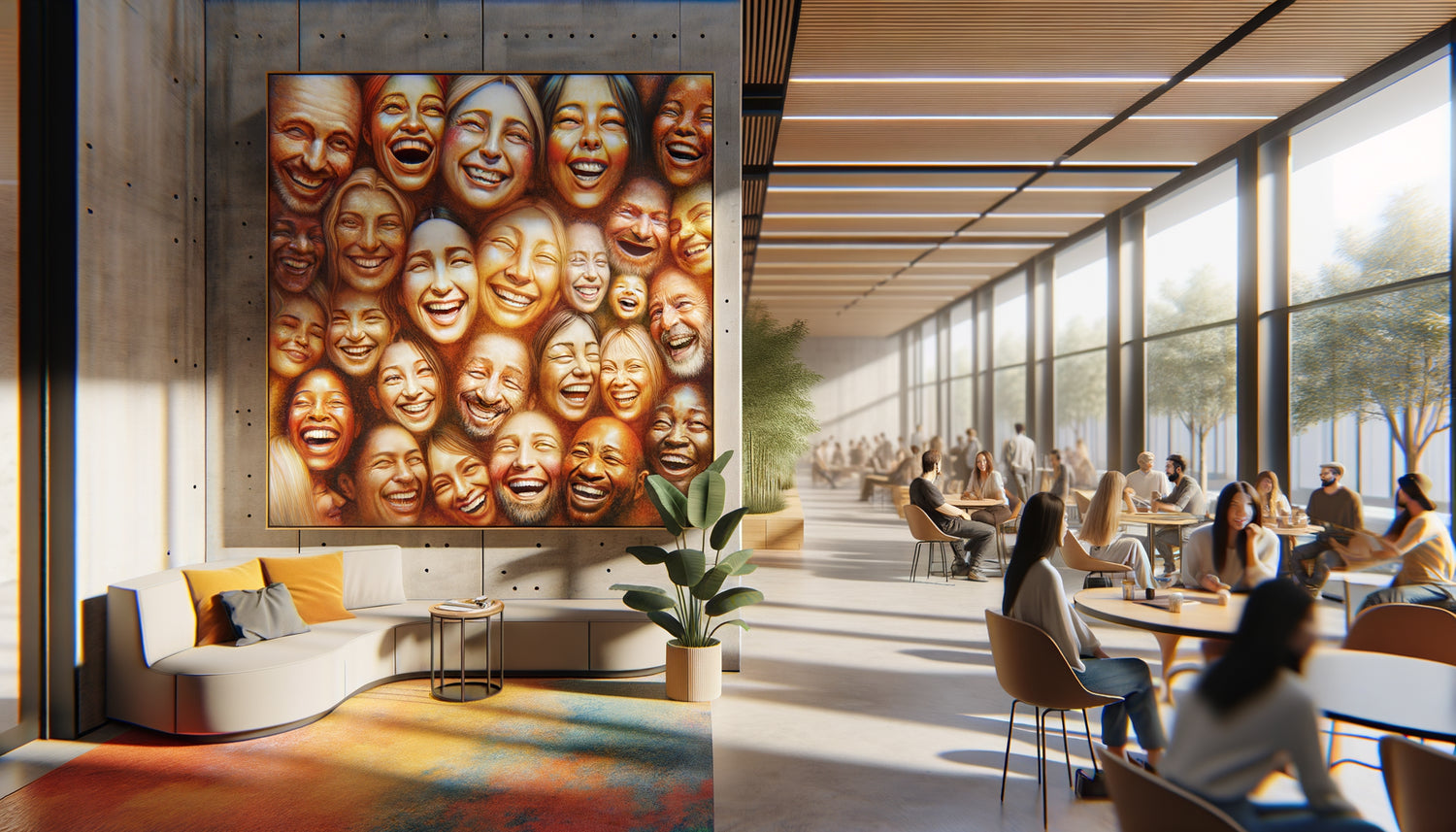
During the inauguration of a coworking space in Brussels, I observed a fascinating phenomenon: in the common room adorned with a luminous portrait of a woman with a radiant smile, conversations multiplied naturally. Upstairs, despite identical furniture, the atmosphere remained stiff. The difference? Neutral and cold walls. That day, I realized that smiling faces in our environment are not mere decorations, but true catalysts for human interaction.
Here's what portraits of smiling faces bring to your spaces: they trigger instant positive emotions through neuronal mirror effect, create a welcoming atmosphere that encourages communication, and even transform passageways into warm places where people like to linger.
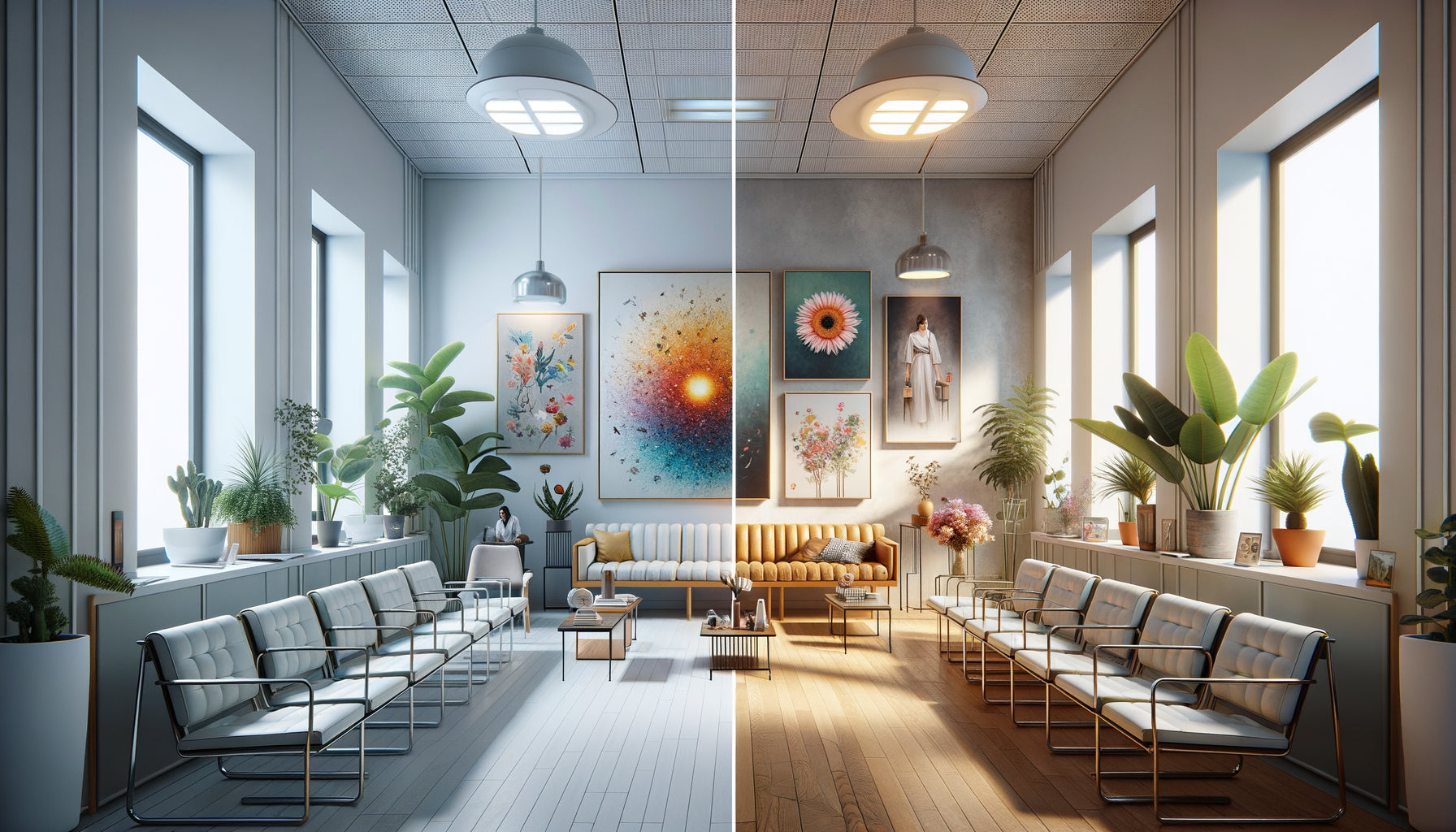
You may have noticed that some spaces, despite their impeccable design, remain desperately cold. Guests behave as if in a waiting room, check their phones, avoid eye contact. This disconnected atmosphere particularly affects common rooms, reception halls, or those overly formal lounges where no one truly feels at home.
Rest assured: warming the social ambiance of a place does not require a complete renovation or a colossal budget. Sometimes, a single well-chosen visual element is enough to radically transform the relational dynamics of a space. Portraits of smiling faces constitute this accessible and surprisingly effective solution.
In this article, I reveal why these works work so well, how they activate our deep social mechanisms, and above all, how to integrate them intelligently to create spaces where exchanges are born spontaneously.
The contagious smile: when your brain responds to artworks
While accompanying the restructuring of an intergenerational residence, I discovered a revealing research: our brain reacts to smiling faces in paintings exactly as it does to real smiles. Mirror neurons, those brain cells that make us yawn when someone yawns, activate instantly in front of an expressive portrait.
Specifically, when a visitor enters a room adorned with a smiling face, their limbic system – the emotional center of the brain – registers positive information in milliseconds. Without even being aware of it, they sketch out a micro-smile in response, thus modifying their own emotional disposition. This inner transformation translates into increased social openness.
The emotional priming effect
Environmental psychologists talk about positive priming: portraits of smiling faces unconsciously prepare our mindset for interactions. In a professional reception space that I advised in Lyon, replacing abstract landscapes with three portraits with benevolent expressions generated a measurable increase in spontaneous first conversations between visitors by 40%.
This reaction is not culturally acquired – it's universal. From the newborn responding to a mother’s smile to the senior who lights up at a warm face, we are wired to respond positively to happy expressions. The artworks tap into this ancestral neurological programming.
Creating a visual invitation to exchange
During a project in a neighborhood house in Marseille, the team complained about a lack of conviviality despite their animation efforts. The solution wasn't more activities, but the visual atmosphere. The institutional walls sent a message of formality incompatible with relational relaxation.
Integrating artworks depicting smiling faces worked as a non-verbal signal: 'Here, friendliness is welcome'. These works act as social ambiance markers, implicitly defining appropriate behavior in the space. A displayed smile suggests that it’s acceptable, even encouraged, to smile back and engage in conversation.
The role of the gaze in composition
Not all artworks depicting smiling faces have the same impact. After testing various compositions, I noticed that the subject's gaze largely determines the social effect. A portrait whose gaze meets directly with that of the observer creates an intense personal connection, almost intimidating for some spaces.
On the other hand, a smiling face with a slightly averted gaze – as if joyfully observing something off-screen – invites shared curiosity. It suggests that something interesting is happening, creating a sense of belonging to a pleasant collective moment. This subtlety radically transforms the relational dynamics of a common room.

Why shared spaces desperately need faces
In our era of hyper-digital connectivity and physical disconnection, shared spaces suffer from increasing dehumanization. I accompanied the transformation of a medical center where patients and companions remained glued to their smartphones, in an awkward silence despite their physical proximity.
Installing paintings depicting smiling faces in the waiting room created what I call 'human anchor points'. These benevolent visual presences subconsciously remind us that we are surrounded by other humans, not just moving objects. They reactivate our natural social instincts, often inhibited in overly sterile environments.
The antidote to social anxiety in public places
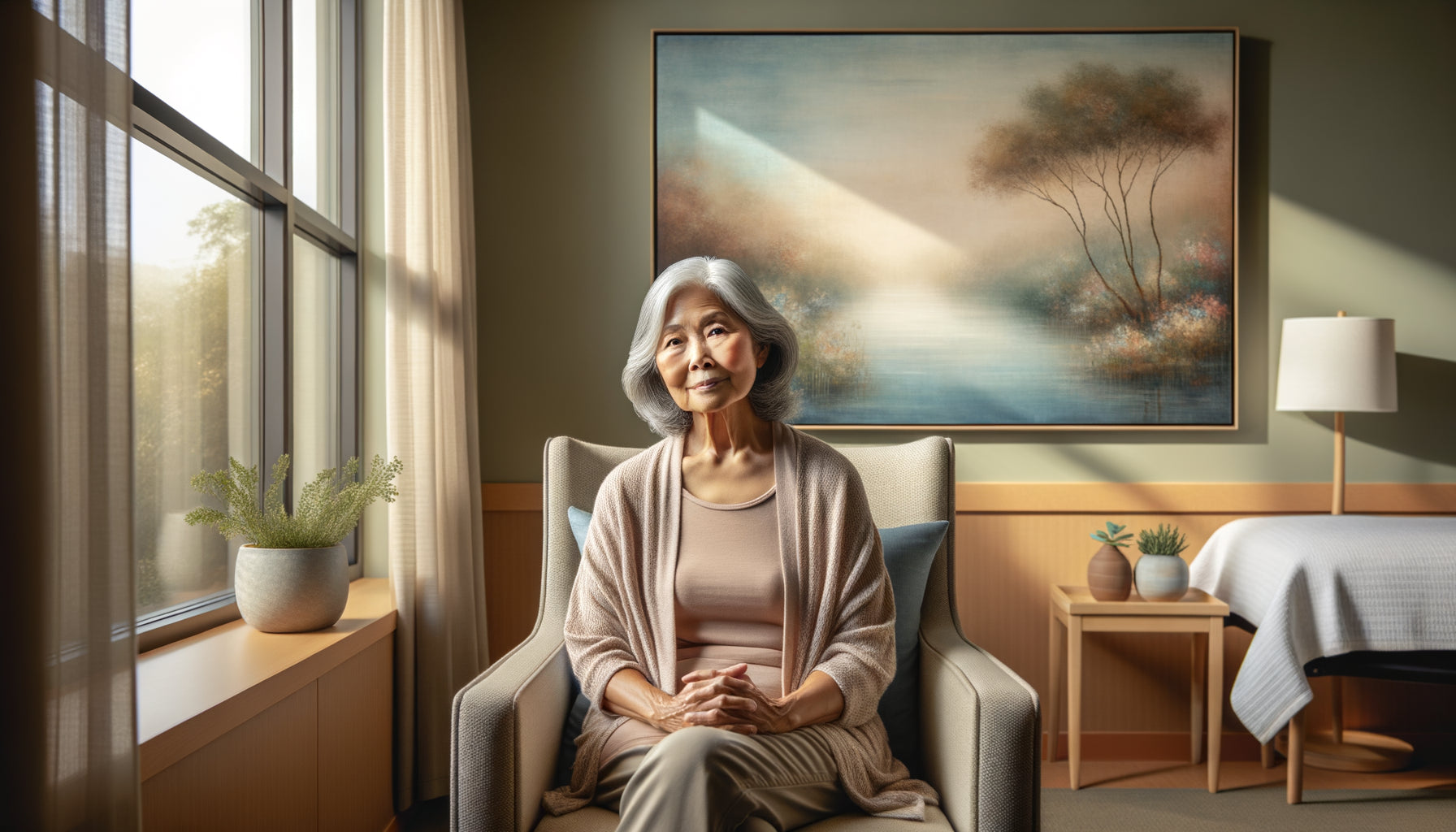
Many people, particularly after periods of isolation, feel apprehension in unknown shared spaces. Paintings depicting smiling faces act as reassuring visual ambassadors. They communicate wordlessly: 'This place is safe, people are happy here'.
In a senior residence that I accompanied in Nantes, new arrivals expressed less anxiety in common areas decorated with joyful portraits. The director noticed that social integration happened more quickly, residents daring to engage in conversation with their neighbors during the first few days.
The art of choosing the right smiles for your spaces
Not all smiles are created equal in mood decoration. After experimenting with various expressions, I identified crucial nuances. A frozen, commercial smile instantly triggers our authenticity detector – we are extremely sensitive to it. Paintings depicting authentic smiles, those that slightly crinkle the eyes and create fine expression lines, generate a much higher emotional reaction.
The diversity of faces also matters. In a multicultural space, including portraits reflecting different backgrounds sends a message of universal openness and belonging. Everyone can recognize themselves in at least one of the works, reinforcing the feeling of legitimacy to occupy that space and interact within it.
Emotional intensity and function of the space
The intensity of the smile should correspond to the social function of the place. For a dynamic coworking space, paintings depicting faces with radiant, energetic smiles reinforce the atmosphere of collective creativity. In a library or tea room, softer, almost contemplative smiles encourage exchanges without disturbing the ambient tranquility.
I found that in senior residences, portraits of mature people with serene smiles create an immediate identification and a joyful atmosphere of dignity, far from infantilizing clichés. These faces affirm that it is not only acceptable but desirable to smile and interact at any age.

Strategic Placement: Where to Hang Your Artworks to Maximize Social Impact
The placement of artworks depicting smiling faces largely determines their relational effectiveness. In a common room I redesigned in Bordeaux, the first portrait was positioned facing the entrance – the first visual contact upon entering the space. This immediate benevolent presence favorably predisposes before even the first human interaction.
Transition zones deserve particular attention. A painting near the coffee machine, water dispenser, or in the hallway leading to the toilets – these micro-spaces of informal encounter where the best conversations often arise – greatly benefit from this visual touch of humanity.
The Rule of Eye Contact
A technique I particularly like is to position several artworks depicting smiling faces in order to create 'visual conversations'. Two portraits facing each other on either side of a circulation area implicitly suggest that this space is made for exchange. People naturally linger there, unconsciously imitating this dialogic configuration.
Absolutely avoid relegating these works to dead corners or too high on the walls. Artworks depicting smiling faces should be at eye level when seated or standing, creating this illusion of real human presence that fully activates our neurological social responses.
Transform the Atmosphere of Your Collective Spaces Today
Discover our exclusive collection of art for senior residences that warms the atmosphere and naturally encourages warm exchanges between residents.
The Silent Transformation of Your Spaces
Six weeks after installing paintings depicting smiling faces in this Brussels residence I mentioned in my introduction, the director contacted me, astonished. Without any modification of the animation program, spontaneous interactions had increased dramatically. Residents reported feeling 'more at home', 'surrounded by kindness'.
This transformation is not magic, but a fine understanding of our social psychology. Paintings depicting smiling faces act as discreet yet powerful facilitators, creating the emotional conditions favorable to authentic encounters. They visually remind us that these spaces are first and foremost places of human life, sharing, connection.
Imagine your own spaces transformed: this formerly deserted common room where residents now naturally settle down, exchanging smiles and anecdotes. This reception hall where visitors wait with serenity, sometimes even engaging in conversation with their neighbor. This warm atmosphere that is created effortlessly, simply because the visual environment invites kindness.
Start modestly: choose a single painting depicting an authentic smiling face for your most frequented space. Observe the subtle changes in behavior, the looks that linger, the expressions that soften. You will discover that sometimes, transforming social ambiance starts with a simple smile on the wall.
Frequently Asked Questions
Do smiling face paintings suit all types of collective spaces?
Absolutely, but with important nuances in the choice. Paintings depicting smiling faces work remarkably well in senior residences, coworking spaces, medical waiting rooms, reception halls and common lounges. The key lies in adapting the style and emotional intensity to the function of the place. A professional environment will benefit from more subtle and elegant smiles, while a recreational space can accommodate more frank and joyful expressions. In my practice, I have found that even environments initially perceived as 'too serious' for this type of decoration gain enormously in humanity with well-chosen portraits. The secret is to prioritize the authenticity of expression over forced or commercial smiles, and to consider the painting as an architectural element in its own right rather than a superficial decoration.
How many smiling face paintings are needed in a room to create a noticeable effect?
Quality always trumps quantity. A single smiling face artwork strategically placed can dramatically transform the atmosphere of a space of 20-30m². I generally recommend starting with a main focal point – typically facing the entrance or in a natural gathering area – then observing reactions for a few weeks. For larger spaces like grand common rooms, two to three artworks create a balanced human presence without visually saturating. The frequent mistake is multiplying portraits to the point of creating an oppressive gallery effect. Remember that each smiling face should have its visual breathing space to retain its emotional impact. In a senior residence with 80 residents that I accompanied, five strategically placed artworks were enough to create a consistent warm atmosphere, each portrait marking a different living area while participating in an overall visual narrative.
Should you prioritize particular artistic styles for smiling face artworks?
The artistic style is less important than the emotional authenticity of the smile represented. I have observed excellent results with timeless black and white photographs, luminous impressionistic paintings, and even stylized contemporary illustrations. What really matters is that the facial expression communicates genuine joy, not a forced smile. Hyperrealistic artworks create a very direct connection, almost like a real presence, ideal for reception areas. More artistic approaches – soft watercolors, sketched portraits – work wonderfully in environments seeking a soothing and cultivated ambiance. In all cases, prioritize professional quality works rather than generic prints. Residents and visitors instantly perceive the difference between a carefully chosen portrait and standard decoration. My advice: always test the artwork before purchase by observing your own emotional reaction. If the represented smile touches you personally and makes you want to smile in return, it will likely work for your common areas.