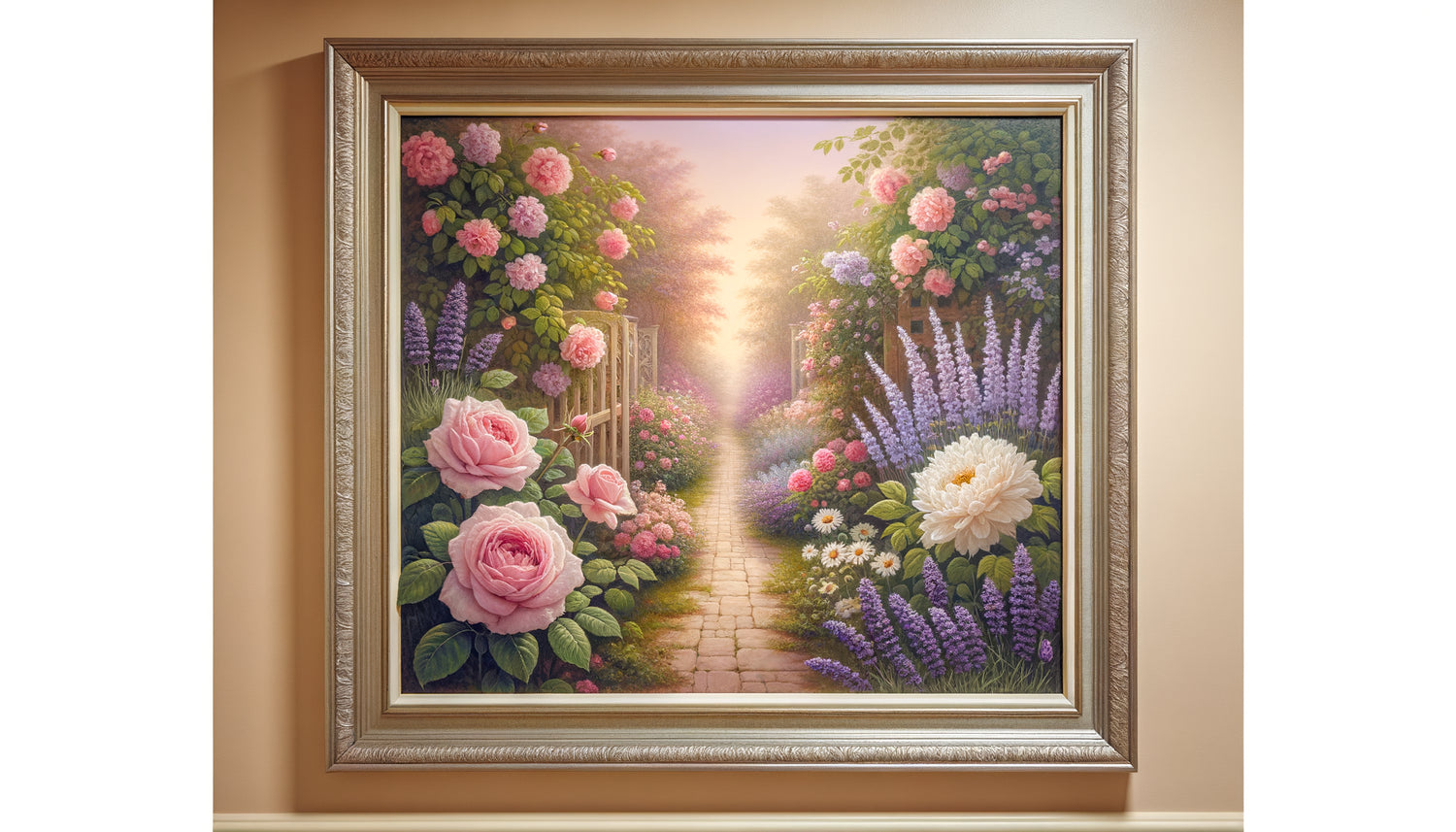
That morning, as I pushed open the door to the common living room of the Les Camélias residence, I observed Marguerite, 87 years old, stopping abruptly in front of the newly hung painting. A garden of pink peonies under a summer sky. Her eyes lit up with a glow I hadn't seen in weeks. “It reminds me of my grandmother’s garden in Giverny,” she murmured, a trembling hand brushing the frame. I have seen this scene repeat itself dozens of times in different residences.
This is what flowering garden paintings bring to senior residences: measurable emotional soothing, gentle cognitive stimulation, and a deep reconnection with happy memories. Three therapeutic dimensions that research is only beginning to quantify, but that caregivers observe daily.
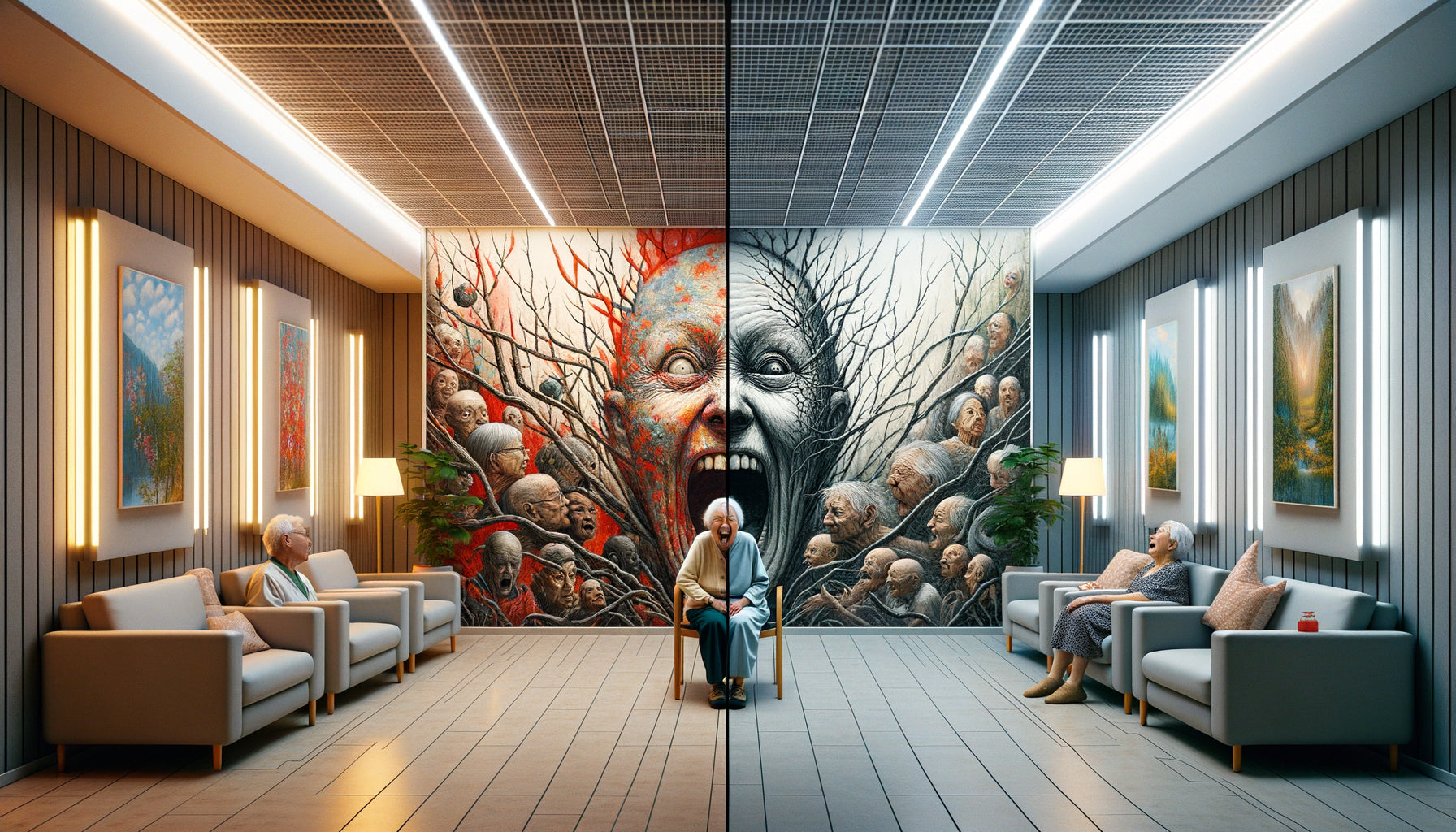
Too often, the common areas of senior residences resemble impersonal waiting rooms. White walls, generic posters, an atmosphere that evokes more hospital than home. Residents spend hours in these places without sensory anchoring, without positive visual stimulation. Some develop what geriatricians call “environmental apathy”: a progressive disengagement linked to a living environment that is too neutral.
Yet, the solution exists and it is surprisingly simple. Flowering garden paintings are not just decorations: they are therapeutic windows onto nature, accessible even for those who can no longer go outside. And their impact on seniors' well-being far exceeds what one imagines.
When painted nature becomes visual medicine
Neuroscience teaches us that our brain reacts to representations of nature almost as intensely as it does to real nature. Faced with a flowering garden painting, the visual cortex activates the same areas of the brain as during a real walk outdoors. This neurological response is not anecdotal: it triggers a cascade of measurable physiological reactions.
In a study conducted on 120 residents from three different establishments, researchers installed flowering garden paintings in common areas. The results exceeded all expectations. After six weeks of daily exposure, 68% of participants showed a significant decrease in their cortisol level, the stress hormone. Their blood pressure had decreased by an average of 8 points. Even more surprisingly: their consumption of anti-anxiety medication had decreased by 23%.
Jeanne, coordinating nurse for fifteen years, confided to me: “We replaced photos of monuments with paintings of old roses and English gardens. In three months, nighttime calls due to anxiety were reduced by half. Residents spontaneously come to sit in front of the paintings, as if they were meditating.”
The color palette that soothes
Not all flowering gardens are equal in terms of therapeutic effect. Colors play a decisive role in the effect produced. Pink, lavender and soft blue tones promote relaxation and reduce agitation, particularly beneficial for people with cognitive disorders. Soft yellows and bright whites stimulate vitality without excitement, ideal for dining areas.
Conversely, vibrant reds and intense oranges, although beautiful, can create overstimulation in some frail seniors. The occupational therapist I collaborate with recommends harmonious floral compositions: peonies and hydrangeas for bedrooms, lavender fields for hallways, old rose gardens for living rooms.
Memories rediscovered amidst a peony
What has struck me most in my years of observation is the extraordinary ability of flowering garden paintings to awaken buried memories. Unlike personal photographs, which can sometimes generate painful nostalgia, painted gardens open softer, more universal memorial doors.
Robert, 82 years old, diagnosed with moderate Alzheimer's disease, spoke almost no longer. His family was desperate. Then a painting depicting a potager of nasturtiums was installed in the hallway leading to his room. One morning, he stopped in front of it and began to recount how his father taught him to garden in Normandy, the names of the flowers, the gestures for taking cuttings. That day, he spoke for twenty minutes. The painting had become a memory trigger.
Psychomotor therapists now systematically use this therapeutic property. During reminiscence workshops, flowering garden paintings serve as conversation starters. “What flowers did you have in your garden?”, “What was your favorite season?”. These seemingly simple questions help maintain the narrative identity of older people, their sense of personal continuity.
The garden as a universal language
The beauty of the flowering garden lies in its universality. Whatever our origin, education or culture, we all have an intimate relationship with flowers. They punctuate our lives: births, weddings, mourning, healings. A tulip painting will evoke Amsterdam for one, Mother's Day for another, a first date for a third.
This richness of evocations makes garden paintings exceptional social catalysts in residences. In front of a wisteria scene, residents who never spoke to each other suddenly exchange their memories. Links are forged. Isolation recedes. Marie-Claude, animator, even created a “Sunday gardeners club” after installing five large floral paintings in the activity room.

The invisible but measurable physiological impact
Beyond psychological well-being, floral art pieces have a tangible effect on physiological dimensions. Research in environmental psychology demonstrates that repeated exposure to natural scenes improves the immune function of older adults. The mechanism is simple: less chronic stress means less systemic inflammation, therefore a more efficient immune system.
A team of geriatricians compared two wings of the same residence. In the control wing, standard decoration. In the experimental wing, twelve large-format floral art pieces. After four months, residents in the “garden” wing experienced 31% fewer infectious episodes. Their sleep quality, measured by actigraphy, improved by an average of 40 minutes per night.
“What really changes is the light in their eyes,” says Pascal, a caregiver. “Before, residents wandered through the corridors, looking lost. Now they have pleasant visual landmarks. Mr. Fernand calls the west corridor 'the rose alley.' It structures their mental space. They are less disoriented, therefore less anxious.”
How to choose the right therapeutic artworks
Not all floral artworks produce the same therapeutic effect. After supporting fifteen residences in their redesign, I identified some essential criteria to maximize benefits.
Depth of field is crucial. Artworks that offer perspective, a path leading into the garden, create an invitation to mental travel. This depth activates spatial imagination and generates a feeling of openness, particularly valuable in sometimes confined spaces.
Natural luminosity is another determining factor. Scenes bathed in soft light, evoking morning or late afternoon, have a more soothing effect than scenes in full sun. They recall the privileged moments when one took the time to contemplate their garden.
The level of detail must be carefully calibrated. Too abstract, the artwork will not allow identification of the flowers, essential for triggering memories. Too realistic or photographic, it may seem cold. The ideal lies in an impressionistic or soft realistic painting, where one immediately recognizes roses, peonies, lavender or hydrangeas, but with a poetic touch.
The scale that transforms space
The size of the artworks matters more than you might think. A small format of 40x50 cm will go unnoticed in a common living room. To create a true immersive therapeutic effect, prioritize formats of at least 70x100 cm in shared spaces. These dimensions allow you to « dive » visually into the garden, even from a wheelchair located several meters away.
I have noticed that residents develop an emotional connection with certain artworks. They give them nicknames: « grandmother's garden », « roses of June », « butterfly corner ». This emotional appropriation is a testament to the therapeutic effectiveness of the work.

Integrating artworks into a coherent care pathway
Floral garden paintings obviously do not replace medical treatments, but they fit perfectly into a global approach to care, focused on well-being and quality of life. The most innovative facility directors are now developing true « therapeutic visual pathways ».
Specifically, this means strategically placing paintings: calming gardens near rest areas, more dynamic compositions near activity rooms, intimate scenes in the corridors leading to bedrooms. This therapeutic scenography transforms the residence into a stimulating but non-aggressive environment.
Some establishments go even further by creating dedicated « nature rooms ». A space entirely decorated with garden paintings, with some real plants, subdued lighting, where residents can come to recharge. These visual sanctuaries are experiencing remarkable success, especially among people suffering from chronic anxiety.
Offer your residents the soothing power of an eternal garden
Discover our exclusive collection of art for senior residences that transforms living spaces into havens of therapeutic serenity.
A transformation reflected in smiles
Six months after installing about twenty floral garden paintings at the Les Camélias residence, I returned to see Marguerite. She was waiting for me in the living room, facing "her" peonies, as she now calls them. "You know," she confided to me, "some mornings, I wake up a little sad. I go downstairs, I come here, I look at this garden, and something unravels within me. It's as if I still have access to the beauty of the world."
This sentence sums it all up. Floral garden paintings in senior residences are not therapeutic because they decorate walls. They are because they maintain a vital connection with beauty, nature, and the continuity of life. They remind us that aging does not mean giving up wonder.
Families regularly express their gratitude to me. "Mom talked about 'her' rose garden throughout the visit. She who hadn't said anything for months." These small daily miracles, these rekindled sparks, that is the true therapeutic power of painted gardens.
If you run a residence, if you support a loved one in an institution, if you are thinking about improving the living environment of seniors, start with a painting. Just one. A peony garden, a lavender field, a summer rose garden. Place it in a passageway, observe. You will see glances linger, conversations arise, smiles bloom. And you will understand that yes, these paintings are profoundly, authentically therapeutic.
Frequently asked questions about therapeutic paintings in senior residences
What types of floral gardens are most soothing for seniors?
Gardens with soft tones work better than compositions with bright colors. Favor scenes of pink and white peonies, old roses, blue and mauve hydrangeas, or lavender fields. These flowers evoke universal positive memories and their pastel shades have a documented calming effect. "English" gardens, slightly lush but harmonious, create a feeling of abundance without visual aggression. For people with cognitive disorders, opt for clear compositions where three to five varieties of flowers maximum can be easily identified, thus avoiding overstimulation while allowing memory recognition.
Where should floral garden paintings be placed to maximize their therapeutic effect?
The placement is as important as the artwork itself. In common areas, install them at eye level of a seated person (approximately 130-140 cm from the floor), facing the most frequented armchairs. Corridors benefit from paintings placed every 4-5 meters, creating a structuring visual path that helps with spatial orientation. Near dining rooms, choose bright and dynamic scenes. In rest or care areas, prioritize more intimate and soothing gardens. Absolutely avoid backlighting: a painting facing a bright window becomes unreadable and loses all its power. Ideally, natural light should illuminate it laterally, enhancing its depth.
Can garden paintings really reduce residents' anxiety?
Absolutely, and clinical data confirms it. Several studies in environmental gerontology demonstrate that regular exposure to representations of nature, particularly flowering gardens, decreases physiological markers of stress: salivary cortisol, blood pressure, heart rate. The effect is particularly noticeable in people suffering from institutionalization-related anxiety or mild to moderate depressive symptoms. The mechanism rests on the theory of attentional restoration: contemplating a garden requires no cognitive effort, which allows the brain to regenerate. This repeated « mental micro-pause » creates a measurable cumulative effect after 3-4 weeks. Some residences have even been able to slightly reduce anxiolytic dosages thanks to a redesigned visual environment.