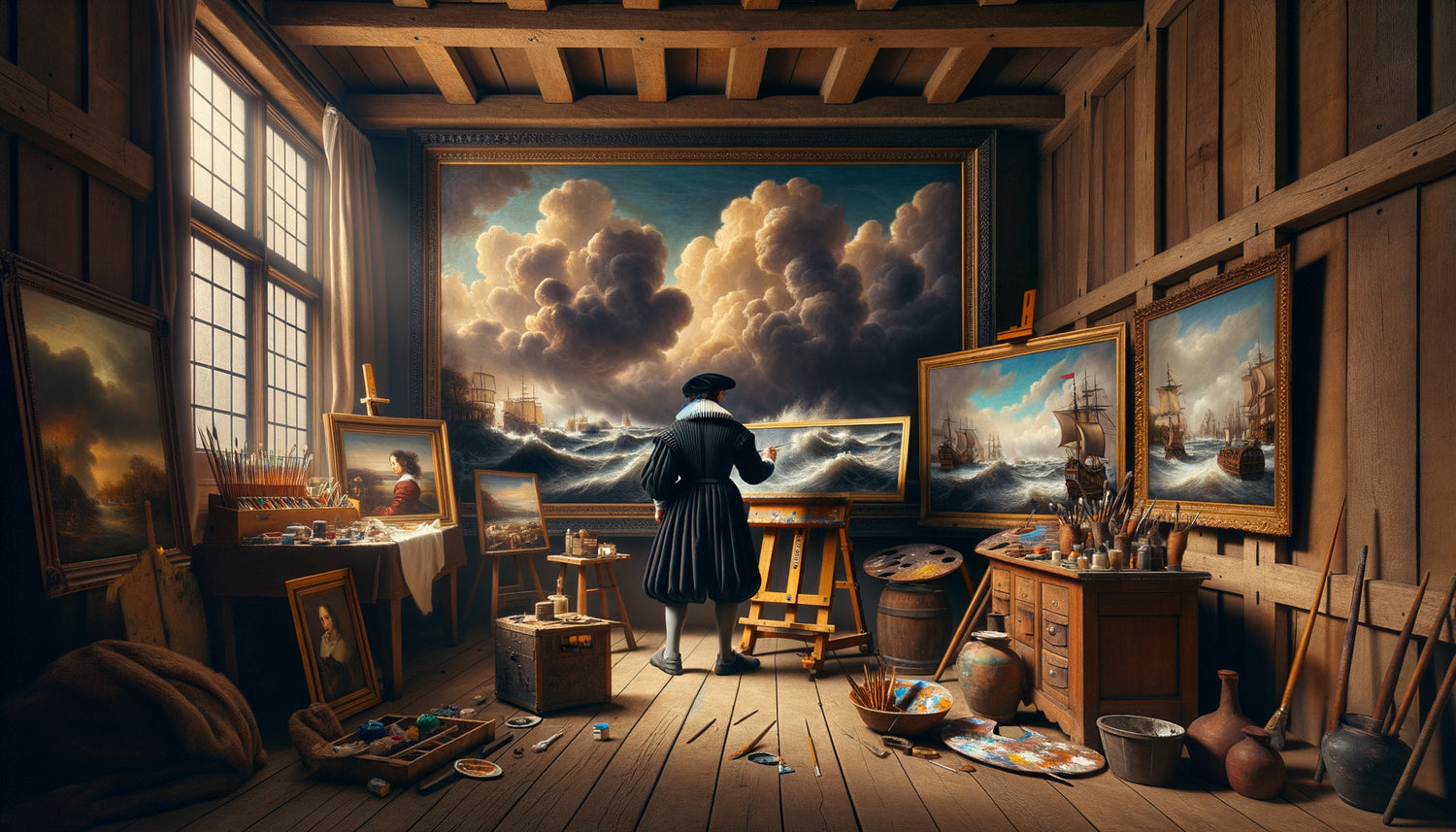
Imagine a workshop from the 17th century in Amsterdam. On the easel, stormy skies with endless nuances of pearl gray. In the next workshop, marine paintings with meticulously detailed waves. Further on, scenes of skaters on frozen canals. Three painters, three specialties, three hermetic universes. This hyper-specialization of Dutch Golden Age painters was not a coincidence, but a brilliant strategy that transformed each canvas into a recognizable signature.
Here's what this specialization of Dutch painters reveals to us: an art market revolution where expertise surpassed versatility, a quest for technical perfection pushed to its paroxysm, and a surprisingly modern organization of work that foreshadowed our niche economy.
You may admire a Dutch landscape in your living room without really understanding why these works exude such mastery. This misunderstanding is normal: we have lost sight of the fascinating ecosystem that produced these masterpieces. Contrary to popular belief, Dutch painters did not specialize due to a lack of talent, but as a strategic excellence.
In this article, I take you behind the scenes of this artistic revolution where economy, technique and genius combined to create works of astonishing precision. You will discover why this specialization shaped the visual identity of an entire nation.
The Dutch art market: an economic revolution
The Provinces-United of the 17th century were experiencing unprecedented prosperity. Unlike other European countries where only the aristocracy commissioned paintings, Holland saw the emergence of a middle class eager to decorate their interiors. Merchants, artisans, even innkeepers hung paintings on their walls.
This democratization of art created a market of an unparalleled scale. Dutch painters produced thousands of canvases annually, sold at fairs, shops, and even fish markets. In this ultra-competitive context, specialization became a decisive competitive advantage.
An enthusiast looking for an exceptional marine painting knew exactly which painter to turn to. Jan van Goyen for atmospheric river landscapes, Jacob van Ruisdael for dramatic windmills, Aelbert Cuyp for pastoral scenes bathed in golden light. This immediate recognition built a solid reputation and guaranteed regular orders.
The obsession with technical perfection
Painting exclusively marine paintings for forty years allows you to reach a level of mastery that no generalist can match. Specialized Dutch painters knew their subject in its smallest details: how light refracts on water at different times, the exact structure of a VOC ship, the chromatic nuances of a sky before a storm.
This technical expertise was passed down in master workshops to apprentices. A young painter entering Willem van de Velde the Younger's workshop did not simply learn to paint, but to paint ships with the precision of a naval engineer. He studied rigging, sails, and reflections on varnished hulls.
Dutch landscape artists developed secret recipes for their glazes, perfected atmospheric perspective techniques, tirelessly experimented with pigments to capture the very essence of their subject. This quest for excellence transformed each specialized painter into a veritable living encyclopedia of their field.

When geography dictates inspiration
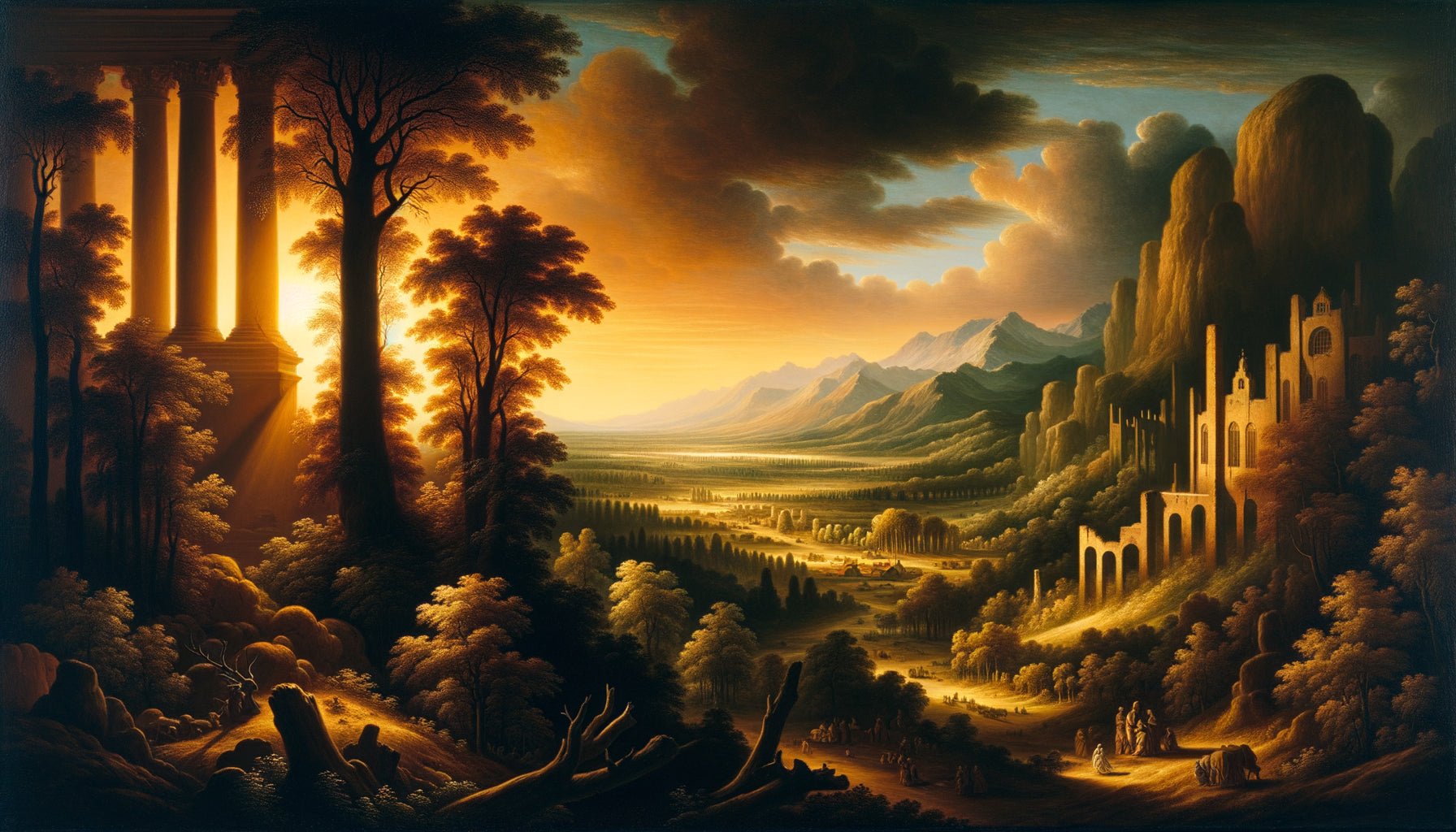
The unique topography of the Netherlands naturally influenced specializations. This territory conquered from the sea, flat as far as the eye could see, offered specific panoramas: immense skies occupying two-thirds of the compositions, low horizons, winding canals, windmills silhouetted against monumental clouds.
Dutch painters observed these landscapes daily and developed a particular sensitivity to their subtle variations. Why paint Italian mountains when you could capture the fleeting magic of a ray of sunshine piercing the clouds over the polders? This celebration of the national landscape resonated deeply with proud Dutch buyers of their young republic.
Some painters even specialized in micro-geographic niches: the beaches of Scheveningen, the canals of Amsterdam in winter, the surroundings of Haarlem with its characteristic dunes. This hyper-localization created a powerful emotional connection with collectors from these regions.
The workshop as a manufacturing plant: artistic division of labor
The prosperous workshops of Dutch painters functioned like veritable small businesses. The master focused on signature elements – the dramatic sky, the particular light – while assistants prepared canvases, painted secondary elements, reproduced successful compositions.
This streamlined organization allowed for remarkable productivity. Jan van Goyen produced approximately 1200 paintings during his career, a pace impossible without specialization. By repeating the same types of compositions, he developed automatisms that accelerated execution without sacrificing quality.
Some Dutch painters even collaborated between specialists: one landscape artist painted the backdrop, an animalier added the livestock, a figure painter integrated the characters. This artistic division of labor maximized each person's skills while creating harmonious works sought after by demanding collectors.

The Guilds: Guardians of Specialized Excellence
The Saint Luke guilds strictly regulated the profession of painter in each Dutch city. These medieval corporations encouraged specialization by creating distinct categories: landscape painters, portraitists, still life painters, specialists in genre scenes.
A Dutch painter would register within a specific, sometimes exclusive category. This professional classification influenced their training, prices, and reputation. The guilds organized assessments where peers judged technical mastery in each specialty, fostering constant emulation towards excellence.
This corporatist system also protected markets. A marine painter established in Rotterdam benefited from certain protection against competition, provided they maintained high quality standards. This relative security encouraged investment in perfecting a unique specialization.
The Contemporary Legacy of this Specialization
Even today, the approach of Dutch painters resonates in our appreciation of art. We value expertise, a recognizable signature, and the consistency of an artistic approach. Modern collectors seek the same authenticity that specialization guaranteed in the 17th century.
Dutch landscapes continue to influence photography, interior design, even our aesthetic perception of natural spaces. This particular light, these dramatic skies, these balanced compositions have become universal visual archetypes. Hanging a landscape in the Dutch spirit immediately brings this contemplative and timeless atmosphere.
The lesson of Dutch painters transcends art history: in a world saturated with options, authentic specialization creates lasting value. Their centuries-old strategy remains surprisingly relevant in our contemporary economy of attention and expertise.
Transform your interior with the spirit of Dutch masters
Discover our exclusive collection of landscape paintings that capture the same timeless mastery and contemplative atmosphere that made the Dutch school famous.
Conclusion: The Power of Singular Expertise
Dutch Golden Age painters teach us a profound truth: greatness rarely arises from dispersion, but from stubborn concentration on excellence in a chosen field. Their specialization was not a limitation but a liberation, a path to absolute mastery.
Imagine your living room transformed by a landscape with monumental skies, that characteristic silvery light, an invitation to immobile travel. Start by carefully observing the landscapes of your region with this specialized gaze of Dutch masters. Notice the nuances, the changing lights, the natural compositions. This is how art authentically enters our lives.
FAQ: Understanding Specialization in Dutch Painting
Did Dutch painters really only paint one type of landscape?
Specialization was indeed very advanced, but with important nuances. One painter could focus exclusively on winter scenes with skaters, another only on marine paintings with sailboats in calm weather. This hyper-specialization mainly concerned established painters seeking to maximize their reputation. Young artists and some masters sometimes explored several genres, but most built their careers on a recognizable specialty. Rembrandt is a notable exception, mastering portraits, biblical scenes, and etchings. But even he almost never painted pure landscapes, a domain reserved for specialists. This focus guaranteed unparalleled expertise and an immediately identifiable visual signature in the highly competitive Dutch art market.
How did this specialization influence the price of paintings?
Contrary to what one might think, specialization did not necessarily create higher prices, but a more stable and predictable demand. A recognized specialist in marine painting like Willem van de Velde the Younger could command substantial prices from informed collectors, notably shipowners and maritime merchants. However, the Dutch market operated on volume: thousands of paintings at average prices rather than a few very expensive works. Specialization made it possible to retain customers and optimize production. Painters often set prices according to complexity and size, with variations for their favorite subjects. Collectors appreciated this predictability and knew exactly what quality to expect. This unusual transparency for the time contributed to the extraordinary vibrancy of the Dutch art trade.
Can we apply the approach of Dutch painters to modern decor?
Absolutely, and it's particularly relevant today. The approach of Dutch painters suggests creating a strong visual consistency rather than accumulating disparate styles. Instead of mixing seascapes, urban scenes, and abstractions, choose a dominant theme that creates a unified atmosphere. If dramatic Dutch skies resonate with you, build your collection around this specific aesthetic. This consistency creates a visual signature in your interior, just as specialization created the signature of a painter. Contemporary interior designers are rediscovering this wisdom: a memorable space is born from the mastered repetition of visual elements rather than eclecticism. Dutch landscapes, with their restricted palette and characteristic luminosity, fit particularly well into modern minimalist interiors. Their timelessness transcends centuries without ever seeming dated.