I spent twenty years scouring European auction houses, authenticating paintings in the dimness of storage rooms, negotiating acquisitions for demanding collectors. But I still remember the visceral shock felt the first time I saw a Vlaminck landscape in person. It was at Drouot, a village under snow, and this canvas vibrated with an emotional violence that shook my expert certainties. Vlaminck's landscapes do not decorate: they inhabit space, they transform the atmosphere of a room like a living presence.
Here is what Vlaminck’s landscapes bring to your interior: a raw emotional intensity that transcends simple representation, a chromatic presence that structures space without dominating, and this rare ability to express the movement of nature rather than its frozen appearance. You are probably looking for a work that is not just a decorative element, but you fear those garish canvases that tire the eye or those cold abstractions that tell nothing. Vlaminck offers this fascinating point of balance: his landscapes remain readable, immediately identifiable, while carrying an expressive charge that never runs out. In this article, I will reveal to you the secrets of this unique expressiveness that makes Vlaminck's landscapes timeless aesthetic investments.
Color as pure emotional language
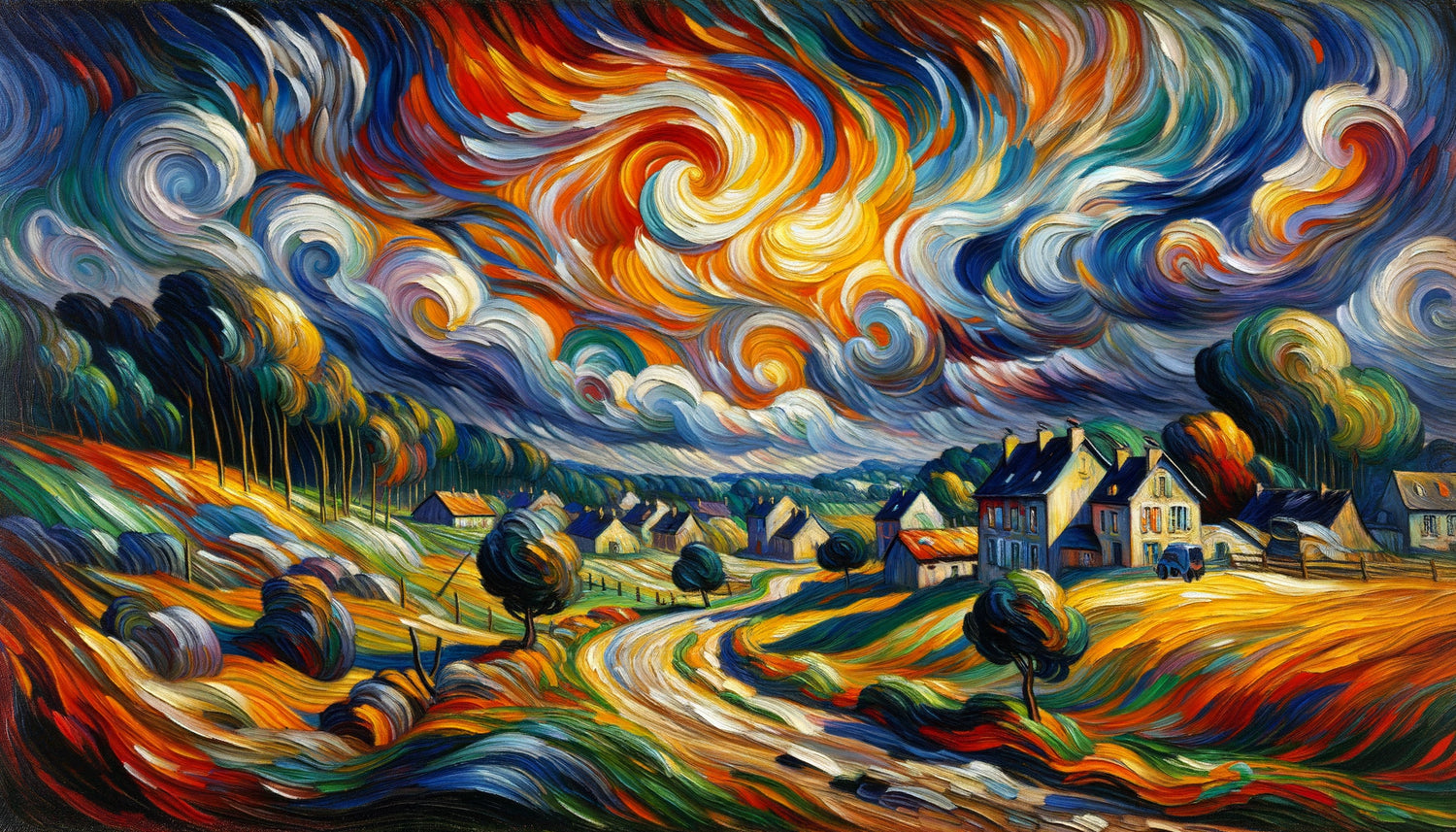
When Vlaminck paints a sky, he is not trying to reproduce the exact blue of the Norman sky at 5 p.m. in October. He extracts the emotional essence of that moment: blue becomes anguish, red expresses the violence of the approaching storm, pure white translates this electric tension before the sky tears apart. I have authenticated hundreds of Fauvist landscapes, and what distinguishes Vlaminck is this total absence of chromatic compromise.
His landscapes explode with saturated colors applied directly from the tube, without prior mixing on the palette. This technique creates brutal contrasts that captivate the eye: a vermilion red borders a Prussian blue without transition, a chrome yellow pulses against an emerald green. These juxtapositions create an optical vibration that brings the landscape to life. Vlaminck does not paint green trees under a blue sky – he paints the subjective experience of facing nature, with all the emotional charge it implies.
This approach to color radically transforms the decorative impact of a Vlaminck landscape. In a contemporary interior with neutral tones, one of these expressive landscapes functions as a focal point that structures the entire space without saturating it. The intense colors dialogue with the furniture, create unexpected visual echoes, modify the perception of natural light according to the hours of the day.
Thick material that captures movement
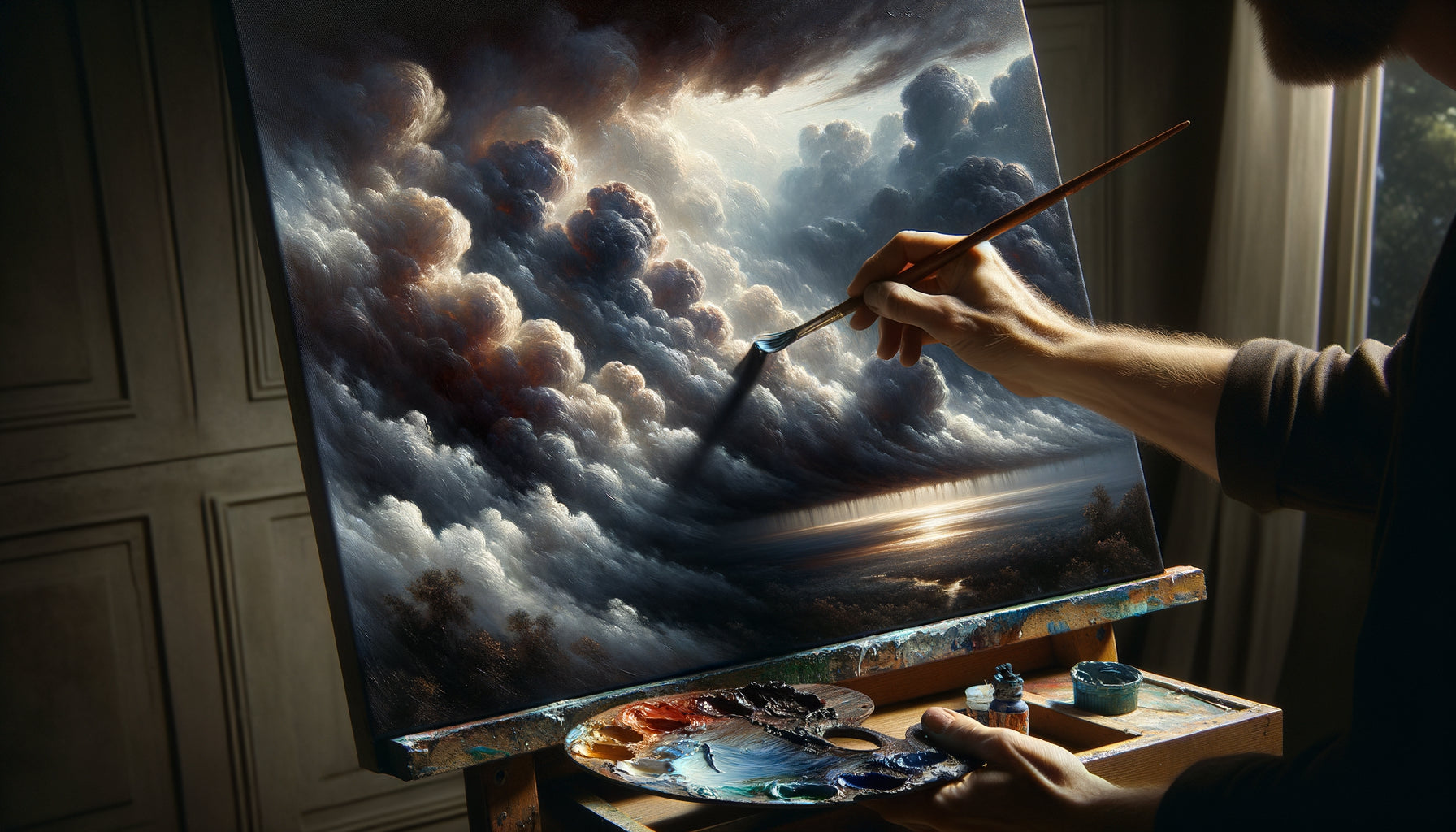
Approach an authentic Vlaminck landscape and you will discover a tormented surface, almost sculptural. Vlaminck worked with a thick and generous paste, applied with a knife or large brush, creating reliefs that catch the light dramatically. This impasto technique gives the landscape a physical dimension: the clouds seem to truly weigh on the village, the trees twist tangibly in the wind.
I have seen collectors literally hypnotized by this materiality. A Vlaminck landscape changes appearance depending on the lighting: in raking morning light, the paint reliefs project micro-shadows that accentuate movement; in direct afternoon light, the impasto areas shine and intensify the colors. It is a living work, which evolves with the day, never static.
This thickness of material also translates the painter's expressive gesturality. Each knife stroke captures a moment of creative intensity. Vlaminck painted quickly, in an urgency that rejects academic preciosity. His country roads are traced in a few broad strokes, his tormented skies are born from large and decisive gestures. This spontaneity is transmitted to the viewer: facing a Vlaminck landscape, one physically feels the energy of the creative gesture.

Compositions that defy conventions
Vlaminck structures his expressive landscapes according to principles that challenge classical harmony. His horizons are often placed very high or very low, creating oppressive or dizzying spaces. His paths do not comfortably lead to a central vanishing point, but snake dramatically, creating a dynamic tension that keeps the eye in constant motion.
This unbalanced composition is precisely what makes his landscapes so captivating in an interior. Unlike traditional landscapes that soothe with their reassuring balance, a Vlaminck landscape stimulates, questions, maintains an active presence. In a contemporary living room, this compositional tension dialogues brilliantly with the clean architecture and minimalist lines of modern furniture.
The architecture of Vlaminck's landscapes
His villages are rarely picturesque in the traditional sense. Houses accumulate in dark and compact masses, crushed by immense skies. Vlaminck's landscapes capture this melancholy of French rural villages, this impression of solitude and permanence that transcends anecdote. Even his snow scenes, a theme of romantic excellence, carry a gravity that avoids easy sentimentality.
The Fauve heritage revisited with brutality
Vlaminck was one of the major protagonists of fauvism alongside Derain and Matisse, but his approach to landscape remains unique due to its expressive violence. Where Matisse sought decorative harmony, Vlaminck cultivated emotional dissonance. His fauve landscapes of 1905-1907 are among the most radical of the movement: blood red trees, violet rivers, cadmium yellow roads that burn the retina.
This Fauve period represents the peak of his expressiveness, the most sought-after landscapes by collectors today. But even after 1908, when Vlaminck adopts a darker palette influenced by Cézanne, his landscapes retain this dramatic intensity. His storm skies of the 1920s, with their deep blacks and bright whites, possess an expressive power that is second to none compared to Fauvist works.
For a contemporary art lover, this Fauve lineage gives Vlaminck's landscapes historical legitimacy while retaining a visual modernity that naturally dialogues with current art. These works are not relics of the past: they anticipate American abstract expressionism, announce the gestural style of Soulages or De Staël.

How to integrate an expressive landscape into your interior
After twenty years of advising collectors, I have developed an intuitive understanding of what works. An expressive landscape in the manner of Vlaminck requires a space that respects its intensity. Avoid cluttered walls: give it breathing room, a space for dialogue with the architecture.
Lighting is a crucial parameter. A directional spotlight in warm light (2700-3000K) beautifully reveals the impasto and chromatic richness. Avoid overly cold lighting which hardens contrasts and distorts reds. The optimal viewing distance is between 1.5 and 3 meters: close enough to appreciate the texture, far enough for the composition to fully reveal itself.
These landscapes work remarkably in interiors with clean lines: industrial lofts, renovated Haussmann apartments, contemporary homes. The contrast between the expressive violence of the painting and the architectural sobriety creates a particularly successful aesthetic tension. I have seen expressive landscapes completely transform the atmosphere of a white minimalist space, bringing it that emotional warmth and historical depth often lacking in overly controlled interiors.
Match colors with precision
The intense reds of Vlaminck brilliantly dialogue with terracotta or brick textiles. His deep blues resonate with indigo cushions or glazed ceramics. Don't be afraid to create subtle chromatic echoes that extend the painting's palette into the space without literally duplicating it.
The expressiveness that transcends generations
What fascinates about Vlaminck’s landscapes is their ability to speak to contemporary sensibilities. Young collectors I accompany today are drawn to this raw emotional authenticity, this lack of intellectual sophistication. Vlaminck did not theorize: he painted with his gut, translating primary emotions – anguish, melancholy, the violence of nature.
This emotional immediacy makes his landscapes universally accessible while retaining a complexity that resists visual fatigue. A expressive landscape of quality does not go out of style because it follows no trend: it expresses fundamental human truths that transcend eras. This timelessness also represents an intelligent heritage investment for those who wish to build a lasting collection.
Transform your space with a work that vibrates with authentic emotion
Discover our exclusive collection of landscape paintings that capture the same expressive intensity and magnetic presence to inhabit your interior with character.
Living with expressiveness every day
Vlaminck’s landscapes are not contemplative works that one looks at distractedly as they pass. They impose a presence, create an atmosphere, modify the perception of space. After a few weeks, my clients often confide to me that the painting has become an emotional reference point in their daily life: a visual landmark that structures their relationship with the interior, a constant reminder that art can be visceral and un-intellectualized.
This expressiveness of landscapes also dialogues with our era saturated with smooth and controlled images. Faced with screens and their digital perfection, the raw materiality of an expressive landscape offers a tangible anchor, a physical resistance that brings back to the essential: the trace of a human gesture, the affirmation of a subjectivity, the rejection of aesthetic consensus. Perhaps this is the ultimate secret of Vlaminck's expressiveness: to remind us that painting can still move, shake up, awaken emotions we thought were dormant.
The expressiveness of Vlaminck’s landscapes is born from this rare alchemy between chromatic violence, affirmed gesture and unbalanced composition. These paintings do not passively decorate: they inhabit the space with a presence that transforms our relationship to the interior. Whether you are an experienced collector or an emerging enthusiast, let yourself be guided by this raw emotion that Vlaminck knew how to capture better than anyone. Visit an exhibition, approach an original, let the material and color speak directly to you. Expressiveness cannot be explained intellectually: it is felt physically, viscerally. It is this immediate sensory experience that makes Vlaminck’s landscapes lifelong companions rather than simple decorative objects.
Frequently Asked Questions
Are Vlaminck’s vibrant colors likely to tire the eye on a daily basis?
This is a legitimate concern that I regularly hear, but experience proves otherwise. Unlike the garish colors of contemporary prints, the pigments used by Vlaminck possess depth and complexity that enrich the gaze rather than saturate it. The thick material creates endless nuances according to the light, and the eye constantly discovers new subtleties. My clients who have been living with expressive landscapes for years confirm that these works never tire: they evolve with mood, season, lighting. The key lies in judicious placement and appropriate lighting that respect chromatic intensity without hardening it.
How to distinguish a genuine Vlaminck landscape from a reproduction or a fake?
Authentication requires professional expertise, but certain clues are revealing. The thick texture and characteristic gesturality of Vlaminck are impossible to faithfully reproduce in print. Examine the surface in raking light: you should see the paint reliefs, knife marks, and variable material thickness. An original also has natural cracks consistent with age, a patina of varnish, sometimes visible restoration repaints under UV light. Documented provenance and expertise from a recognized specialist remain essential. To start a collection, prioritize established galleries or reputable auction houses that guarantee authenticity and provide the necessary certificates. A quality reproduction can decorate pleasantly, but only an original possesses this material presence and historical significance that constitute the true value of an expressive landscape.
What interior design style best suits the expressiveness of Vlaminck's landscapes?
The expressive landscapes of Vlaminck possess this rare versatility to adapt to various styles, provided that the space respects their intensity. They shine particularly in clean contemporary interiors where their emotional charge contrasts with architectural sobriety. An industrial loft with raw concrete and large white surfaces offers a perfect setting. Renovated Haussmann apartments, with their generous volumes and moldings, also create an interesting historical dialogue. Avoid, however, already visually cluttered interiors: a Vlaminck landscape requires space to breathe. Minimalist Scandinavian furniture, mid-century modern style, or even a Japanese-inspired interior work remarkably well. The essential thing is to create a clear focal point where the painting can display its presence without visual competition. Think museum: the best institutions exhibit these works on neutral walls with careful lighting, a lesson directly applicable to your interior.