Between sky and water, mangroves weave vegetal cathedrals where aerial roots and mangroves draw a fascinating amphibious world. These unique ecosystems have long captivated the imagination of tropical artists, who find in them an inexhaustible source of inspiration. The representation of mangrove landscapes in tropical art reveals much more than just a desire to document nature: it expresses an intimate relationship with these border territories, where humans coexist with exceptional and fragile biodiversity.
The unique aesthetics of mangroves in tropical painting
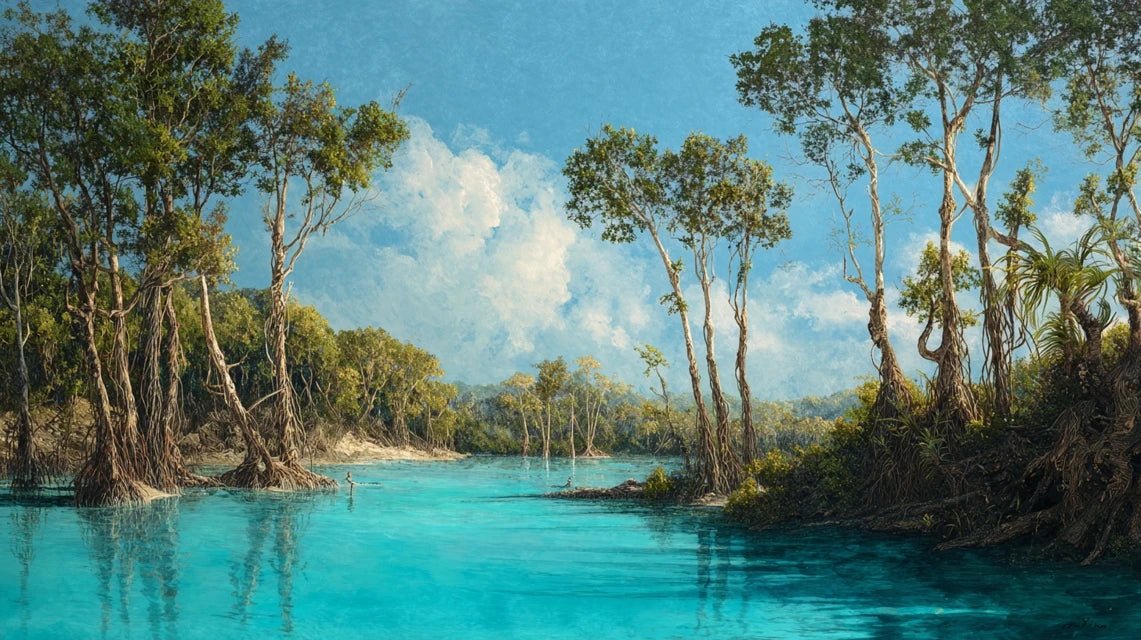
Mangrove landscapes possess a visual complexity that defies classical pictorial conventions. Tropical painters have developed specific techniques to capture the entanglement of stilt roots and the particular luminosity that filters through the dense foliage. In landscape paintings, mangroves are characterized by their palette of deep greens, earthy browns and changing aquatic reflections.
Caribbean and Latin American artists in particular have known how to render this mysterious atmosphere typical of mangroves. They play with contrasts between shadows and bright spots, creating a depth that evokes immersion in these marsh forests. The representation of gnarled roots becomes a recurring motif, symbolizing anchorage and resilience against the tides. This particular aesthetic transforms each canvas into an invitation to explore a world suspended between land and sea.
Artistic techniques to capture the density of mangroves
Faithfully representing a mangrove landscape requires a particular technical mastery. Tropical artists have perfected several approaches to visually translate the vegetation density characteristic of these environments. Watercolor allows suggesting fluidity and subtle transitions between water and vegetation, while oil offers the chromatic richness necessary to express the depth of shadows.
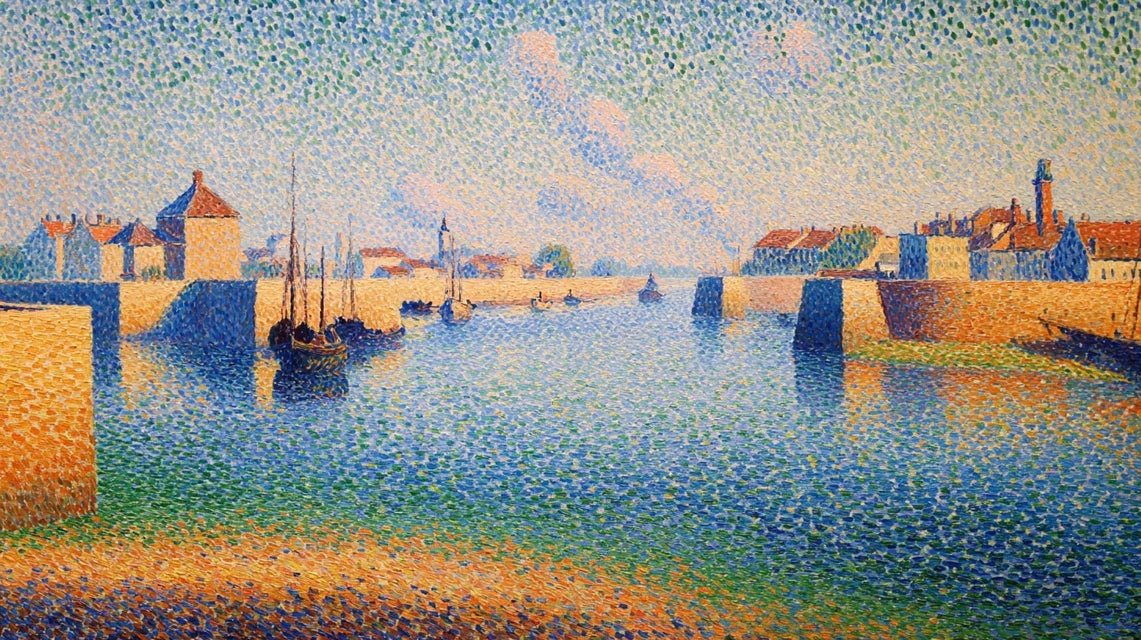
Some painters prefer an impressionistic approach, where quick brushstrokes evoke the perpetual movement of water and foliage agitated by sea breezes. Others adopt a meticulous realism to botanically document the different species of mangroves. Mixed techniques are also gaining popularity, combining painting and natural elements to create textures evoking rough bark or organic silt. This technical diversity reveals the richness of possible interpretations of a single mangrove ecosystem in contemporary tropical art.
Symbolism and ecological dimension in the art of mangroves
Beyond their aesthetic beauty, artistic representations of mangroves convey a powerful symbolic charge. In the tropical imagination, these coastal forests embody the border, the passage between two worlds. Artists exploit this metaphorical dimension to explore identity themes, particularly in regions where populations maintain a strong cultural connection with these environments.
Since the 1990s, the ecological dimension has emerged in tropical art depicting mangroves. Faced with their massive destruction, many committed artists use their practice as a visual advocacy for conservation. Their works highlight:
- The exceptional biodiversity sheltered by mangroves, with birds, crustaceans and fish
- The protective role of mangrove trees against coastal erosion and storms
- The fragility of these ecosystems in the face of urbanization and climate change
- The interdependence between human communities and the health of mangroves
This environmental awareness transforms the mangrove landscape into a visual manifesto, where pictorial beauty serves an urgent and necessary message of preservation.
Artistic movements and emblematic artists of tropical mangroves
Several artistic movements have marked the representation of mangroves in tropical art. The Latin American indigenous movement of the early 20th century integrated these landscapes into a quest for national identity, valuing the environments specific to each territory. More recently, Caribbean and Asian contemporary art explores mangroves from innovative angles, combining installations, photography and video.
Artists such as Cuban Wifredo Lam have incorporated the dense atmosphere of mangroves into their surrealist compositions, creating hybrids between tropical vegetation and mythological figures. In Florida and in the Gulf of Mexico, a whole school of landscape artists has specialized in the artistic documentation of mangroves, creating valuable visual archives of these threatened environments. Contemporary painters from Southeast Asia, particularly in Thailand and Malaysia, develop an approach combining traditional techniques and modern sensitivity, where the mangrove landscape becomes a pretext for bold formal experiments.
The influence of mangroves on contemporary artistic creation
Contemporary tropical art extends and reinvents the representation of mangrove landscapes by exploring new mediums. Immersive installations recreate the sensory experience of the mangrove, with sounds of water, plant smells and light games evoking moving reflections. Photographers document these ecosystems with scientific precision while seeking aesthetic emotion, capturing the magic hours when grazing light ignites the mangroves.
Tropical land art sometimes directly uses the space of mangroves as a creative support, with ephemeral interventions respectful of the environment. These artistic approaches question the relationship between human creation and natural processes. In parallel, digital art makes it possible to represent mangroves from unprecedented angles, generating hybrid landscapes where reality and imagination merge. This evolution is a testament to the ability of mangrove landscapes to constantly stimulate the renewal of artistic forms, while remaining rooted in a rich and diverse tropical pictorial tradition.
Conclusion : The representation of mangrove landscapes in tropical art constitutes a fascinating visual heritage, where aesthetic quest, scientific documentation and ecological commitment intersect. These works remind us that art has the unique power to transform our gaze on unknown ecosystems, revealing their complex beauty and vital importance. Through brushes, lenses and installations, tropical artists write a visual ode to these aquatic cathedrals, inviting everyone to recognize the irreplaceable value of these border landscapes.
Frequently Asked Questions
Why are mangroves so prevalent in tropical art?
Mangroves represent an emblematic ecosystem of tropical regions, offering a unique visual complexity with their tangled roots and particular light. They symbolize the boundary between land and sea, embodying the identity of tropical coastal populations. Their mysterious beauty and ecological fragility make them both aesthetically pleasing and meaningful artistic subjects.
Which artistic techniques are best suited to represent mangroves?
Watercolor excels at capturing fluidity and transitions between water and vegetation, while oil painting allows rendering the depth of shadows and the chromatic richness of greens. Mixed media combining paint and natural materials create evocative textures. The impressionistic approach suggests movement, while documentary realism prioritizes botanical precision.
How does contemporary art address mangrove landscapes?
Contemporary tropical art diversifies approaches with immersive installations recreating the sensory experience of mangroves, from documentary photography with an aesthetic dimension to ephemeral land art. Artists often integrate an ecological dimension, using mangroves as a symbol of environmental fragility. Digital art also allows creating hybrid landscapes between reality and imagination.