Imagine a moment: Paris, 1730. In his modest workshop, Jean-Siméon Chardin observes a basket of strawberries. No king to portray, no battle to immortalize. Just fruits and their light. It is this simplicity that will revolutionize 18th century bourgeois decorative art.
Chardin's still lifes in the bourgeois world
The Parisian bourgeoisie seeks an art in its image: elegant without being pretentious, refined without ostentation. Chardin’s paintings perfectly meet this expectation. From 1728, with The Ray and The Buffet, he imposes his visual signature. His pictorial compositions breathe; each object finds its natural place without clutter.
These paintings become the stars of bourgeois dining rooms. They are indeed called “dining room paintings,” intended to accompany family meals. Collectors snap up these domestic scenes that reflect their daily lives (Source: Musée André Malraux du Havre).
The artist works with legendary slowness. Diderot tells this tasty anecdote: Chardin was unable to finish a still life because the rabbits had rotted in the meantime (Source: Musée des Beaux-Arts de Bordeaux). This obsessive patience is read in every detail: the transparency of a glass, the velvety texture of a peach, the patina of copper.
The composition of Chardin's still lifes for interiors
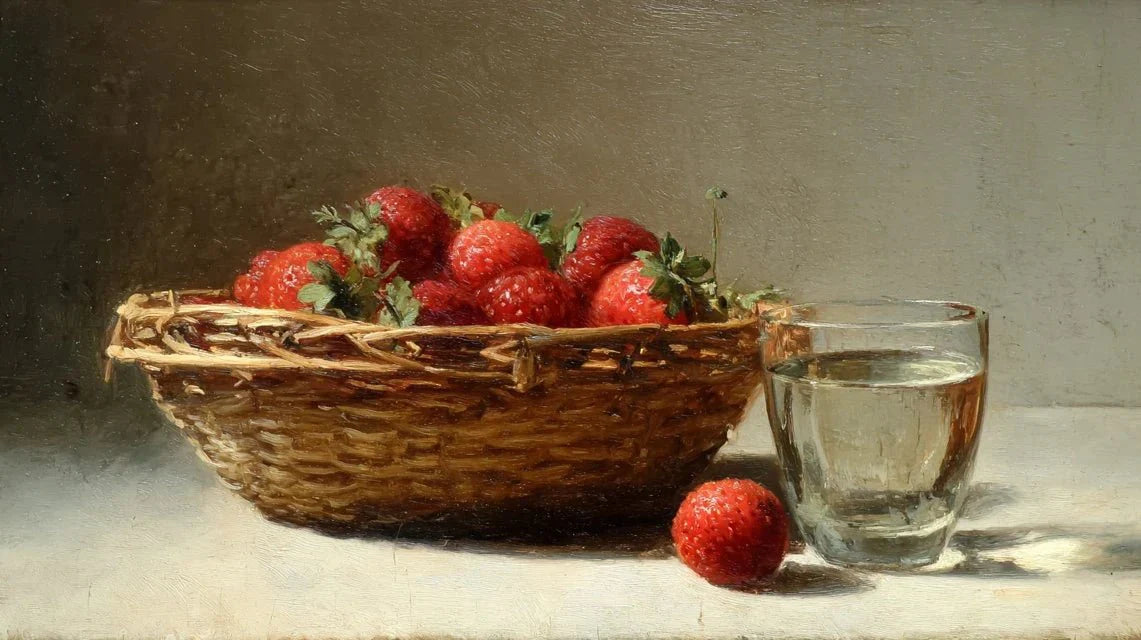
Basket of Strawberries, painted in 1761, illustrates the compositional genius of this master. Recently sold for 20.5 million euros (Source: Musée du Louvre), this painting presents a perfect visual architecture. The pyramid of strawberries dialogues with the transparent water glass. Total balance and harmony.
Why such success with the bourgeoisie? First, the format. Chardin’s paintings adapt to 18th century interiors, wealthy but not excessive. Unlike history paintings that require castle walls, his works harmoniously integrate into a living room with light wood paneling.
Then, the sobriety. Each composition presents:
- Neutral backgrounds that enhance objects
- A lateral lighting creating soft shadows
- A depth without visual overload
This avant-garde minimalist approach appeals to a clientele that appreciates discreet elegance.
Everyday bourgeois objects in still lifes
Chardin paints reality, not dreams. His still lifes present what the bourgeoisie actually consumes: seasonal fruits, market game, used copper utensils. In Still Life with Pieces of Meat (1730), a simple kitchen scene becomes a masterful study of textures.
The choice of objects is never arbitrary. Velvety peaches, golden grapes, sober silverware: these elements signal an easy social status without falling into ostentatious luxury. This authenticity pleases. Buyers recognize themselves in these representations of embellished everyday life.
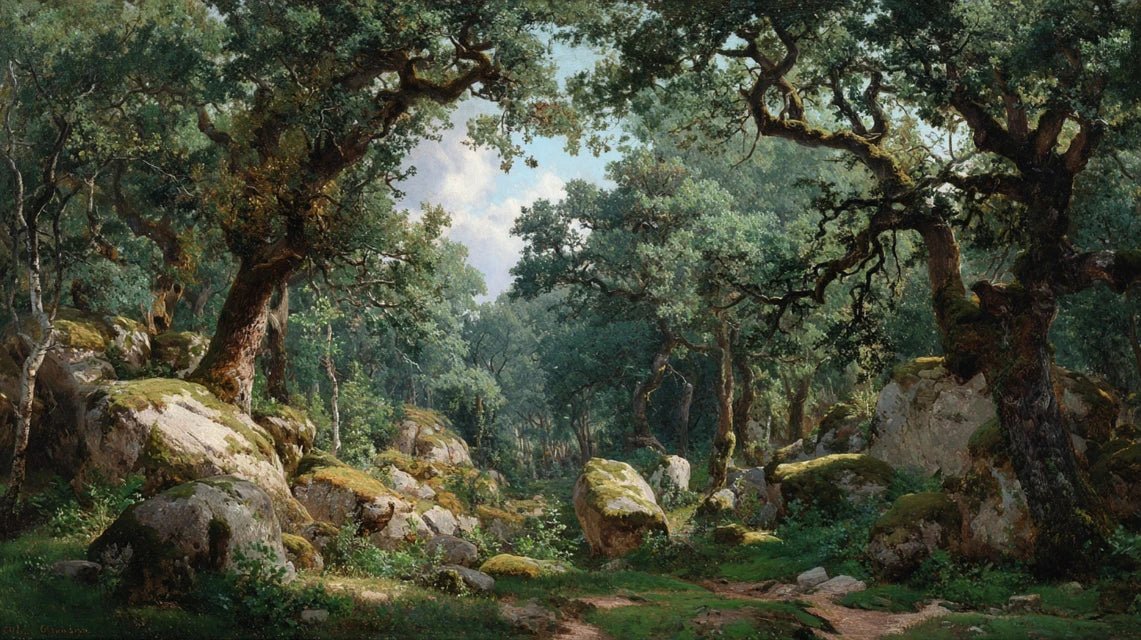
The artist rejects accumulation. Where Flemish painters pile up goods, Chardin limits his compositions to a maximum of three or five objects. This restraint perfectly matches the bourgeois aesthetics of the time. To find this heritage of purified composition in contemporary art, modern landscape paintings often draw inspiration from it.
But the real feat lies elsewhere. Chardin does not paint objects; he captures their material essence. A pitcher has its weight, a slice of bread reveals its airy crumb, a carafe diffuses light with striking transparency.
Light and materials in Chardin's still lifes
The magic mainly works through the light. Unlike traditional still lifes plunged into shadow, Chardin bathes his scenes in diffused clarity. This light envelops, caresses, reveals. It doesn’t shout; it whispers.
Diderot expresses it beautifully: "O Chardin, you don't grind white, red, or black on your palette; you take the very substance of objects, it is air and light that you seize with the tip of your brush" (Source: Louvre Museum). The philosopher adds that faced with the noisy paintings of the Salon, Chardin’s works offer “islands of silence” (Source: French Studies).
The painting technique remains unique. The artist lays his pigments without mixing them completely, creating a characteristic granular effect. The viewer's eye itself fuses the colors. This revolutionary process foreshadows the Impressionist research of a century later.
Materials converse with each other: cold metal against warm wood, hard ceramics facing tender fruit. These tactile dialogues, perfectly rendered, create a complete sensory experience that transcends vision.
The influence of Chardin's still lifes on bourgeois decor
The impact goes beyond the presence of his paintings on walls. The aesthetics of Chardin influences the decoration of bourgeois interiors themselves. Living rooms adopt his palette: ochre, beige, pearl gray dominate the woodwork. Chromatic harmony replaces bright colors.
Official recognition arrives quickly. In 1752, Louis XV granted him a pension of 500 livres (Source: Montreal Museum of Fine Arts). In 1770, he became Premier Painter to the King with the highest pension from the Academy: 1400 livres (Source: Wikipedia). A remarkable rise for a long-disdained genre.
His works circulate everywhere thanks to the engravings by François-Bernard Lépicié. European bourgeoisie discover his art through these reproductions that adorn libraries and studies. Major innovation: Chardin receives royalties on these engravings, an unprecedented system for the time (Source: Wikipedia).
His legacy transcends centuries. Manet, Cézanne, Matisse who copied four of his paintings at the Louvre (Source: Wikipedia), Braque, Morandi: all recognize their debt. This sober approach to everyday reality still inspires contemporary creators. Chardin’s lesson remains relevant: beauty is hidden in the ordinary; you just have to know how to look. His influence on French painting remains undeniable.
FAQ: Chardin's Still Lifes and the Bourgeois WorldWhy were Chardin’s still lifes so popular with the bourgeoisie?
Chardin’s still lifes perfectly met the decorative needs of bourgeois interiors in the 18th century. Their modest format adapted to living rooms with light wood paneling, unlike large historical paintings. Moreover, they depicted the refined daily life of this social class: seasonal fruits, copper utensils, understated silverware. This authenticity allowed collectors to recognize themselves in the scenes represented without ostentation.
What was Chardin’s unique pictorial technique?
Chardin used a revolutionary method for his time: he applied pigments to the canvas without completely mixing them, creating a characteristic granular effect. The viewer's eye itself fused the colors, a process that foreshadowed the Impressionist research of a century later. This technique gave his still lifes a subtle vibration and exceptional material presence that captivated the gaze.
How did Chardin influence the great masters of modern painting?
Chardin’s influence on modern art is considerable. Édouard Manet drew inspiration from him for his compositions, Paul Cézanne studied his treatment of volumes, Henri Matisse copied four of his paintings at the Louvre during his training. The painters Chaïm Soutine, Georges Braque and Giorgio Morandi also acknowledged their debt to this master. His sober and sensitive approach to everyday reality continues to inspire contemporary artists.