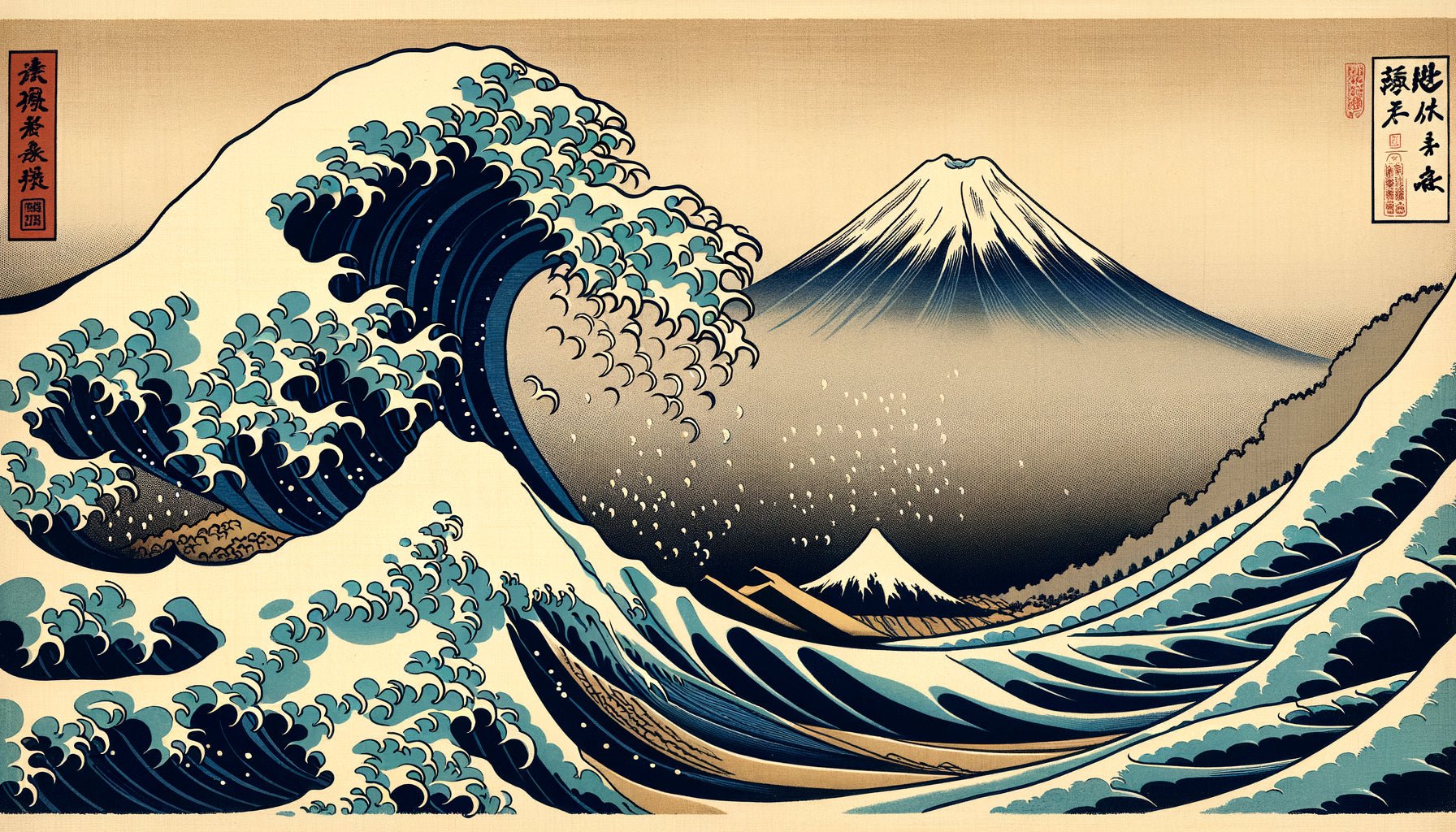
Imagine standing before a vast artwork: the sky occupies two-thirds of the space, tumultuous cloud masses traversed by rays of light piercing to an infinite horizon. At the bottom, a thin strip of land where windmills, canals and tiny silhouettes recall human fragility in the face of this celestial cathedral. This is not just a landscape: it's an artistic revolution that has forever transformed our way of looking at the world.
Here’s what a Dutch Golden Age-inspired landscape brings to your interior: a contemplative depth that invites inner travel, dramatic light that transforms the atmosphere of your space according to the hours of the day, and that majestic serenity of vast spaces that instantly soothes. You are probably looking for an artwork that is not just decoration, but a window on infinity, a composition that breathes and lives with the natural light of your room. The problem with so many contemporary landscapes? They forget this essential lesson that 17th-century Dutch masters masterfully understood: the sky is not a backdrop, it's the protagonist. This guide reveals how these visionary painters invented the modern landscape, and why their compositions continue to captivate our interiors four centuries later.
When the sky becomes the true subject of the painting
In 1628, in the workshops of Haarlem and Amsterdam, something extraordinary happens: Dutch painters decide to literally reverse perspective. For centuries, landscapes served as a backdrop for biblical or mythological scenes. The sky? A uniform blue band at the top of the canvas, lifeless, without presence. Then comes Jacob van Ruisdael, accompanied by his contemporaries Jan van Goyen and Salomon van Ruysdael, who dare the unthinkable: to give the sky 60, 70, sometimes 80% of the pictorial surface.
This bold decision was not just an aesthetic choice. The Netherlands, a flat territory conquered from the sea, naturally offered these immense horizons where the gaze gets lost in atmospheric immensity. Golden Age painters understood that the true beauty of their country lay in this perpetual celestial theater: clouds pushed by marine winds, changing lights, meteorological dramas playing daily above the polders. Hanging such a landscape at home is to invite this cosmic breath into your everyday life, to create an active contemplation space where the gaze travels endlessly.
The science of clouds: observing before painting
What radically distinguishes Dutch skies from any previous production is their stunning meteorological veracity. Van Ruisdael spent hours observing cloud formations, studying how light passes through different densities of water vapor, how cumulus clouds pile up before a storm, how crepuscular rays create those dramatic columns of light that the Dutch call Godsstralen – divine rays.
This quasi-scientific approach has produced compositions of striking modernity. Look at Ruisdael's *The Sunset*: the clouds are not soft decorative swirls, but complex atmospheric architectures, with their shadows, illuminated borders, and masses suggesting volume and movement. Placed in a contemporary living room, such a painting dialogues beautifully with a minimalist decor: its dramatic realism contrasts with modern minimalism, creating a fascinating visual tension. The palette of grays, off-whites, ochres, and deep blues naturally harmonizes with interiors in neutral tones, bringing that emotional depth that smooth contemporary surfaces cannot offer.
The low horizon: a revolutionary lesson in composition
Mentally position yourself in front of Ruisdael's *View of Haarlem with Laundry Fields*. The horizon is located in the lower third of the painting. This tiny earth line anchors the gaze before releasing it towards celestial expansion. It is a compositional principle that landscape photographers are rediscovering today, but which the Dutch mastered perfectly four hundred years ago.
This bold vertical asymmetry creates a powerful psychological effect: the viewer feels simultaneously rooted (by this reassuring strip of land) and liberated (by the immensity rising above). For your interior, this means that such a painting works particularly well above a low sofa or console: the upward vertical composition naturally draws the eye upwards, giving an impression of increased ceiling height. Dutch landscape artists intuitively understood what environmental psychology confirms today: spaces that integrate views of the sky reduce stress and promote creativity.
Nordic light: dramatize without artifice
The light of the Netherlands is nothing like Mediterranean light. It is oblique, filtered, changing, shifting in a few minutes from soft clarity to violent contrasts when a cloud suddenly reveals the sun. Painters of the Golden Age made this instability their signature. In Aelbert Cuyp, the golden lights of early morning bathe cows and shepherds in a warm glow that seems miraculous. In Van Goyen, silvery gray sails unify land, water, and sky in a soothing monochrome harmony.
This mastery of light transforms these landscapes into living works within an interior. Unlike a composition with saturated colors that always imposes the same presence, a Dutch landscape with subtle tones reacts to the natural light in your room. In the morning, when the light is soft, the clouds seem to float gently. Late in the afternoon, when slanting rays enter through the window, the illuminated areas of the painting come alive, creating a luminous resonance between the work and your space. It is this contemplative quality that makes these compositions perfect for a bedroom or office: they never shout, they continually whisper new nuances. Discover our selection of wall art landscapes inspired by this luminous tradition.
The windmills, canals and silhouettes: the art of human scale
Within this celestial immensity, Dutch painters never forgot humanity. Look closely: there, a solitary windmill cuts its silhouette against the clouds. Here, a tiny boat on a canal. Over there, figures reduced to a few brushstrokes. These elements are not anecdotal: they give scale, create a relationship between the infinitely large and the infinitely small.
This compositional lesson remains as relevant as ever for our interiors. An entirely abstract landscape can seem cold, disconnected. The discreet presence of architectural or human elements creates an emotional anchor point, a story that the eye can follow. In a contemporary decor often dominated by geometric lines and abstract surfaces, these narrative touches bring a poetic dimension without falling into the picturesque. A windmill in the mist is not just a rustic detail: it is a symbol of human perseverance, a verticality that dialogues with that of your designer lamp, a visual landmark that guides the eye through the composition.
The contemporary heritage: why these skies still speak to us
Why, in 2024, are we still fascinated by these skies painted four centuries ago? Perhaps because our hyper-connected era is rediscovering the need for silent contemplation. A Golden Age landscape does not tell a linear story, does not deliver an explicit message. It offers a mental space for reverie, a visual silence in the contemporary din.
Interior designers are observing a marked return to these atmospheric compositions in high-end residential projects. After years of dominance by colorful geometric abstractions, clients are now seeking works that breathe, that create a meditative depth. A large format inspired by Dutch landscapes – with its three quarters of cloudy sky and its peaceful horizon – literally transforms the energy of a room. It creates a mental window overlooking infinity, even in an urban apartment without a view.
Contemporary photographers specializing in landscapes know this well: they study Ruisdael and Van Goyen before scouting locations. The rule of the low horizon, attention to cloud formations, the search for that dramatic yet natural light – all these principles continue to permeate current visual creation. Integrating this tradition into your decor is not succumbing to nostalgia: it's recognizing that some visual truths are timeless.
Transform your space with the magic of landscapes
Explore our exclusive collection of landscape paintings that capture the authentic essence of dramatic skies and endless horizons in visually captivating compositions inspired by Dutch masters.
Conclusion: inviting infinity into your home
Dutch Golden Age painters accomplished a subtle but profound revolution: they showed that apparent emptiness could be the main subject, that clouds contained more drama than battles, that the peaceful immensity of a June sky spoke louder than theatrical scenes. Hanging a landscape inspired by this tradition is choosing contemplation over stimulation, depth over immediate effect.
In your living room, bedroom or office, this type of composition creates a visual breath, a space where the eye can get lost and found. The subtle tones – these nuanced grays, deep blues, bright whites – naturally harmonize with contemporary palettes while bringing an emotional complexity that bold colors cannot match. Each time you look up at these painted clouds, you will rediscover what 17th-century Dutch people knew instinctively: that looking at the sky, even in painting, remains the simplest and deepest gesture to reconnect with the essential. Let these infinite horizons transform your daily life into a permanent inner journey.