Imagine standing before Mont Sainte-Victoire on a summer morning. The sun rises, and suddenly the limestone rock ignites with pink and gold. This daily magic is the very essence of Southern France: a light that transforms everything into a spectacle.
Mediterranean light: a characteristic feature of Southern French landscapes
In the South, light doesn't just illuminate. It sculpts, reveals, and transfigures. When the Mistral wind sweeps across Provence, the air becomes crystal clear. The reliefs stand out with surgical precision. Colors explode.
Paul Cézanne understood this perfectly. From his Aix studio, he observed how this Provençal light atmosphere made every element of the landscape vibrate. The silhouettes of objects were no longer simply black and white, but blues, reds, browns, purples. Mediterranean light revealed colors that ordinary eyes did not perceive elsewhere.
This fascinating phenomenon is the result of an alchemy between geography and climate. The Mediterranean sun strikes the ground at an angle that creates dramatic contrasts. Shadow areas become almost black while exposed surfaces radiate a blinding clarity. It is this interplay of light and shadow that gives Provençal landscapes their theatrical dimension.
Color palette of Provençal Mediterranean landscapes
Close your eyes and think "French Riviera". Instantly, colors come to mind: the deep azure blue of the Mediterranean, the warm ochre of the facades, the silvery green of the olive trees. This color palette belongs only to Southern France.
The Mediterranean blue declines endlessly. From the intense cobalt of windless days to the vibrant turquoise of the calanques, each shade tells a different story. This blue constantly dialogues with that of the sky, sometimes creating a fusion where sea and sky become one.
Then come the warm earth tones: the ochres of Roussillon ranging from pale yellow to blood red, the terracotta roofs of Provence which seem to absorb and restore the heat of the sun, the flamboyant reds of the Estérel massif that violently contrast with the marine blue. These natural Mediterranean pigments permeate every stone, every tile, every wall.
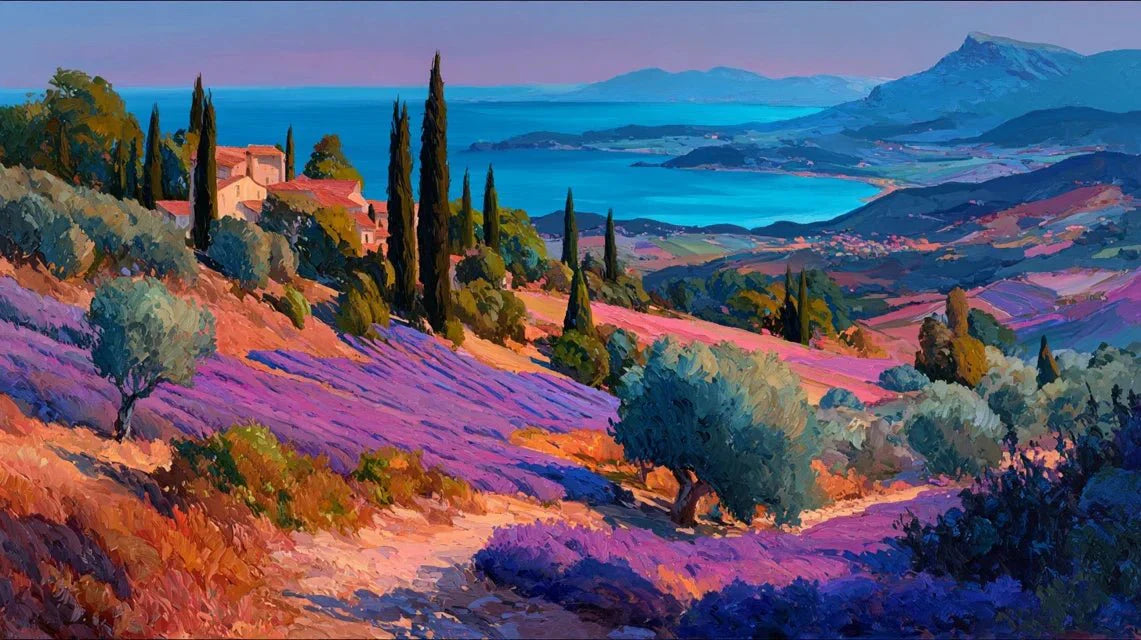
Mediterranean vegetation brings its own symphony of greens: the tender gray-green of centuries-old olive trees, the intense purple of lavender fields that ignite the Luberon in summer, the dark and mysterious green of the slender cypresses. Even the garrigue, often perceived as austere, displays a subtle palette of Mediterranean tones - grayish greens, browns and ochres - which change with the seasons.
To prolong this immersion in Provençal colors, landscape paintings allow you to capture this Mediterranean essence and bring it into your daily life.
Mediterranean landscapes and light intensity: the contrast of light and shadow
At noon in Provence, the sun beats down directly. Shadows are reduced to their minimum, concentrating into black pools under objects. This extreme contrast between light and shadow creates a spectacular geometry:
- The white facades of houses dazzle like mirrors
- Blue or green shutters stand out as vibrant patches on this incandescent white
- Centuries-old plane trees draw archipelagos of cool shadows across the squares
- The limestone cliffs of the calanques rise, dazzling, above the deep waters
This radical opposition structures our visual perception. Reliefs stand out with unusual clarity. Each form acquires a palpable presence. It is this particular quality that attracted Cézanne to Mont Sainte-Victoire, Van Gogh to the Arles fields, Matisse to Nice.
But the magic works differently depending on the hour. At dawn, the grazing light caresses the hills, tinting them pink and gold. Shadows stretch, creating exaggerated relief. At dusk, the sky ignites in tones of fire - orange, purple, mauve - transforming familiar landscapes into dreamlike visions.
Landscapes of southern France captured by light: sea, hills and maquis shrubland
The Mediterranean itself becomes a luminous character. Its shimmering surface multiplies the ambient brightness, projecting dancing reflections on the facades of ports. In Saint-Tropez, Signac captured these golden sparkles that transform water into a carpet of liquid light. In the calanques of Cassis, the turquoise water seems to emit its own phosphorescent glow.
The hills of Provence offer a layered landscape of colors. Vineyards draw geometric stripes that go from tender spring green to summer gold. Olive groves punctuate the slopes with their silvery tones. Groves of pines and holm oaks bring dark notes which, by contrast, enhance the surrounding brightness.
Mont Sainte-Victoire dominates this emblematic Mediterranean panorama. Cézanne painted it 87 times (Source: Musée Granet d'Aix-en-Provence), obsessed with its ability to change appearance according to the light. Grey in the early morning, bluish at midday, pink at sunset, this Provençal limestone relief embodies the infinite variability of Mediterranean landscapes under the effect of light.
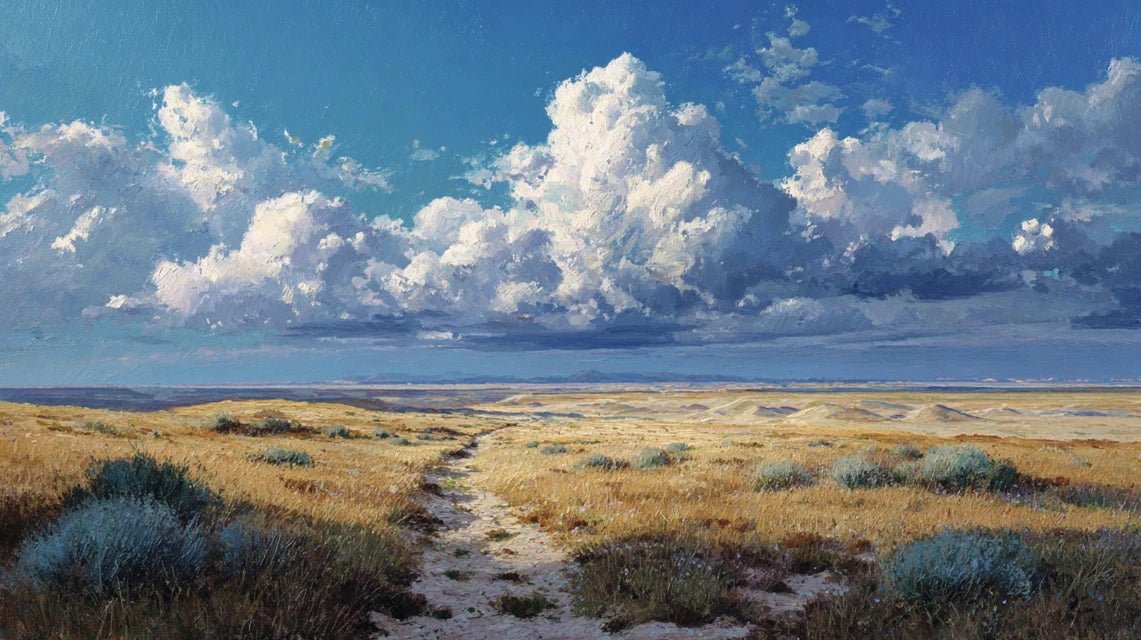
The maquis shrubland reveals a more discreet but equally intense beauty. Whitened limestone outcrops emerge from an aromatic carpet of thyme, rosemary and wild lavender. These sparse expanses release powerful scents that complement the visual experience. The grazing evening light transforms these spaces into mosaics of golden textures.
Mediterranean light and color: impact on landscape perception
The light of southern France has an almost magical power: it intensifies colors to saturation. This phenomenon is scientifically explained by the exceptional chromatic atmosphere that allows wavelengths to pass without filtration.
Result? The ochre facades of Roussillon seem to radiate from within. Fields of lavender become vibrant purple blankets that evoke abstraction more than realism. Autumn vineyards explode in copper symphonies.
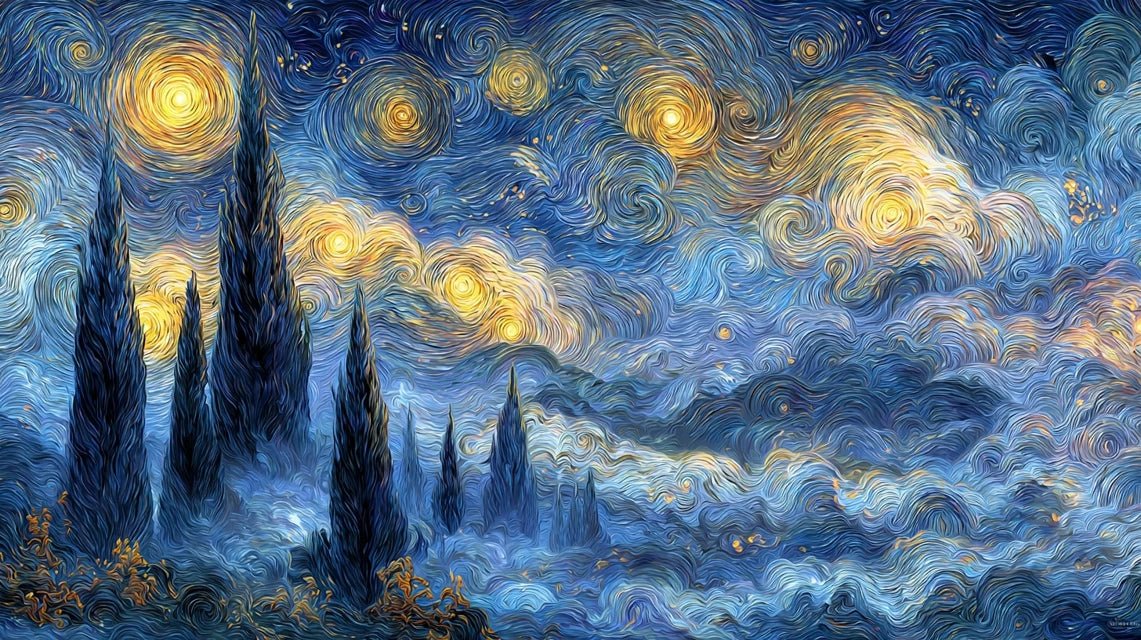
This luminous alchemy explains the magnetic attraction that the South of France has exerted on artists since the 19th century. Van Gogh proclaimed: "The whole future of art is in the South." Matisse found in Nice the pure colors he was looking for. Braque discovered in Estaque the geometric structures that would lead to Cubism.
Even today, this unique luminous quality continues to fascinate. It transforms every moment into a living painting, where colors express themselves with maximum intensity. The Mediterranean landscapes of southern France remain this exceptional land where light does not only illuminate: it creates, reveals, enchants.
FAQ : Mediterranean landscapes of southern France
What makes the Mediterranean light so special?
The light in southern France is distinguished by its exceptional intensity and atmospheric clarity. The Mistral regularly sweeps away the air, creating a crystalline transparency. The sun strikes at an angle that generates marked contrasts between shadow and light, literally sculpting the landscapes and revealing saturated colors found nowhere else.
What are the iconic colors of Provence's landscapes?
The Mediterranean palette combines the deep azure blue of the sea and sky, warm ochres ranging from golden yellow to red earth, the terracotta of roofs, the silvery greens of olive trees, and the intense purple of lavender. These natural tones, exacerbated by bright light, create a chromatic symphony unique in the world.
Why are painters fascinated by the landscapes of the South?
Since the 19th century, artists have been coming to the South to capture a luminous quality that cannot be found anywhere else. Cézanne, Van Gogh, Matisse and dozens of others were drawn to these dramatic contrasts, saturated colors and clarity that transforms every landscape into a living painting. The Mediterranean light does not only illuminate: it reveals, transfigures and creates.