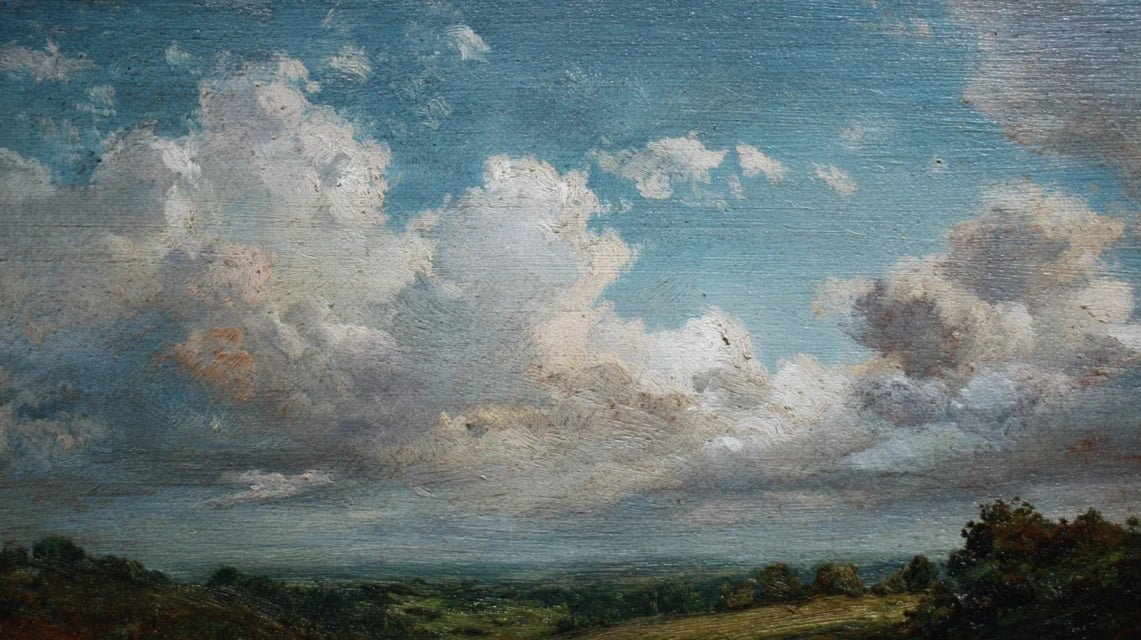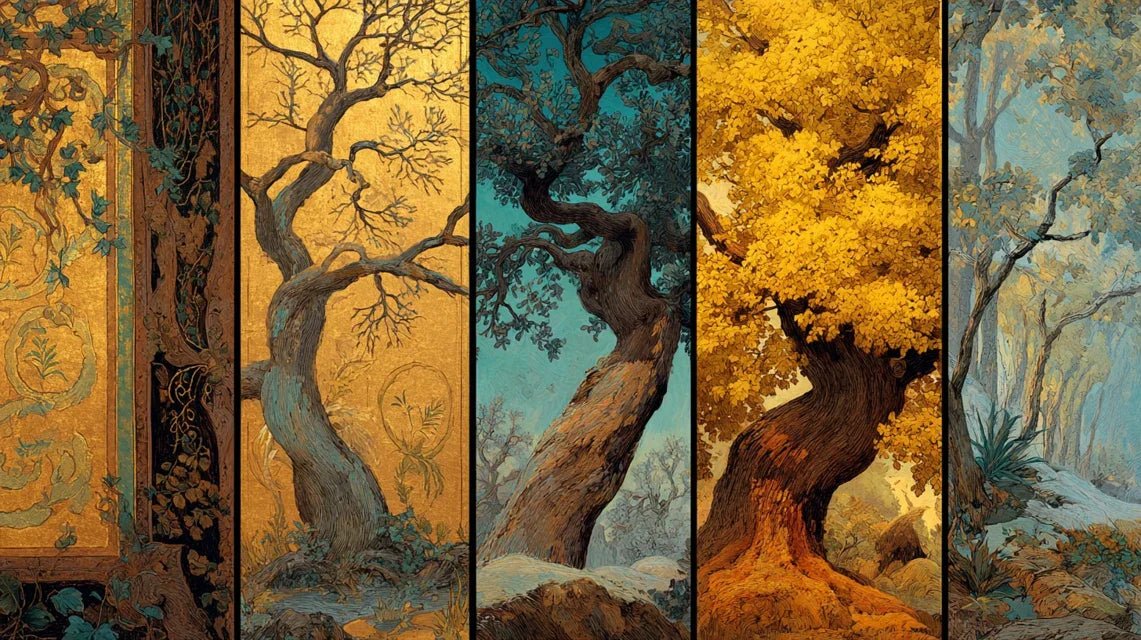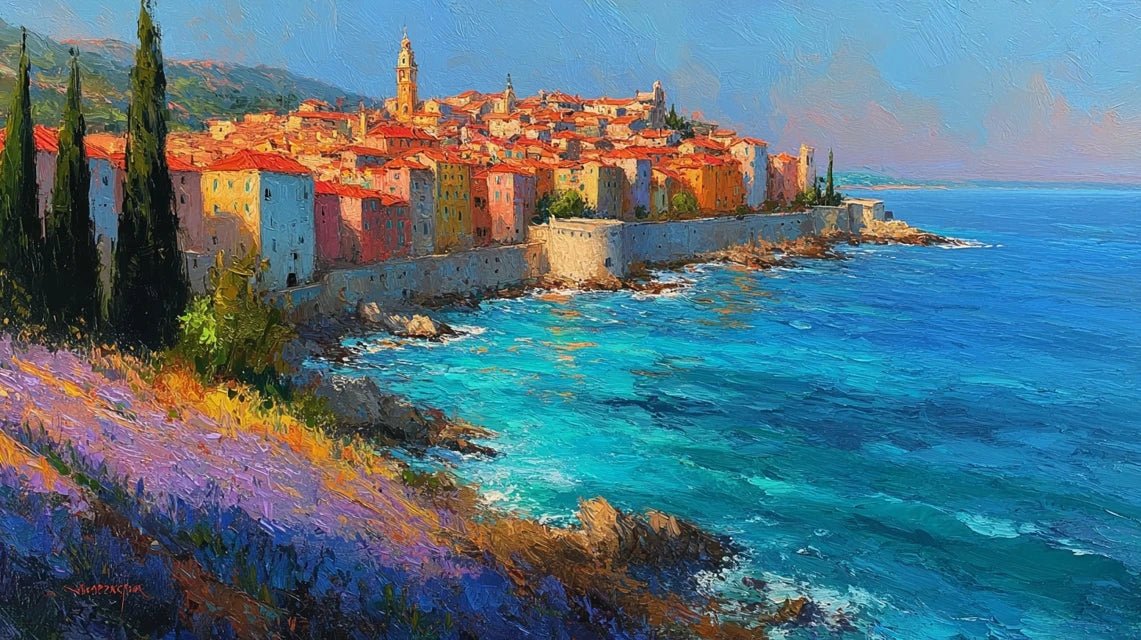
When light meets color on the shores of the French Riviera, a whole world awakens. Imagine yourself facing the Mediterranean Sea, the sun at its zenith. This particular light has fascinated generations of painters who came here, easel in hand, to attempt the impossible: to capture the brilliance of the South.
The luminous magic of the French Riviera
Mediterranean light is unlike any other. It possesses this crystalline clarity that cuts out every detail with surgical precision. Van Gogh understood this when he wrote to his brother that the Midi was « the equivalent of Japan » as the quality of the light transformed his perception.
This exceptional luminosity creates games of light and shadow of a rare intensity. Contrasts are marked with surprising sharpness. Dawn tints the hills in soft pinks, noon explodes in saturated blues and burning ochres, twilight ignites facades with copper reflections.
Impressionist painters flocked to the South as early as the 1880s, drawn like butterflies by this revelatory light. Monet in Antibes, Renoir in Cagnes-sur-Mer, Cézanne before Mont Sainte-Victoire: each sought to capture this daily miracle where the sun continually reinvents the landscape.
An explosion of Mediterranean colors
The Midi unfolds a palette that would make a rainbow pale. Blue reigns supreme: that famous azure which christened an entire coast in 1887. But not just any blue. A deep, luminous blue that vibrates between the sky and the sea in constant dialogue.
Facing this maritime symphony, the land responds with a breathtaking range of ochres. In Roussillon, the cliffs decline twenty different shades, from pale yellow to blood red. This richness comes from the concentrated iron oxide in the soils, a geological heritage millions of years old that colors facades and paths today.
The contrast is what makes these landscapes so beautiful. The Massif de l'Estérel plunges its purple rocks into the Mediterranean azure. Umbrella pines raise their dark green silhouettes against the cobalt sky. Perched villages align their blood-red and gold facades under a light that enhances every hue. To bring these sunny atmospheres home with you, explore landscape paintings that capture the colorful soul of the Midi.
The Impressionists invented a revolutionary technique to render this intensity: placing touches of pure color side by side, without mixing them. The result? An optical mixture that takes place directly in the eye, creating colored vibrations impossible to obtain otherwise.
The technical secrets of painters from the Midi
How to capture so much light and color? The invention of the paint tube in 1841 changed everything. Suddenly free to leave their dark workshops, painters were able to face the Mediterranean sun face to face.
Working outdoors became their signature. Setting up the easel in front of the motif, feeling the warmth on their neck, squinting against the glare. Monet spent hours observing how light transformed a harbor in just minutes. This urgency to capture the moment gave birth to a nervous, vibrant painting.
Techniques adapted to this intensity:
- Quick and thick brushstrokes build up the canvas with vibrant touches
- Generously applied paint creates relief and catches the light differently
- Shadows are no longer black but colored, a mixture of complementary hues that sing together
- Abandoning black in favor of chromatic mixtures to restore shadow areas
Signac pushed the logic to the extreme with his pointillism in Saint-Tropez. In « The Red Buoy », each dot of pure color participates in restoring the solar brilliance with almost scientific precision. You can almost feel the heat vibrating on the canvas.
Then came the Fauves, Matisse and Derain at the forefront. In Collioure, they freed color from all realistic constraints. Pinks, yellows, screaming blues that shout with joy of being there, under this generous sun. Their exaggerated palette no longer sought to reproduce but to convey a feeling of total dazzle.
Iconic locations of the luminous South
Certain places concentrate all the magic of the Mediterranean. L'Estaque, this small fishing village near Marseille, saw Cézanne, Braque, Derain pass through. What fascinated them? This natural organization into three bands: the sea, the land, the sky. Three distinct but permeable spaces, constantly transformed by the course of the sun.
The Côte d'Azur multiplies visual wonders from Cassis to Menton. Picasso settled there every summer, exploring Juan-les-Pins, Cap d'Antibes, Cannes. He filled dozens of canvases, studying how the hills, trees, and sea reacted to the Mediterranean light that reminded him of his native Spain.
Van Gogh and Gauguin preferred the Arles hinterland, brimming with sunshine and earthy colors. Fields of sunflowers under the relentless sky, cypress trees like black flames, Roman tile roofs: another version of the South, more agricultural but equally intense in color.
And then there's the Estérel, a unique geological spectacle. Its red porphyry rocks plunge into deep blue. This violent contrast between incandescent mineral and liquid azure inspired Fauvism at the Salon d'Automne in 1905. Nature becomes almost abstract as colors are saturated.
These Mediterranean landscapes never cease to reinvent themselves. The same view changes radically depending on the hour, the season, the quality of the air. It is this perpetual dance between light and color that makes the French South an inexhaustible playground for all lovers of beauty.
FAQ: Mediterranean landscapes of the French South
Why is Mediterranean light so special?
The light of southern France possesses exceptional atmospheric transparency due to the dry climate and latitude. This intense clarity creates marked contrasts between shadow and light, stylizes reliefs, and reveals colors with a unique saturation. Hourly variations constantly transform the landscape, from the roses of dawn to the golds of twilight.
What are the iconic colors of Mediterranean landscapes?
Azure blue dominates, ranging from turquoise to deep cobalt for the sea and sky. The land offers an exceptional palette of ochres (yellow, orange, red), the silvery green of olive trees, the purple of lavender, and the blood and gold facades of villages. These natural colors, intensified by sunlight, create spectacular contrasts.
Which painters best captured the landscapes of southern France?
The Impressionists (Monet, Renoir, Cézanne) revolutionized the representation of Mediterranean light as early as the 1880s. Van Gogh and Gauguin explored the Provençal hinterland. The Fauves (Matisse, Derain, Braque) pushed chromatic intensity to the extreme. Signac developed pointillism in Saint-Tropez, while Picasso multiplied studies on the Côte d'Azur.