Imagine the shock. One morning in 1850, a painter sets up his easel facing what was yesterday a peaceful meadow. Before him now stands a monster of steel: a blast furnace spewing black smoke into the Norman sky. This scene is repeated everywhere in Europe. Industrial landscapes fascinate, frighten, and upset. And artists take up their brushes to tell this story.
Industrial Landscapes in 19th Century Art
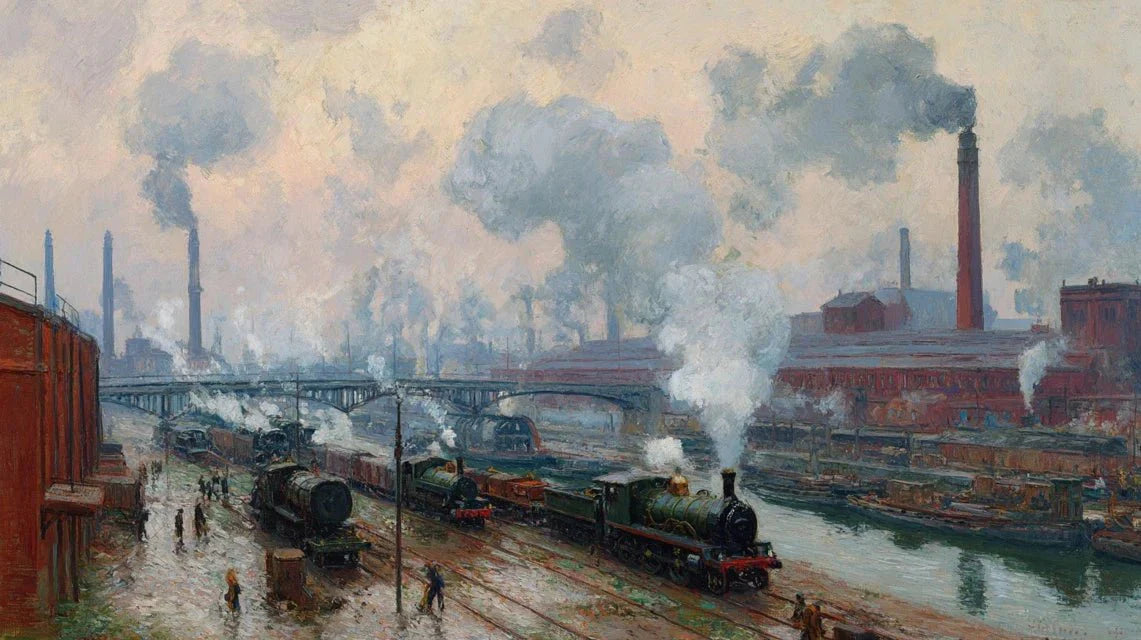
The Parisian industrial suburb becomes unrecognizable. In fifty years, factories devour everything. The famous Argenteuil asparagus fields disappear under concrete. In their place? Chimneys, canals, workshops. Gustave Caillebotte observes this transformation from his studio. Paul Signac and Claude Monet join him in this quest for the new.
Constantin Meunier goes even further. In 1890, he visits Borinage, that Belgian mining basin where everything breathes coal. His painting "In the Black Country" is striking in its intensity. No trees, no blades of grass. Just coal, everywhere. A pure industrial landscape.
These painters document a revolution. They show how the Seine becomes an industrial highway. How the Canal Saint-Denis short-circuits natural meanders. How railways connect Paris to the mines in the North, Belgium, and Germany. Each brushstroke tells this urban transformation.
Artistic Techniques to Capture the Urban Revolution
Monet becomes obsessed with Gare Saint-Lazare. He returns there eleven times. Eleven different paintings to capture variations in light through locomotive steam. His Impressionist technique finds its ideal ground: metal architecture, changing smoke, hurried crowds.
Artists adapt. They now paint outdoors, facing the subject. Recently invented tubes of paint make their lives easier. The train quickly takes them to these new industrial territories. They capture on the spot:
- Factories with long facades punctuated by windows
- Metal bridges spanning rivers
- Mine headframes, those frameworks that overlook the shafts
- Tips, those artificial mountains of mining waste
Photography enters the scene. More precise than the brush, it freezes these industrial landscapes with documentary accuracy. Photographers from the Geographical Society travel the world to bear witness to these upheavals.
Industrial Landscapes of Suburbs by the Impressionists
The Impressionists break the codes. Why paint only rural scenes when real life is bubbling in industrial areas? Pissarro, Renoir, and Degas explore these changing territories with as much passion as the banks of the Seine.
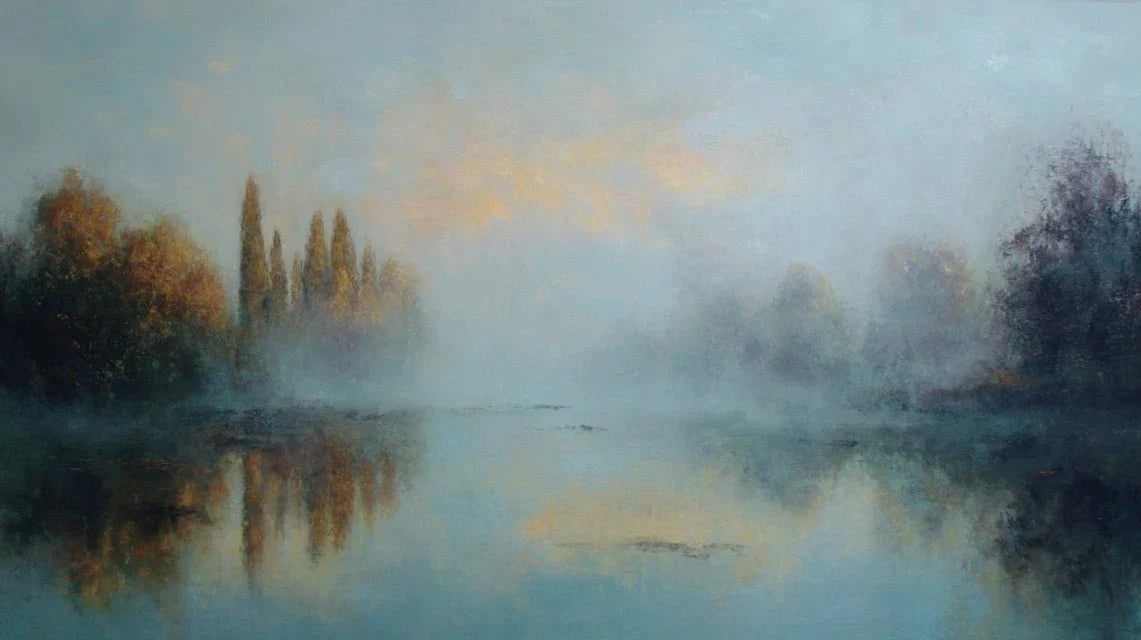
Monet's "Impression, Sunrise" perfectly illustrates this approach. Le Havre awakens in the morning mist. The industrial port emerges from the vapors. Nature and industry confront each other, blend together, create a new world.
Each painter brings their vision. Some romantics dramatize the scene: fiery flames, threatening smoke, heroic workers. Others, adherents of realistic painting, coldly document the transformations. Landscape paintings capture this diversity of approaches.
Art and transformation of urban landscapes by industry
Industry doesn't just transform the landscape; it disrupts lives. Artists understand this and show it. Train stations become symbols. Every morning, thousands of workers rush through them to reach the factories. The "commuter train" enters everyday vocabulary at the turn of the 20th century.
Industrial landscapes also tell social stories. Around coal mines grow worker cities. Mine tailings sculpt new reliefs. Entire neighborhoods emerge in a few years, testifying to an unprecedented urban transformation.
Architecture itself is reinvented. Factory halls impose their volumes. Brick chimneys pierce the sky. Metal structures outline bold geometries. These "industrial monuments" create a new aesthetic that artists rush to document.
These works now exceed their artistic value. They constitute an irreplaceable visual memory and a valuable industrial heritage. When the demolishers arrive, often only canvases and photographs remain to bear witness. Art thus preserves the trace of this urban revolution that has shaped our modern world.
FAQ: Industrial landscapes in art
Which artists primarily painted industrial landscapes in the 19th century?
Impressionists like Claude Monet, Gustave Caillebotte and Paul Signac were among the first to be interested in industrial landscapes. Monet notably created a series of eleven canvases on Gare Saint-Lazare. Constantin Meunier distinguished himself with his dramatic representations of mining basins, particularly with his work "In the Black Country" from 1890.
Why were artists interested in industrial areas?
Artists wanted to bear witness to the radical transformation of their time. The Industrial Revolution was transforming landscapes, lifestyles and social organization. Painting these new territories made it possible to document an unprecedented historical mutation, while exploring new visual aesthetics related to metal structures, smoke and industrial light games.
What is the historical value of landscape paintings today?
These works constitute an irreplaceable visual memory. They document industrial sites that have often disappeared since. When factories are demolished, these canvases and photographs remain the only testimonies of the architecture and spatial organization of the industrial era. They therefore have a double value: artistic and heritage.