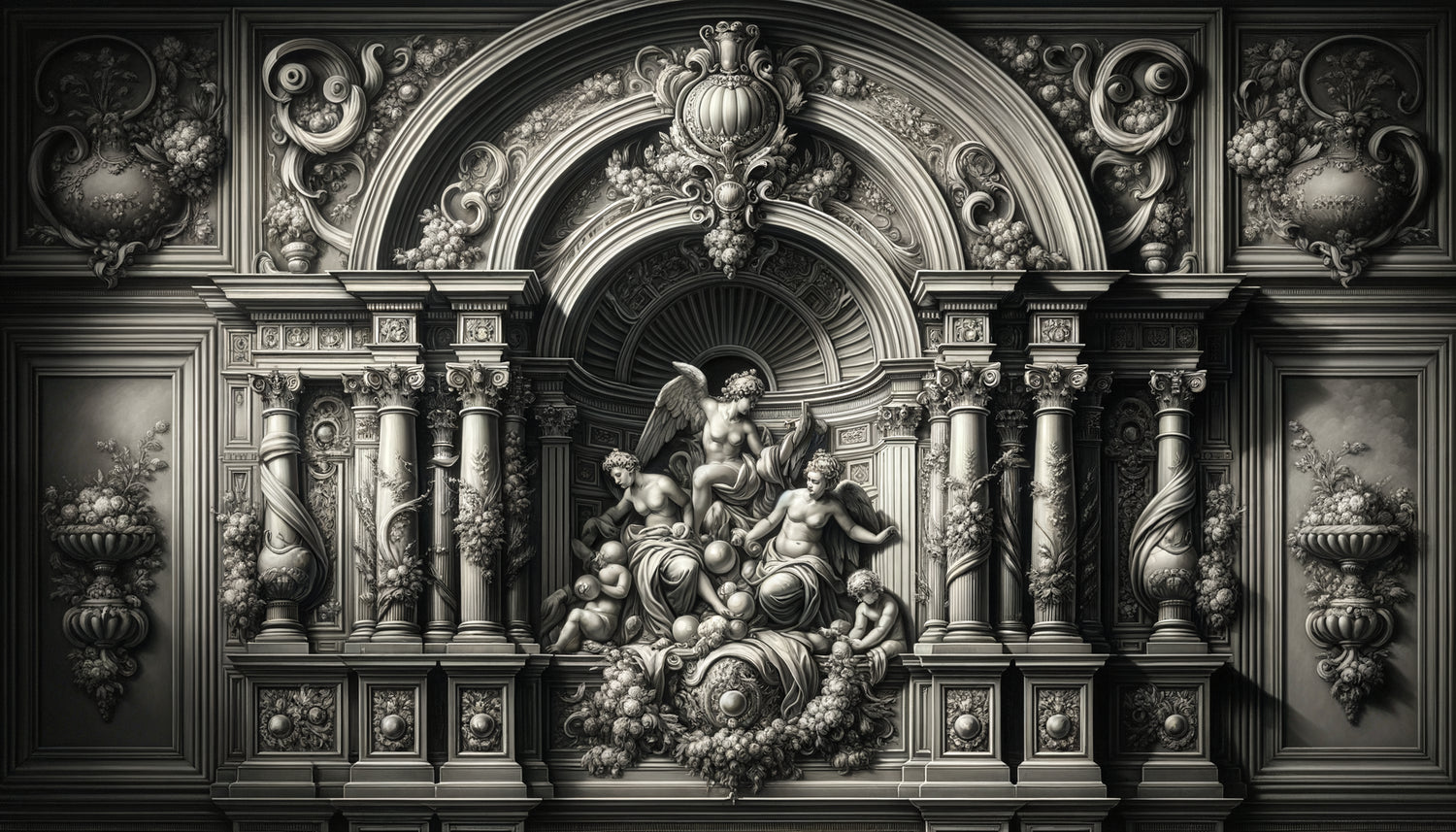
In the workshops of Amsterdam and Antwerp, a question plagues young apprentice artists: is it better to master all techniques or specialize in the delicate art of grisaille? Behind the easels of the 17th century lies a fascinating economic reality, where talent alone does not guarantee prosperity. Some painters accumulate modest orders while others, thanks to a strategic positioning, manage to negotiate three times higher rates for their monochrome works.
Here's what specialization in grisaille brought to 17th-century painters: a higher hourly rate due to the scarcity of skill, privileged access to lucrative ecclesiastical commissions, and artistic recognition opening the doors of European courts. But this strategy also had its risks.
For an artist seeking to live from his art in the creative effervescence of the Golden Age, the dilemma was crucial. Accepting all orders – portraits, still lifes, genre scenes – guaranteed a regular stream of income. But this versatility often prevented achieving recognized and rewarded excellence. Conversely, dedicating oneself exclusively to grayscale shades was a bold gamble.
Rest assured: guild archives and order records allow us today to precisely reconstruct these economic trajectories. The figures reveal surprisingly modern financial strategies, where market positioning and artistic differentiation determined prosperity much more than the simple volume of production.
Let's dive into the economy of workshops to understand how mastering grisailles transformed an artisan into a prosperous entrepreneur, and why this specialization remains a relevant lesson in creative strategy even today.
The hourly rate: when monochrome was worth its weight in gold
In the records of the Saint-Luc guild of Antwerp, a quality grisaille for an altarpiece was negotiated between 80 and 120 florins, against 40 to 60 florins for a polychrome painting of equivalent dimensions. This apparent paradox is explained by the exceptional technicality required: creating the illusion of relief and depth with only shades of gray required absolute mastery of chiaroscuro and tonal modulation.
A competent generalist painter produced about 8 to 12 medium-sized works per year, generating an annual income oscillating between 300 and 500 florins. By comparison, a skilled craftsman earned around 250 florins annually. The versatile painter therefore lived comfortably, no more.
The grisaille specialist, on the other hand, operated differently. Producing only 4 to 6 major works annually, he charged between 100 and 150 florins each, reaching incomes of 400 to 900 florins. His hourly profitability was 60 to 80% higher than that of his generalist colleague. This difference was even greater for prestigious orders: grisaille altarpiece panels ordered by cathedral chapters could reach 200 florins apiece.
Ecclesiastical commissions: the jackpot for specialists
The Catholic Church, particularly after the Council of Trent, represented the main sponsor of religious works. The grisaille adorning the exterior shutters of altarpieces experienced constant demand, as they respected the austerity required during Lent while demonstrating the prestige of the parish.
A specialist recognized as Adriaen van de Velde or the Flemish masters of this register regularly received commissions from religious institutions. These contracts not only guaranteed substantial income but also considerable visibility. Each faithful contemplating the closed shutters of the altarpiece became a potential spectator, a silent recommender.
The generalist painter, even talented, struggled to access these prestigious commissions. Chapters and church factories systematically favored artists who had demonstrated their excellence in this specific register. The reputation as a specialist opened doors for those with broader skills, creating a virtuous circle of orders and recognition.
The network: intangible capital of the specialist
Beyond the raw rate, the grisaille specialist benefited from a major strategic advantage: membership in a restricted network. Ecclesiastical sponsors recommended proven artists to each other. A successful grisaille in Bruges led to an order in Ghent, then in Brussels. This dynamic of recommendation drastically reduced the lean periods dreaded by every independent artist.
The generalist, dispersing their efforts on portraits, landscapes and genre scenes, had to constantly prospect for new clients in different circles. This constant search for orders represented non-billable time, a net loss in their overall profitability.

The risks of positioning: not all specialists prospered
Specialization nevertheless had real dangers. A painter focused on grisaille was heavily dependent on the cycles of construction and renovation of churches. A period of economic crisis, war or religious unrest could brutally dry up the flow of orders. The generalist, diversifying their sources of income, absorbed these cyclical shocks better.
The archives show that only one specialist in three actually achieved prosperity. The other two struggled, prisoners of a positioning too narrow in an insufficient market. What was the difference? The level of excellence reached and the ability to make themselves known beyond their city of origin.
An average specialist earned less than a competent generalist, as they failed to secure either the prestigious commissions reserved for masters or the easy jobs accessible to polymaths. Specialization amplified results: resounding success or crushing failure, rarely anything in between.
The cost structure: unexpected savings of the specialist
Beyond income, let's examine expenses. The generalist painter had to maintain a varied stock of expensive pigments: ultramarine for skies, vermilion for draperies, different yellows, greens and reds. Their workshop resembled an apothecary, immobilizing considerable capital in raw materials.
The specialist in greyscale operated with a reduced palette: vine black, lead white, shadow earths. Their pigment costs represented only 30% of those of a generalist. This substantial saving directly improved their operating margin. On a work billed at 120 florins, their material costs did not exceed 15 florins, against 35 to 40 florins for an equivalent polychrome painting.
This streamlined cost structure also allowed for greater flexibility in difficult times. The specialist could accept reduced rates while preserving their profitability, whereas the generalist, trapped by high fixed costs, could not go below certain thresholds without working at a loss.
Production time: efficiency through repetition
An often overlooked advantage: the learning curve. The specialist, tirelessly repeating the same technical gestures, optimized their production time. Where a generalist would spend three weeks on an unusual grisaille for them, the specialist completed it in ten days, having automated certain processes.
This efficiency mechanically increased their hourly profitability. A simple calculation: 120 florins for 10 days of actual work is equivalent to 12 florins per day, against 8 daily florins for a generalist producing a work at 60 florins in one week.

Intangible prestige: when recognition nourishes the wallet
In the 17th century, the hierarchy of pictorial genres valued specializations differently. Greyscales, associated with sacred art and pure technical virtuosity, conferred a higher prestige than still lifes or tavern scenes. This symbolic status was concretely monetized.
A recognized master in grisaille techniques gained access to aristocratic and scholarly circles. These networks of influence generated lucrative additional commissions: portraits of notables, decorations for patrician homes, paid artistic advice. The direct income from grisaille work sometimes represented less than 60% of the specialist's total income, the rest coming from these peripheral activities made possible by their status.
The generalist, perceived as a skilled craftsman rather than a virtuoso artist, rarely gained access to these lucrative circles. Their versatility paradoxically confined them to a capped social and economic status.
The timeless elegance of monochrome in your interior
Discover our exclusive collection of black and white artworks that capture the sophistication of classic grisaille with a refined contemporary aesthetic.
Economic lessons from an 17th century workshop
What do these economic trajectories of the Golden Age teach us? That strategic specialization, when it achieves excellence, generates profitability greater than versatility. But this economic law is accompanied by a ruthless corollary: specialized mediocrity condemns to poverty more surely than general competence.
The 17th-century grisaille painter reminds us of a timeless truth: in any market, premium positioning on a narrow segment surpasses economically the average positioning on a wide spectrum. This logic transcends eras and sectors.
Financial records also reveal the importance of network and reputation in transforming talent into prosperity. The best unknown artist earned less than the competent specialist benefiting from a network of influential prescribers. Strategic visibility was as valuable as technical skill.
Finally, the optimized cost structure of the specialist conferred superior resilience to crises. This financial flexibility, often neglected in profitability analysis, nevertheless constituted a decisive advantage in the long term.
Visualize your own monochrome masterpiece
Imagine yourself in this Antwerp workshop, slanting light streaming through the high windows, revealing subtle gradations of gray on your oak panel. You have just affixed your signature to an Annunciation in grisaille destined for the cathedral's retable. The chapter will pay you 140 florins in fifteen days, more than the semi-annual income of a craftsman.
This prosperity is not the result of chance, but of a deliberate strategic choice: concentrate your creative energy on a demanding register, resist the temptation of easy diversification, tirelessly perfect your mastery of chiaroscuro. Your profitability stems directly from your positioning.
17th-century painters offer us a lesson in creative entrepreneurship of astonishing modernity. Their dilemma between specialization and generalism still resonates today in any professional journey. The austere elegance of their grisailles reflects the economic discipline that underpinned their prosperity: do less, but better, and systematically build the recognition that transforms talent into sustainable income.
FAQ
How much did a specialist in grisailles actually earn in the 17th century?
A recognized specialist in grisailles generated between 400 and 900 florins annually, or two to three times the income of a qualified craftsman of the time. Their works were sold individually for between 80 and 200 florins depending on complexity and the prestige of the client. For comparison, a competent generalist painter earned rather 300 to 500 florins annually. This substantial difference was explained by the scarcity of expertise, the prestige associated with ecclesiastical commissions, and the higher hourly rate made possible by specialization. However, not all specialists reached these heights: only the top third really prospered, others struggling to find enough orders to justify their narrow positioning.
Why were grisailles better paid than color paintings?
This apparent paradox rests on several economic and artistic factors. Technically, creating the illusion of relief, depth and volume using only shades of gray required exceptional mastery of chiaroscuro and tonal modulation. This difficulty significantly reduced the number of artists capable of producing quality grisailles, creating a scarcity valued by the market. Culturally, grisailles mainly adorned the exterior shutters of prestigious altarpieces, associated with the sacred and the austerity of Lent, conferring a high symbolic status. Finally, economically, constant ecclesiastical demand met a limited supply of competent specialists, allowing them to negotiate premium rates. The combination of scarcity and prestige created a significant price premium.
What risks did a painter take by specializing exclusively in grisailles?
The specialization entailed three major risks. Firstly, dependence on a narrow market: grayscale orders primarily came from religious institutions, making the specialist vulnerable to church construction cycles and economic or religious crises. A generalist, diversifying income sources, absorbed these shocks better. Secondly, the amplifying effect: specialization magnified results, leading either to dazzling prosperity (for the top third) or crushing failure (for those not reaching recognized excellence). A mediocre specialist found themselves excluded from prestigious orders without being able to fall back on basic work accessible to generalists. Thirdly, strategic rigidity: it was difficult to pivot after years dedicated exclusively to grayscales if the market evolved unfavorably. This specialization therefore constituted a bold gamble rather than a guarantee of prosperity.