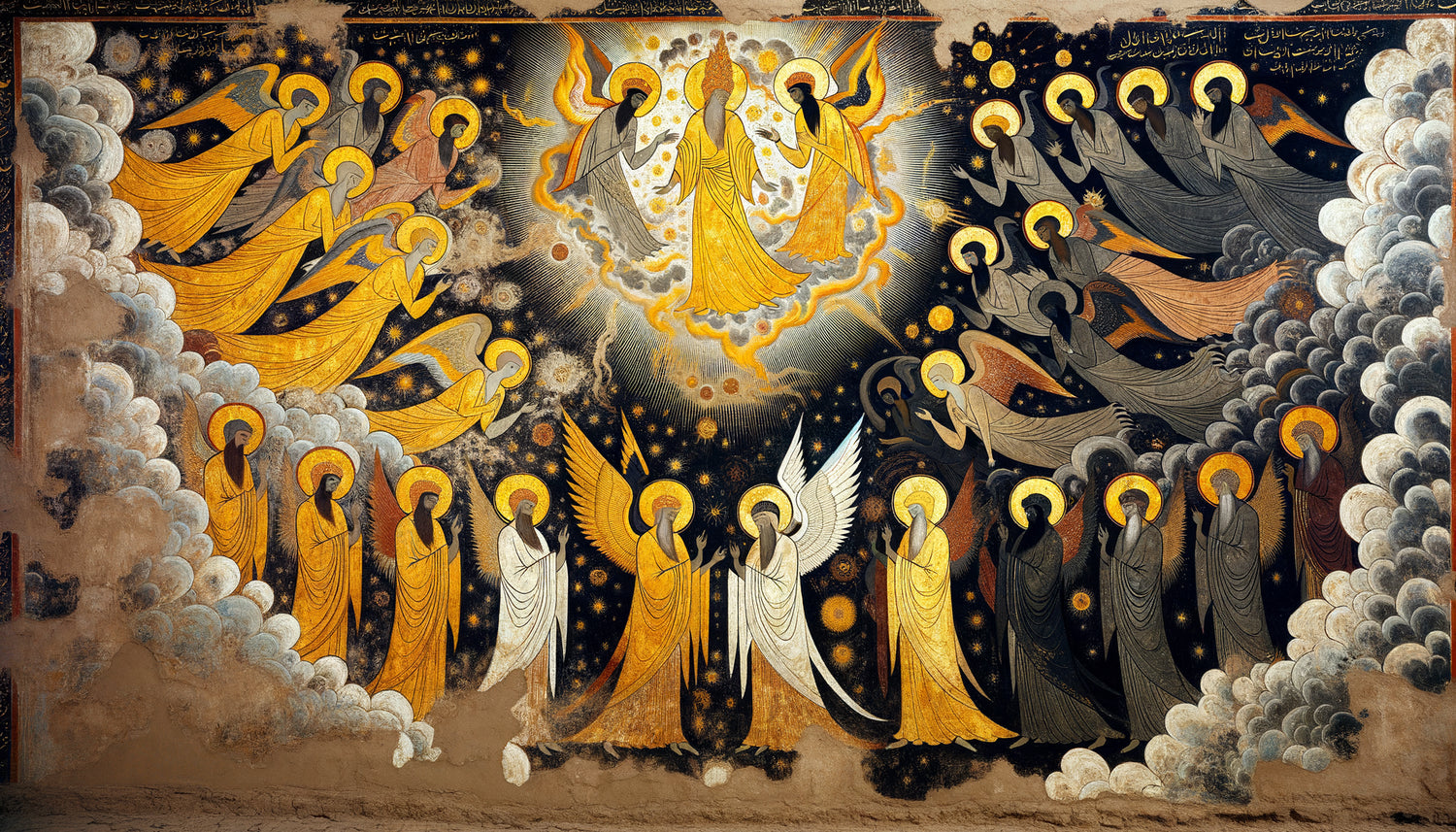
In the ruins of a forgotten temple in the Taklamakan Desert, I first contemplated these millennial Manichaean frescoes. What struck me was not their antiquity, but this visual power: luminous figures bursting forth from absolute blackness, as if the artist had wanted to paint the invisible. This radical opposition between light and darkness was not simply an aesthetic choice, but the beating heart of a cosmic vision.
Here's what the light-dark contrast in Manichaean murals brings: a visual representation of the cosmic struggle between Good and Evil, a universal language transcending words, and an invitation to spiritual transformation through image. This pictorial duality is the very foundation of Manichaean art.
Many think that these ancient frescoes are merely beautiful historical relics, archaeological curiosities with no connection to our modern sensibilities. Yet, their visual language continues to influence our relationship to contrasts in contemporary art and decoration.
Understanding this symbolism requires no pointed theological knowledge. It is enough to open your eyes to what those artists of yesteryear wanted to convey: a vision of the world translated into pure chromatic opposition.
I invite you to discover how these Manichaean murals used contrast as a spiritual language, and why this approach still resonates in our interiors today.
Manichaeism: when cosmology becomes image
Manichaeism, a religion founded in the 3rd century by Mani in Persia, was based on a fundamental principle: the universe is the theater of an eternal confrontation between the kingdom of Light and that of Darkness. This dualistic vision was not metaphorical but literal.
In the Manichaean murals discovered in Turfan, Khocho or Bamiyan, this cosmology takes visual form. Manichaean artists developed a specific pictorial vocabulary where each chromatic element carried a precise theological meaning. Light represented the spiritual realm, the divine origin, primordial purity. Darkness embodied matter, the trap, ignorance.
What fascinates about these frescoes is their formal radicality. No complacent half-tones, no gentle transitions. Bright white borders on deep black, creating a visual tension that translates the cosmic tension itself.
Pictorial techniques at the service of the sacred
Manichaean artists perfectly mastered the art of contrast. On the walls of temples, they used natural pigments of remarkable intensity: lead white, carbon black, lapis lazuli for deep blues that further accentuated the oppositions.
The technique of layering created striking effects of depth. The luminous figures seemed literally to emerge from the darkness, like souls extricating themselves from matter. This three-dimensional dimension gave Manichaean murals a nearly living presence.
The symbolic use of luminous halos
In these frescoes, the sacred figures bear radiant golden or white auras, contrasting with dark backgrounds. These halos are not decorative: they materialize the presence of divine Light in the world of darkness.
The Manichaean elects depicted in these murals appear as bearers of light, their entire body radiating against the surrounding darkness. This representation translated the very mission of the believer: to be a fragment of light prisoner of obscure matter, aspiring to return to its source.

The spiritual geography of the frescoes
The spatial organization of Manichaean murals followed a vertically meaningful logic. The top of the compositions bathed in light, representing the celestial realm. The bottom plunged into darkness, symbolizing the material world.
This stratification created an upward movement. The gaze of the faithful was naturally drawn upwards, towards the light, reproducing the spiritual path itself. Darkness was never shown as a void, but as a dense presence, almost palpable, from which light had to tear itself away.
In Manichaean temples, the architecture itself amplified this effect. The frescoes were positioned so that natural daylight gradually illuminated them, creating a living spectacle where the contrast evolved with the hours.
Beyond good and evil: a nuanced reading
Contrary to a simplistic interpretation, the light-darkness contrast in Manichaean murals does not reduce to a primary moral opposition. Manichaean artists expressed a more subtle vision: darkness is not evil to be destroyed, but ignorance to transcend.
This nuance appears in the pictorial treatment itself. The dark areas are never repulsive or monstrous, but simply obscure, lacking knowledge. Light does not crush the darkness, it reveals and transforms.
Influence on later sacred art
This approach to contrast profoundly influenced the religious iconography of Central Asia and even, indirectly, certain aspects of Eastern Christian art. The chiaroscuro of Renaissance masters also owes something to this tradition of sacred contrast, even if the links are indirect.
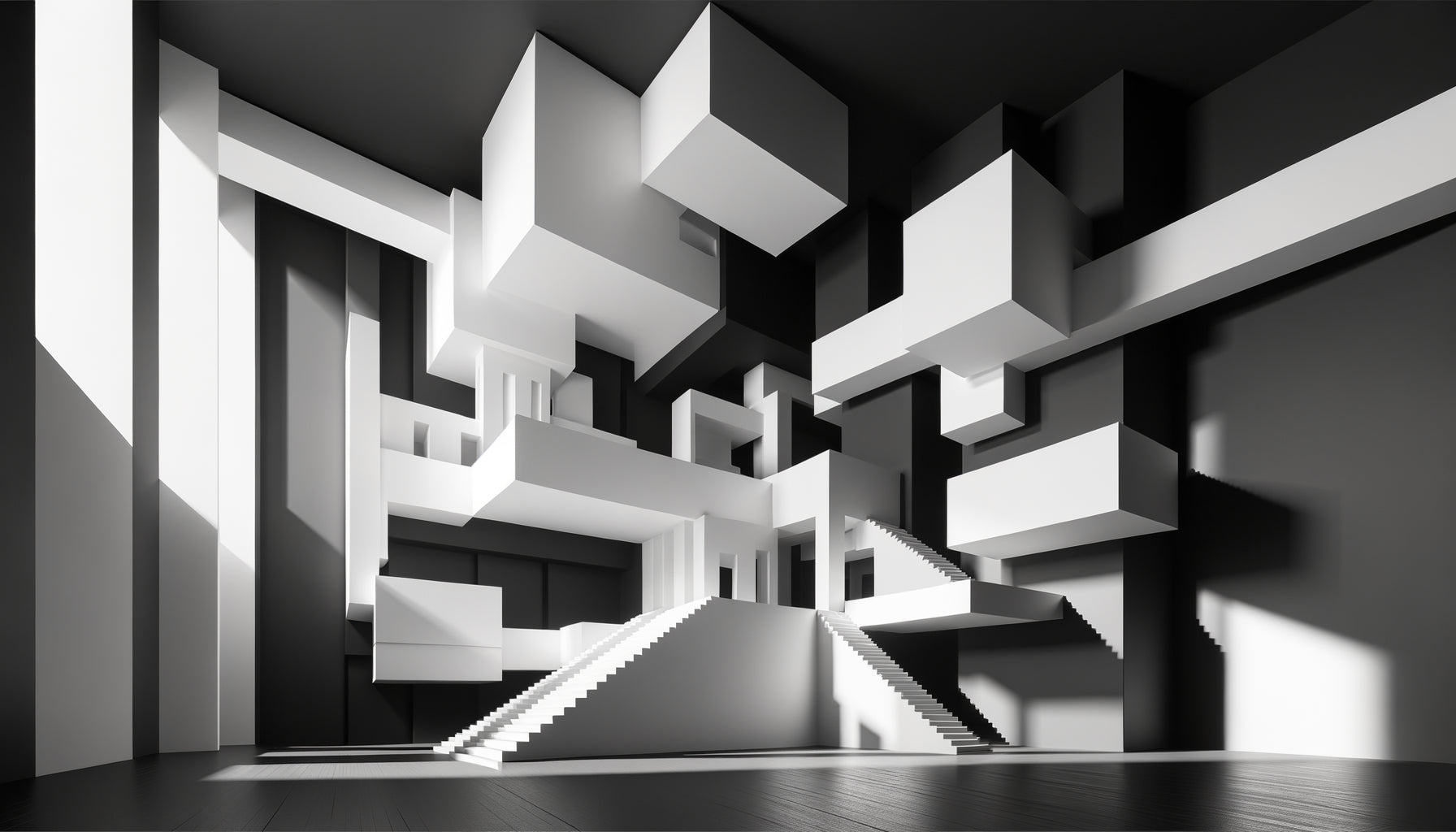
Today, when we use strong contrasts in our interiors, we unconsciously reactivate this visual heritage. A black and white painting in a modern living room carries within it the distant echo of these Manichaean murals.

When darkness makes the light shine
The genius of Manichaean artists lay in this understanding: light only exists fully by contrast. Without darkness, it would be invisible, undifferentiated. It is the obscurity that reveals the light, that gives it its power and presence.
In Manichaean murals, the darkest areas systematically surround the brightest figures. This technique creates a halo effect: the light seems to pulsate, alive, conquering. Black is not the enemy of white; it reveals it.
This visual philosophy finds very concrete applications in interior design. A totally clear space lacks depth. The introduction of dark elements, far from darkening it, makes the light vibrate and structures the atmosphere.
Contemporary resonances of an age-old art
These ancient frescoes still speak to us because they touch something universal: our relationship with contrast, opposition, creative tension. In a world that often seeks bland consensus, they celebrate the power of radical affirmation.
Contemporary minimalist aesthetics, with its refined black and white games, intuitively finds some principles of Manichaean murals: clarity through contrast, intensity by contrast, beauty by tension.
Photographers, graphic designers, interior architects: all work with the same fundamental material that Manichaean artists explored over a thousand years ago. The light-darkness contrast remains a primordial visual language, capable of immediately touching our sensitivity.
Let contrast transform your space
Discover our exclusive collection of black and white paintings that capture the timeless power of contrast and bring depth and character to your interiors.
The living legacy of a dualistic vision
Manichaean murals have practically disappeared, destroyed by time and persecution. But their visual language has survived, spread through the centuries and cultures. Each time an artist uses strong contrast to create meaning, they reactivate this heritage.
What makes these frescoes so powerful is their refusal of aesthetic compromise. They assert that some truths can only be expressed by radical opposition, by the visual shock that awakens the gaze and the mind.
In your interior, daring contrast means accepting this millennial lesson: beauty often arises from tension, from the meeting of opposites, from that silent dialogue between light and darkness that Manichaean artists brought to its purest expression.
Imagine your space transformed by this understanding. A light wall receiving a work with affirmed contrasts. The room changes dimension, gains depth, presence. You have created, on your scale, what the Manichaean frescoes accomplished: a point of visual tension that structures and dynamizes the entire space. Start simply, observe the effect, and let contrast reveal the light in your daily life.