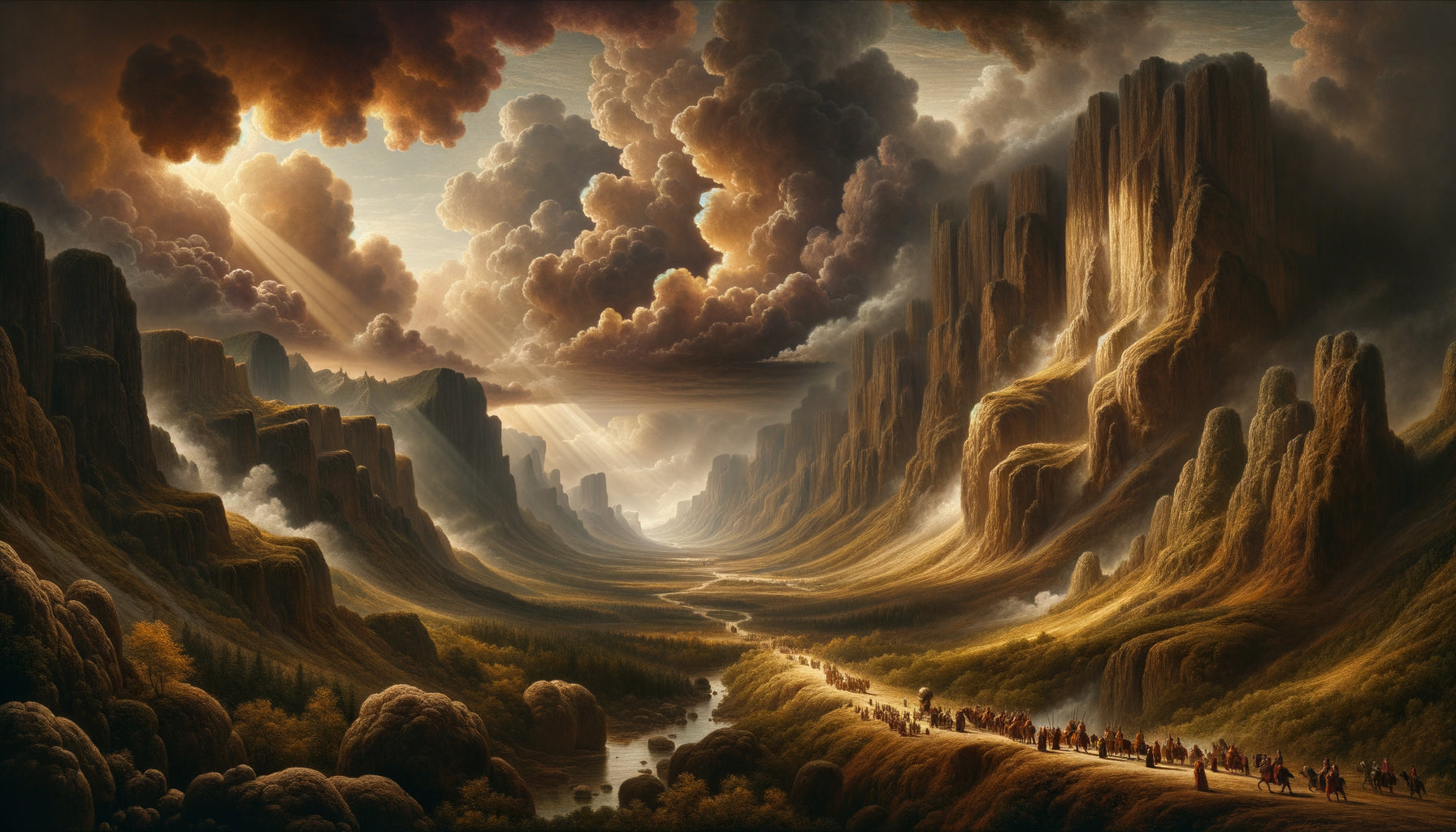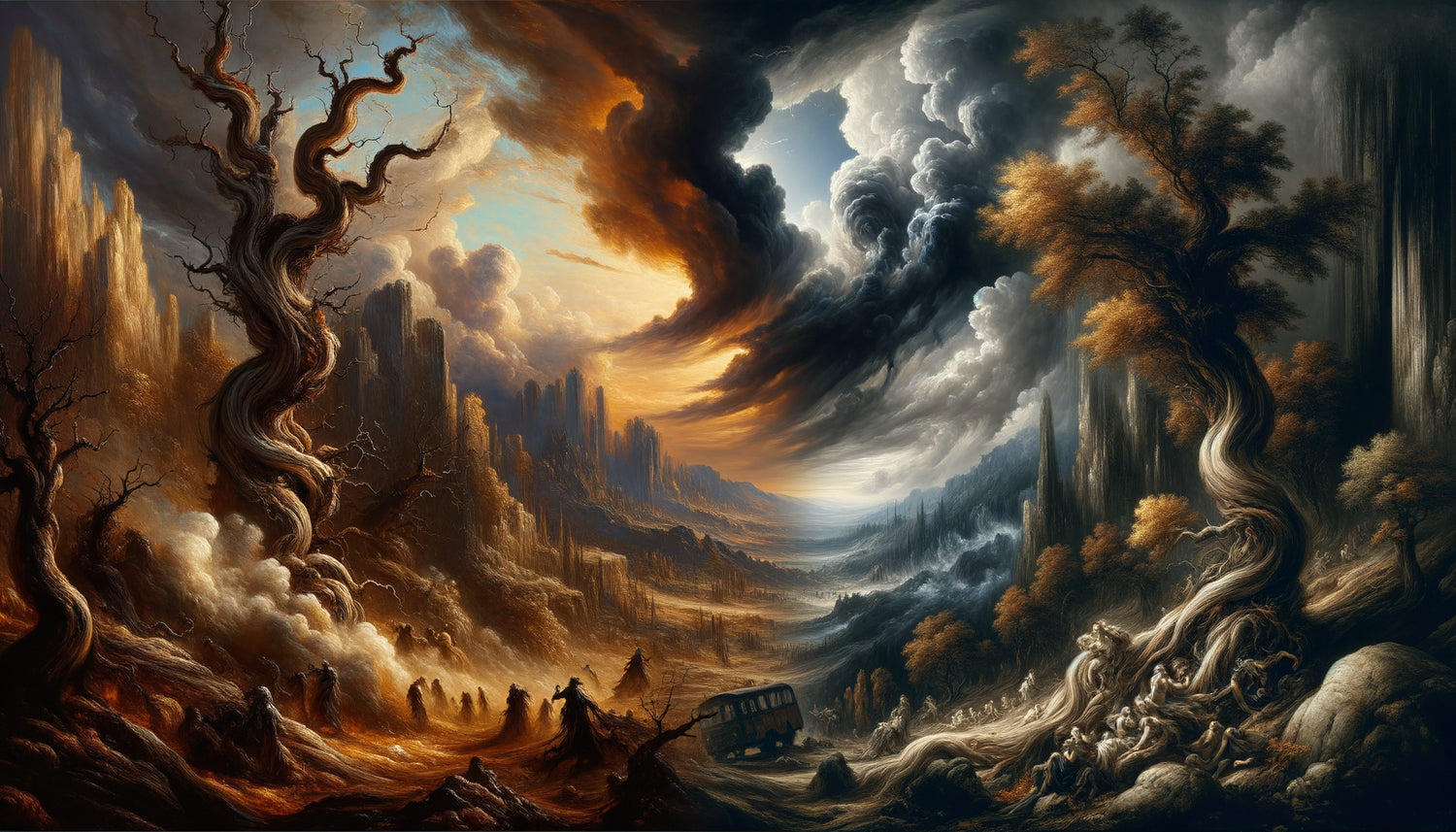
Imagine yourself facing a canvas where the storm still seems to rumble, where the rocks appear to vibrate with a wild energy, where each brushstroke captures the fleeting moment of lightning flashing across the sky. That's exactly what Magnasco’s landscapes evoke when discovered in the dimness of a museum: a visual shock, a breath taken away, a raw emotion that crosses centuries. Here's what Magnasco’s nervous and rapid touch brings to our contemporary interiors: a dramatic energy that transforms any space into an emotional theater, a gestural authenticity that dialogues with modern art, and that magnetic presence that captures the gaze like a storm captures attention. How many times have you felt frustrated by these perfectly polished academic landscapes, technically flawless but terribly... boring? These compositions where everything is so clean, so finished, that they look like photographs before their time? Rest assured: Alessandro Magnasco felt the same impatience at the beginning of the 18th century. And his response? A pictorial revolution that still shakes walls three centuries later. I will reveal to you why this rapid gesture was not a technical defect, but a radically modern artistic vision.
The urgency of the gesture: when the brush captures the moment
In my restoration workshop, I have spent hundreds of hours with my nose glued to Magnasco’s landscapes, magnifying glass in hand, analyzing each layer of pigment. And believe me, what looks like spontaneity from the exhibition hall reveals a brilliant pictorial strategy under the microscope's eye. This nervous touch that Magnasco deploys is not the result of an imperfect technique or incomplete training - it’s a deliberate, almost transgressive choice for his time.
Unlike his contemporaries who spent weeks polishing their surfaces until erasing any trace of brush, Magnasco leaves the visible gesture, almost palpable. His trees twisted by the storm are born from a few lightning strokes, his rocks emerge from touches of impasto applied with astonishing velocity. This speed of execution creates an extraordinary visual tension: the viewer's eye never finds rest, it is constantly solicited, tossed from one element to another as in a real squall.
A reduced palette for maximum intensity
I analyzed the pigments of several Magnasco’s landscapes: ochres, umbers, lead white, a few touches of Prussian blue. A deliberately restricted palette that forces the artist to build his dramatic effects not by color, but by gesture and matter. This economy of means paradoxically amplifies the emotional impact. Every touch counts, every brushstroke carries its expressive weight.
The frozen movement: capturing the ephemeral on canvas
What fascinates about Magnasco’s quick touch is that it generates a perpetual illusion of movement. His tormented skies seem to truly swirl, his waterfalls appear to actually flow, and his tiny figures give the impression of struggling against the elements. How does he achieve this dynamic effect with simple oil paint?
The secret lies in what I call directional gesture. Observe carefully a Magnasco landscape: each area possesses its own gestural rhythm. Clouds streak across diagonals, trees stretch in trembling verticals, and water fragments into broken horizontals. This orchestration of directions creates a kinetic energy that literally traverses the composition. Your eye cannot help but follow these gestural trajectories, mentally recreating the movement of the artist’s brush.
I discovered during a restoration that Magnasco often worked on prepared dark backgrounds, then added his nervous touches over them in thin and rapid layers. This technique allows the background shadows to show through, creating atmospheric depth while retaining the vibrancy of the final touch. It is this combination - absorbent ground and vibrant surface - that gives this sensation of light captured in urgency, like during a storm that momentarily tears through the darkness.

Why this modernity still resonates today
In our contemporary interiors saturated with perfectly smooth digital images, Magnasco’s landscapes offer a powerful visual antidote. This nervous and rapid touch naturally dialogues with abstract expressionism, gestural art, all these modern explorations of painting as a trace of a body in motion. When you install a quality reproduction of a Magnasco landscape in a minimalist loft or a Haussmann apartment, you create a fascinating bridge between Baroque and modernity.
I recently accompanied a collector who was hesitating between a polished 18th-century landscape and a tormented Magnasco. His decision crystallized when he realized that the rapid gestural touch brought exactly what his refined space called for: humanity, assumed imperfection, raw emotional presence. Where an academic landscape would simply have decorated his wall, the Magnasco truly inhabited it.
Influence on subsequent generations
What makes Magnasco's touch even more fascinating is that it foreshadows pictorial revolutions that would not emerge for much longer. Turner would take up this atmospheric dissolution, the Impressionists would theorize the visible touch, and the Expressionists would exploit gesture as a vector of emotion. Magnasco was simply two centuries ahead of his time, painting with a gestural freedom that his era could not yet fully understand.
The technique behind the apparent spontaneity
Do not be fooled: this nervous touch which seems so spontaneous is the result of absolute technical mastery. Magnasco had an extraordinary intuitive understanding of what I call gestural economy - getting maximum effect with minimal touches. Each brushstroke accomplishes multiple functions simultaneously: defining a form, suggesting a texture, creating movement, establishing tonal value.
I studied his landscapes under raking light to reveal the relief of the pictorial matter. Some areas show an almost violent application, with impasto that creates real reliefs. Other sections reveal transparent glazes applied in a fluid and continuous gesture. This variation in material density contributes to the feeling of urgency: you can physically feel the artist's hand accelerating and slowing down, pressing and skimming.
Magnasco’s landscapes also bear the mark of a practice that few artists dared at the time: alla prima work, meaning direct painting without elaborate preparatory drawing. This frontal approach to the canvas requires absolute confidence in one's gesture, a clear mental vision of the desired effect. No possible regrets, no infinite corrections - just the artist, his brush, and the urgency of capturing a tumultuous inner vision.

How to integrate this energy into your spaces
The power of Magnasco’s landscapes lies in their ability to transform the atmosphere of a room. This nervous and rapid touch generates an energetic field that energizes the surrounding space. In an office, it stimulates creativity and prevents mental stagnation. In a living room, it creates a magnetic focal point that naturally becomes the center of conversations. In an entrance hall, it immediately establishes a dramatic and memorable tone.
I regularly accompany clients in choosing artworks for their interiors, and I consistently recommend allowing Magnasco's landscapes sufficient breathing space. Their gestural intensity requires a certain visual solitude - avoid saturating them with other decorative elements that are too present. A clean wall, directional lighting that reveals the texture of the pictorial matter, and you create a true theater of emotions.
The beauty of this nervous aesthetic is that it adapts equally well to traditional interiors as to ultra-contemporary spaces. In a classic setting, it brings a breath of fresh air, a transgressive energy. In an industrial loft, it adds historical and emotional depth that humanizes architectural rigor. This stylistic versatility is rare and valuable.
Let the storm into your daily life
Discover our exclusive collection of nature paintings that capture this same dramatic energy and emotional presence which transforms a simple wall into an unforgettable visual experience.
The living legacy of a pictorial revolution
When you understand that Magnasco's nervous touch was not a technical limitation but a radical artistic vision, you completely change your view of his works. These sketched landscapes with this urgent gesturalism are not unfinished works - they are manifestos for an emancipated painting, freed from the obligation to polish and lick every square centimeter of canvas.
This speed of execution also conveys something deeply philosophical: the acceptance of impermanence, the celebration of the fleeting moment, the refusal to artificially freeze what is by nature moving and transient. Magnasco's storms last only an instant on his canvas, captured in all their ephemeral violence. Perhaps it is this existential dimension that makes his landscapes so unsettling, so contemporary despite the centuries passed.
In my restoration work, I have the privilege of touching these nervous touches laid down three hundred years ago, of feeling under my gloved fingers the relief left by a lightning gesture. It's a disturbing physical connection with a disappeared artist, as if his creative energy remained trapped in the pictorial matter. This vitality transmitted through the centuries explains why Magnasco's landscapes have lost none of their power of fascination.
Your gaze transformed
Now that you understand the secrets of this bold and rapid touch, you will never look at Magnasco’s landscapes in the same way. You will see in each brushstroke a conscious artistic decision, in each impasto area a dramatic intention, in each visible gesture an affirmation of creative freedom. And perhaps, next time you come across one of his tormented landscapes in a museum or gallery, you will feel that particular shiver - that of recognizing a revolutionary spirit who dared to paint with his whole body, not just his hand.
This gestural energy that runs through Magnasco’s works is a permanent invitation to embrace imperfection, to celebrate movement rather than stillness, to choose emotional intensity over academic correctness. In our interiors as in our lives, we all need this touch of mastered chaos, this channeled storm that reminds us that beauty often lies in what trembles, vibrates and refuses to freeze. So, are you ready to welcome this energy into your space?
Frequently Asked Questions about Magnasco Landscapes
Did Magnasco really paint quickly or is it just a visual impression?
Excellent question that gets to the heart of his technique! Yes, Magnasco worked with a remarkable speed of execution, but this velocity resulted from absolute technical mastery, not any haste. The analyses I have conducted on his works reveal a relatively simple pictorial stratification - few superimposed layers - which confirms a direct and spontaneous approach. But be careful: quick does not mean sloppy. Each bold touch is perfectly placed to create the desired effect. It's like a virtuoso pianist who seems to play effortlessly: behind this apparent fluidity lies years of intensive practice. Magnasco had developed an extraordinary gestural memory that allowed him to instinctively place the right touch in the right place. This speed of execution was also a technical necessity: oil paint begins to dry, and to obtain those characteristic atmospheric blends, it was necessary to work while the material remained malleable. So yes, he painted quickly, but with the intelligence of gesture that only relentless practice allows.
Is a Magnasco landscape suitable for all interior styles?
That’s a question my clients ask me constantly, and my answer always surprises them: yes, absolutely, but with an important nuance. Magnasco’s landscapes possess this rare quality of dialoguing as well with the classic as with the contemporary, but they require a certain decorative confidence. These are not discreet works that blend sagely into the decor - these are affirmed presences that transform the atmosphere of a space. In a Scandinavian minimalist interior, a tormented Magnasco creates a fascinating dramatic contrast that avoids the blandness of all-white. In a Haussmannian apartment with majestic moldings, it brings an emotional intensity that prevents the decoration from turning into a frozen museum. Even in a refined industrial loft, its nervous gesture adds an organic and human dimension that softens architectural rigor. The secret is to give him enough breathing room and suitable lighting that reveals the richness of his material. Simply avoid drowning it in an overloaded environment where its particular energy would be diluted. If you like strong and assumed atmospheres, Magnasco is your perfect ally, whatever your style.
How to recognize a good reproduction of a Magnasco landscape?
Ah, a crucial question that I cannot stress enough! The nervous touch of Magnasco poses a particular challenge in terms of reproduction: it is precisely the relief of the pictorial material, the texture of the impasto, the variation in density of the layers that create the essential part of its visual impact. A simple flat print, however high its resolution, completely betrays the essence of his work. Look for reproductions on textured canvas with a final varnish that recreates the characteristic glazing of old paintings. The best reproductions use relief printing techniques that simulate the variable thickness of the original material. Examine the shadow areas carefully: they must retain depth, not appear as simple black flats. The quick touches in the skies and foliage must remain individually readable, not merge into an indistinct mash. Also be wary of formats that are too small: Magnasco’s landscapes lose much of their power below 60-70 cm wide. If possible, compare with a museum-quality reproduction - your eye will immediately understand the difference between a basic mechanical print and a reproduction that truly respects the materiality of the original work. A slightly higher investment in a quality reproduction radically changes the daily experience of the artwork.