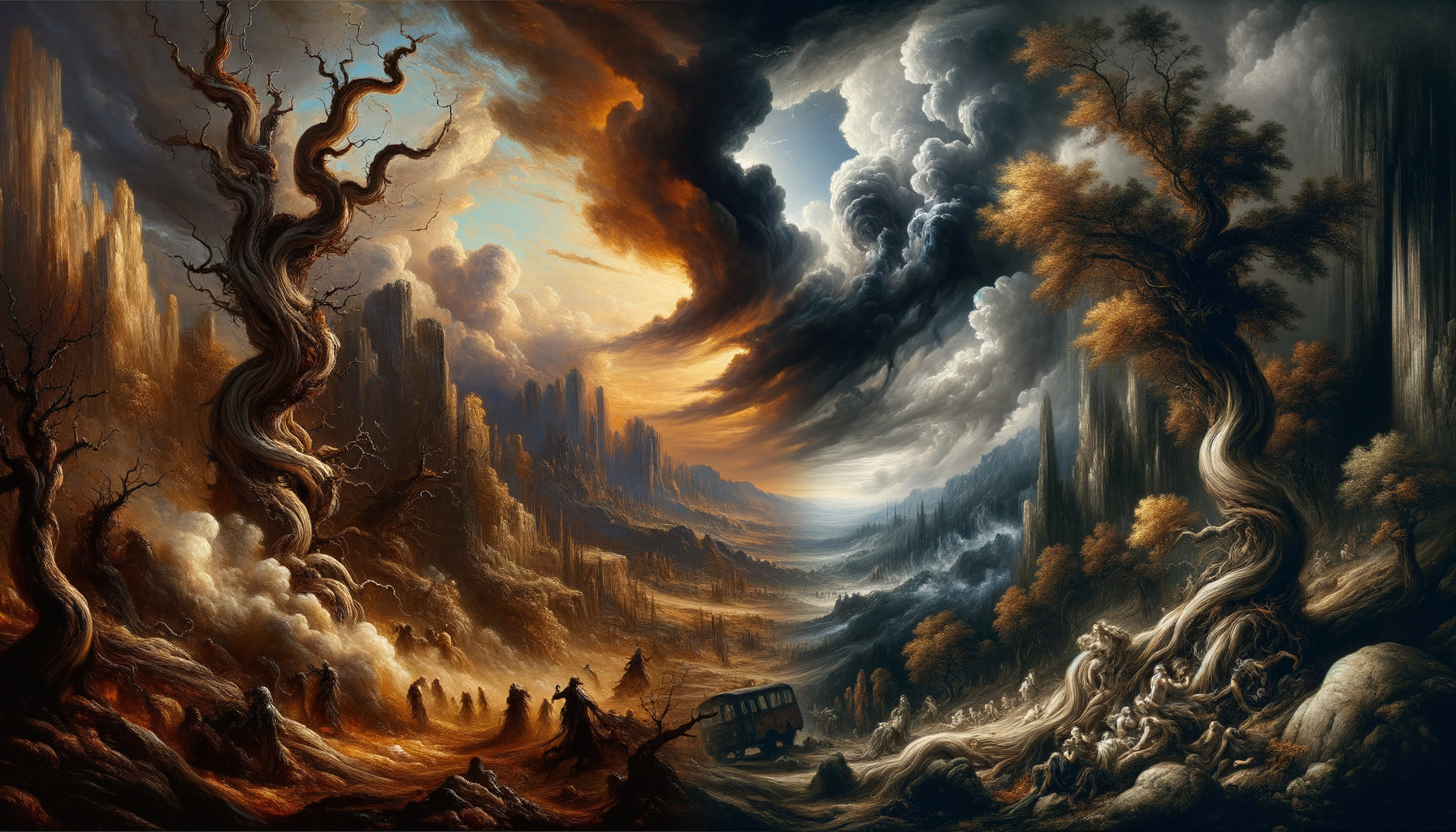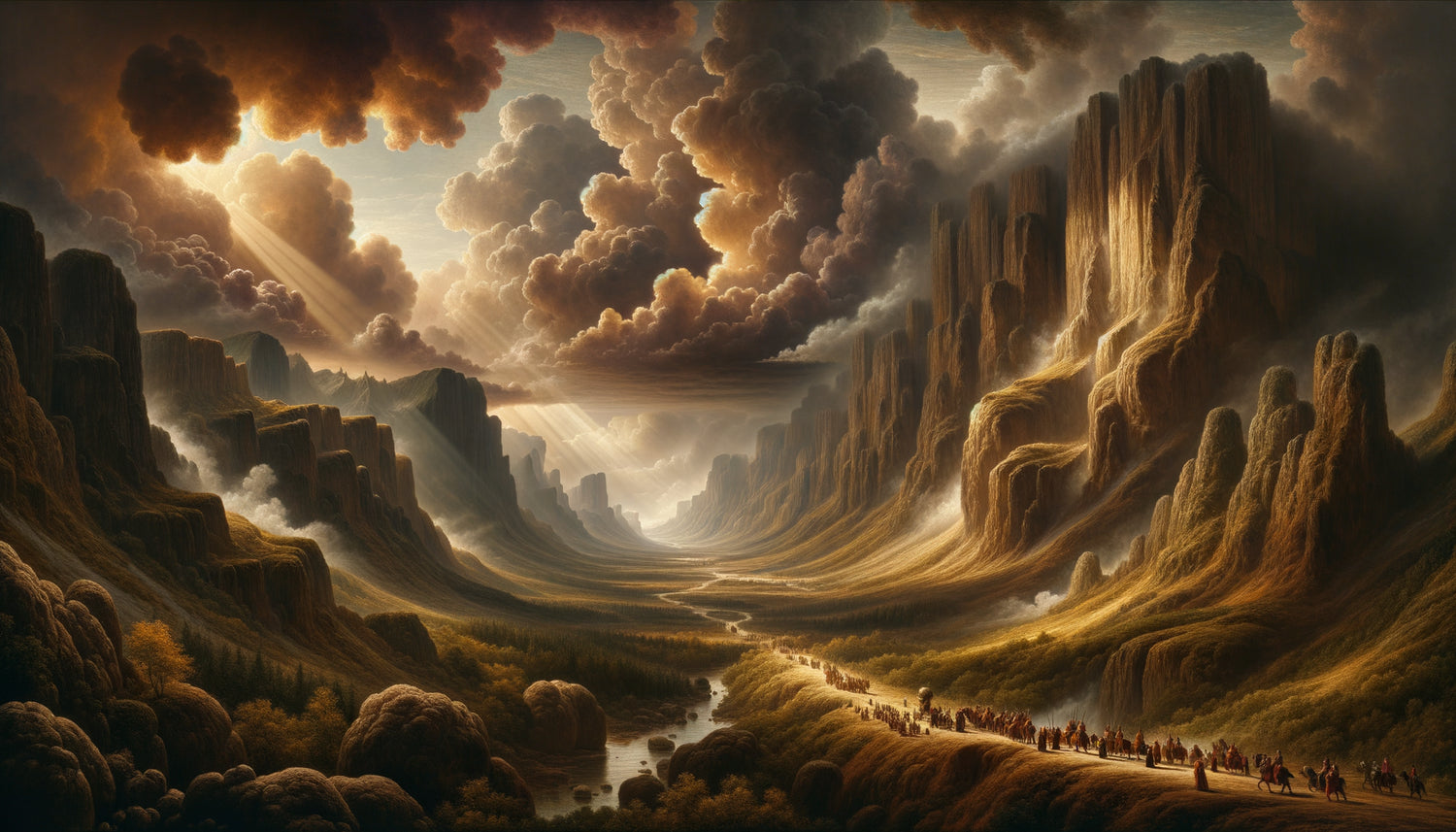
The first time I observed a large baroque landscape during an appraisal at Christie's, I almost missed the essential. As hypnotized by those majestic mountains and ancient ruins dominating the composition, I nearly ignored these tiny silhouettes lost in the foreground. Then my mentor whispered to me: 'Look where your eye travels. It is not the mountains that tell the story.'
This is what the narrative function of the small figures in large baroque landscapes truly brings: they humanize divine immensity, create a visual path that guides your gaze through the canvas, and transform an impressive decor into a true emotional story. These tiny characters are not mere decorative details, but the true narrators of the work.
Many art lovers hesitate to invest in these monumental landscapes, finding these small figures too discreet or insignificant to justify the dramatic power of the whole. You may wonder why these baroque masters devoted so much talent to painting barely visible silhouettes.
Rest assured: this apparent tension between grandeur and smallness reveals all the narrative sophistication of the Baroque era. Once decoded, it completely transforms your way of appreciating these masterpieces and decorating your spaces with reproductions that tell a story.
I propose that we discover together how these small figures secretly orchestrate all the visual dramaturgy of large baroque landscapes.
The Baroque paradox: when the infinitely small tells the infinitely great
In 17th-century large baroque landscapes, the disproportion between human scale and that of nature is never accidental. Painters like Salvator Rosa, Claude Lorrain or Nicolas Poussin perfectly mastered this contrast to convey a profound philosophical message.
These small figures embody the human condition in the face of divine grandeur and the forces of nature. When you observe a stormy landscape with its jagged rocks and tormented sky, notice how these fragile silhouettes – a shepherd, travelers, fishermen – emphasize the immensity of the elements. This narrative function transforms the painting into a meditation on man's place in Creation.
I have noticed during my appraisals that the most discerning collectors specifically seek this dramatic tension. A baroque landscape without human figures loses this metaphysical dimension which is its true value. The characters serve as an emotional scale: the more vulnerable they appear to the immensity, the more the painting resonates with our own sense of humility.
Figures as invisible guides of the gaze
The narrative function of the small figures also relies on an ingenious visual strategy. These characters are never placed randomly: they create an optical path that directs your eye through the composition.
Observe how Baroque masters generally arrange their figures in the foreground, often slightly off-center. Your gaze begins with these recognizable silhouettes – a hat, a cape, a pilgrim's staff – then naturally follows the direction of their gaze or movement towards the bottom of the painting. This narrative function transforms the viewer into a traveler who gradually enters the landscape.
In Claude Lorrain’s Baroque landscapes, I have often analyzed how groups of figures are arranged in depth, creating a visual rhythm. A first silhouette in the foreground, then a group at mid-distance near a bridge, finally a distant caravan on the road winding towards the horizon. This orchestration literally guides your exploration of the canvas.
The power of gestures and interactions
The small figures in these compositions are never passive. Even tiny, they perform actions that enrich the narrative: a character points to a distant waterfall, shepherds converse while guarding their flocks, sailors bustle on a pier.
These micro-narratives create a sense of time. The Baroque landscape is no longer a frozen view but a moment captured in the flow of daily life. This subtle animation explains why these paintings never tire: with each observation, you discover new scenes, new stories within stories.

When characters embody mythological or biblical narratives
The narrative function of the small figures reaches its maximum sophistication when they embody mythological or biblical episodes. In this case, their smallness serves a double purpose: to integrate the sacred anecdote into a grandiose natural setting, while inviting the viewer to an effort of identification that reinforces engagement.
I had the privilege of examining a Poussin depicting the Flood where human and animal figures, tiny in the face of raging waters and submerged mountains, transformed the biblical drama into a universal experience of catastrophe. This narrative approach allows the Baroque landscape to transcend simple illustration to become moral commentary.
In grand baroque landscapes with mythological subjects – the flight to Egypt, Orpheus charming the animals, Mercury and Argus – the small figures function as erudite quotations. Their identification requires culture and attention, rewarding the cultivated viewer while offering immediate beauty to the novice eye.
The subtle balance between architecture and humanity
Another essential narrative function of these characters concerns their relationship with architecture. Baroque landscapes are full of ancient ruins, temples, aqueducts and bridges. The small figures establish the monumental scale of these constructions while also humanizing them.
At a memorable auction, I compared two views of Roman ruins. In the first, without figures, the architecture seemed abstract, almost photographic. In the second, a few silhouettes of peasants crossing an arch transformed the composition: suddenly, one felt the weight of history, the contrast between past grandeur and present humility.
This narrative function creates what I call 'the dialogue of eras'. The small figures contemporary evolving among the ancient vestiges embody the continuity of humanity in the face of the fragility of empires. A powerful philosophical message conveyed by simple silhouettes.
How to recognize a mastered composition
In a grand baroque landscape of quality, the figures never disrupt the overall harmony. They integrate chromatically – clothes whose tones dialogue with the foliage or the sky – and compositionally, occupying transition zones rather than competing with the main masses.
I always teach novice collectors this simple test: mentally mask the figures. If the landscape still works perfectly, then reveal them again and observe how they enrich without weighing down, you have a successful baroque composition.

Transposing this narrative into your contemporary interior
Understanding the narrative function of small figures in grand baroque landscapes transforms your decorative approach. These works are not just spectacular panoramas, but layered visual narratives that gain by being discovered progressively.
In a living room or library, a baroque landscape with its tiny figures creates a contemplative window. Unlike works saturated with details in the foreground, these compositions invite the eye to travel, to escape, to dream. They generate a mental space of breathing particularly valuable in our urban interiors.
I recently accompanied a client who was hesitating between a contemporary mountain photograph and a reproduction of a baroque landscape. The presence of these small figures ultimately swayed his decision: 'They remind me that even when facing monumental challenges, humanity perseveres,' he confided in me. This emotional resonance goes far beyond pure aesthetics.
What this narrative sophistication teaches us today
The narrative function of these tiny figures reveals an essential lesson about visual communication: sometimes suggesting is better than dominating. Baroque painters could have placed their figures in majesty at the center. They chose strategic discretion.
This approach respects the intelligence of the viewer, inviting them to explore rather than to be overwhelmed. Large baroque landscapes function like visual enigmas where each observation reveals new layers of meaning. It is precisely this that gives them their timelessness: they never run out.
In my practice as a curator, I have found that works that captivate enduringly always combine monumentality and intimacy, spectacle and secret. The small figures in these vast landscapes perfectly embody this balance. They whisper where others would shout.
Let yourself be captivated by these timeless visual narratives
Discover our exclusive collection of nature paintings that capture this same narrative sophistication, where each detail tells a story and invites contemplation.
Your gaze transformed by these masterpieces
From now on, when you contemplate a large baroque landscape, your eye will instinctively seek out those small silhouettes. You will understand that they are not anecdotal additions but the true orchestrators of emotion. They weave the link between you and the immensity represented.
This narrative function explains why these works cross the centuries without losing their power. They speak to something fundamental in us: our need for meaning when facing grandeur that surpasses us, our search for landmarks in vastness, our desire to tell and hear stories.
Start by carefully observing the quality reproductions or, even better, visit museum collections. Take the time to spot these figures, follow their gestures, and imagine their stories. You will discover that Baroque landscapes are never silent: they whisper millennial stories to those who know how to listen with their eyes.
Frequently Asked Questions
Why did Baroque painters represent their characters so small in landscapes?
This deliberate disproportion served several essential functions. First, it created a dramatic contrast between human fragility and divine or natural grandeur, reflecting the Baroque view of the world. Second, these small figures allowed to give a monumental scale to the natural and architectural elements without saturating the composition. Finally, their reduced size invited the viewer to an observation effort that reinforced their engagement with the work. This narrative strategy transformed a simple landscape into a philosophical meditation on the human condition. Far from being neglected, these tiny silhouettes often concentrated as much technical virtuosity as the main elements.
How to identify the narrative subject in a large Baroque landscape with figures?
Start by locating groups of characters and observe their gestures, postures, and interactions. Often, a character points, kneels or adopts an expressive attitude which constitutes the main narrative clue. Also look for symbolic attributes: pilgrim's staff, discreet halo, specific period clothing. The position of the figures in the composition also provides clues: those placed on the central axis or in areas of light generally mark the heart of the story. Do not hesitate to consult the label or documentation accompanying the work, as many Baroque landscapes illustrate mythological or biblical episodes whose identification considerably enriches appreciation. With practice, you will develop an eye for these micro-visual narratives.
Do these landscapes with small figures suit all modern interiors?
Absolutely, provided that a few integration principles are respected. Large Baroque landscapes bring depth and narrative sophistication to contemporary interiors, creating an elegant contrast with current minimalism. Prioritize contemplative spaces such as living rooms, libraries or bedrooms rather than areas of quick passage. Their often horizontal format adapts perfectly above consoles, sofas or beds. The presence of these small figures humanizes the monumental scale of the landscape, avoiding an overwhelming effect in medium-sized rooms. For truly compact interiors, opt for reproductions of moderate size that retain this narrative quality without visually dominating the space. Framing also plays a crucial role: a simple and clean frame effectively modernizes these classic compositions.