

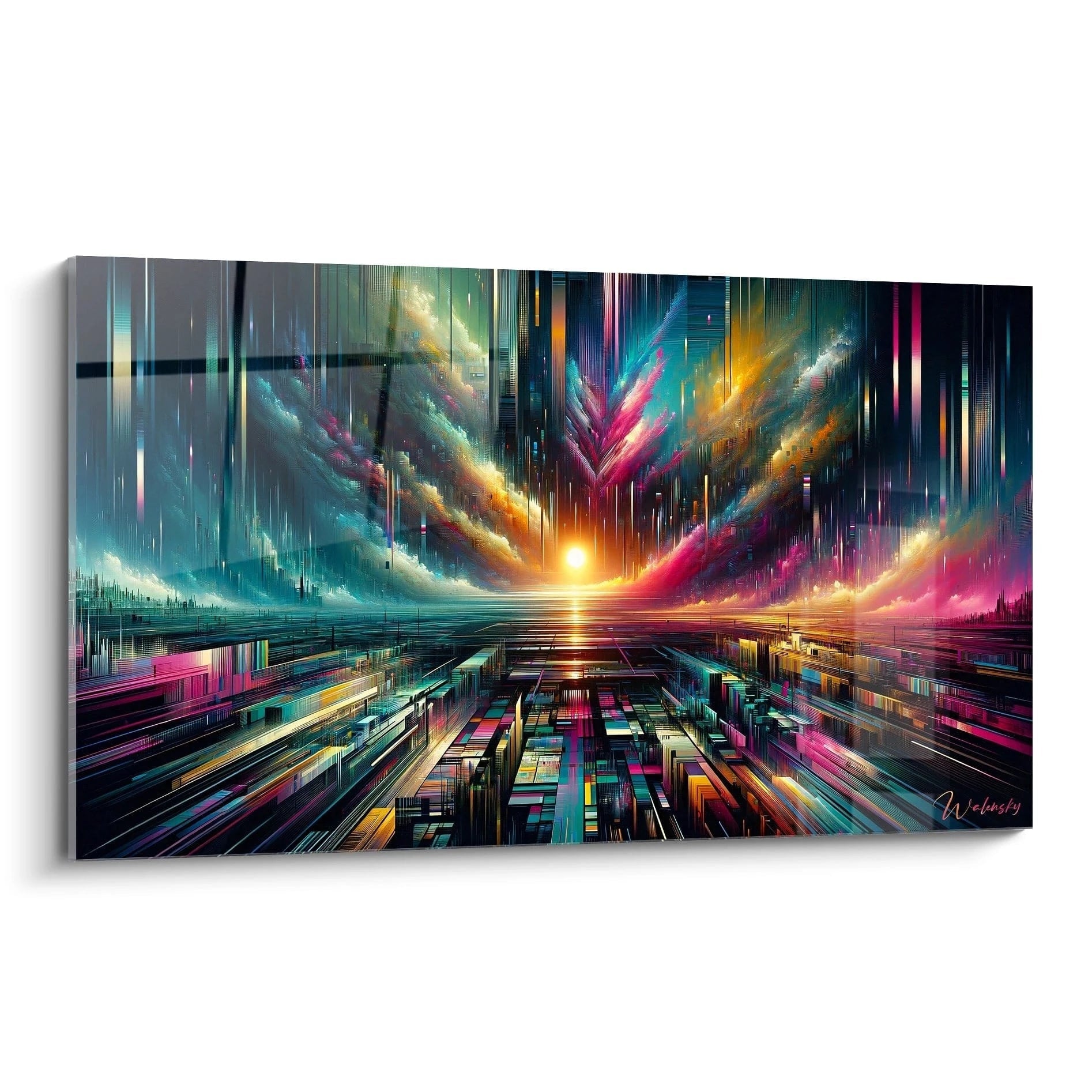
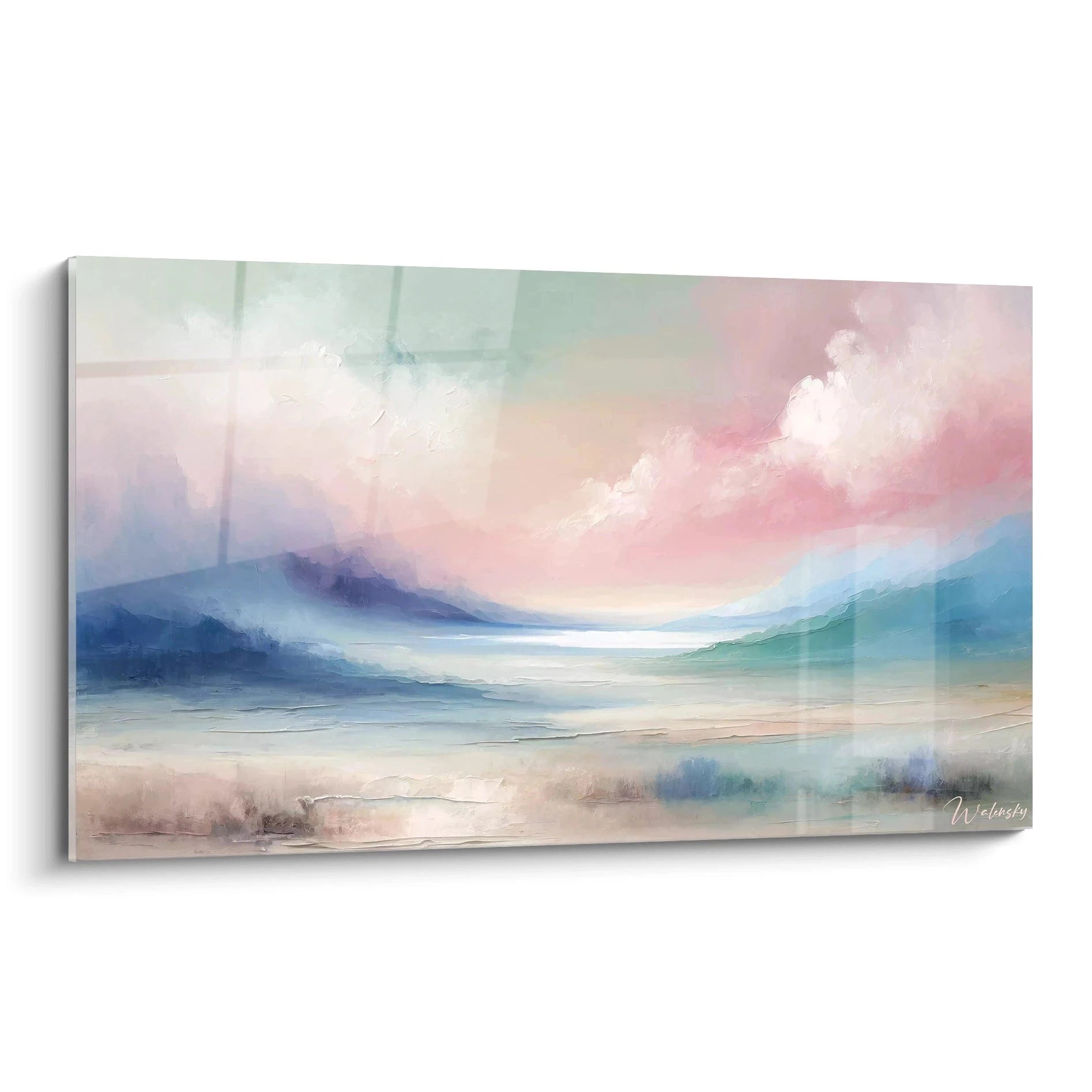

Luxury Minimalist Artwork: Subtle Refinement or Lack of Impact?
October 11, 2025 · 17 min read · by Walensky
You've just invested in this high-end minimalist artwork that you’ve admired for weeks. But now that it graces your wall, a question nags at you: "Isn't it... too understated?"
You observe this refined wall art that seemed so sophisticated in the gallery, and wonder if it has disappeared into your interior. Do your guests even notice it? This feeling of artistic emptiness makes you doubt your decorative choices.
You may have tried adding other elements to "compensate," multiplied lighting points, or even considered replacing it with something more “present.” But nothing works; this impression of lack of visual impact persists.
Rest assured, this questioning is perfectly normal and does not call into question your artistic taste. In reality, luxury minimalist art adheres to specific codes that few people truly master, and it's this lack of understanding that creates this frustration.
By the end of this article, you will know exactly how to reveal the subtle power of your minimalist artwork and create that refined elegance which characterizes the most prestigious interiors.
Why does minimalist art divide so many decoration enthusiasts?
Luxury minimalist art is currently going through a crucial period. Between supporters of "less is more" and those who prefer expressive art, the debate rages. But this hesitation hides a unique opportunity: that of creating an exceptional interior which reveals your refined personality without falling into ostentation.
🎨 Collector's testimony : "I installed a €2000 minimalist artwork in my living room. My friends would walk past it without noticing it. I almost resold it, until an expert showed me how to highlight it. Today, it’s the piece that everyone notices and admires."
Conversation with a decor expert
The golden rule of luxury minimalism: A successful minimalist artwork doesn't reveal itself at first glance, it unfolds gradually, creating an intimate relationship with the viewer. The result? A lasting elegance that never tires, unlike more demonstrative arts.

Our highlight
Structural Luminous Momentum Wall Art - Abstract Minimalist Edition
232,90€
Discover this artwork →Understanding the real expectations behind your frustration
You probably feel one of these situations: your minimalist artwork seems "drowned" in your current decor, your guests never comment on it spontaneously, or you yourself no longer "see" it after a few weeks. This frustration actually reveals a fundamental misunderstanding about the nature of minimalist art.
The problem isn't your artwork, but how we have been conditioned to "consume" art. Our eye, accustomed to constant visual stimulation, has lost the habit of silent contemplation. Your minimalist artwork works perfectly, but in a different register.
Imagine a luxury fragrance: it doesn't impose itself brutally, it creates a subtle olfactory signature that marks the spirits durably. Minimalist art works according to the same principle of discreet elegance.
The first hidden cause: the visually saturated environment
Contrary to popular belief, a minimalist artwork doesn't "lack" impact, it is simply suffocated by its environment. Most modern interiors contain too many visual elements that parasitize the perception of minimalist art.
It's like trying to listen to a string quartet in a nightclub: the beauty exists, but it is drowned in the ambient noise. Your minimalist artwork needs a purified visual setting to express its full power.
This visual saturation explains why you no longer "feel" your work after a few days. Your brain, overwhelmed with visual information, puts minimalist art in the background to focus on the more "noisy" elements of your decor.
💡 Quick test: Look at your wall for 30 seconds while slightly squinting. Does your minimalist artwork stand out naturally, or does it blend into a confused whole? If it's the latter, your visual environment needs simplification.
The second cause: misunderstanding of luxury minimalism
Many confuse minimalism with basic simplicity. Luxury minimalism is not a reduction, it is a concentration of excellence. Every element present must be perfect, from the quality of the support to the millimeter-perfect hanging.
Think of a bespoke suit: it looks simple, but every detail (cut, fabric, finishes) contributes to creating an incomparable elegance. Your minimalist artwork works according to the same principle of discreet perfection.
This misunderstanding leads you to expect an immediate "wow" effect, while luxury minimalism favors lasting satisfaction. Result: you judge your work according to bad criteria and miss its true value.
The third cause: unsuitable lighting
Here's the factor that 95% of enthusiasts overlook: specific lighting for minimalist art. An expressive painting "forgives" approximate lighting, but a minimalist work immediately reveals lighting flaws.
Observe your painting at different times of the day: you will probably notice that it "disappears" at certain hours and "comes back to life" at others. This variation reveals uncontrolled lighting that betrays the beauty of your work.
Inadequate lighting transforms your artistic investment into ordinary decoration, completely negating the sought-after effect of discreet prestige. It's like wearing a luxury jewel in the dark: the value exists, but it remains invisible.
🔍 3 signals that reveal failed lighting :
- Variations in impact depending on the time : Your painting seems magnificent in the morning and dull in the evening, revealing an excessive dependence on natural light
- Parasitic reflections : Bright areas appear on your work, creating visual "holes" that break the minimalist harmony
- Insufficient contrast : Your painting blends into the wall, a sign of lighting that is too uniform and does not reveal its texture and nuances
The trigger factor: the missed staging
Luxury minimalist art is not just hung; it must be orchestrated like a silent performance. This orchestration creates a domino effect: the right location reveals beauty, which attracts the gaze, which creates admiration, which generates conversation. Without this staging, even the most exceptional work remains mute.
The rule of 3 distances : Your minimalist painting must work at 3 meters (overall impact), 1 meter (discovery of details) and 30 cm (intimate contemplation). If one of these levels fails, the work loses its power.
| ❌ Classic approach | ✅ Luxury minimalist approach | 💡 Why it changes everything | 🎯 Benefit obtained |
|---|---|---|---|
| Seeking immediate impact | Cultivating progressive discovery | The eye gets tired less quickly of subtlety | Lasting aesthetic pleasure |
| Multiplying decorative elements | Creating a purified visual frame | Each element is fully revealed | Sophisticated elegance |
| Standard uniform lighting | Specific sculptural lighting | Reveals subtle textures and nuances | Museum effect at home |
| Instinctive placement | Calculated positioning | Optimizes viewing angles | Magnetic presence |

Our favourite
Abstract Movement Painting - Dynamic Spiral - Minimalist Edition
233,90€
Discover this artworkThe 3-step method to reveal your minimalist painting
Rest assured, transforming your frustration into artistic pride doesn't require a decorative revolution. This progressive method, inspired by museum techniques, allows you to reveal the silent power of your work while respecting its minimalist essence. Like a gardener revealing the beauty of a rare plant, each step unveils a new facet of your painting.
🎯 Transformation overview: Step 1 - Create the perfect visual frame (foundation), Step 2 - Master revealing lighting (amplification), Step 3 - Orchestrate the final staging (sublimation). At each step, you will notice a visible improvement in the presence of your work.
Step 1: Create the perfect visual frame
Before optimizing your painting, you must prepare its environment. This fundamental step determines 70% of the final success. Like a jeweler who cleans the setting before placing a diamond, you will create ideal conditions for your minimalist art to flourish fully.
Elements needed for the perfect frame
- Visual breathing space: Free space of 1.5 meters around your painting, free of any competing decorative elements. This area allows the eye to focus exclusively on your art. Avoid cluttered shelves or furniture too present in the immediate vicinity.
- Unified neutral wall: Wall surface of a uniform color, preferably matte, which serves as a "visual silence". Off-white, pearl gray, or very pale beige work perfectly. This neutrality reveals the subtle nuances of your minimalist artwork.
- Controlled chromatic harmony: Color palette around the painting limited to a maximum of 3 shades, in harmony with your painting. This color restriction creates a visual coherence that enhances minimalist art.
Now let's move on to putting this preparation into practice:
Concrete actions for the perfect frame
Clear the visual space: Remove all decorative objects within a 1.5 meter radius around your painting. This creates a "visual silence" that allows the eye to focus exclusively on your art. The goal is to create a pure contemplation zone, free of visual clutter.
⏱️ Time: 15 minutes | ✅ Success when: Your gaze naturally rests on the painting without being diverted by other elements | ⚠️ Attention: Do not create a total void, keep an anchoring piece of furniture at a reasonable distance to avoid the "lost painting" effect
Unify the wall surface: Check that your wall has a uniform color and texture. Correct any visible imperfections (holes, traces, color variations) that would parasitize the perception of your work. A perfect wall reveals the quality of your minimalist art.
⏱️ Time: 30 minutes | ✅ Successful when: The wall becomes "invisible" and serves only as a frame for your artwork | ⚠️ Attention: Avoid walls that are too shiny, which create parasitic reflections
Harmonize the color environment: Identify the dominant colors of your artwork and ensure that the visible elements in the room respect this palette. Store or move objects with discordant colors that disrupt visual harmony.
⏱️ Time: 20 minutes | ✅ Successful when: The entire room seems to "breathe" around your artwork | ⚠️ Attention: Avoid total monochromaticism, retain some nuances to avoid monotony
✨ Verification of the perfect frame: Step back 3 meters and observe your artwork. It should naturally attract your gaze without effort, create a feeling of serenity and reveal its nuances with clarity. If this is the case, your frame is perfect and you can move on to the next step with confidence.
— Our selection


RECOMMENDED PRODUCTS
Step 2: Mastering Revealing Lighting
Now that your frame is perfect, you are going to transform your artwork with sculptural lighting. This step immediately reveals the difference between an amateur and a connoisseur. Lighting becomes your invisible brush which sublimates every nuance of your minimalist work.
Specialized Lighting Elements
- Adjustable 3000K LED Projector: Warm color temperature that reveals natural nuances without distorting colors. Power 15-20W sufficient for a standard artwork. Available in specialized lighting stores, check for flickering which would tire the eye. Diffusing Reflector: Matte white accessory that softens direct light and avoids harsh reflections. Creates an enveloping lighting that reveals texture without creating hard shadows. Essential for minimalist art with delicate surfaces. Dimmer Switch: Allows you to adapt the lighting according to the desired atmosphere and time of day. Look for a model compatible with LED without buzzing. This modulation reveals different facets of your work depending on the moments.
Installation of Revealing Lighting
Position the main projector: Install your LED projector at a 45° angle to the artwork, at a distance of 1.5 meters. This angle avoids direct reflections while revealing textures. The goal is to create sculptural lighting that gives relief to your work.
⏱️ Time: 25 minutes | ✅ Successful when: Your artwork reveals details invisible in ambient light | ⚠️ Attention: Avoid frontal lighting which "flattens" the minimalist work
Adjust intensity and diffusion: Adjust the dimmer to obtain a lighting that is twice as intense on the artwork than on the surrounding wall. Add the reflector to soften contrasts that are too marked. This light hierarchy naturally guides the eye to your work.
⏱️ Time: 15 minutes | ✅ Success when: The painting naturally stands out without creating glare | ⚠️ Attention: Lighting that is too intense turns your living room into a cold gallery
Test ambient variations: Experiment with different intensities depending on the time of day. In the morning, prioritize soft lighting that complements natural light. In the evening, intensify to create a warm focal point. This adaptability reveals the richness of your minimalist art.
⏱️ Time: 10 minutes | ✅ Success when: Your painting retains its presence at all times | ⚠️ Attention: Avoid abrupt variations that disrupt visual harmony
🌟 Successful lighting validation: Your painting should reveal previously invisible nuances, create a magnetic presence in the room and retain its charm at different times of the day. The lighting disappears in favor of the sublimated artwork. Your transformation becomes spectacular!
Step 3: Orchestrate the final stagingYou now master the frame and the lighting. This final step transforms your space into a private gallery where your minimalist painting becomes the silent hero. It is here that the difference between beautiful decoration and a truly refined art de vivre is revealed.
Elements of sophisticated staging
- Visual anchor point: Unique piece of furniture or object that dialogues with your painting without competing with it. Favor simple geometric shapes and noble materials (solid wood, marble, brushed metal). Its function is to create a visual balance that enhances your work. Accompanying texture: Tactile element (cushion, plaid, art book) that enriches the sensory experience without cluttering the visuals. Choose natural textures and colors in harmony with your painting. This tactile richness sublimates the minimalist experience. Depth element: Object that creates visual perspective (architectural plant, discreet sculpture) placed at a strategic distance. It guides the eye to your painting while enriching the overall composition. Avoid overly demonstrative elements.
Orchestration of the final staging
Create visual dialogue: Place your anchor point 2-3 meters from your painting, slightly offset to create a visual triangulation. This element should "converse" with your work without dominating it. The goal is to create a visual path that gradually reveals the beauty of your minimalist art.
⏱️ Time: 20 minutes | ✅ Successful when: Your gaze naturally navigates between the elements before settling on the artwork | ⚠️ Attention: Avoid perfect alignment which creates rigidity contrary to the minimalist spirit
Integrate tactile dimension: Subtly add a textural element that enriches the sensory experience. An art book casually placed, a cushion with natural fibers, or a handcrafted object create a tactile richness that enhances the visual experience of your artwork.
⏱️ Time: 15 minutes | ✅ Successful when: The space invites contemplation and well-being | ⚠️ Attention: Do not multiply textures, one is enough to avoid sensory overload
Finalize the overall experience: Test different approaches to your artwork. From the entrance of the room, from the sofa, from the passage... Each point of view should reveal a different facet of your work. This multiplicity of experiences transforms your artwork into a true companion for life.
⏱️ Time: 10 minutes | ✅ Successful when: Your artwork still surprises you after weeks of observation | ⚠️ Attention: Keep a preferred angle for moments of pure contemplation
🏆 Validation of successful transformation: Your space now exudes sophisticated serenity, your artwork radiates without imposing itself, and your guests immediately notice this particular atmosphere. You have created an environment where minimalist art reveals all its silent power. Congratulations, you master the art of refined living!
The rule of minimalist progression: Each step should reveal a new level of beauty without ever overloading the whole. Only move on to the next step when the previous one provides lasting satisfaction. Minimalist art prioritizes patience over haste.
Your transformation is remarkable! You have surpassed the amateur level to reach mastery of sophisticated minimalism. This expertise distinguishes you from amateurs who are subjected to their decor and places you among connoisseurs who orchestrate their environment with subtlety.
🎯 Expert technique - The "breathing" effect: Vary the intensity of your lighting slightly according to the seasons and your mood. This micro-modulation creates a living dialogue with your work, revealing new facets and maintaining your interest intact. It is the secret of great collectors not to tire of their masterpieces.
Frequent question from an enlightened amateur
“I'm afraid that my efforts to highlight will transform my living room into a cold gallery. How can I preserve the warmth of an interior while sublimating my minimalist art?”
This concern reveals a perfectly justified sensitivity! Well-integrated minimalist art doesn't cool the atmosphere, it purifies and enhances it. The difference lies in the balance between sophistication and humanity. Simply add a warm tactile element (cashmere blanket, natural wood, personal book) near your artwork. This human touch preserves intimacy while revealing your artistic refinement.
💡 Immediate test for perfect balance: Invite someone close to settle into your redesigned space. If they immediately feel comfortable while noticing your painting, you have achieved the ideal balance between sophistication and conviviality.
— You may also like


The 5 mistakes that ruin the effect of a minimalist painting
Even with the best intentions, some mistakes can undo all your efforts. These pitfalls are so common that I prefer to warn you now rather than see you redo your layout. Rest assured, these mistakes are normal and easily correctable.
- ❌ Overloaded the lighting out of perfectionism: Wanting to "do well", we multiply light sources, creating a confusing lighting that kills minimalist subtlety. Result: your painting looks like a museum piece, not an art de vivre. Limit yourself to one main source well positioned; minimalist art prefers accuracy to abundance. ❌ Giving in to the “empty” panic: After creating the perfect setting, we feel a sense of emptiness and add elements "to fill it up". This natural reaction destroys the desired effect. Let the space breathe for 48 hours before judging; your eye gradually gets used to this new elegance. ❌ Choosing a “logical” location rather than an optimal one: We place the painting where it “should” be (facing the sofa, in the center of the wall) without testing its actual impact. Minimalist art obeys its own placement rules. Test several positions before deciding, even if they seem "incorrect" at first glance. ❌ Neglecting height harmony: A minimalist painting poorly positioned in height loses 80% of its impact. Too high, it becomes decorative; too low, it oppresses. The rule: the center of the work at eye level (1.60m) when standing, not sitting. This technical error is the most common among enthusiasts. ❌ Imitating without understanding: Copying a layout seen in a magazine without adapting it to your space and your specific artwork. Each minimalist painting has its own personality and requires a customized approach. What works for one may not necessarily work for you.
🔍 Anti-error verification system: Photograph your installation and observe the photo 24 hours later with a fresh eye. Does your painting stand out naturally? Is the atmosphere serene? Do you feel proud to show this space? If one answer is negative, review the element concerned before finalizing.
Special readers offer
Because you took the time to learn, enjoy 10% off your first order:
⏰ Valid for 72h after reading • Applicable on all our products
— In the same vein


Frequently Asked Questions
Your transformation into an accomplished art enthusiast
In a few weeks, you will contemplate your minimalist painting with new pride. Your guests will immediately notice this refined atmosphere that characterizes your interior, without being able to precisely explain what creates this magic. You will have joined the circle of connoisseurs who master the art of silent beauty.
This expertise far exceeds your initial artwork. You are developing an artistic eye that transforms your approach to decoration, your way of choosing future purchases, and even your relationship with space and beauty. This newly acquired sensitivity will enrich your art de vivre for a long time.
The most difficult part was understanding the codes of luxury minimalism. Now that you have mastered them, your first step will be to contemplate your work with this new perspective. You will discover previously invisible nuances and feel that deep satisfaction that characterizes true artistic beauty.
🌟 Your new artistic beginning: You now possess the keys to a refined art de vivre that is passed down and enriched over time. Every glance cast upon your artwork will remind you of this successful transformation and inspire you for even more daring future artistic choices.
Also read: 🎯 Discover the codes of luxury in wall art
</div
More selected pieces
Silky Mauve Flow Painting - minimalist abstract edition
232,90€
Discover this artwork →Explore our collections


