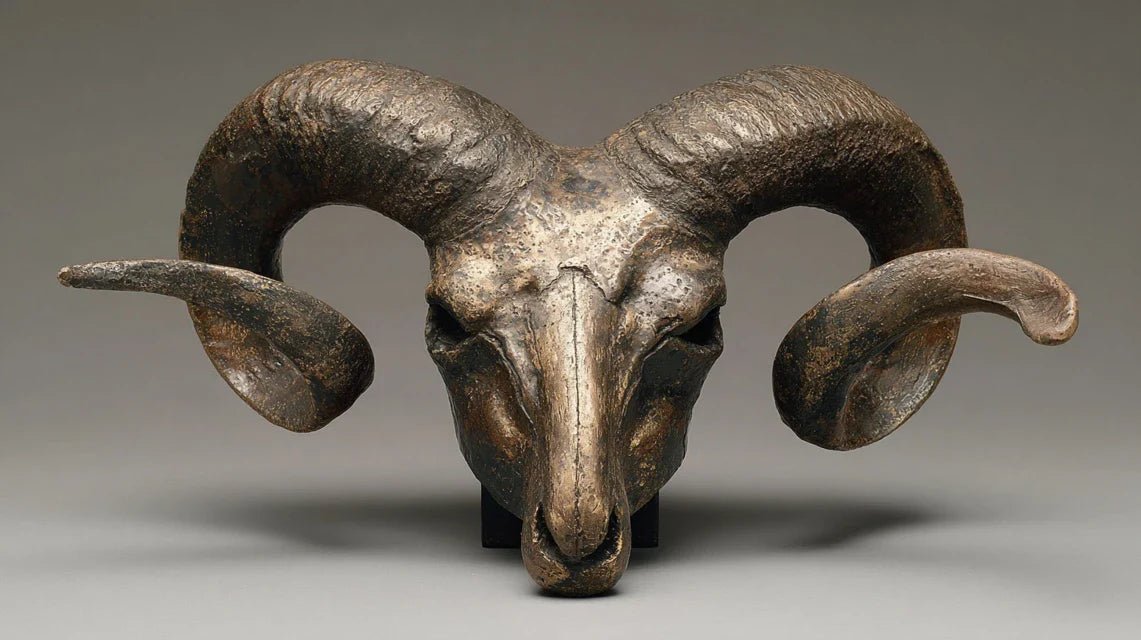
I still remember that misty morning in Gaoua, southwest Burkina Faso, when an elder handed me a statuette with majestic spiral horns. “These horns are not there for decoration,” he murmured to me with gravity. For fifteen years that I have been collecting and studying African sculptures, this moment has revolutionized my understanding of Lobi art. The ram's horns embody much more than a simple aesthetic motif: they crystallize spiritual power, mediation with the invisible, and protection of the home.
You may be fascinated by these mysterious sculptures that intrigue international galleries, but their symbolism eludes you? You fear appreciating them only for their form without grasping their soul? I understand you: faced with these works full of meaning, one hesitates between aesthetic admiration and respect for cultural codes. Yet, understanding the ram's horns in Lobi art is more accessible than one might think. I will reveal to you the keys to reading that sculptors, diviners and collectors have passed on to me over my travels. You will discover how these curved attributes transform a sculpture into a spiritual guardian.
The ram in Lobi cosmology: much more than an animal
Among the Lobi, a people established between Burkina Faso, Ghana and Côte d'Ivoire, the ram occupies a central place in the spiritual hierarchy. Unlike traditions where the ram symbolizes warrior virility, here it embodies mediating wisdom and connection between the visible and invisible worlds. I have observed during ceremonies that the ram is the animal of excellence, whose blood nourishes the thilba (guardian spirits).
The ram's horns materialize this function as a cosmic intermediary. Their spiral shape evokes the perpetual movement between earth and sky, life and death, humans and ancestors. When a sculptor integrates these horns into an anthropomorphic figure, he is not creating a decoration: he is making an active spiritual receptacle. These sculptures become thilba, endowed with their own strength, capable of intervening in daily life to protect, heal or warn.
The dual nature of the horns: protection and power
In my personal collection, I have noticed that the size and orientation of the horns are never random. Horns standing vertically signal a function of vigilance: the sculpture watches over the home, detects bad intentions. Horizontal or slightly curved forward horns indicate an offensive posture, a guardian ready to repel malevolent forces. A sculptor from Kampti confided in me that he meditates for several nights before determining the exact angle of the horns, because this decision determines the character of the thilba.
Identifying types of ram horn sculptures
Lobi art features a fascinating typology of representations with ram horns. The bateba ti puo (protective figures) constitute the most common category. These male or female sculptures, ranging from 20 to 60 centimeters high, display horns often disproportionate to the body. This deliberate exaggeration amplifies the spiritual power of the object.
I have cataloged several variants during my research. Figures with simple horns protect against thieves and domestic accidents. Sculptures with a double pair of horns – rarer – combine functions: physical and psychological protection. Some exceptional pieces feature horns adorned with scarifications or sacrificial residues (blood, cowrie shells, plant fibers), testifying to their intensive ritual use.
Horns associated with other attributes
Interpretation becomes more complex when ram horns coexist with other symbolic elements. A sculpture holding a staff or spear while bearing horns becomes a bateba duntundara, a spiritual warrior of formidable power. If the horns are accompanied by prominent breasts or a swollen belly, the figure protects fertility and childbirth. I acquired a masterful piece where the horns intertwine with sculpted serpents: double protection against earthly enemies and invisible forces.

Discover this inspiring artwork
The ritual process: when the sculpture comes to life
Here's what few collectors understand: a Lobi sculpture with ram horns is not « active » from its creation. The sculptor shapes the envelope, but it is the diviner (thildar) who infuses the spirit during an activation ceremony. I had the privilege of attending this ritual near Diébougou. The diviner sprinkles the sculpture with ram blood – indeed – while reciting incantations to invite a spirit to inhabit the horns.
This ritual blood penetrates the porous wood and creates a characteristic sacrificial patina, often black or dark reddish-brown. On ancient sculptures, this layer can reach several millimeters in thickness, particularly concentrated on the horns and the top of the skull. For a collector, this patina not only authenticates the antiquity but above all the effective ritual use of the object. Tourist reproductions, even old ones, never present this specific organic accumulation.
Recognizing a ritually charged piece
Beyond the patina, observe differential wear. The areas touched during offerings – top of horns, forehead, shoulders – show a distinct polish. Active sculptures often present white kaolin deposits (ritual clay) in anatomical recesses. Some pieces even bear tiny cowrie shells (money-shells) inlaid at the base of the horns, monetary offerings to enhance the protective efficacy of the thilba.
Integrating a ram horn sculpture into your interior
The ethical and aesthetic question legitimately arises: how to welcome these powerful spiritual objects into a contemporary space? My position, shared by several African curators, is clear: if the piece has been acquired legally and ethically, it deserves to be exhibited with respect and knowledge. The Lobi themselves recognize that thilba can “travel” and protect new homes.
In your arrangement, give these sculptures a significant place. Avoid relegating them to a cluttered shelf. A clean console table, a white wall that highlights the majestic horned silhouette, indirect lighting that sculpts the shadows – these staging choices honor the work. I have seen masterful installations where a Lobi figure dialogues with minimalist Scandinavian furniture: the contrast accentuates the sculpture’s spiritual presence.
Respectful conservation and maintenance
Never clean a Lobi sculpture with chemical products. The sacrificial patina is an integral part of the work. A delicate dusting with a soft brush is sufficient. Maintain stable humidity (45-55%) to preserve the wood, often Pterocarpus or Crossopteryx. If you notice cracks, consult a restorer specializing in African art: some well-intentioned interventions irreparably destroy the documentary and market value of a piece.

Discover this inspiring artwork
Authenticity and market: navigating with knowledge
The international success of Lobi art has created a complex market where ancient pieces, authentic contemporary creations, and tourist reproductions coexist. Horns, the iconic motif, are particularly copied. How to distinguish them? First, examine stylistic consistency: in traditional Lobi art, proportions follow precise canons, even if each sculptor has their « hand ». Horns that are too symmetrical, too smooth, often betray recent manufacture for the decorative market.
Secondly, scrutinize the patina and wear. Forgers imitate aging by smoking or applying wax, but these processes create a uniform layer. Authentic ritual patina presents variations, concentrations, organic streaks impossible to reproduce artificially. I have compared hundreds of pieces: real sculptures used ritually tell their story in every square millimeter of surface.
Working with reliable sources
Favor established galleries and collectors capable of providing documented provenance. An archival photograph, an old export certificate, a mention in a prestigious sale catalog add to credibility. Be wary of « exceptional finds » at bargain prices. A real ancient Lobi sculpture with horns, with proven sacrificial patina, represents a significant investment – justified by its rarity and cultural importance.
Transform your space with the soul of Africa
Discover our exclusive collection of African paintings that capture the spiritual essence and aesthetic power of traditional art. Each work tells a story, each motif carries meaning.
Your gaze transformed on horns
Now that you know the symbolic depth of horns in Lobi art, your perception will never be the same. These elegant curves that seem to defy gravity are not decorative fantasies: they materialize a worldview where protection, spirituality and aesthetics merge inextricably. Each sculpture becomes an open book on Lobi cosmology, a testament to a relationship with the sacred that continues to inspire creators and contemporary collectors.
Next time you encounter a Lobi figure in a gallery or a carefully composed interior, give it a few moments of true attention. Observe the angle of the horns, imagine the sculptor's hands, the diviner’s libations, the generations who have lived under its silent protection. Traditional African art offers this rare grace: to transform an object into a presence, a form into strength. You are no longer simply looking at carved wood – you are dialoguing with a millennial conception of the balance between visible and invisible. And perhaps, like me this misty morning in Gaoua, you will feel that these spiraling horns actually carry something indefinable: an energy, an intention, a presence.