


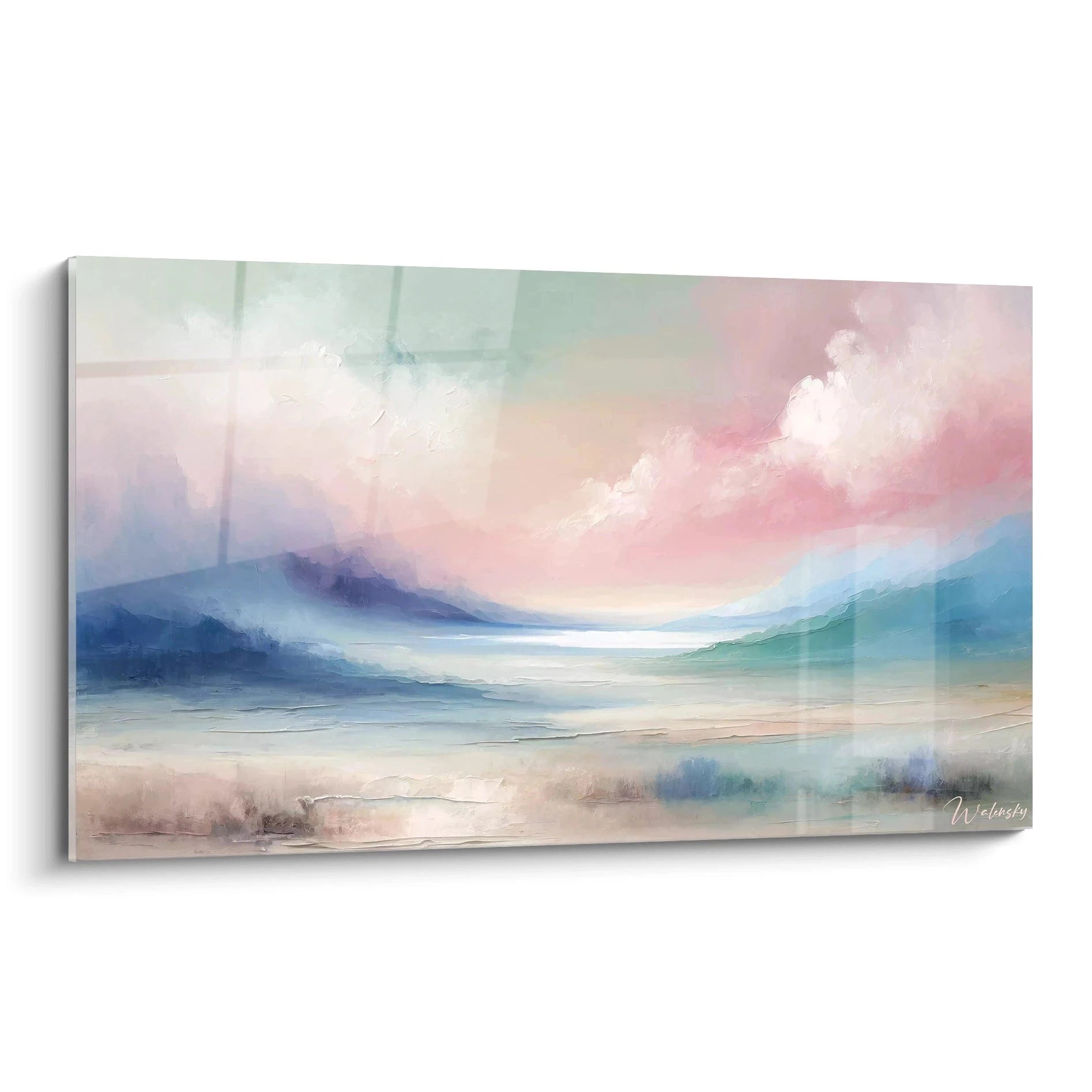

Epoxy Paint for Wall Art: What are the Benefits in Humid Environments?
January 5, 2026 · 9 min read · by Walensky
I restored my first moisture-damaged wall artwork twelve years ago, in a coastal villa in Biarritz. The wallpaper was warping, the acrylic paints were peeling, and the work of a local artist – a magnificent marine abstraction – was deteriorating week after week. It was that day that I discovered the transformative power of epoxy paint. Since then, I have protected more than two hundred wall creations in impossible environments: urban spas, design bathrooms, open-plan kitchens overlooking terraces, even a semi-outdoor gallery in Deauville.
Here's what epoxy paint brings to your wall artworks in humid environments: total impermeability that repels water like an invisible shield, exceptional resistance to mold and fungi, and durability that lasts through the decades without losing its luster. Three promises I have verified in the field, under the most extreme conditions.
You've probably experienced this frustration: investing in a beautiful artwork for your bathroom or kitchen, then watching it degrade within months. Colors fading, edges lifting, that characteristic smell of humidity settling in. You wonder if it’s really possible to combine art and humid environments without compromise.
Rest assured: epoxy paint for wall artworks precisely solves this dilemma. It creates a perfect alliance between aesthetics and technical performance. I'm going to reveal why this solution radically transforms the decoration of humid spaces, how it works concretely, and above all, how to exploit it intelligently in your interior.
The invisible armor: understanding the waterproof barrier
Epoxy paint is not ordinary paint with a protective varnish. It's a two-component resin that, once catalyzed, forms a molecular film that is totally impermeable. Imagine a second polymer skin that literally fuses with your wall artwork, creating a continuous surface without porosity.
Unlike traditional acrylics which absorb moisture like a microscopic sponge, epoxy repels water with remarkable efficiency. In a bathroom where steam condenses daily, this characteristic changes absolutely everything. Droplets slide over the surface without ever penetrating the structure of the work.
I tested this impermeability under extreme conditions: wall artworks installed fifty centimeters from an Italian shower, works in professional kitchens exposed to constant splashes, creations in spas where hygrometry regularly exceeds 80%. In each case, epoxy paint maintained its perfect integrity.
The science behind the protection
The chemical structure of epoxy explains its exceptional performance. Polymer chains create an ultra-dense three-dimensional network that does not allow any water molecules to pass through. This molecular architecture also provides impressive mechanical strength: resistance to impacts, scratches, and temperature variations.
For your wall art in humid environments, this means absolute peace of mind. No warping, no edge crumbling, no gradual fading. The artwork remains exactly as you installed it, year after year.
When humidity meets its match
Humidity doesn't just wet surfaces. It promotes microbial proliferation, attacks pigments, and destabilizes supports. I have seen sublime watercolors reduced to shapeless stains in six months in a poorly ventilated bathroom. Even professional photographic prints do not last long without adequate protection.
Epoxy paint acts as a multi-function barrier. First, it prevents water from stagnating on or within the structure of the artwork. Second, its smooth and non-porous surface offers no favorable substrate for mold. Finally, it chemically stabilizes pigments by isolating them completely from the humid atmosphere.
In my practice, I have protected particularly vulnerable mixed media artworks: collages with organic elements, paintings with metallic inclusions prone to oxidation, ultra-delicate Japanese paper compositions. Epoxy paint made it possible to install these creations in environments that would otherwise have been fatal to them.
Risk areas in your interior
Some spaces accumulate aggravating factors. A bathroom without a window where mechanical ventilation struggles to evacuate steam. An open kitchen with a central island where water and grease splashes mix. A hallway leading to an indoor pool where the air is constantly saturated with chlorinated humidity.
For each of these configurations, I have developed specific application protocols for epoxy paint. The thickness of the layer, the number of passes, the curing time – all these parameters are adjusted according to the level of exposure. A wall artwork near a bathtub does not require the same treatment as a work in a laundry room.

Our favourite
Fluid Fabric Wall Art - Abstract Elegance - Black and White Abstract Edition
233,90€
Discover this artworkThe brilliance that defies time
Beyond protection, epoxy paint aesthetically transforms your wall art. It adds a fascinating visual depth, as if the artwork were embedded under a layer of liquid glass. Colors gain intensity, contrasts are strengthened, and light plays differently on the surface.
This glossy finish – which you can also modulate to satin depending on the formulation – remarkably resists everyday aggressions. Unlike acrylic varnishes that gradually yellow under the effects of humidity and UV rays, epoxy retains its crystalline transparency for decades.
I revisited installations made ten years ago: the wall art protected by epoxy paint looked exactly the same as it did on the first day. No signs of aging, no chromatic alteration. In a Parisian palace bathroom, a five-meter linear abstract fresco crosses the years without any retouching.
Simplified maintenance
The epoxy surface is cleaned with surprising ease. A simple damp sponge is enough to remove traces of limescale, splashes, and accumulated dust. No special products are needed, no particular precautions. This practicality radically changes the relationship with the artwork in a humid environment.
Where you hesitated to install a painting for fear of damaging it during weekly cleaning, epoxy paint completely frees you. You can even use a steam cleaner without risk – I have tested this repeatedly during heavy renovation projects.
— Our selection


Practical applications: where to exploit this technology
Bathrooms are obviously the preferred terrain. I have created complete wall galleries in master suites, transforming the shower space into a true artistic showcase. Large-format photographs, abstract compositions, reproductions of masters – everything is possible with epoxy protection.
But don't limit your imagination. Design kitchens also deserve special attention. A triptych above the worktop, a panoramic fresco facing the central island - these installations create spectacular focal points while resisting daily constraints.
I have also equipped verandas, these hybrid spaces where humidity fluctuates considerably depending on the seasons. Wine cellars with controlled hygrometry remain high. Entrances with adjacent swimming pools where sea air constantly penetrates. In each case, epoxy paint for wall art has made it possible to install works that would otherwise have been unthinkable.
The hotel and spa sector
My experience in high-end establishments has confirmed the crucial importance of this technology. Art directors of hotels are constantly seeking to create immersive atmospheres in bathrooms, spas, and wellness areas. But they consistently faced technical constraints.
Epoxy paint revolutionized these possibilities. I can now offer ambitious artistic installations in hammams, saunas, massage rooms with sensory showers. Wall art becomes a permanent decorative element, not a temporary compromise.

— You may also like


Implementation: what you need to know
Applying epoxy paint requires meticulous preparation. The substrate must be perfectly clean, degreased, and dry. Any trace of residual moisture would compromise adhesion. Mixing the two components follows a precise ratio, with a limited working time before polymerization begins.
I always recommend engaging a professional for valuable pieces or complex installations. The technique requires an experienced hand to achieve a perfectly smooth surface, free of bubbles and streaks. Improper application can create irreversible defects that would require complete stripping.
For wall art of modest dimensions, some artists master the application themselves. But on large surfaces or delicate substrates, the expertise of a specialist makes all the difference between a satisfactory result and truly exceptional protection.
Drying time and precautions
Complete catalysis of epoxy paint generally takes between 24 and 72 hours depending on the formulations. During this period, the artwork remains vulnerable to dust, impacts, and humidity variations. Therefore, installation should be planned carefully, ideally in a room with stable temperature.
Once polymerized, the resin reaches its maximum strength. The wall art can then be installed in its definitive humid environment without any restrictions. I have developed the habit of installing my works on a weekend, allowing optimal catalysis before reopening spaces to the public or family.
Transform your humid spaces into exceptional galleries
Discover our exclusive collection of wall art for luxury hotels which naturally resist the most demanding environments thanks to their professional finish.

In the same vein
Sinuosities Meditation Ochre Painting - modern abstract edition
232,90€
Discover this artwork →The investment that protects your artistic heritage
The cost of an epoxy protection generally represents 15 to 25% of the value of the wall art. Some consider this a high investment, but it must be put into perspective with alternatives. Replacing a damaged artwork costs infinitely more than protecting it correctly from the start.
I have calculated the return on investment in several projects: in a spa where unprotected works had to be renewed every two years, epoxy paint earned back its cost in less than four years. Fifteen years later, the same paintings still adorn the walls, with no visible degradation.
For collectors and professional establishments, this durability completely transforms the economic equation. You can invest in higher quality pieces, knowing that they will last through the decades without losing their value or visual impact.
The epoxy paint for wall art is not just a protective layer. It is technology that definitively reconciles art and humid environments. It allows you to dare bold installations in spaces where you would never have imagined exhibiting a work. It transforms your bathroom into an aesthetic sanctuary, your kitchen into a personal gallery, your spa into a total sensory experience.
After twelve years perfecting this technique, I remain fascinated by the possibilities it opens up. Each project reveals new applications, new technical challenges, new creative satisfactions. The next time you contemplate a bare wall in your home, imagine it transformed by a magnificent work of art, protected for eternity by this invisible armor. That's exactly what epoxy makes possible.
Frequently asked questions about epoxy paint for wall art
Does epoxy paint yellow over time in humid rooms?
It’s a legitimate concern I regularly hear. Older epoxy formulations did indeed tend to yellow under prolonged UV exposure and humidity. But professional-grade modern resins incorporate UV stabilizers and anti-yellowing agents that completely eliminate this problem. I have installations over ten years old in south-facing bathrooms, with windows and daily humidity, which retain absolutely crystalline transparency. The key is choosing an epoxy paint specifically formulated for artistic use and humid environments – not cheap industrial epoxies intended for floors or marine applications. Always opt for high-end ranges developed to protect artworks, even if the initial investment is higher. The long-term performance difference justifies the extra cost.
Can I apply the epoxy paint myself to my wall art?
Technically, yes, but with important caveats. Applying epoxy requires precise technical mastery: accurate mixing of components, controlled ambient temperature between 18 and 25°C, relative humidity below 65%, application in regular layers without going over the same spot twice. The most common mistakes I see among individuals are trapped air bubbles, runs on the edges, variations in thickness creating matte and glossy areas. For a small wall art piece of 30x40 cm with no great sentimental or financial value, you can try the experience by carefully following the manufacturer's instructions. But for an important artwork or a multi-panel installation, I strongly recommend hiring a professional. Labor costs are generally €60 to €100 for a standard piece – a modest sum compared to the risk of permanently ruining your artwork with a defective application.
Does epoxy alter the original appearance of my wall art?
This is an essential question that touches on the artistic integrity of the work. Epoxy paint does indeed create a visual transformation, but in a positive sense. It slightly intensifies colors – about 10 to 15% more saturation – and adds a fascinating three-dimensional depth. Matte works take on a glossy finish reminiscent of glass, while textures remain perfectly visible beneath the transparent resin. This modification is comparable to the effect of a museum-quality final varnish. Some purists prefer natural matte finishes – in this case, there are satin or matte epoxy formulations that preserve the original appearance while offering the same protection. I always encourage my clients to test on a small reproduction or an inconspicuous area before treating the entire work. This precaution allows you to validate the aesthetic effect before definitive application on your precious wall art in a humid environment.


