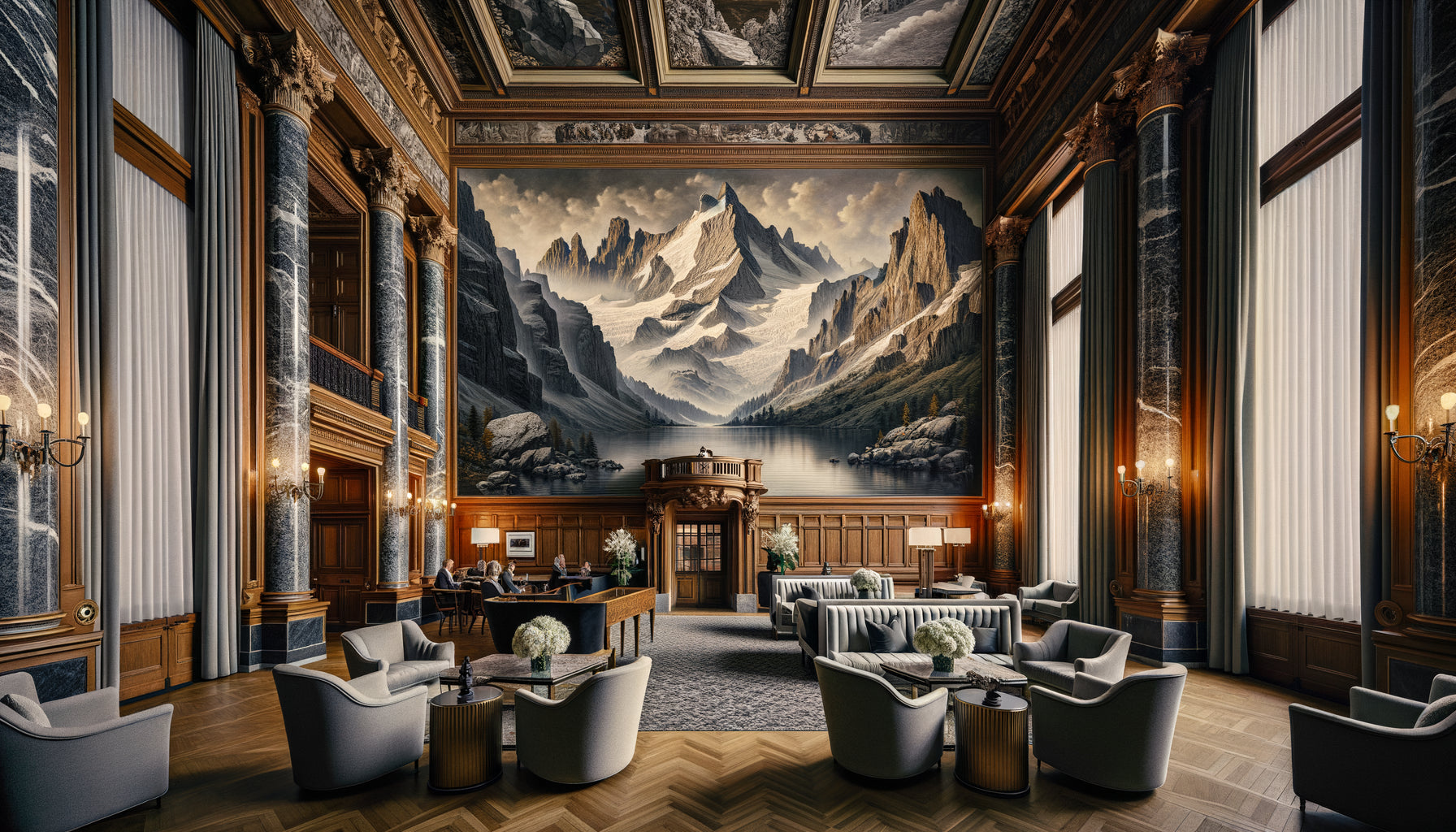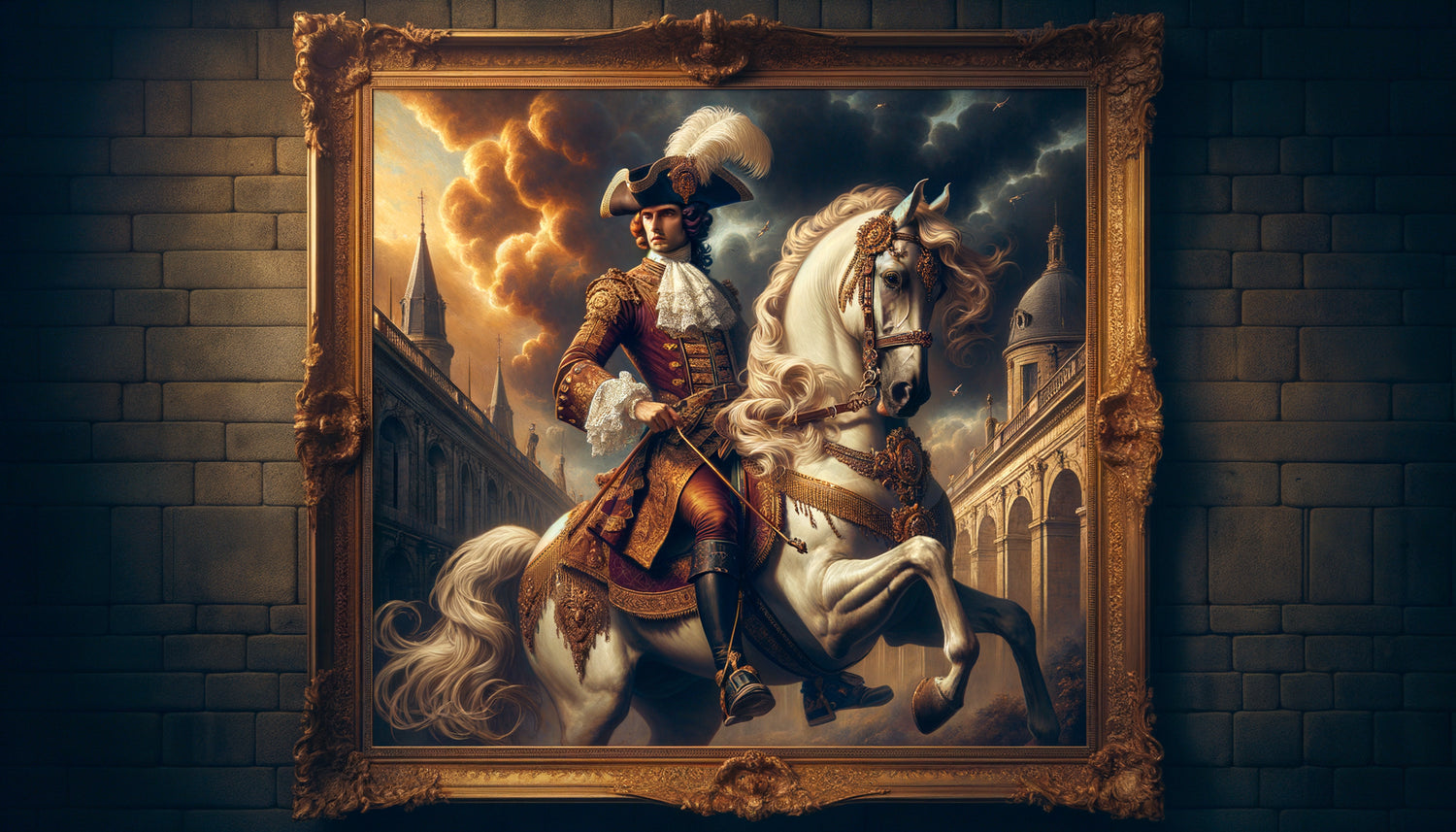
In the grand living room of a castle converted into a luxury hotel near Chambord, a couple stops before an imposing equestrian portrait from the 18th century. The aristocrat in ceremonial attire dominates majestically his mount, his gaze fixed on an invisible horizon. "Who was this man?" asks the woman, fascinated. This scene repeats hundreds of times each day in French castle-hotels, where these paintings continue to exert a magnetic attraction on visitors.
Here's what the tradition of equestrian portraits brings to castle-hotels: an immediate connection with French aristocratic history, an atmosphere of prestige and unparalleled refinement, and a visual experience that transforms a simple stay into a journey through time. These works are not mere decorations; they embody the very soul of these exceptional places.
Yet, many owners of high-end establishments wonder where this tradition so deeply rooted in our hotel heritage comes from. Why equestrian portraits specifically? Why this omnipresence in French castles? And above all, how has this aristocratic convention been perpetuated to this day in luxury hospitality?
Rest assured: understanding the origin of this tradition requires no training in art history. By exploring the roots of these majestic portraits, you will discover how this centuries-old practice continues to enrich the customer experience in France's most prestigious establishments.
This article reveals the secrets of a tradition dating back to the Renaissance, and how it still shapes the visual identity of exceptional castle-hotels today.
The horse, a symbol of power since the Renaissance
The history of equestrian portraits in French castles begins in the 16th century, when Francis I imports Italian representation codes after his military campaigns. At this time, owning a pedigree horse represents an absolute aristocratic privilege: only nobles have the right to ride these expensive animals, bred specifically for war and parade.
Italian Renaissance artists had understood that an equestrian portrait instantly communicated three essential messages: nobility of blood, military mastery, and sufficient wealth to maintain stables. Leonardo da Vinci and his contemporaries establish the visual conventions that French painters will adopt for three centuries.
In the Loire castles, this new artistic fashion spreads like wildfire. Each lord wants his equestrian portrait, hung in the grand gallery or above the monumental fireplace of the reception room. The equestrian portrait becomes the smartphone of the time: an indispensable status symbol object, exposed to the eyes of all visitors.
Louis XIV and the apogee of the equestrian portrait
If tradition takes root in the Renaissance, it reaches its peak under Louis XIV. The Sun King instinctively understands the power of image in building his authority. He commissions dozens of equestrian portraits from his official painters, including the famous Charles Le Brun.
At Versailles, these paintings adorn the royal apartments and galleries. Each portrait of the king on horseback conveys a specific political message: Louis XIV controls his kingdom as he masters his mount, with power and elegance. This visual propaganda works remarkably well, and all of French aristocracy hurries to imitate the monarch.
Nobles have their castles decorated with equestrian portraits commissioned from the best painters. These works follow strict codes: the rearing horse suggests military bravery, the walking horse evokes wisdom and governance, while the galloping horse symbolizes boldness and youth. Each posture tells a story, each detail of the harness reveals an aspect of the commissioner's personality.
The anatomy of the classical equestrian portrait
French portraitists of the Grand Siècle develop a true visual grammar. The format is generally monumental: between two and three meters high, to impress the viewer. The aristocrat always wears his finest attire, often ceremonial armor or an embroidered costume with gold.
The background decor is never trivial: a castle evokes landed property, a battlefield recalls past deeds, a bucolic landscape suggests enlightened land management. Each element constitutes a stone in the edifice of family reputation, intended to endure through generations.

From aristocratic residence to luxury hotel
The French Revolution could have sounded the death knell of this tradition. Yet, after the Terror and the progressive return of the aristocracy in the 19th century, equestrian portraits regain their place of honor in castles. Napoleon I, a perfect understanding of the power of symbols, himself commissions several equestrian portraits, including the famous "Napoleon crossing the Alps" by Jacques-Louis David.
At the beginning of the 20th century, when the first noble families transform their castles into hotels for financial reasons, equestrian portraits remain hanging on the walls. Far from removing them, owners quickly realize that these works constitute a major commercial asset: they authenticate the aristocratic experience promised to customers.
Wealthy visitors who frequent these establishments do not come simply for a comfortable room. They seek an immersion in the French art of living, a connection with the country's prestigious history. Equestrian portraits then become silent ambassadors of this promise of exception.
Why this tradition endures today
In contemporary castle hotels, equestrian portraits fulfill several essential functions that explain their permanence. Firstly, they instantly create an atmosphere of historical authenticity. An entrance hall adorned with an 18th-century equestrian portrait immediately communicates that the establishment has deep roots, an aristocratic pedigree.
Secondly, these paintings act as universally recognized markers of luxury. International clients, even without in-depth knowledge of French history, immediately identify these portraits as signs of prestige. The horse, the noblest animal par excellence in almost all cultures, transcends language and cultural barriers.
Thirdly, equestrian portraits offer a natural conversation starter. In the lounges and galleries of castle hotels, they spark curiosity and wonder in visitors, creating memorable moments that enrich the customer experience. Concierges and guides often develop captivating anecdotes around these works, transforming each painting into a window open to the past.
The contemporary adaptation of tradition
The most innovative establishments do not simply preserve the original equestrian portraits. Some castle hotels commission contemporary works that reinterpret classic codes, creating a fascinating dialogue between past and present. Contemporary artists revisit the genre with modern techniques, while maintaining the majesty and elegance that characterize these portraits.
This approach allows establishments to build their own visual identity while honoring tradition. A contemporary equestrian portrait can represent an Olympic champion, a riding enthusiast owner, or even an imaginary figure embodying the spirit of the place.

The psychological impact on the customer experience
Neuroscience applied to hospitality reveals that equine portraits activate brain areas associated with prestige and social aspiration. When a guest enters a castle hotel and discovers these imposing paintings, their brain subconsciously registers signals of high status and exclusivity.
This reaction is not superficial: it is rooted in centuries of cultural conditioning where equestrian imagery has been systematically associated with power and distinction. Equine portraits act as experience amplifiers, increasing the perceived value of the establishment without a word being spoken.
Hotel castle managers regularly report that spaces adorned with equine portraits generate more spontaneous photographs from guests on social media. These images become powerful organic marketing tools, associating the establishment with a universe of aristocratic refinement.
How to integrate the equestrian spirit into your establishment
Not all luxury hotels have antique equine portraits in their collections. Fortunately, the spirit of this tradition can be captured in multiple ways to enrich the atmosphere of your establishment without requiring the acquisition of priceless antiques.
High-quality reproductions of famous equine portraits offer a first accessible option. Choose canvas prints with generous dimensions: an equestrian portrait loses its impact if it is too small. Monumental scale is an integral part of the desired effect.
Prioritize gold leaf frames, even for reproductions, because the framing contributes as much as the image itself to create the desired aristocratic atmosphere. A poor frame instantly betrays a reproduction and breaks the illusion of authenticity.
For establishments that want a more personalized approach, commission a contemporary artist specializing in classical style. An original equestrian portrait, even recent, has a presence that no reproduction can equal. Some French painters keep alive the tradition of academic equestrian portraiture, mastering techniques passed down for centuries.
Transform your spaces with the timeless elegance of equestrian tradition
Discover our exclusive collection of art for luxury hotels that captures the majesty of classic equestrian portraits while perfectly adapting to contemporary interiors.
The equestrian tradition, a living heritage of French excellence
Equestrian portraits in French castle hotels are not simply relics of the past. They embody a remarkable cultural continuity, a golden thread that connects the Renaissance to our time, former aristocracy to today's travelers seeking authenticity and refinement.
This tradition endures because it responds to a fundamental human need: connection with something greater than oneself, temporary belonging to a world of elegance and prestige. When a client contemplates an equestrian portrait in the lounge of a castle hotel, they do not simply see an old painting. They glimpse a window open onto centuries of history, power and beauty.
Whether you manage a historic property or seek to infuse that atmosphere into a more recent hotel, the spirit of the equestrian tradition can greatly enrich the experience you offer. Each portrait becomes a story to tell, each gallery an invitation to travel through time.
Start simply: choose a strategic space in your establishment, select a work that resonates with the identity of your place, and let the magic happen. You will be surprised at how these silent witnesses of French aristocratic history continue to captivate and amaze visitors in the 21st century.
Frequently asked questions about equestrian portraits
Why are equestrian portraits so large?
The monumental dimensions of equestrian portraits respond to both a practical and symbolic logic. From a practical point of view, these paintings were intended for the vast spaces of castles: fifteen-meter long galleries, six-meter high ceilings. A small painting would have been visually insignificant in these imposing volumes. Symbolically, size itself communicated the power and importance of the person depicted. The larger the portrait, the more the commissioner asserted his status. This convention has continued in modern castle hotels, where large-scale equestrian portraits instantly create an impression of majesty and historical authenticity that greatly enriches the atmosphere of the establishment.
Can you decorate a modern hotel with equestrian portraits?
Absolutely, and this approach is currently experiencing a real revival in luxury hotel design. The contrast between contemporary architecture and classic aristocratic imagery creates a fascinating aesthetic tension that captivates guests. The key lies in balance and intention: avoid the "dusty museum" effect by limiting the number of portraits and integrating them into a thoughtful staging. A single monumental equestrian portrait in a minimalist hall with clean lines can produce a spectacular visual impact. The most innovative establishments mix classic equestrian portraits and contemporary works, creating a dialogue between eras that enriches the customer experience. The essential thing is that each work seems to have been chosen deliberately rather than simply hung to fill an empty space.
How to authenticate an antique equestrian portrait?
Authenticating an antique equestrian portrait requires the expertise of a specialist in old master painting, but some clues can guide you. First examine the pictorial technique: authentic 18th century portraits have a characteristic facture, with successive glazes and an anatomical mastery of the horse rarely equaled in later copies. Then check the frame and canvas: antique materials have a specific patina. Authentic equestrian portraits often bear on the back marks, labels or inscriptions revealing their provenance. The artist's signature, although valuable, is not systematic at this time. For castle hotels owning these works, having a professional appraisal carried out considerably enhances the artistic heritage of the establishment and provides captivating narrative elements to share with cultured clients.