


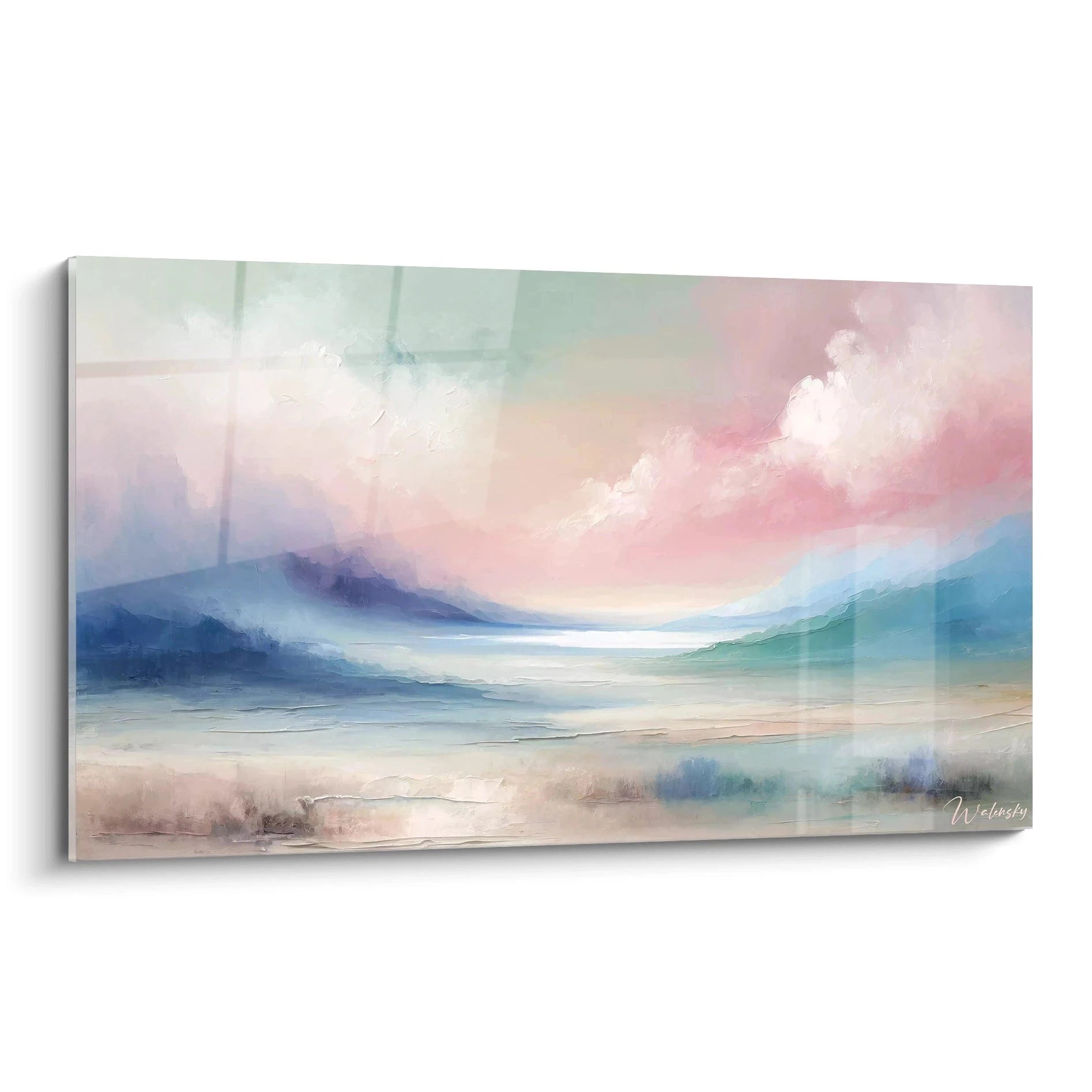

Do Textured Artwork Last Longer in Public Spaces of a Luxury Hotel?
November 6, 2025 · 8 min read · by Walensky
The lobby of the Tokyo Ritz Carlton. A massive, relief abstract work captures the subdued light, its streaks of material creating moving shadows. Six months later, it still displays the same majestic presence, while other works already show signs of fatigue. This is no coincidence.
Here's what textured artworks bring to the public spaces of a luxury hotel: superior resistance to daily handling, an ability to mask inevitable imperfections, and a tactile dimension that enriches the sensory experience of even the most demanding clients.
Luxury hotel managers know this painful equation: invest in exceptional works of art to create a strong identity, then see them degrade under the effects of repeated passages, humidity variations, and accidental contacts. Traditional smooth canvases reveal every imperfection; each micro-scratch becomes visible under the sophisticated lighting of lobbies.
Yet, some artworks stand the test of time without losing their luster. Texture is not just a matter of aesthetics – it constitutes an invisible armor against daily aggressions. Let's explore why textured artworks represent a more sustainable investment for high-traffic spaces.
Texture as a shield: why material protects better than a flat surface
In the hushed corridors of a five-star hotel, a textured work plays on a simple but formidable physical principle. The depth of the reliefs disperses light irregularly, making micro-scratches practically invisible. On a smooth canvas, even the slightest mark creates an immediately perceptible discontinuity in the light.
I observed this phenomenon in a Venetian palace where two works by the same artist coexisted: one with thick impasto knife strokes, the other in fine application. After two intense tourist seasons, the former retained its mystery intact while the second already required delicate restoration. Textured artworks possess this extraordinary ability to visually absorb small imperfections.
Generous impastos also create a more mechanically resistant three-dimensional structure. The superimposed material forms multiple anchor points that reinforce the cohesion of the whole. Unlike thin layers which can crack under the effects of temperature variations, thick reliefs offer natural flexibility that accompanies the subtle movements of the support.
Modern materials at the service of durability
Contemporary techniques have revolutionized the creation of textured artworks for public spaces. Acrylic structure pastes mixed with mineral fillers offer exceptional adhesion and superior UV resistance to traditional oils. These hybrid compositions withstand unflinchingly the permanent air conditioning of lobbies and the hygrometric variations of spas.
In a thermal establishment in the Swiss Alps, resin epoxy textured artworks withstood five years of exposure to high humidity without any alteration. The controlled porosity of these materials allows for breathing which prevents delamination, a plague of impermeable surfaces in humid environments.
The optical illusion that preserves: how texture masks the wear and tear of time
A little-known secret: textured paintings age better because they integrate imperfection into their visual language. A rough surface, a complex play of shadows create a visual reading where the brain naturally accepts variations. This is the opposite of smooth flats that must remain impeccable to maintain their impact.
In public spaces in a luxury hotel, this property proves decisive. Suitcases brushing against walls, hands seeking support, daily cleaning operations – all invisible micro-aggressions on a textured artwork, glaring on a flat surface. I documented this phenomenon in a Parisian boutique-hotel: after three years, their textured paintings displayed the same prestige as on the first day, while framed photographs required replacement.
Texture also plays a subtle psychological role. Faced with a relief surface, customers instinctively adopt a respectful distance. The apparent tactile dimension discourages contact, unlike smooth surfaces which invite the hand to check their flatness. This invisible barrier significantly reduces direct contacts, the leading cause of premature degradation.

Our favourite
Golden Calligraphy Painting - Abstract Elegance - Calligraphy Edition
233,90€
Discover this artworkMechanical resistance: when thickness makes the difference
Laboratory tests confirm it: a layer of material 3 to 5 millimeters thick resists up to four times better against light impacts than standard paint film. In a hotel context, where carts, cleaning equipment and luggage circulate permanently, this mechanical resilience changes everything.
A London establishment equipped its hallway floors with thick relief textured paintings. Five years later, no conservation intervention was necessary, generating substantial savings compared to the usual maintenance budget. The slightly higher initial investment is largely amortized over the extended lifespan of the artwork.
The structural composition of textured artworks
Artists specializing in public space creations now use integrated armatures – fiberglass, fine metal meshes – embedded within the body of the artwork. These invisible reinforcements distribute mechanical stresses across the entire surface, avoiding points of fragility. It's the equivalent of reinforced concrete applied to wall art.
In high-traffic areas such as elevator halls or restaurant entrances, this discreet engineering makes all the difference. Textured artworks designed in this way withstand constant vibrations, pressure variations related to ventilation systems, and maintain their structural integrity for decades.
— Our selection


Simplified maintenance: a major economic argument
Let's talk pragmatism. Maintenance staff in high-end establishments dread delicate surfaces that require endless precautions. Textured artworks can be dusted with a soft duster without excessive caution, whereas a smooth canvas requires complex protocols.
The relief structure also prevents dust from accumulating uniformly. Particles settle randomly in the hollows and on the bumps, making the phenomenon of soiling much less visible. I timed interventions in a Mediterranean resort: maintenance of textured artworks took 40% less time than maintaining flat surfaces, with an equivalent visual result.
In case of accidental stains – projection of drink, fingerprint mark – the texture also offers a decisive advantage. Localized cleaning blends into the natural irregularity of the surface, without creating a distinct area as on a uniform plane. This tolerance to spot interventions avoids costly complete restorations.

— You may also like


Perceived value and sensory experience: beyond resistance
If textured artworks are becoming essential in the public spaces of luxury hotels, it is not only for their robustness. They create a multisensory experience that enriches the stay of even the most demanding clients. The promise of touch – even if unrealized – adds an emotional dimension absent from flat works.
In today's attention-driven hospitality landscape, these textured pieces become memorable anchor points. Guests photograph, comment, and remember "that massive relief artwork in the lobby." Texture generates engagement, transforming a simple decorative element into an identity marker for the establishment.
Variations in light throughout the day constantly reveal new facets of the work. The low morning light sculpts dramatic shadows, midday zenithal light flattens reliefs, and nighttime spotlights create theatrical contrasts. A single textured artwork thus offers multiple visual experiences, maintaining interest even for long-staying guests.
The investment that enhances heritage
Heritage managers of major hotel groups understand this: high-quality textured artworks retain or even increase their value over time. Unlike prints that quickly go out of style, these unique pieces transcend trend cycles. Their exceptional physical resistance also preserves their market value – a decisive criterion during periodic decor renovations.
Transform your public spaces into timeless galleries
Discover our exclusive collection of luxury hotel artwork that combines a strong artistic presence with exceptional resistance to the constraints of high-traffic areas.

In the same vein
Arched Iridescent Vermillion Wall Art - Geometric Abstract Edition
233,90€
Discover this artwork →Selection criteria for maximizing durability
Not all textured artworks are equal when it comes to the requirements of hotel public spaces. The thickness of the material is the first indicator: prioritize works with at least 3 millimeters of relief to guarantee resistance and lasting visual effect. Inspect the adhesion quality by observing the edges – scales or lifts indicate a faulty implementation.
The choice of protective varnish is also crucial. Satin or matte varnishes are better suited for public spaces than glossy finishes, which mercilessly reveal every scratch. Some next-generation anti-UV varnishes extend resistance to discoloration by 50%, a relevant investment for locations exposed to natural light.
Also consider the color palette. Textured artworks with nuanced tones – blends of grays, beiges, ochres – age more harmoniously than solid bright colors. Natural variations in tone blend into the irregularity of the texture, whereas a flat red or blue will quickly show differences in discoloration.
Imagine your reception areas in five years. While other establishments renew their worn decor, your textured artworks will always display that majestic presence from day one. The initial brilliance preserved, the material intact, this timeless dimension that characterizes true exceptional places. Superior resistance is not a technical detail – it's the promise of a lasting visual identity that will continue to impress every new client crossing your threshold.
Start with a strategic space: the wall facing the main entrance, that decisive first impression. Choose a textured piece with generous dimensions, let the material tell its story of durability and excellence. You won't simply decorate a wall – you'll invest in a visual heritage that will cross the years without losing its soul.
FAQ
Do textured artworks require specific maintenance in a hotel?
Maintaining textured artworks remains remarkably simple, even in high-traffic public spaces. A monthly dusting with a natural feather duster or soft brush is sufficient. Avoid damp cloths that could snag on the reliefs. The texture itself naturally disguises fine dust, making cleaning less frequent than for smooth surfaces. In case of accidental stains, gently blot with a slightly damp cloth, without rubbing. Most modern artworks for public spaces are protected by varnishes which greatly facilitate these occasional interventions. The time investment is minimal compared to the preserved visual impact.
What texture thickness guarantees optimal resistance?
For luxury hotel public spaces, aim for a minimum thickness of 3 millimeters on the relief areas. This depth offers the best compromise between mechanical strength, striking visual effect and reasonable weight for hanging. Works with impastos of 5 to 8 millimeters are particularly suitable for high-traffic areas such as entrance halls or corridors leading to elevators. Beyond 10 millimeters, you enter the realm of architectural bas-relief, superb but requiring reinforced fixing systems. The thickness is easily verified by observing the work in profile – the reliefs should create sharp shadows even under diffused lighting. This tangible physical dimension is your best guarantee of longevity.
Are textured artworks suitable for humid environments like spas?
Absolutely, provided you choose artworks made with suitable materials. Textured tables in epoxy resin, acrylic or modern mixed media perfectly withstand the humidity variations of wellness spaces. Their controlled porous structure allows for breathing which avoids delamination, unlike impermeable surfaces that trap moisture. I have observed remarkable installations in thermal spas where textured works endure year after year exposure to high hygrometry without visible alteration. Favor pieces with waterproof varnish and simply avoid direct contact with water splashes. In passageways between pool and changing rooms, position the artworks at a sufficient height, and they will create this refined atmosphere characteristic of exceptional establishments, without compromising their integrity.
Explore our collections


