Facing the blank wall of your living room, you hesitate. This Parisian gallery has overwhelmed you with its majestic canvases, and now your heart wavers between the dramatic intensity of a Caravaggio and the serene grace of a Botticelli. This choice is not insignificant: a historical painting dialogues with your soul as much as with your decor.
Here's what a Baroque or Renaissance historical painting brings to your interior: a narrative depth that transforms every glance, timeless elegance that transcends trends, and this silent conversation that elevates your daily life to an aesthetic experience.
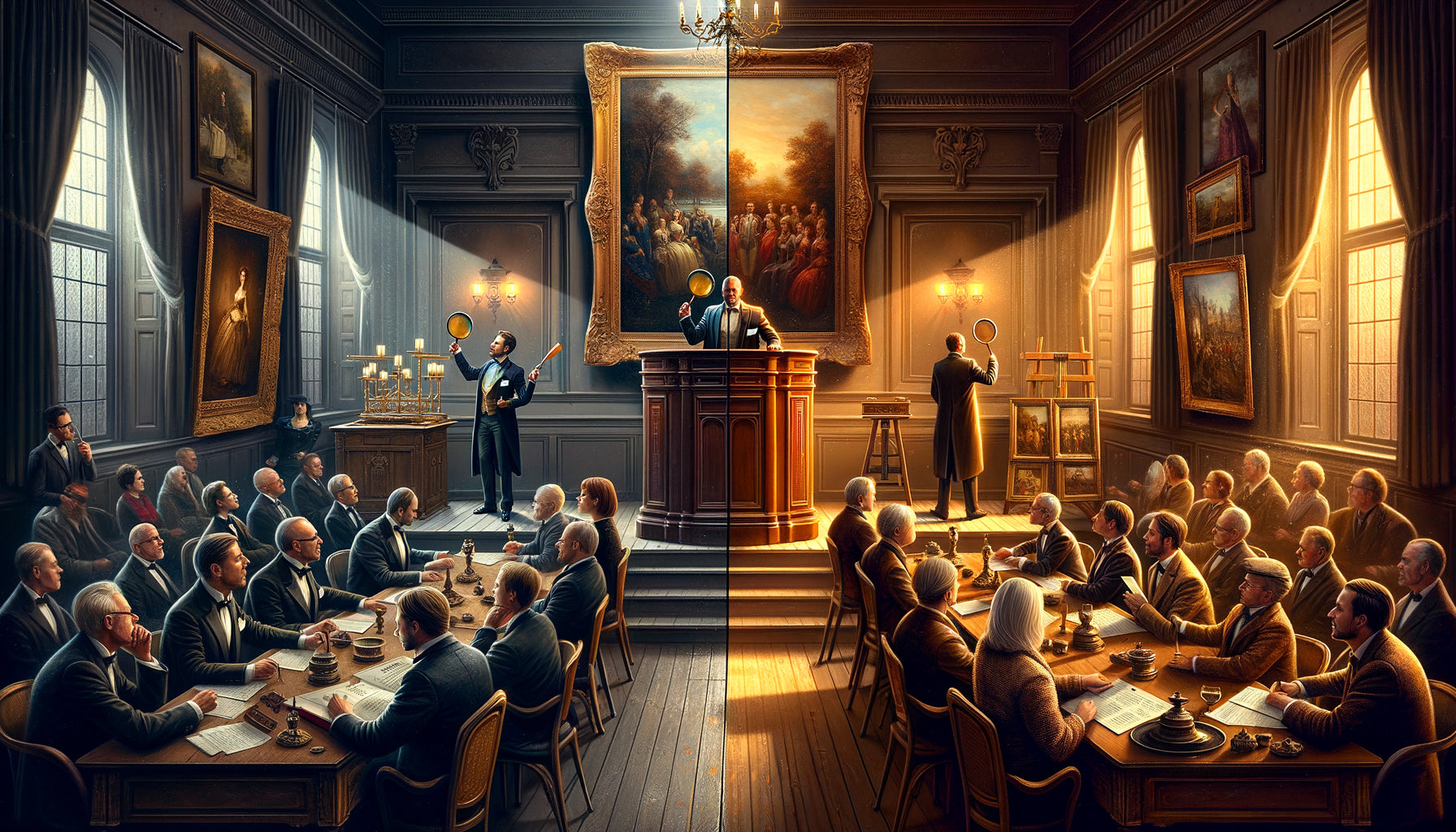
Many feel paralyzed by this decision. Should you follow your heart or respect a stylistic consistency? Fear making an expensive mistake or risk living with a choice that doesn't reflect who you are? I understand this hesitation. After twenty years spent scouring auction houses and restoration workshops, I have accompanied hundreds of collectors in this precise moment where emotion meets reason.
This article reveals how to choose your historical painting by listening simultaneously to your sensitivity and your living space. Not by applying rigid rules, but by understanding what makes the heart of these two pictorial universes beat.
When light reveals the soul of eras
The Renaissance and Baroque speak two radically different luminous languages. Understanding their visual grammar is discovering which one resonates with your inner gaze.
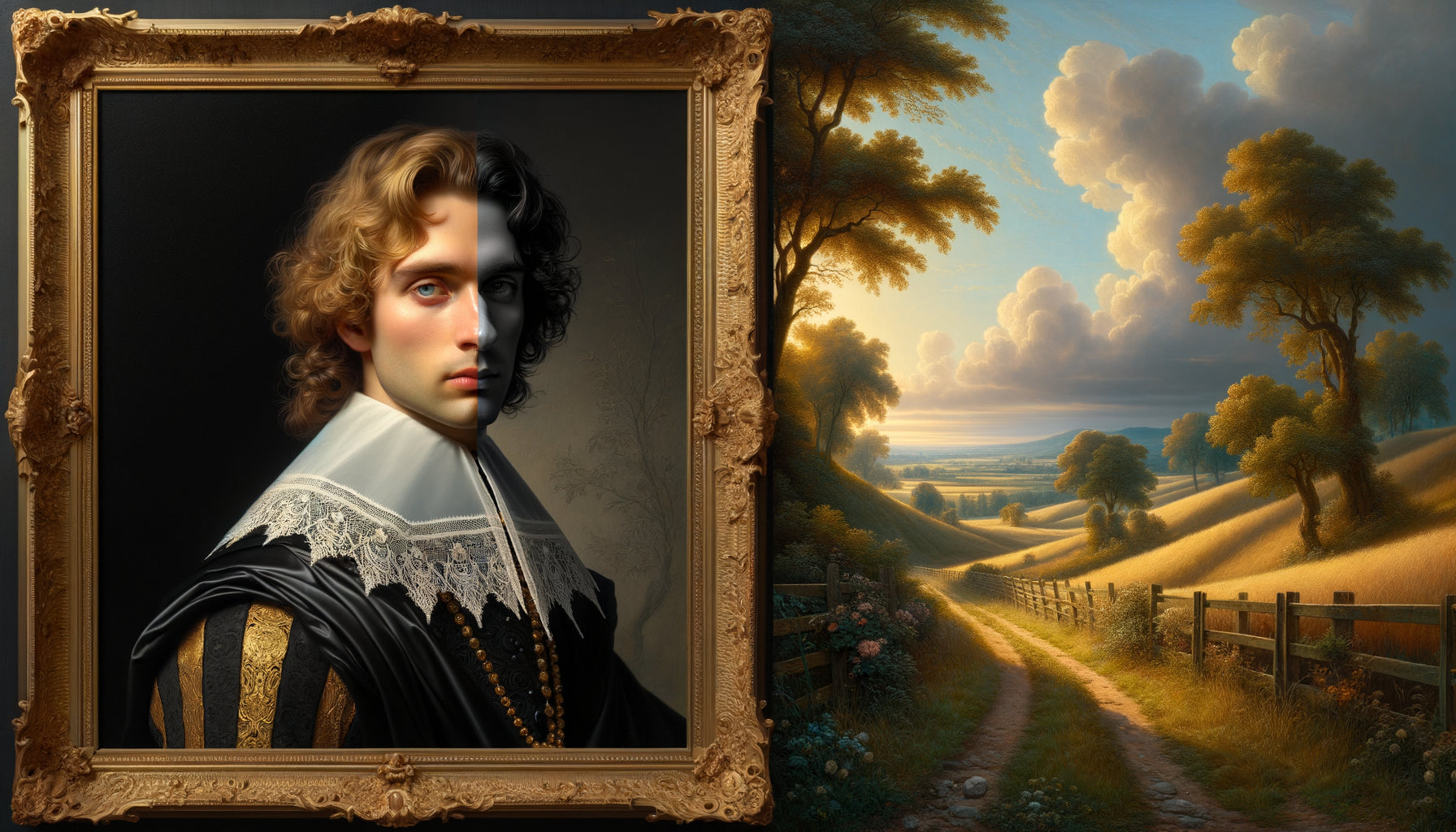
A Renaissance historical painting bathes in a golden, uniform, almost celestial light. Botticelli, Raphael, Leonardo da Vinci sculpt their figures in this balanced clarity that evokes mathematical harmony. The contours are sharp, the compositions symmetrical, the faces serene even in pain. This is the light of triumphant reason, which celebrates humanity as the measure of all things.
The Baroque, on the other hand, electrifies space with violent contrasts. Caravaggio plunges his scenes into darkness from which bursts, as if by a miracle, shards of harsh light. This dramatic chiaroscuro – the famous tenebrismo – creates an intense theatricality. Rubens explodes compositions in swirls of movement, Rembrandt sculpts matter with thick touches where light seems trapped within the painting itself.
In your interior, a Renaissance painting will bring this soothing, contemplative presence. It requires a gaze that lingers, that meditates. The Baroque, on the contrary, immediately captures attention, provokes visceral emotion, transforms your wall into a theater scene.
The emotions your walls will breathe
Choosing between Baroque and Renaissance, is ultimately choosing the daily emotion you want to inhabit.
The masters of the Renaissance cultivate the ideal. Their madonnas possess mathematically perfect beauty, their saints timeless nobility. Even tragic scenes – crucifixions, martyrdoms – retain a restrained dignity. It is emotion filtered by intellect, passion sublimated into grace. A Renaissance historical painting in your library or office elevates thought and inspires creative concentration.
The Baroque releases passions in their raw intensity. Judith beheading Holoferne by Artemisia Gentileschi, the tormented bodies of Rubens' Last Judgment, the ecstasy of Saint Teresa by Bernini (translated into painting by so many artists) – all breathe pathos, overflowing emotion. The grimacing, weeping, exultant faces draw you into their overwhelming humanity.
In a living room where you receive guests, a Baroque painting immediately becomes a conversation starter. In a bedroom, a Renaissance painting offers that serenity conducive to rest. One stimulates, the other harmonizes.
The test of personal resonance
Close your eyes and imagine your morning. Would you prefer to start the day facing the Birth of Venus emerging peacefully from the waves, or facing the Conversion of Saint Paul thrown to the ground by divine lightning? Your intuitive answer is valuable: it reveals your deep aesthetic temperament.

The secret architecture of your space
Your interior already has a personality. A historical painting does not impose itself: it dialogues, responds, amplifies.
Sleek contemporary interiors with clean lines beautifully welcome Renaissance paintings. Their clear geometry and balanced compositions create an elegant bridge between modernity and classicism. I have seen a reproduction of Raphael's Sistine Madonna transform a minimalist loft into a sanctuary of contemplation. The contrast becomes harmony.
Generous, voluminous spaces – high corniced ceilings, antique parquet floors, stone fireplaces – naturally call for the Baroque. Its overflowing compositions, monumental formats, and centrifugal energy beautifully fill these ambitious architectures. A large-format Baroque painting doesn't just decorate: it literally inhabits the room.
Consider also the lighting. Renaissance paintings reveal their chromatic subtleties under soft natural light or warm white LED lights. Baroque works, with their powerful contrasts, support – and even demand – more directional, almost theatrical lighting. A spotlight miraculously awakens their dark depths.
When your collection tells a coherent story
If this historical painting will not be alone, think dialogue rather than collection.
Mixing Baroque and Renaissance in the same room is perilous but not impossible. The secret? Create distinct zones. A library wall can accommodate your Renaissance paintings in their serenity, while the main wall receives a Baroque masterpiece. The two eras respond to each other like the movements of a symphony: calm and storm, meditation and passion.
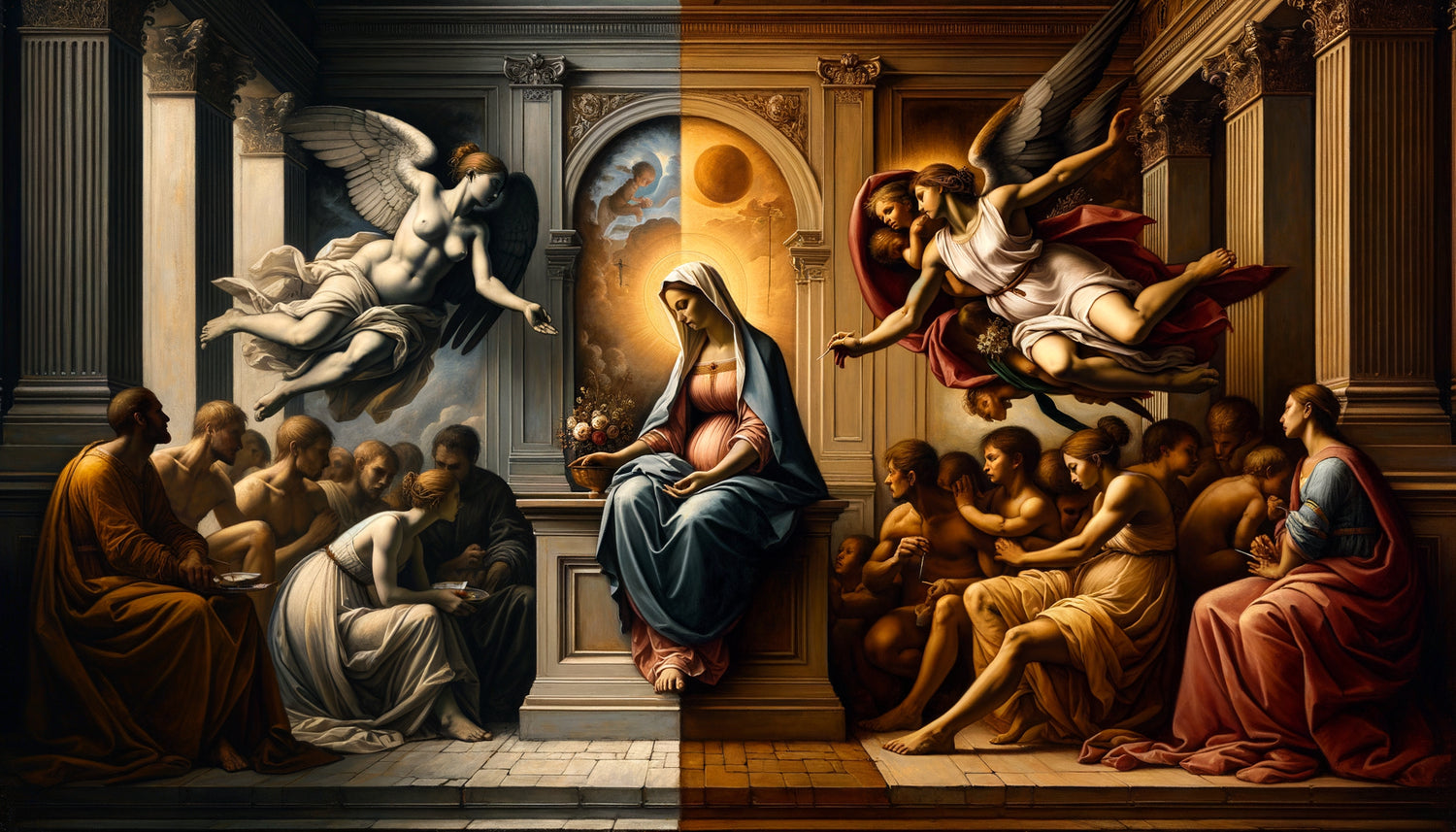
Some collectors choose thematic rather than stylistic coherence. A series of biblical scenes spanning Renaissance and Baroque creates a fascinating narrative: you see how Fra Angelico's Annunciation differs from Caravaggio's, how sensitivity changes while keeping the same subject.
Others prefer stylistic purity: a room entirely Renaissance becomes a humanist study, a baroque living room transforms into a theater of emotions. Both approaches are valid; only your personal vision counts.
The colors that connect your spaces
Observe your existing palette. Renaissance paintings favor lapis lazuli blues, delicate carmine reds, luminous golds – precious colors that wonderfully dialogue with interiors in neutral tones, beiges, pearl grays. The Baroque explodes in deep vermilions, dark emerald greens, warm browns – a chromatic richness that enhances woodwork, velvets, and interiors with dramatic accents.

Let's be frank about what worries every buyer of historical paintings: authenticity and value.
True antique paintings – Renaissance or Baroque – reach unaffordable peaks for most of us. But high-quality reproductions, antique workshop copies and contemporary interpretations offer fascinating alternatives.
A giclée print on canvas, if made with archival pigments and aged varnish, captures 90% of the emotion of the original. To live daily with a Titian or Vermeer, it is a perfectly legitimate choice. The essential thing is not to possess the original, but to maintain this daily dialogue with artistic genius.
Antique workshop copies from the 19th century have their own historical value. These academic painters spent months at the Louvre or the Uffizi Gallery reproducing the masters. Their work testifies to an era when copying was learning, honoring, transmitting. These works already bear the patina of time, that texture which immediately distinguishes an antique canvas from a modern print.
Finally, some contemporary artists offer reinterpretations – same composition, modernized palette, or vice versa. These bridges between eras create exciting visual conversations in an eclectic interior.
The Ritual of Choice: Listen Before Deciding
Now that you understand these universes, how do you choose your historical painting?
First, live with the images. Print your favorites in A3 format, pin them to the intended location. Observe them at different times of the day. Which one calls to you in the morning? Which one soothes you in the evening? A Renaissance painting that seems bland in full daylight may reveal its magic in the golden light of sunset. A Baroque scene too intense at 8 am can become your meditative refuge at 9 pm.
Next, test the scale. Proportions are critical. A small Renaissance painting (40x60 cm) enhances an intimate space – hallway, reading nook, cabinet of curiosities. Baroque paintings lose their power under 80x100 cm: they need space to deploy their theatricality.
Finally, listen to your narrative instinct. What story do you want to inhabit? The quest for harmony and ideal beauty of the Renaissance? Or the exploration of extreme emotions in the Baroque? Your home tells your story; this historical painting becomes an essential chapter.
Ready to bring history into your everyday life?
Discover our exclusive collection of historical paintings that transform your walls into galleries of timeless emotions.
You are now standing in front of your wall, but this time with a new perspective. It's no longer a paralyzing hesitation, it's a joyful exploration. Renaissance or Baroque, you now know how to recognize what resonates with your soul and harmonizes your space.
The right historical painting is not chosen only with the eyes or reason. It is chosen with that deep intuition that makes you say, when discovering it: “It’s him”. Trust this inner voice, now enriched by an understanding of these two magnificent universes.
Start with a first painting – the one that overwhelms you. The others will come naturally, over time and according to your discoveries and favorites. Your personal collection will be written in this way, chapter after chapter, in this ongoing conversation between your sensitivity and the legacy of the masters.