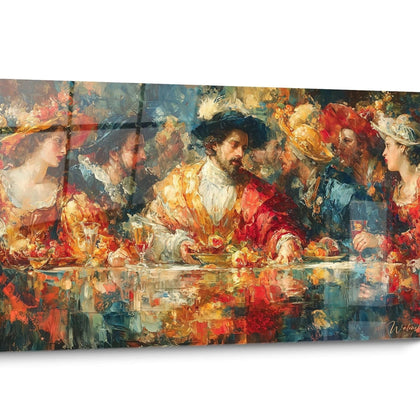
A Renaissance flower painting elevates your space through the timeless elegance of 16th and 17th century floral still life artworks. These large-format pieces capture the splendor of ancient botanical compositions with their deep chromatic palettes and spiritual symbolism. Each reproduction conveys the artistry of Flemish and Italian masters who magnified tulips, roses, irises and peonies in luxuriant arrangements laden with allegorical meaning.
The Art of Renaissance Bouquets in Contemporary Decoration
Acquiring a Renaissance flower painting transforms an interior's atmosphere through visual opulence inherited from Florentine and Bruges studios. These monumental floral compositions distinguish themselves through complex stratification where approximately thirty different botanical species interweave, creating the characteristic depth absent from minimalist modern arrangements.
Why do Renaissance floral compositions stand out from other wall decorations?
The typical pyramidal structure of Renaissance bouquets generates upward dynamism instantly captivating the viewer's gaze. Masters of this period strategically positioned flowers according to their symbolic value: white roses evoking Marian purity at the top, rare tulips testifying to earthly wealth at center, while faded flowers subtly reminded of vanity at the composition's base. This hierarchy creates vertical narrative reading absent from still lifes of other periods.
Shaded dark backgrounds, the aesthetic signature of large-format Renaissance flower paintings, dramatically amplify the chromatic brilliance of petals. This botanical chiaroscuro technique allows saturated hues of crimson peonies, ultramarine irises and vermillion carnations to burst visually with three-dimensional intensity. In a contemporary salon with neutral tones, this controlled chromatic explosion becomes the absolute focal point without ever tipping into garish exuberance.
Harmonious association with Baroque collections
Creating a coherent wall gallery, associating a Renaissance flower painting with other pieces from the same period proves particularly judicious. The Renaissance Baroque Painting collection offers the desired stylistic continuity, allowing composition of a sophisticated decorative ensemble celebrating Europe's artistic golden age. Book collectors and curators particularly appreciate these visual dialogues between aristocratic portraits and botanical still lifes sharing identical gilt and vermillion chromatic codes.
Botanical details as authenticity markers
Careful examination of botanical details reveals Renaissance artists' scientific precision studying plant anatomy rigorously. Leaf veining, velvety textures of rose petals, delicate stamens of lilies reproduced with microscopic exactitude testify to pre-photographic naturalistic observation. This botanical veracity paradoxically satisfies contemporary decoration enthusiasts seeking authentic vegetable alternatives to standardized digital reproductions.
Deciphering Hidden Meanings in Ancient Floral Paintings
Each Renaissance flower painting constitutes a genuine visual rebus where each plant species conveys coded messages comprehensible to the era's cultured elite. This allegorical dimension transforms the work from simple decorative ornament into support for philosophical meditation on existential cycles, Christian spirituality and the human condition.
How to interpret floral symbols in your decoration?
The variegated multicolored tulip, extraordinarily prized during Dutch tulip mania, signified financial extravagance and risky speculation. Its presence in a decorative Renaissance flower painting subtly recalls the ephemeral nature of material wealth. Columbine with drooping petals traditionally symbolized melancholy and Christian humility, while red peony simultaneously embodied Asian prosperity and medicinal healing according to period botanical treatises.
Meticulously rendered insects fully participate in allegorical discourse: the metamorphosed butterfly evokes spiritual resurrection, the buzzing fly recalls inevitable decay, while the golden beetle symbolizes cyclical regeneration. These microscopic animal elements, often invisible at first glance, reward prolonged observation and continuously enrich the contemplative experience of a large-format Renaissance flower painting installed in an office or reflection space.
Chromatic palette as emotional language
Renaissance flower painting color harmonies obeyed strict symbolic conventions. Purple and violet dominant tones evoked Christological passion and penance, particularly sought for private devotional spaces. Compositions dominated by yellow-orange celebrating sunflowers and marigolds communicated solar adoration and sentimental constancy, ideal for patrician matrimonial chambers.
Why do these symbols remain relevant today?
Contemporary appropriation of a Renaissance flower painting allows free personal resonance, detached from period dogma. A maximalist vegetation decoration enthusiast finds the desired luxuriant abundance, while an intellectual collector appreciates historical semantic strata. This interpretive versatility explains why these works traverse centuries without losing their capacity for wonder, unlike ephemeral decorative trends.
Current large-format reproductions preserve this original symbolic richness while adapting to modern spatial constraints. Slender vertical formats integrate into narrow urban apartment corridors, while panoramic horizontal compositions glorify vast walls of rehabilitated industrial lofts, proving the extraordinary architectural versatility of this botanical artistic heritage.
Enhancing Prestige Spaces with Floral Still Lifes
Installing a Renaissance flower painting in private or professional reception areas immediately establishes an atmosphere of cultural refinement and historical erudition. These monumental works function as social markers signaling appreciation for European artistic heritage and classical aesthetic sensitivity of their owners.
Which spaces particularly magnify these ancient floral compositions?
Residential entrance halls exceptionally benefit from the immediate visual impact of a large-format Renaissance flower painting. This first luxuriant floral impression announces the residence's sophisticated character. Formal dining rooms find in these botanical still lifes a natural echo to refined gastronomy and carefully dressed tables, creating thematic continuity between culinary and visual arts.
Private libraries and contemporary curiosity cabinets constitute the ideal environment for these erudition-laden works. The visual dialogue between ancient bindings and symbolic floral compositions reinforces studious and contemplative atmosphere. Wine cellar owners similarly appreciate the association of Renaissance flower paintings' deep wine-hued palettes with garnet and ruby tones of grand crus preserved, establishing sophisticated chromatic coherence.
Lighting adapted to characteristic dark backgrounds
Unlike luminous Impressionist works, a Renaissance flower painting requires precise directional lighting valorizing dramatic contrasts between shadowed backgrounds and brilliant flowers. Adjustable LED spotlights at warm 2700K temperature faithfully restore original golden and copper tones without denaturing chromatic subtleties. Museum-quality adjustable rail lighting allows experimenting with different light angles alternately revealing microscopic botanical details or the composition's overall impact.
How to create a coherent wall collection around this theme?
Building a thematic Renaissance gallery requires rigorous format and palette planning. Alternating vertical and horizontal Renaissance flower paintings generates dynamic visual rhythm avoiding monotony. Incorporating select period portraits or mythological scenes among floral compositions creates narrative breaths while maintaining overall stylistic unity. Gilded frames with sculpted moldings, though non-essential, amplify historical authenticity and justify investment in premium high-definition reproductions.
FAQ - Frequently asked questions about Renaissance flower paintings
Does a Renaissance flower painting suit minimalist modern interiors?
Absolutely, juxtaposing opulent floral still life against contemporary clean surfaces creates striking contrast become signature of high-end eclectic interiors. The work becomes the sole ornamental element in visual sobriety ocean, maximizing decorative impact while respecting minimalist principles of visual economy.
Which dimension to prioritize for a 35m² living room with cathedral ceiling?
Generous volumes call for monumental vertical formats exceeding 120cm height establishing balanced proportional dialogue with architecture. A large-format Renaissance flower painting anchors visual space without being overwhelmed by excessive verticality, particularly effective positioned above a deep sofa or majestic console.
Do current Renaissance flower painting reproductions preserve originality depth?
High-resolution giclée printing technologies on textured supports now faithfully reproduce superimposed glazes and characteristic impasto. The finest large-format reproductions even integrate selective varnish accentuating brilliant petal areas versus matte backgrounds, restoring this tactile dimensionality absent from standard prints fundamentally differentiating these works from simple decorative posters.


 Orange Flowers Symphony Wall Art - renaissance edition233,90 €
 Woman with Flowers Passion Incarnate Painting - renaissance edition233,90 €
 Exuberant Nature Floral Painting - renaissance edition213,90 €
 Woman Refinement Pictorial Painting - renaissance edition213,90 €