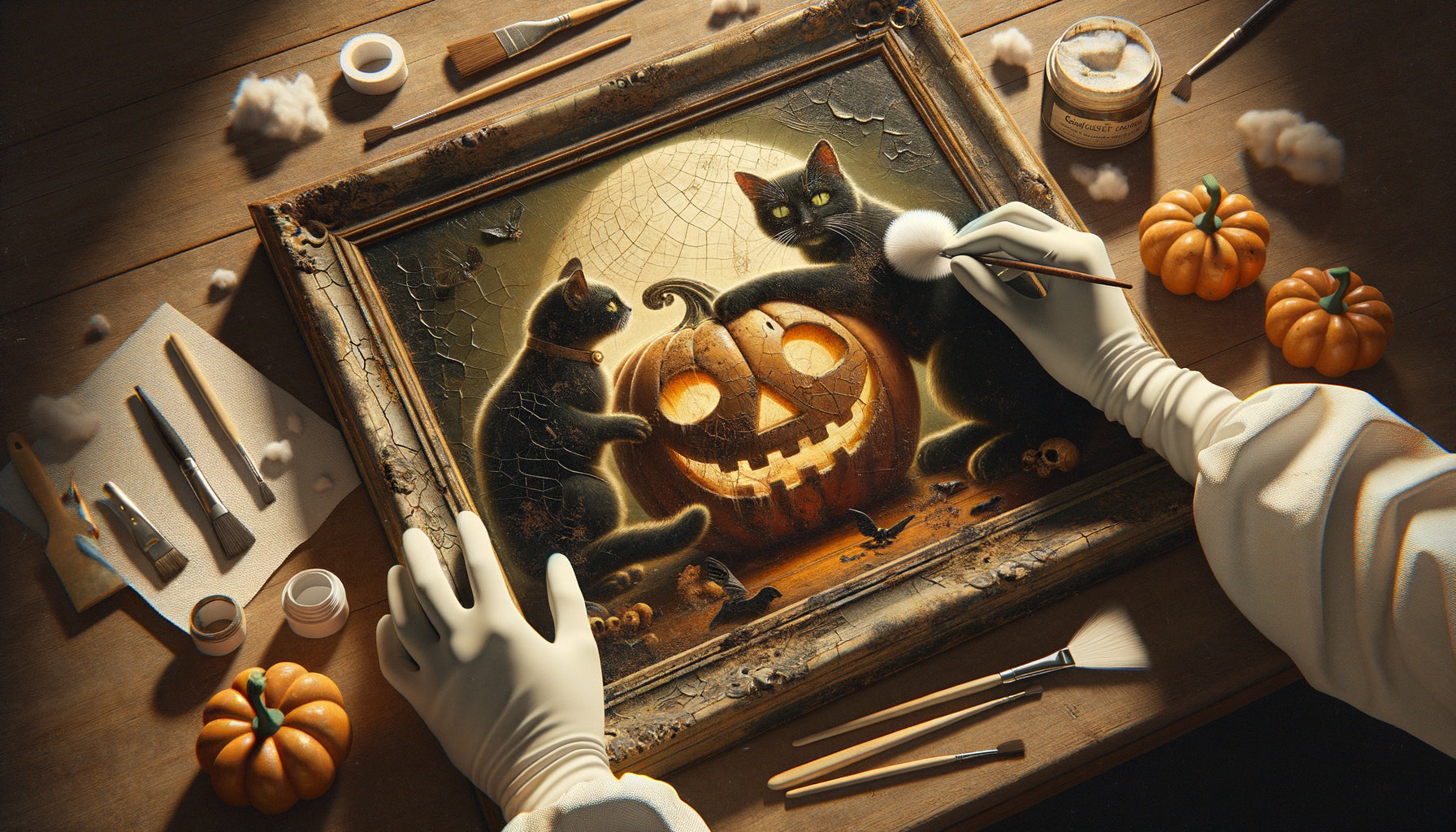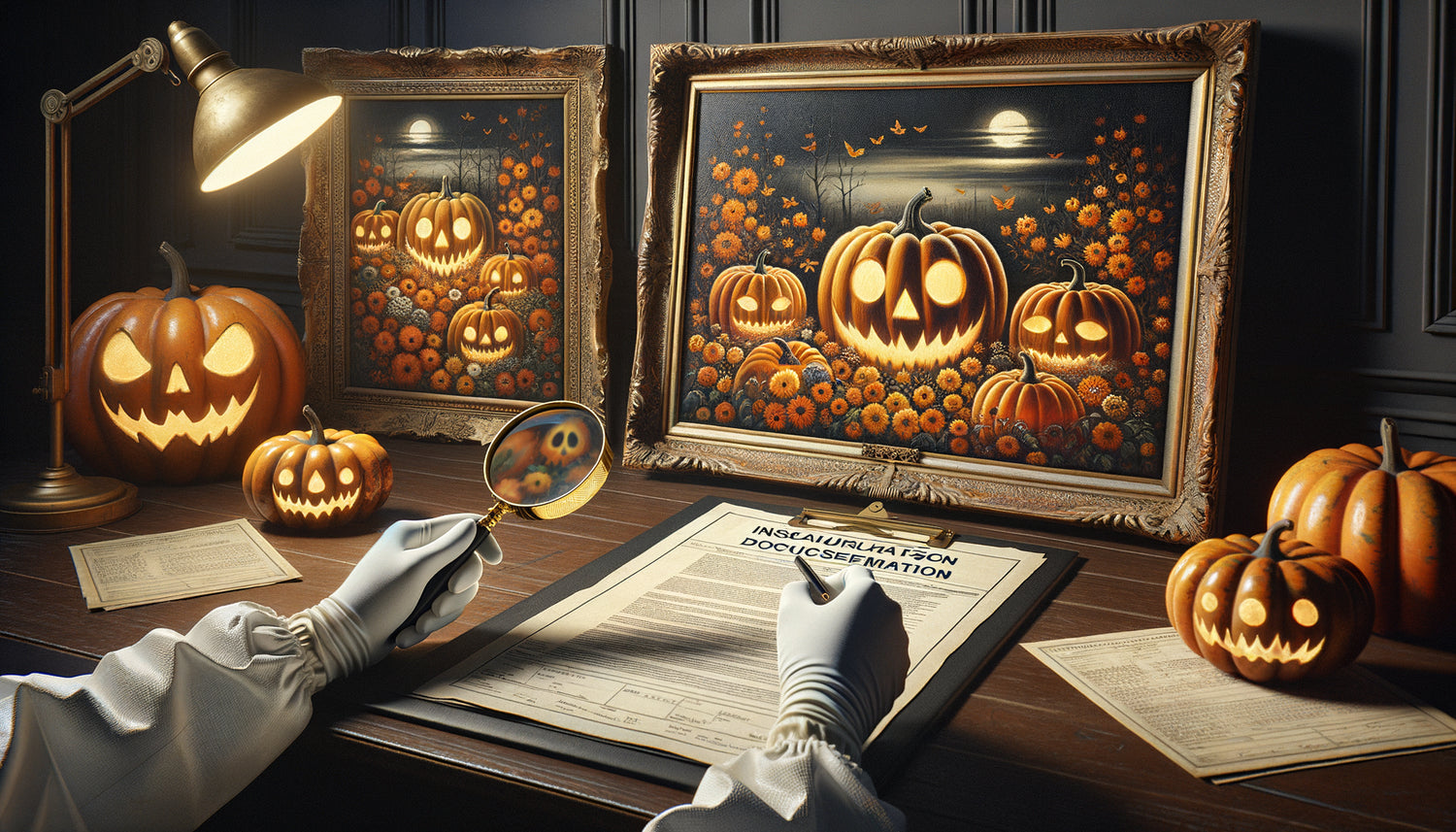
The shiver down your spine when you see a Halloween wall art from the collection has nothing to do with the carved pumpkins in the neighborhood. When you own a limited edition signed piece, a vintage 1920s screenprint or a contemporary canvas dedicated to macabre atmospheres, it's no longer about seasonal decoration. It's about heritage. About emotional and financial investment. And yet, how many collectors leave their precious works exposed without adequate protection, convinced that their standard home insurance will suffice? I have met too many enthusiasts devastated after water damage or a burglary, discovering that their standard policy only covered a fraction of the actual value. The good news? Protecting a themed collection like this is neither complicated nor ruinous when you know the right options. Here's what specialized insurance provides: coverage at the declared value of each piece, protection against all risks including during temporary exhibitions, and depreciation-free compensation that respects the true value of your collection.
Why Your Standard Home Insurance Isn't Enough
Most home insurance policies cap coverage for valuable items between €3,000 and €10,000 in total. Imagine owning five rare Halloween paintings each worth €4,000: your €20,000 collection would be underinsured by half, or even more. Worse still, these standard policies generally apply a depreciation factor that can reduce compensation by 30 to 50% depending on the age of the work. For a 1950s screenprint, this means being reimbursed on a depreciated basis while its market value has continued to increase.
Exclusions are another major trap. Moving to reorganize your exhibition space? Not covered in transit. You lend a piece to an art gallery friend for a temporary exhibition? Out of warranty as soon as it leaves your threshold. Not to mention damage caused by light, humidity or temperature variations, rarely covered by standard home insurance contracts. These risks are not science fiction: a faulty radiator or infiltration can destroy years of passionate collecting in a few hours.
Art Insurance: Tailor-Made Protection
Specifically designed for discerning collectors, art insurance works on the principle of agreed value. You have your Halloween paintings appraised by a recognized professional, and the insurer agrees to compensate you based on this amount in the event of a claim, without discussion of depreciation. This approach eliminates endless negotiations and disagreements over valuation that poison so many standard claims.
Coverage extends to all risks: theft with or without force, fire, water damage, accidental breakage, natural disasters, and even vandalism. Some contracts automatically include temporary relocation, loans for exhibitions, and even transport to a specialist restorer. This flexibility allows you to fully enjoy your passion without turning each artwork outing into an administrative obstacle course.
Major players in the French market
Insurers such as Hiscox, AXA Art, or Allianz offer flexible formulas from as little as €150 per year for a collection of €10,000. The rate then evolves proportionally, generally between 0.15% and 0.30% of the total insured value depending on the guarantees chosen and the security measures installed. A Halloween paintings collection valued at €50,000 would cost between €750 and €1,500 per year to fully protect.
These specialists understand the specificities of the art world. They accept appraisals from recognized professionals without systematically requiring a certificate of authenticity for each piece. Some even allow you to add new acquisitions during the year with a simple declaration, avoiding renegotiating the contract each time you fall in love with a piece in a gallery or on a specialized platform.

The extended warranty: the intermediate solution
If your collection remains modest, between €5,000 and €15,000, a simple extension to your home insurance contract may suffice. This intermediate option, called enhanced valuables coverage, increases indemnification ceilings and reduces exclusions for a reasonable monthly additional cost, often between €10 and €30.
However, pay attention to the specific conditions. Some insurers require the installation of an approved alarm system or a safe to validate this extension, while others impose a photographed inventory of each painting. Also check whether coverage applies to replacement value or appraised value: the difference can represent several thousand euros for rare pieces whose rating has increased since acquisition.
This formula is particularly suitable for novice collectors or those who prioritize contemporary works by emerging artists, whose unit value remains contained. It offers an interesting price-quality ratio to test your passion before investing in a custom coverage if the collection grows over time.
What to prepare before subscribing
A detailed inventory forms the cornerstone of any collection insurance process. For each Halloween artwork, document the <strong>title of the work, the artist, dimensions, technique used, year of creation and provenance</strong>. Photograph each piece from multiple angles with neutral lighting, including details such as the signature or any distinctive feature. Store these digital documents in a secure cloud and a physical copy off-site.
Professional expertise significantly enhances your file. An art expert or recognized auctioneer will establish a detailed valuation certificate, typically charged between 100 and 300 euros depending on the number of pieces. This document is authoritative with insurers and greatly facilitates tariff negotiations. Update these appraisals every three to five years, as the art market evolves constantly and your protection must follow the actual value of your assets.
Preventive measures that lower the premium
Insurers reward responsible collectors. Installing a certified NF A2P alarm can reduce your premium by 10 to 20%, as can equipping connected smoke detectors or a video surveillance system. Hanging your paintings on walls not exposed to direct sunlight and maintaining stable humidity between 45% and 55% demonstrates your seriousness in preservation.
Some contracts also reward collectors who store their works under optimal conditions: UV-resistant glass framing, reinforced wall fixings, distance from heat sources. These investments not only preserve your pieces but also lighten your insurance budget over the long term, creating a virtuous circle between protection and savings.

Pits to avoid at all costs
Underestimating the value of one's collection is the most common and costly mistake. Out of modesty or to save on premiums, some collectors declare amounts lower than reality. In the event of a disaster, this underinsurance triggers the application of the proportional rule: if you have insured 30,000 euros while your collection is worth 50,000, compensation will be reduced by 40% on all damages, even partial.
Another classic pitfall: failing to declare new acquisitions. You gradually enrich your Halloween painting collection over the years, but your contract remains fixed on the initial inventory? Added pieces will not be covered. Schedule an annual meeting with your insurer to update the list and adjust coverage accordingly.
Also beware of high deductibles hidden in the fine print. An economical contract may seem attractive with an annual premium of 200 euros, but impose a deductible of 2,000 euros per incident. Result: for any damage less than this threshold, you will receive nothing. Opt for reasonable deductibles, generally between 150 and 500 euros depending on the total insured value.
Your collection deserves more than a bare wall and flimsy protection
Discover our exclusive collection of Halloween paintings that will transform your interior into a fascinating private gallery, while also constituting a tangible and insurable asset.
Turning constraint into opportunity
Looking at your collection from the perspective of insurance requires salutary rigor. This exhaustive inventory, these methodical photographs, these regular expertises ultimately form the basis of a true approach to informed collecting. You come to know each piece intimately, to document its history, to track the evolution of its value. This discipline transforms spontaneous accumulation into a coherent and valuable collection.
The specialized insurance process also opens up unexpected doors. Insurers specializing in art often offer additional services: introduction to approved restorers, advice on optimal hanging or preventive conservation, access to private events for collectors. Some even organize free appraisal evenings to assess new pieces before acquisition.
Imagine the serenity of living surrounded by your favorite Halloween paintings, knowing that each work benefits from protection commensurate with its sentimental and financial value. No more stress before going on vacation, no more worry during a violent storm or a leak in the apartment above. Just the pure pleasure of contemplating these dark and fascinating universes that inhabit your walls, knowing that your passion rests on solid foundations. The first step? Pick up the phone to request three comparative quotes, inventory in hand. In three weeks, your collection will be protected as it deserves, and you can finally sleep soundly, even on Halloween night.
Frequently Asked Questions
How much does it really cost to insure a Halloween painting collection?
The rate depends directly on the total insured value and the chosen guarantees. For a modest collection of 5,000 to 10,000 euros, expect between 100 and 200 euros per year with an extension of your standard home insurance. Beyond 15,000 euros, opt for specialized fine art insurance costing between 0.15% and 0.30% of the declared value. Specifically, a collection of 30,000 euros will cost between 450 and 900 euros per year to fully protect, depending on the security measures installed and your claims history. This budget may seem significant, but it represents a minimal fraction compared to the financial and emotional loss that would result from the destruction or theft of irreplaceable pieces. Many collectors are surprised to discover that protecting their artistic heritage costs less than their annual subscription to streaming platforms.
Should each painting be appraised before subscribing?
A formal appraisal by a recognized professional is generally only required from 15,000 to 20,000 euros of total insured value, according to insurers. For smaller collections, recent purchase receipts, certificates of authenticity provided by galleries, or estimates from comparable online sales may suffice. However, investing in a comprehensive appraisal offers real advantages: it establishes an undeniable value that significantly accelerates claims in the event of a loss, and it sometimes reveals that certain pieces are worth more than you thought. An appraiser typically charges between 100 and 300 euros to examine about ten works, which remains reasonable for securing thousands of euros of heritage. Consider this expense as an investment in peace of mind and the enhancement of your collection.
What happens if I buy a new painting during the year?
Fine art insurance contracts generally provide a simplified procedure for incorporating new acquisitions. Most insurers grant a temporary automatic guarantee of 30 to 90 days for any new piece, provided its individual value does not exceed a certain percentage of the total insured collection, typically 10%. During this period, you must officially declare the acquisition with its characteristics and value, which results in a proportional adjustment of your annual premium. This flexibility allows you to remain spontaneous in your purchases without compromising protection. For warranty extensions on home insurance contracts, procedures are often more rigid: systematically contact your insurer before any significant acquisition to confirm immediate coverage. Some active collectors prefer to insure a slightly higher value than their current collection, creating room for impulsive purchases without urgent paperwork.