


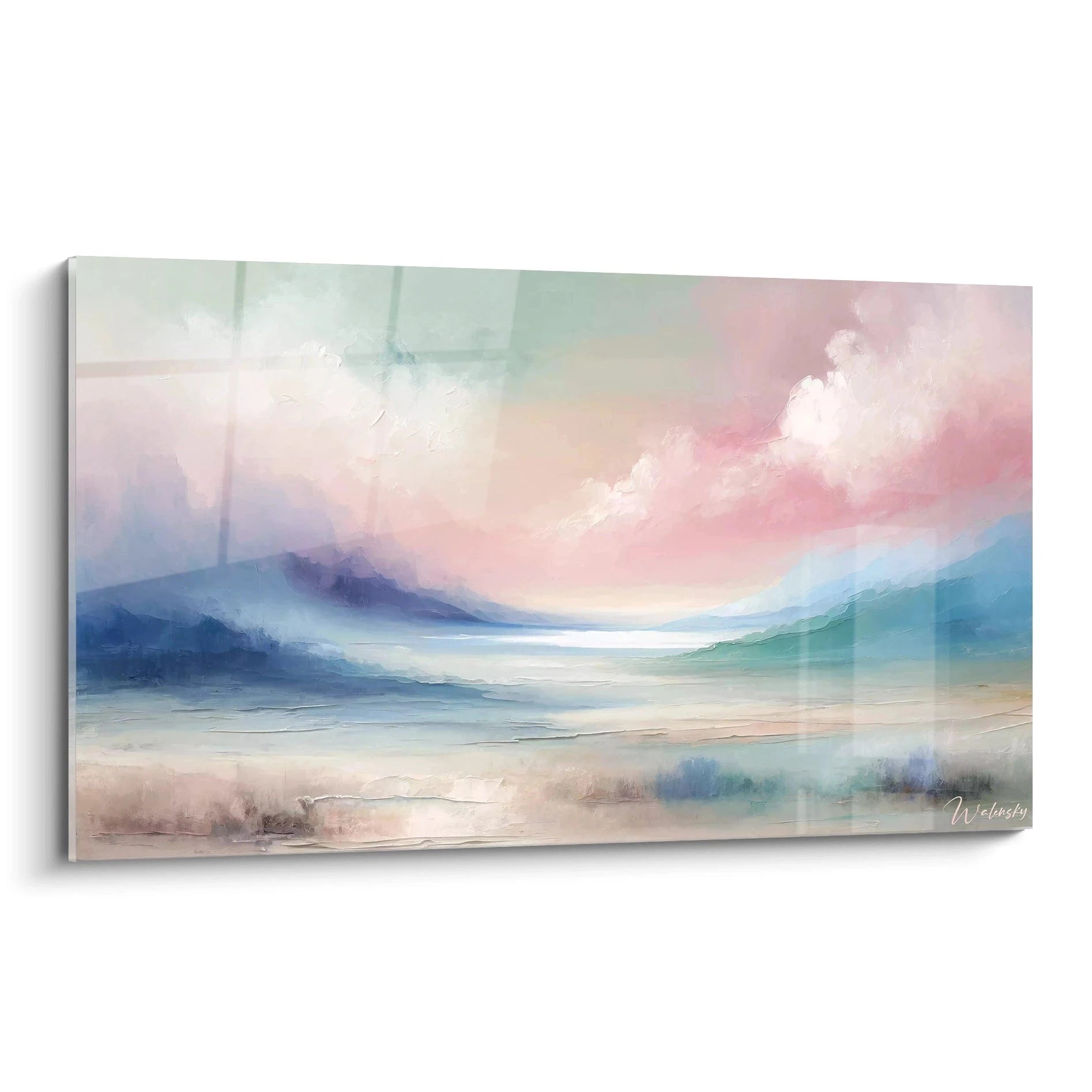

Is it possible to use the fixings of an old picture for a new one?
11 October 2025 · 16 min read · by Walensky
You’ve just splurged on a new magnificent picture that will transform your living room, but a question is nagging at you: do you need to drill new holes in your perfectly repainted wall, or can you use the fixings already in place from your old picture?
This hesitation has been gnawing at you for weeks. You can already visualize your new artwork illuminating your space, but the idea of drilling new holes in your wall is discouraging. Between the dust from drilling, the retouching of paint, and the risk of misplacing the new fixings, you keep postponing this decorating project.
You may have tried to roughly measure the location, or looked for universal fixings, but nothing really reassures you. This uncertainty prevents you from fully enjoying your artistic acquisition.
Rest assured, this frustration is perfectly normal and does not reflect your decorating skills at all. The real reason for this confusion? Most guides talk about installing pictures, but never about intelligently reusing existing fixings.
By the end of this article, you will know exactly how to reuse your existing wall hooks safely, and you will even discover pro tips to optimize the hanging of your new picture without drilling a single extra hole.
Why is this question becoming so crucial now?
In a world where sustainability and the circular economy are gaining importance, reusing existing fixings is no longer just a practical matter, it has become a thoughtful approach. Imagine: avoiding new holes, preserving the integrity of your walls, and installing your picture in minutes instead of hours. It’s just like reusing a solid foundation to build a new house!
🏠 Customer testimonial: "I moved into an apartment with 6 fixing holes in the living room. Instead of filling them and making new ones, I chose my new pictures based on these locations. The result? A perfect hanging in 15 minutes and total harmony in the room!"
Conversation with a decorating expert
The golden rule of intelligent reuse: A well-installed wall fixing can support several generations of pictures, provided that weight limits are respected and the hanging system is adapted. You will get an impeccable result in less than 30 minutes!

Let's discover what's really blocking you in this process
Three situations surely resonate with you: you stare for a long time at the old mounting holes wondering if they are still solid, you hesitate in front of your new painting imagining that it necessarily requires a specific system, or you postpone installation for fear of making an irreversible mistake.
These doubts do not reflect your incompetence, but rather the lack of clear information on the compatibility of mounting systems. The reality? The majority of wall fixings follow industrial standards designed to facilitate exactly what you want to do.
It's like a keychain: even if they all seem different, they use the same basic mechanical principles. Your concern comes from the fact that no one has explained these universal fixing codes to you.
The first truth about mounting systems
Contrary to what many think, there are only four main types of wall fixings for paintings, and they are designed to be interchangeable. The decoration industry has standardized these systems to avoid exactly the problem you are encountering.
Imagine fixings as A4 paper formats : regardless of your printer's brand, the paper always adapts. Manufacturers of paintings and fixings follow the same logic of universality.
This standardization completely transforms your approach: instead of looking for the perfect fixing for YOUR painting, you will simply identify the type of existing system and check compatibility. It's a shift in perspective that makes everything much simpler.
🧪 Quick test: Look at the back of your new painting. You will see either a metal cable, or D-rings, or a horizontal bar, or notches. Now observe your wall fixings: they must correspond to one of these four systems!
The second truth about the strength of fixings
Many believe that a fixing ages and loses its strength over time. In reality, a quality wall fixing installed correctly even becomes more stable over the years, as it "becomes one" with the wall.
It's like a tree that develops its roots: the longer it stays in place, the stronger the anchorage becomes. The only enemies of a fixing are excessive humidity and repeated vibrations.
This reality changes everything: instead of distrusting old fixings, you can trust them and even consider them as more reliable than new ones. Your energy will be better used to check compatibility than to doubt solidity.
The third truth about weight and balance
The most neglected factor in the reuse of fixings? Weight distribution rather than the total weight. A 3 kg painting poorly balanced can be more problematic than an 8 kg painting perfectly centered.
You can easily check this by observing the wear marks around your existing fixings. If they are uniform and discreet, it is a sign of a well-balanced system that can accommodate your new painting.
This knowledge frees you from the anxiety of weight: focus on balance and adaptation of the hanging system, and you will get a professional result without any risk.
🎯 The 3 green signals for a serene reuse:
- Fixing stable to the touch: It doesn't move when you apply slight pressure - it's like testing the solidity of a door handle
- No rust or deformation: The metal retains its original shape - a sign that the previous load was suitable
- Wall without cracks around the fixing: The anchor is healthy and can support a new picture of equivalent weight
The trigger element: the compatibility of the hanging system
The real secret of successful reuse lies neither in the brand of the fixing nor in the age of the painting, but in the adaptation of the rear hanging system. It's the positive domino effect: once this compatibility is ensured, everything else follows naturally. You will recognize this compatibility by observing that the hanging system of your new painting naturally "fits" your existing fixings.
The universal rule of compatibility: If your new painting and the old one have similar hanging systems and equivalent weight (± 30%), reuse is not only possible but recommended. Test by gently approaching the painting to the fixing.
| ❌ Common belief | ✅ Reality on the ground | 💡 Why this difference | 🎯 Practical advantage |
|---|---|---|---|
| It is necessary to change the fixings for each new painting | Quality fixings serve several successive paintings | Industrial standardization of hanging systems | Installation in 15 minutes instead of 2 hours |
| Old fixings are necessarily fragile | They are reinforced over time if properly installed | Mechanical anchoring improves through stabilization | Superior reliability to new fixings |
| Each painting requires specific fixings | 4 types of systems cover 95% of needs | Manufacturers' desire to simplify installation | Choice of paintings without technical constraints |
| The total weight determines compatibility | Distribution and balance are prioritized | Physics of forces: distribution > absolute mass | Optimal safety even with heavier paintings |
— Our selection


The progressive method for successful reuse
Now that you understand the mechanisms, let's move on to practice with a reassuring and methodical approach. Like building a piece of furniture from a kit, we will move step by step, checking each point before moving on to the next. At the end, you will have the satisfaction of having installed your artwork like a professional, without stress or error.
🎯 Overview of the method: Three logical steps like preparing a successful dish - first the analysis of the ingredients (evaluation), then the preparation (adaptation), finally the cooking (installation). Each step brings you closer to the final result: your artwork perfectly hung safely.
Step 1: Intelligent assessment of the existing
Starting with this step avoids unpleasant surprises and gives you confidence for the rest. It's like examining the foundations before building: this analysis allows you to make the right decisions. Once this assessment is complete, you will feel an immediate sense of relief as you will know exactly where you are going.
What you need for the assessment
- Measuring tape: Prefer a metal model of at least 3 meters - it remains rigid for vertical measurements and will give you measurements accurate to the millimeter. Flexible fabric meters distort measurements over short distances. Investing in a good measuring tape transforms the precision of your future decor projects.
- A small flashlight or your phone: Direct lighting reveals details invisible to the naked eye - micro-cracks, signs of wear, perfect alignment of fixings. It's your diagnostic tool that makes the difference between an amateur and a connoisseur. Good lighting gives you confidence in your observations.
- A spirit level: Even a small 20 cm level is sufficient - it detects imperceptible deviations that would impact the final aesthetics. It ensures that your new artwork has the elegance of a professional hanging.
Let's now move on to the practical inspection of your fixings
Methodical inspection in 3 steps
Stability test by touch: Apply gentle but firm pressure on each fixing by pushing it in different directions. A healthy fixing should have no play or movement. This check instantly reveals the condition of the wall anchor - your first indicator of reliability.
⏱️ Time: 2 minutes per fixing | ✅ Successful when: No movement perceptible, clear metallic sound when tapped | ⚠️ Attention: Slight play may indicate a dowel that is working - normal after a few years, but check that it does not worsen
Measurement of the center-to-center distance: Measure the exact distance between your existing fixings (center to center). This measurement determines whether your new artwork can be adapted without modification. Note this distance precisely - it becomes your reference for all your future artwork purchases.
⏱️ Time: 3 minutes | ✅ Successful when: Measurement noted to the millimeter, checked twice | ⚠️ Attention: Always measure between the centers of the fixings, not between the edges - a common mistake that throws off the whole process
Identification of the fixing type: Observe the shape and mechanism of your wall fixings. Photograph them in good lighting - this image will serve as a reference when you make purchases or searches. Each type has its own specific usage and advantages.
⏱️ Time: 1 minute | ✅ Successful when: Type identified and clear photo taken | ⚠️ Attention: Do not confuse a simple hook and a safety hook - they do not have the same load capacity
✅ Validation of step 1: Your fixings are stable, you know their exact pitch and type. If one of the checks reveals a minor problem, don't panic - most are easily correctable. You are now ready to move on to analyzing your new artwork!
Step 2: Analyzing the compatibility of your new artwork
Now that you have mastered your existing artwork, let's discover the secrets of your new artwork. This step reveals the hidden information that determines the success of the installation. This is where you develop your expert eye and understand why some hangings are perfect and others are approximate.
Analysis tools for your artwork
- A kitchen scale: To weigh your artwork precisely - the actual weight often differs by 20% from the estimated weight. An accurate scale to the gram avoids dangerous approximations. This is the most critical information for safety.
- Your tape measure: To measure the pitch of the rear hanging system and verify compatibility with your wall fixings. This double measurement (wall + artwork) instantly reveals the feasibility of the project.
The technical analysis in 2 crucial checks
Weighing and load evaluation: Weigh your artwork and compare this weight to the capacity of your existing fixings (usually indicated on the original packaging or estimable according to the type). Apply a safety margin of 30% - if your fixings support 10kg, limit yourself to a maximum of 7kg.
⏱️ Time: 5 minutes | ✅ Successful when: Exact weight known and compatible with safety margin | ⚠️ Attention: Never neglect the weight of the frame - it can double the weight of the artwork alone
Hanging pitch verification: Measure the distance between the hanging points on the back of your artwork. This measurement must correspond exactly (±2mm) to the pitch of your wall fixings. This is the absolute compatibility criterion - without a perfect match, installation will be impossible or dangerous.
⏱️ Time: 3 minutes | ✅ Successful when: Pitches identical to within 2mm | ⚠️ Attention: Always measure on a flat-laid artwork - the standing perspective distorts measurements
Step 3: Expert and secure installation
You are now at the long-awaited moment: the actual installation. Armed with your complete analysis, you will proceed with the precision of a professional. This final step will give you immense satisfaction - that of perfectly mastering your wall decoration project.
The professional installation sequence
Positioning and dry test: Gently bring your artwork closer to the fixings without forcing, just to verify perfect alignment. This step reveals the micro-adjustments necessary before the final hanging. This is your dress rehearsal that guarantees an impeccable result.
⏱️ Time: 5 minutes | ✅ Successful when: Perfect alignment without forcing | ⚠️ Attention: Never force - if it resists, recheck your measurements
Hanging and safety test: Hang your artwork by applying gentle but firm pressure to engage the hanging system properly. Then perform a stability test by slightly moving the artwork in different directions. It should be perfectly stable with no play.
⏱️ Time: 3 minutes | ✅ Successful when: Artwork stable, perfectly horizontal | ⚠️ Attention: An artwork that leans slightly often reveals a fixing that is not well anchored - to be monitored
Final check and adjustments: Step back 2 meters and observe the whole. Check the level with your level and the visual harmony with the rest of the room. This final step refines the aesthetics and confirms the success of your installation.
⏱️ Time: 5 minutes | ✅ Successful when: Painting perfectly horizontal and aesthetically harmonious | ⚠️ Attention: The eye detects deviations invisible to the level - rely first on the level then adjust according to your perception
The secure progression rule: Never move on to the next step until the previous one is perfectly mastered. Doubt about stability? Check twice rather than once. This patience guarantees a professional and durable result.
You now master the basics, but some expert tips can transform your installation from "successful" to "perfect". These subtleties make the difference between an amateur hanging and a result that impresses your guests.
🎯 Professional decorator tip: Use a small piece of paper cache between the fixing and the painting's hanging system - this eliminates micro-vibrations and squeaks, while protecting the finish of your frame. This simple technique gives a silent and premium rendering to your installation.
"What if my new painting is heavier than the old one?"
"I just bought a magnificent painting with a more imposing frame than the previous one. Can I still use my existing fixings?"
Excellent question that reveals your concern for safety! The difference in weight is not a deterrent if it remains within a reasonable range. Specifically, if your old painting weighed 4kg and the new one weighs 6kg, your fixings can generally handle it. The trick? Distribute the weight better by finely adjusting the rear hanging system to be perfectly centered.
🔍 Immediate validation test: Hang your new painting and observe it for 24h. If it remains perfectly stable and horizontal, it's validated! If there is any sagging or movement, you will need to reinforce or change the fixings.
— Also to discover


The traps to avoid at all costs (and how to avoid them)
Even with the best preparation, some common mistakes can compromise your installation. I reveal the most frequent ones so you can avoid them, because they are all easily preventable when you know them.
- ⚠️ Neglecting to check the level after hanging: The eye quickly gets used to a slightly tilted painting, but your guests will notice it immediately. Always take 30 seconds to check with a level after each installation. This simple habit avoids 80% of hanging corrections.
- 📏 Measuring the spacing with the painting standing: Perspective distorts measurements - always place your painting face against a flat surface to measure precisely. This parallax error can create a displacement of several centimeters and make installation impossible.
- 🔧 Forcing a hanging system that resists: If the hanging doesn't go on naturally, something is wrong - never force. Review your measurements or examine the compatibility of the systems. Forcing can irreparably damage the painting or fixing.
- Underestimating the weight of the frame: A massive frame can weigh as much as the artwork itself - always weigh the entire assembly. This misjudgment is responsible for many falls of paintings that were initially well-attached.
- Forgetting the 30% safety margin: Do your fixings support 10kg? Limit yourself to a maximum of 7kg. This margin absorbs variations in installation quality and dynamic stresses (vibrations, door opening/closing). It's your assurance of peace of mind.
Safety checklist before validation: Fixings stable to the touch, painting horizontal at level, weight verified with safety margin, hanging system engaged without forcing. Warning signs: creaking, slight movements, painting that gradually tilts, wear marks that worsen.
— In the same spirit


Frequently asked questions about reusing fixings
Between €15 and €50 depending on the type of fixings and installation complexity, not including the time saved (minimum 2h). The biggest saving? Avoiding painting touch-ups and the risk of a botched drilling. Optimize by planning your future painting purchases according to your existing spacing.
Absolutely! A quality fixing correctly installed even improves its grip over time. Only excessive humidity and repeated impacts can degrade it. Simply check that it doesn't move to the touch and that no rust is visible. 10 years is the age of maturity for a wall fixing.
A deviation of 1-2mm is negligible and compensates naturally. Beyond that, three solutions: modify the rear hanging system of the painting (often possible), add an intermediate fixing, or choose a different painting. Never attempt to move an existing fixing - you risk damaging the wall.
95% of standard paintings adapt to the four main types of wall fixings. Exceptions: very heavy paintings (>15kg), very wide panoramic formats, or works with special hanging systems. If in doubt, photograph your fixings and show them before purchase - most sellers know the compatibilities.
Plasterboard walls require more vigilance as anchoring evolves differently over time. Particularly check for any play in the fixing and do not hesitate to reduce the maximum load by 20%. If your old fixing held a 5kg painting, stick to a maximum of 4kg for the new one. Caution pays with plasterboard!
Your transformation from amateur to hanging expert
In a few weeks, when your friends ask you how you always manage to create such perfect wall arrangements, you’ll smile, remembering this article. You now master a skill few people possess: optimizing the existing while creating beauty. This sustainable and clever approach reveals your practicality and your taste for discreet excellence.
Beyond the savings and time gained, you’ve developed a technical eye that will serve you for all your future decor projects. This ability to analyze, adapt, and optimize transforms your relationship with interior design: you no longer suffer from constraints, you transform them into creative opportunities.
The best part of this story? You’ve just proven that intelligence and creativity are better than brute force and impulsive purchases. Your first move? Raise your level and hang that painting that’s been waiting for too long. You now have all the keys to succeed.
🚀 Your creative challenge: Transform this acquired skill into a personal decor signature! You now possess the secret of perfect wall arrangements that last. Your living room will radiate a new artistic energy.
Also to read: 🔧 Read our advanced technical solutions


