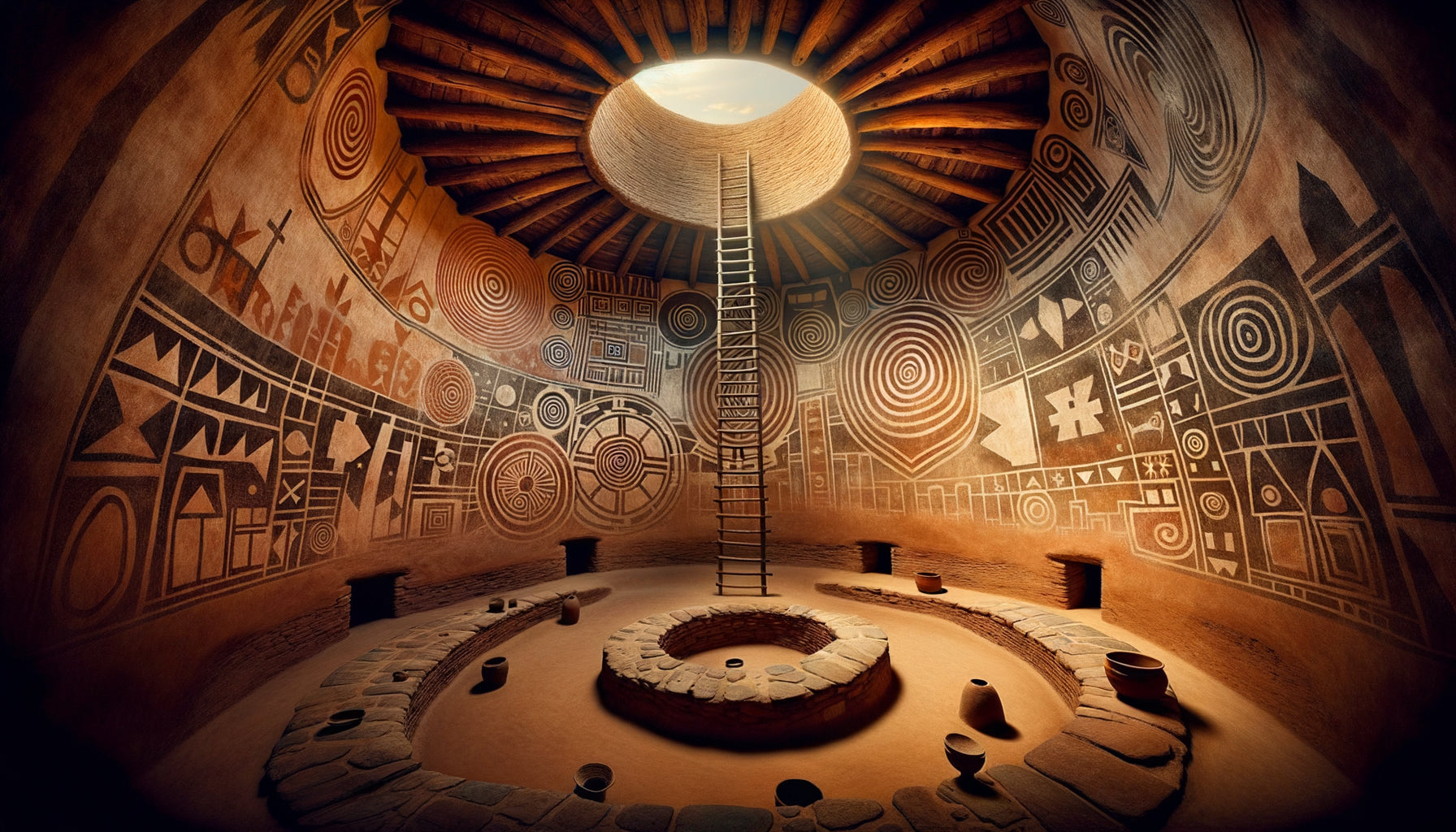
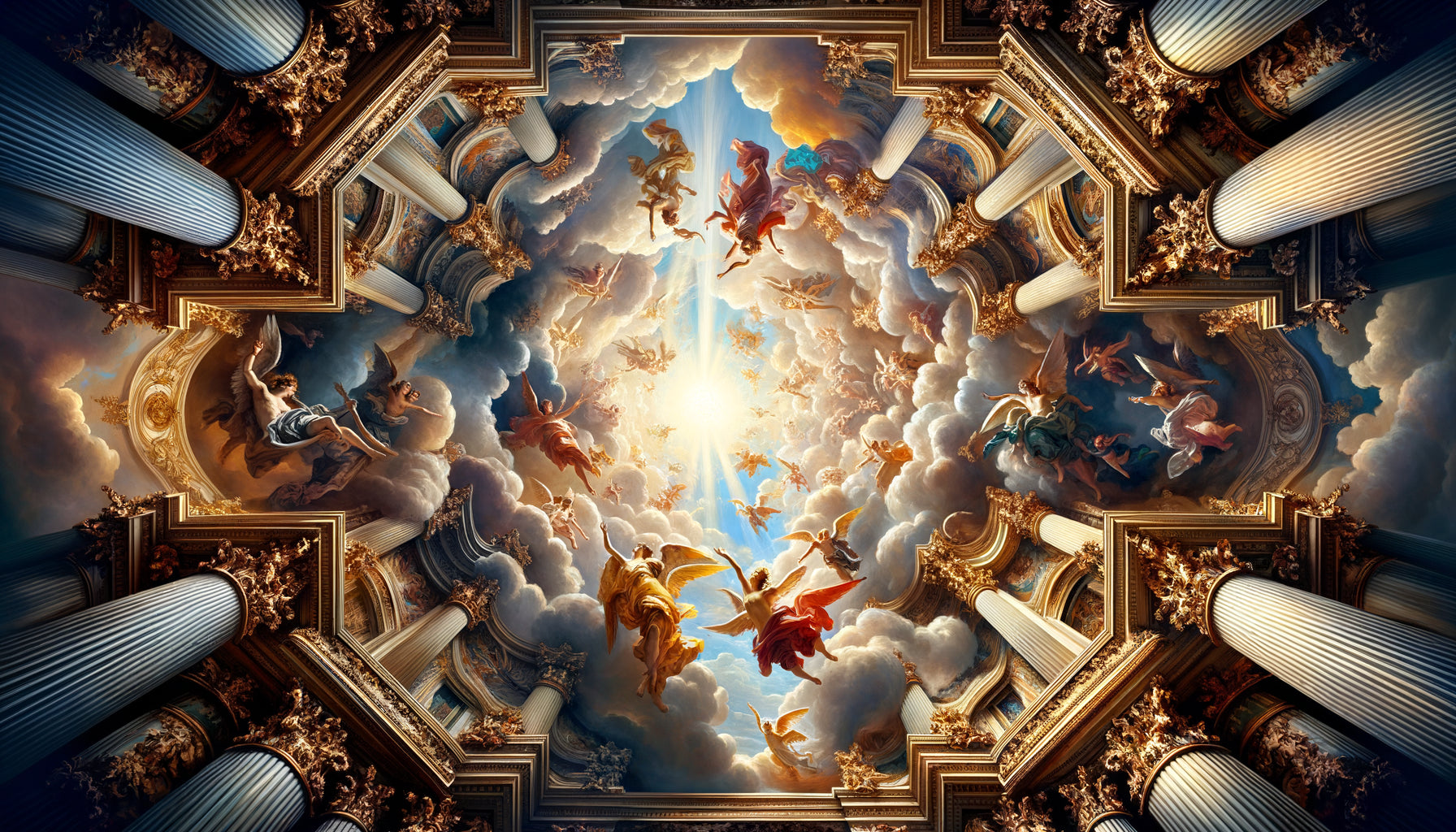
Look up at a Renaissance ceiling. These starry vaults filled with golden stars, these frescoes where Urania unfolds her celestial charts, these finely crafted armillary spheres in curiosity cabinets... Behind this splendor lies a secret that few visitors suspect: the stars contemplated by Botticelli, Raphael or Titian bore Arabic names and obeyed representations from Baghdad, Cordoba and Damascus.
Between the 9th and 15th centuries, while Europe was going through its dark ages, Arab astronomers mapped the sky with unparalleled precision, renaming constellations and reinventing their iconography. When the Renaissance broke out in Italy, it drew heavily on this scientific and visual treasure to create its own celestial representations. Here's what this millennial transmission brings to your understanding of Renaissance art: a renewed reading of celestial motifs, the discovery of an unsuspected cultural dialogue between East and West, and an unprecedented inspiration to reinvent cosmic representations in your interior.
You may admire these magnificent space paintings that adorn contemporary interiors without realizing that they are part of a thousand-year-old iconographic tradition. Yet, understanding this lineage changes everything: each constellation becomes a gateway between civilizations, each celestial representation tells a story of translation, adaptation and reinvention.
Rest assured: no need to be an art historian or Arabist to grasp this fascinating influence. I propose a journey through illuminated manuscripts, astrological ceilings and celestial globes to discover how medieval Arab astronomers literally redrew the European sky.
When Baghdad mapped the stars for the West
In the 9th century, under the Abbasid caliphate, Baghdad became the intellectual center of the world. In the House of Wisdom, scholars like Al-Sufi completely revised the Ptolemaic heritage. In 964, he published The Book of Fixed Stars, a revolutionary treatise that describes more than a thousand stars with astonishing precision.
But Al-Sufi does not just measure: he visually reinterprets the Greek constellations through the prism of Islamic culture. Orion becomes more martial, Andromeda adopts oriental clothing, and the Virgin wears different attributes. These iconographic changes, far from being trivial, reflect a different understanding of the cosmos and its representation.
Al-Sufi's manuscripts, copied and illuminated throughout the Islamic world, present celestial illustrations of striking beauty. The constellations appear in two perspectives: viewed from Earth and viewed from outside the celestial sphere, a major conceptual innovation that will revolutionize European cartography.
The names of the stars: a linguistic heritage still alive
Look at a modern celestial map: Aldebaran, Rigel, Deneb, Altair, Betelgeuse, Vega... More than 200 star names we use daily are of Arabic origin. This nomenclature was established in Europe via the Latin translations of Arab treatises in the 12th and 13th centuries.
Aldebaran comes from al-dabarān (the follower, as it follows the Pleiades), Betelgeuse from yad al-jawzā' (the hand of the giant), Deneb from dhanab (the tail). Each Arabic name carried a meaning related to the star's position in its constellation, thus creating a true celestial narrative.
The artists of the Italian Renaissance, consulting astronomical tables translated from Arabic, incorporated these names into their representations. On 15th century Florentine celestial globes, this double nomenclature can be found: traditional Latin names coexist with their Arabic equivalents, testifying to a fascinating cultural hybridization.

How Andalusian manuscripts redrew the Italian sky
Muslim Spain plays a crucial role in this transmission. In Toledo, Cordoba and Seville, translation workshops transform Arab treatises into Latin, making an incomparable astronomical knowledge accessible to Christian Europe.
Andalusian manuscripts have a remarkable aesthetic particularity: they blend Berber, Iberian and oriental influences in their celestial illuminations. The constellations adopt hybrid costumes, unprecedented postures, flamboyant colors. When these codices arrive in Italian libraries in the 15th century, they offer artists a radically new iconographic repertoire.
The famous Book of the Birth of Things by Ristoro d'Arezzo (1282) is one of the first Italian testimonies of this influence. Its celestial diagrams borrow directly from Arab models, both in the arrangement of stars and in the graphic treatment of constellations.
Astrological ceilings: when the Renaissance paints with Baghdad brushes
Enter Palazzo Schifanoia in Ferrara. Its famous Salone dei Mesi (1469-1470) unfolds a program of astrology of astonishing complexity. Francesco del Cossa represents the zodiacal decans according to an iconography directly derived from Arab treatises, notably Abū Ma'shar's Introduction to Astrology, translated in the 12th century.
The figures of the decans – these subdivisions of ten degrees of each sign – present exotic attributes, oriental postures, objects from elsewhere. The Aries decan holds a falcon, the Taurus decan wears a turban, and the Gemini decan plays Persian instruments. Each detail betrays the Arabic origin of the sources consulted.
This influence is also found in celestial globes. The splendid globe of Johannes Stöffler (1493), preserved at the Museo Galileo de Florence, presents constellations whose iconography skillfully mixes Ptolemaic traditions and Arab contributions. Cassiopeia appears seated in an oriental style, Hercules wears a tunic close to a kaftan, details impossible without the mediation of medieval astronomers.

The astrolabe: the Arabic instrument that fascinated humanists
The astrolabe, perfected by Arab astronomers, becomes the most prized scientific object of the Renaissance. These astronomical calculation instruments, with hypnotic beauty, adorn the portraits of humanists and cabinets of curiosities.
Italian artisans meticulously copy Andalusian and Maghreb models, reproducing their elegant engravings, their scales graduated in Arabic numerals, their openwork networks representing stellar positions. In the paintings of Holbein, Carpaccio or Sebastiano del Piombo, the Arabic astrolabe becomes the quintessential attribute of the scholar, symbolizing access to universal knowledge.
This fascination is not limited to prestige: Italian astronomers actually use these instruments for their observations. The Alfonsine tables, compiled in Castile in the 13th century based on Arab calculations, remain the astronomical reference for Europe until the 16th century. Every celestial representation of the Renaissance thus relies, directly or indirectly, on data calculated by Arab scholars.
Reinventing celestial iconography in your interior
This millennial transmission is not only for museums. Understanding how cultures dialogue through celestial representations opens up exciting decorative perspectives. A celestial painting then becomes much more than a decorative element: it embodies a history of encounters, translations and reinventions.
The hybrid constellations of the Renaissance – half-Greek, half-Arabic – offer an unparalleled visual richness. Their aesthetics blend geometric rigor and oriental sensuality, scientific precision and the poetry of stellar names. In a contemporary interior, these references create a rare cultural depth, a bridge between eras and civilizations.
Think of these ancient celestial globes where constellations simultaneously bear their Latin and Arabic names, where figures adopt postures from several traditions. This cultural stratification inspires a new generation of cosmic representations today, aware of their plural heritage.
Extend this celestial odyssey into your space
Discover our exclusive collection of space paintings that captures this millennial encounter between Arabic science and Renaissance art, transforming your interior into a celestial cabinet of curiosities.
A living transmission, not a relic of the past
The influence of medieval Arab astronomers on Renaissance celestial iconography is not just a historical footnote. It forms the very foundation of our modern cosmic imagination. Every time we name a star, trace a constellation or represent the sky, we activate this heritage.
Renaissance artists saw no contradiction in drawing from Arabic sources: they sought the most accurate knowledge, the most beautiful representation, regardless of its origin. This openness created a visual syncretism of unparalleled richness, which we can still celebrate today.
By adorning your interior with celestial representations aware of this complex genealogy, you are not just adding a decorative touch. You enroll your space in a millennial conversation between civilizations, where each star becomes a word, each constellation a sentence of this infinite dialogue.
Look up again at these Renaissance vaults. Now you will see in their golden constellations the silhouettes of Baghdad astronomers peering at their astrolabes, hear the echo of Toledo translators, recognize in each stellar name a bridge thrown between worlds. The sky painted by the Renaissance speaks Arabic as much as Latin, and it is precisely this polyphony that makes its timeless beauty.
Frequently Asked Questions
Did Renaissance artists really know Arabic sources or were they just using translations?
The artists themselves were working from Latin translations, but this mediation did not diminish the Arabic influence. The translated manuscripts preserved the original illustrations, faithfully copied by European illuminators. Moreover, the learned advisors who developed the iconographic programs for astrological frescoes – such as Pellegrino Prisciani for the Palazzo Schifanoia – were perfectly familiar with Arabic sources and ensured their respect. Globes and astrolabes imported directly from the Islamic world also circulated in Italian courts, offering direct visual models. The transmission was therefore both textual and visual, bookish and material, ensuring remarkable fidelity to the original sources.
Can we still see concrete examples of this influence in Italian monuments today?
Absolutely, and in surprising numbers! In addition to the Palazzo Schifanoia in Ferrara already mentioned, visit the Sala del Mappamondo at the Palazzo Farnèse in Caprarola, whose ceiling (1574) presents constellations directly inspired by Al-Sufi. The Palazzo della Ragione in Padua preserves a 14th-century astrological cycle blending Arabic and Latin iconography. In Florence, the Museo Galileo exhibits several Renaissance celestial globes bearing Arabic nomenclature and hybrid figures. The Laurentian Library, also in Florence, possesses illuminated astronomical manuscripts showing this stylistic fusion. Even the Villa Farnesina in Rome presents, in its Sala di Galatea, astrological references derived from medieval Arabic sources. These testimonies are accessible and allow us to visually witness this fascinating cultural transmission.
How to integrate this historical richness into a contemporary interior without falling into pastiche?
The key lies in selectivity and understanding of meaning rather than the accumulation of decorative elements. Prioritize one or two masterpieces – a painting representing constellations with their double nomenclature, a reproduction of a historic celestial map – rather than a profusion of objects. Opt for purified representations that respect the geometry of stellar configurations while suggesting their history: elegant typography blending Latin characters and calligraphy inspired by Arabic, color palette reminiscent of medieval illuminations (lapis-lazuli blues, golds, ochres). The essential thing is to create an intellectual resonance rather than a literal reconstruction. A simple minimalist painting of the constellations with their Arabic and Latin names, accompanied by careful lighting, will suffice to evoke this millennial transmission with subtlety and elegance, transforming your wall into a celestial palimpsest.