A few years ago, during a property valuation in the 7th arrondissement, I observed two identical apartments: same size, same light, same parquet flooring. One sold for €40,000 more. The difference? Its hallway featured four framed watercolors under museum-quality glass, while the other displayed drooping IKEA reproductions at the corners. That day, I realized that authentic art doesn't decorate a space: it transforms it into an asset.
Investing in genuine paintings for your hallway offers three decisive advantages: measurable property valuation (+8 to 15% on high-end estimates), an irreplaceable daily sensory experience, and an emotional legacy that transcends generations. Many hesitate, believing that art is reserved for living rooms or that a hallway deserves only temporary decor. Rest assured: these transition spaces are precisely those that reveal your sensitivity. I'm going to show you why this decision, far from being an aesthetic whim, constitutes the most intelligent emotional and financial investment for your interior.
The materiality as a signature of authenticity
Approach an original painting. Really close. You perceive the reliefs of the paint, those micro-accidents where the brush hesitated, those impasto that captures the grazing morning light. A poster, however high definition it may be, remains a flat, uniform, dead surface. This three-dimensionality changes everything in a hallway: each passage becomes a rediscovery depending on the angle, the hour, your mood.
Authentic canvases breathe. Literally. The linen, the cotton react to variations in humidity, creating this subtle dialogue with space. I have seen collectors install works in their hallways precisely for this living presence – like a silent companion who ages with you, patinas, tells the passage of time.
The framing also makes all the difference. Custom custom frames, with their solid wood moldings, anti-UV glass, and cotton rag mats, protect the investment while creating a museum-like staging. A poster in its standardized frame shouts its temporary status. A properly framed painting affirms its intention to stay.
The psychological effect of daily passage
We walk through our hallways fifteen to thirty times a day. These are transition zones where our brains switch from one mental state to another: from rest to work, from intimacy to welcome, from stress to comfort. Installing genuine paintings in these spaces creates micro-contemplative pauses that unconsciously regulate our inner rhythm.
One client told me how an abstract oil painting in her hallway had become her morning ritual: three seconds of stopping, a look, a breath. Impossible with a poster. Authentic art possesses this emotional density that reproduction cannot convey. It's the difference between reading a handwritten letter and an email: the content may be identical, but the impact on our nervous system differs radically.
Hallways often host our moments of solitude – when guests have left, when the house sleeps, when you hang up a difficult call. These moments deserve more than generic decor. They deserve works that recognize you, that carry the story of your choice, your gallery find, that signature on the back that only you know.
The spatial storytelling that only true art composes
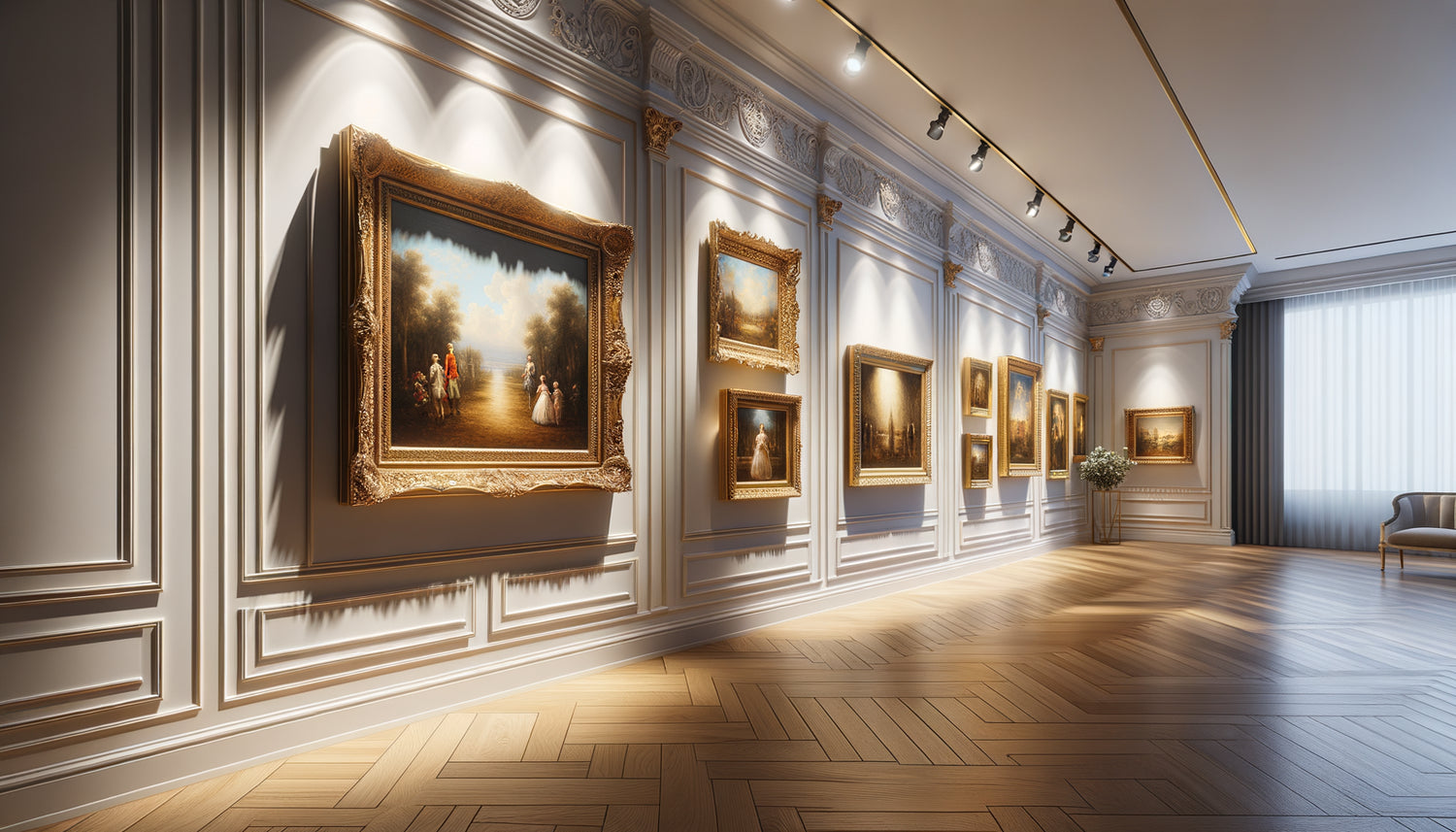
Five paintings in a hallway don't tell the same story as five posters. Original art allows you to create coherent visual sequences: variations on a theme, chromatic progression, dialogue between eras or techniques. I have orchestrated installations where a series of 19th-century etchings conversed with contemporary acrylics, creating a timeline that visitors traversed like a narrative.
This personal curation is impossible with standardized reproductions. Authentic paintings offer unique formats, imperfect tones, contradictory presences that mysteriously balance each other. Your hallway becomes an intimate gallery, not a linear IKEA catalog.

The heritage and real estate valuation
Let's talk numbers. A hallway with four original paintings (average investment: €2000-€4000) increases the perceived value of a property by 8 to 15% during visits. Why? Because the buyer immediately projects a cultivated lifestyle. Real estate agents know it: apartments with authentic art sell faster and for more.
But the real valuation is heritage-based. Unlike posters that go out of style in three years, paintings – even by emerging artists – retain or increase their value. I have clients who bought works for €400 ten years ago, now valued at €1800. Their hallway has become a aesthetic safe.
This legacy dimension changes everything. On the back of each canvas, note the date of acquisition, the context, the emotion. Your children will not receive Mondrian posters, but pieces charged with your history, your tastes, your era. That's the difference between passing down furniture and passing down tangible memory.
The technical criteria that justify the investment
Hallways are harsh environments: frequent passages, temperature variations near doors, sometimes little natural light. Original paintings, properly prepared (protective varnish, suitable framing), resist infinitely better than posters that yellow, peel off, and warp.
Oil paintings can last for centuries in a hallway – I have appraised some dating back to 1870, impeccable. Contemporary mixed media, acrylics, inks, benefit from professional conservation protocols. Even a laminated poster has a lifespan of only 5 to 10 years before visible degradation.
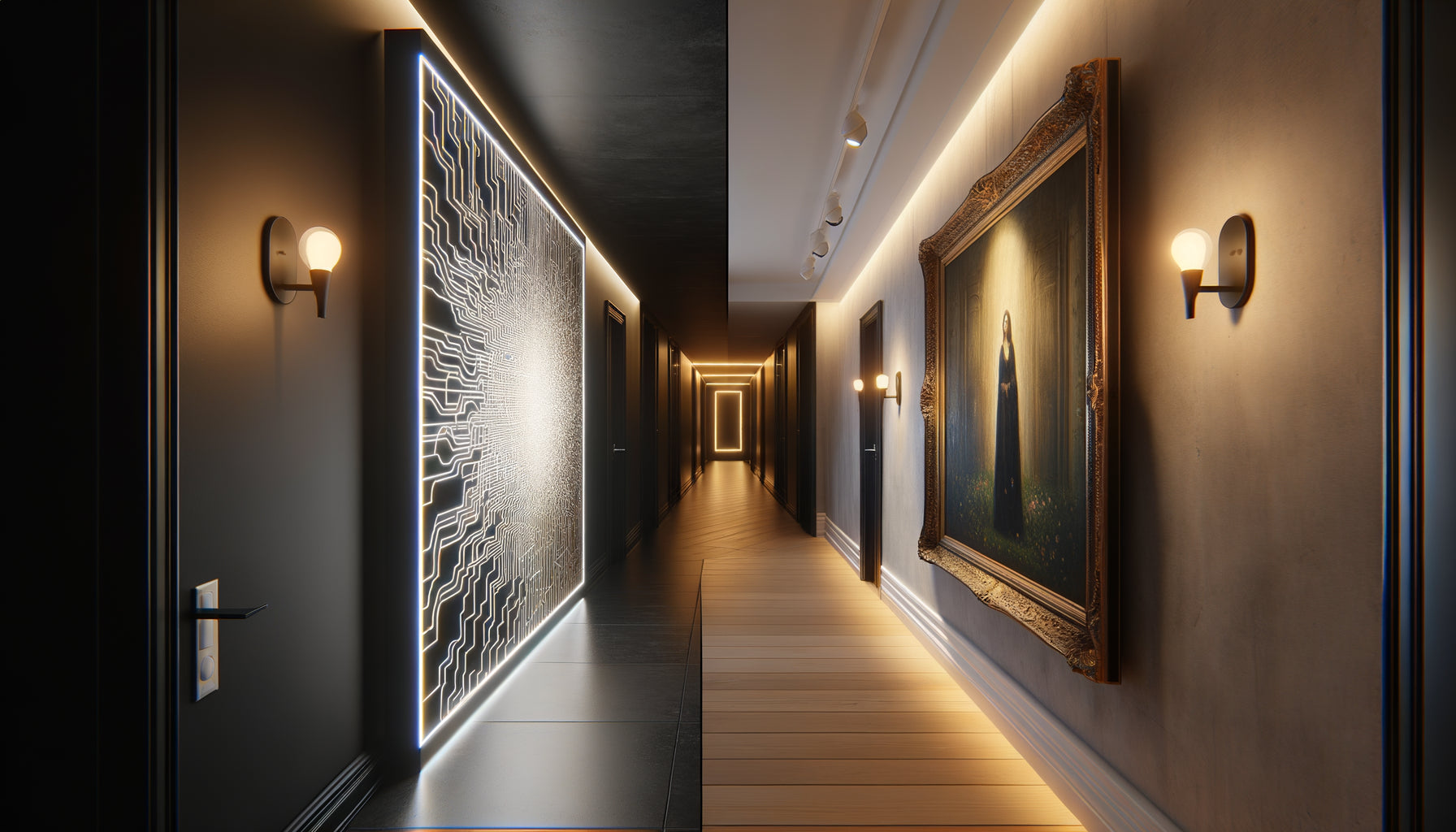
Regarding light: original artworks interact with lighting dynamically. Install adjustable LED spotlights at an adjustable temperature (2700-3000K for warm tones), and watch how the texture of the paint sculpts shadows. A poster remains hopelessly flat, regardless of your lighting installation.
The often overlooked ecological argument
A painting purchased today will stay with you for life. Perhaps your grandchildren will hang it in their turn. Posters, on the other hand, fuel a cycle of disposable consumption: purchase, boredom, replacement every two or three years. The carbon footprint of a single canvas versus ten successive posters is not comparable.
Furthermore, buying from living artists supports a local creative economy. Each euro invested finances a workshop directly, not a multinational decor company. This ethical dimension adds a layer of meaning to your decision: your hallway becomes an act of daily patronage.

How to get started without making a mistake
Start by measuring your hallway: length, ceiling height, light sources. A space of 8 meters can accommodate 4 to 6 artworks of varying sizes (40x60cm to 70x100cm). Favor a consistent hanging line: the center of the paintings at 1.60m from the floor, regular spacing of 15-20cm between each frame.
For your first purchase, aim for €300-€600 per painting. At this budget, you access talented emerging artists, framed paper artworks, small canvases from local galleries. Avoid 'numbered reproductions': these are glorified posters. Demand unique pieces, signed, with certificate.
Test the color harmony: photograph your hallway, import the image onto your phone, virtually overlay the works you are considering. Serious galleries often offer trial periods at home. Take advantage of this: live with the painting for a week before deciding. Your morning instinct, coffee in hand, never lies.
Ready to transform your hallway into a personal gallery?
Discover our exclusive collection of wall art for Hallway that combines artistic authenticity and formats perfectly suited to passageways.
The transformation that begins with the first glance
Imagine. Tomorrow morning, you get out of your bedroom. But instead of the usual emptiness or tired poster, your gaze meets a luminous watercolor, its deep blues still mysterious in the dim light. You smile. This simple passage becomes different. You have chosen this work, it has also chosen you in a way, and now it waits for you every morning.
In six months, friends visit your apartment. They stop in the hallway – which never happened before. 'Where did you find that?' This magical question that means: you have taste, you dared, you created something unique. Your hallway is no longer a non-place. It has become a signature.
Start with one piece. Not five paintings at once, not a perfect arrangement from the start. A work that moves you. Hang it. Live with it. Then look for its accomplice, the one who will dialogue with it. Build your gallery as you compose a life: one emotion at a time, with patience, with accuracy. Your hallway will thank you for decades.
Frequently Asked Questions
What budget should you plan to start with real paintings in a hallway?
To effectively transform a standard hallway (6-10 meters), allow an initial budget of €800 to €2000 for 3 to 4 original paintings. At €200-€400 per piece, you access authentic works by emerging artists or museum-quality paper creations. This amount may seem high compared to €30 posters, but consider it as a long-term investment: these pieces will accompany you for 20, 30 years or more, unlike reproductions that need to be replaced every 3-5 years. Start with a single favorite piece if the budget is tight, then gradually complete your arrangement. Always prioritize quality over quantity: one real painting is better than four generic posters. Local galleries, artist studios and some specialized online platforms offer payment facilities to make original art accessible.
How to tell if a painting will suit my hallway before buying?
The most reliable method is to request a home trial period, which many reputable galleries offer (usually 7 days with deposit). This allows you to live with the artwork in your actual light, at different times of the day. Technically, photograph your hallway in natural and artificial light, then use AR visualization apps (like Artplacer or Augment) to digitally overlay the painting's image. Measure precisely: a 60x80cm format may seem perfect in a gallery but overwhelming in a 1.20m wide hallway. Also consider the color harmony with your existing doors, skirting boards and lighting fixtures. Bring samples of your wall colors when visiting galleries. Finally, trust your emotional instinct: if you still think about a painting three days after seeing it, it's probably the right one. Authentic art creates this gentle obsession that posters never generate.
Are paintings in a hallway likely to deteriorate quickly?
On the contrary, with appropriate framing and a few simple precautions, paintings will survive better in a hallway than posters. The key is to use UV protective glass or museum glass (which filters 99% of harmful rays) for works on paper, and a protective varnish for canvases. Avoid hanging them facing a window in direct sunlight, prefer walls perpendicular to light sources. Temperature variations near exterior doors are only a problem for fragile antique artworks; contemporary creations with modern materials resist perfectly. Regarding impacts: hang securely with systems suitable for the weight (anchors + X hooks for heavy frames), and position the works out of the path of luggage or strollers. Gentle dusting with a duster every two months and glass cleaning once a year are sufficient for maintenance. I have assessed 19th-century oils hanging in hallways for 60 years, in perfect condition. The real threat to art is indifference and storage in damp cellars, not exposure in a properly managed living space.